Artwork
Cei Trei Sfinți Ierarhi Vasile cel Mare, Grigorie de Dumnezeu Cuvântătorul și Ioan Gură-de-Aur slujesc și săvârșesc Sfânta Liturghie împreună. Sunt înveșmântați în veșminte liturgice: sacos verde-alb-verde, felon roșu vermillon, epitrahil verde cu câte patru cruci. Sfântul Vasile cel Mare are Sfânta Evanghelie în mâna dreaptă. Sfântul Ierarh Grigorie de Dumnezeu Cuvântătorul Binecuvintează. Cei trei Sfinți Ierarhi stau cu picioarele pe perinițe rotunde de culori alternative: roșu, verde, alb. Fiecare sfânt ierarh este încadrat de două coloane și o boltă de biserică. Sunt prezente elemente arhitectură bisericească. Fondul registrului superior este albastru. Cromatica este luminoasă și armonioasă: verde, alb, roșu vermillon, roșu, albastru, negru. Este o icoană specifică picturii de Țara Făgărașului, cu un desen fin cu conturul negru și cromatica pastelată. După stilul picturii întregii compoziții, icoane poate să aparțină lui Matei Țimforea.
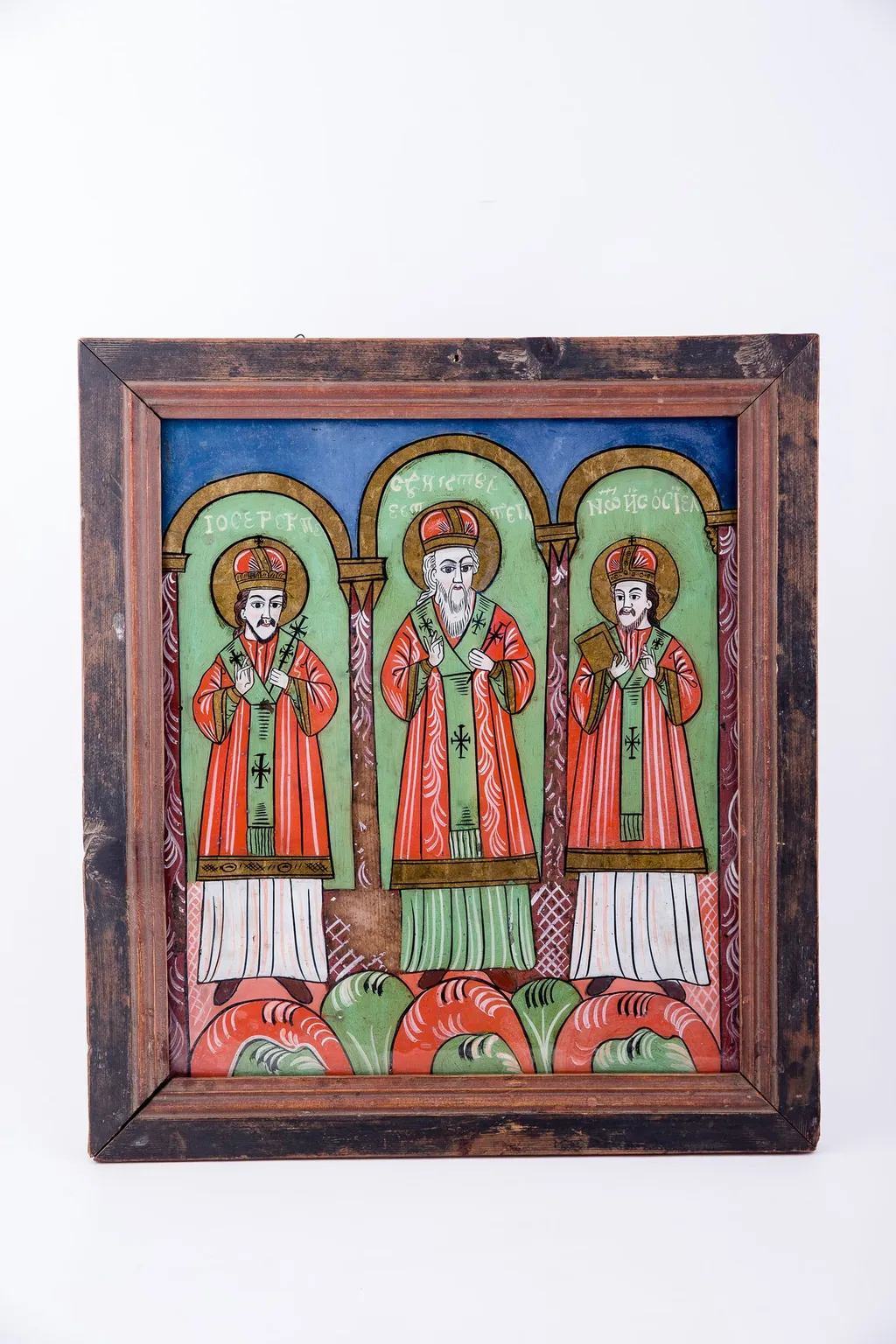
Cei Trei Sfinți Ierarhi Vasile cel Mare, Grigorie de Dumnezeu Cuvântătorul și Ioan Gură-de-Aur slujesc și săvârșesc Sfânta Liturghie împreună. Sunt înveșmântați în veșminte liturgice: sacos verde-alb-verde, felon roșu vermillon, epitrahil verde cu câte patru cruci. Sfântul Vasile cel Mare are Sfânta Evanghelie în mâna dreaptă. Sfântul Ierarh Grigorie de Dumnezeu Cuvântătorul Binecuvintează. Cei trei Sfinți Ierarhi stau cu picioarele pe perinițe rotunde de culori alternative: roșu, verde, alb. Fiecare sfânt ierarh este încadrat de două coloane și o boltă de biserică. Sunt prezente elemente arhitectură bisericească. Fondul registrului superior este albastru. Cromatica este luminoasă și armonioasă: verde, alb, roșu vermillon, roșu, albastru, negru. Este o icoană specifică picturii de Țara Făgărașului, cu un desen fin cu conturul negru și cromatica pastelată. După stilul picturii întregii compoziții, icoane poate să aparțină lui Matei Țimforea. is a drawing by Matei Țimforea. It is held in the collection of the ASTRA National Museum Complex.
About this work
Overview
This icon depicts the Three Holy Hierarchs—Basil the Great, Gregory the Theologian, and John Chrysostom—jointly celebrating the Divine Liturgy.
This icon depicts the Three Holy Hierarchs—Basil the Great, Gregory the Theologian, and John Chrysostom—jointly celebrating the Divine Liturgy. They stand beneath a church arch, each framed by columns and set against a luminous blue background. Their liturgical vestments, rich in symbolic colors, and the architectural setting reflect the solemnity of ecclesiastical ritual. The composition is grounded in the visual traditions of Țara Făgărașului, marked by delicate black outlines and soft, harmonious pigments.
Subject & Meaning
The three saints, revered as pillars of Eastern Christian theology, are shown in unified liturgical action, emphasizing their shared authority and spiritual harmony. Basil holds the Gospel, Gregory bestows a blessing, and John Chrysostom, though not explicitly holding an object, completes the triad. Their collective presence affirms doctrinal unity and the sanctity of the Eucharist. The elevated position and architectural framing reinforce their role as mediators between divine and earthly realms.
Technique & Style
The icon employs fine black contours to define forms, with pastel tones of green, white, vermilion, and blue applied in subtle gradations. The use of soft modeling and restrained highlights avoids dramatic contrast, favoring serene clarity. The figures rest on circular cushions in alternating red, green, and white, a regional motif. Cross-hatching and delicate line work suggest texture in fabric and halos, contributing to a quiet, meditative atmosphere consistent with Transylvanian iconographic practices.
History & Provenance
The icon is attributed to Matei Țimforea, a known painter active in the Făgăraș region during the late 17th or early 18th century. Its stylistic features—particularly the luminous palette and precise linear detail—align with other works from this school. While its exact origin within a church or monastery remains undocumented, its iconographic program and craftsmanship suggest it was created for liturgical use in a local Orthodox community.
Context
This icon emerged within a regional tradition of Romanian Orthodox painting that blended Byzantine models with local aesthetic sensibilities. The emphasis on liturgical accuracy, the use of architectural framing, and the restrained color scheme reflect broader ecclesiastical norms of the period. The depiction of the Three Hierarchs together was common in Eastern Christianity, symbolizing theological consensus and the continuity of sacred tradition in post-Byzantine Romania.
Legacy
The icon stands as a representative example of the Făgăraș school’s contribution to Romanian religious art. Its refined technique and devotional clarity influenced later iconographers in Transylvania. Though not widely known outside regional collections, it preserves a distinctive visual language that bridges Byzantine orthodoxy and local craftsmanship, offering insight into the spiritual and artistic life of Romanian Orthodox communities in the early modern era.
Artist & collection
Artist
Matei Țimforea painted religious icons in the traditional style of his region, using bright colors and clear scenes from Christian stories.

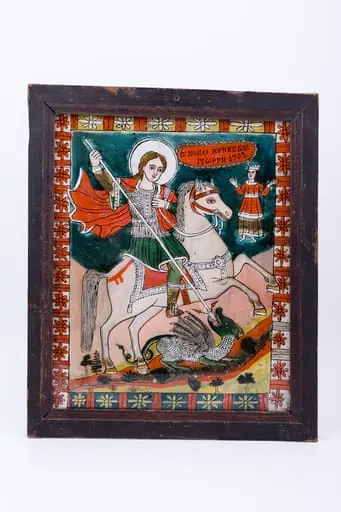 Sfântul Mare Mucenic Gheorghe este așezat călare pe un cal alb, omorând balaurul brun cu lancea, pe care o ține în amândouă mâinile. Balaurul este pictat cu brun-nisipiu, având solzi și coarne. În partea stângă a Sfântului Gheorghe este pictată domnița salvată și ocrotită de marele mucenic. Fondul este turcoaz, în registrul superior și roz- verde-ocru în cel inferior, în centrul icoanei ușor întrepătrundu-se toate culorile. Mantia Sfântului Mucenic Purtător de Biruință este roșie, având pantalonii albi și cămașa de zale de cavaler gri. Cromatica este armonioasă; roșu vermillon, roz, turcoaz, ocru, galben, alb și negru. Inscripția din româno-chirilică se traduce Sf Mare Mucenic Gheorghe. Icoana este rafinată prin acuratețea desenului, compoziția echilibrată și armonia cromatică, Icoana este datată 1902. Icoana este pictată de Matei Țimforea, din Cârțișoara, Țara Făgărașului.
 Icoare a
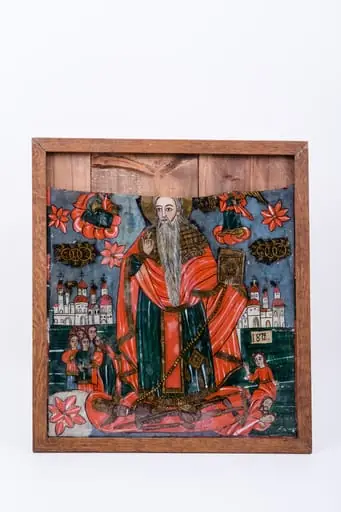 Sfântul Mare Mucenic Haralambie, făcător-de-minuni și vindecător de boli, este cel mai bătrân mucenic din cei prăznuiți de creștini. Este cunoscut ca și făcător-de-minuni, vindecător de boli și ocrotitor al caselor familiilor creștine. Central este pictat Sfântul, îmbrăcat cu veșminte liturgice, arhierești, cu sacos verde-turcoaz, mantie și epitrahil roșu vermillon, omofor cu broderie bronzie, cu mithră și aureolă. Cu mâna dreaptă binecuvântează și cu mâna stângă ține în lanț ciuma, reprezentată antropomorfic și zoomorfic - un animal cu solzi, labe cu gheare și cap de diavol, cu trăsături umane. Ciuma, simbolizând boala incurabilă și moartea, are coarne de diavol, fiind, totodată și păcatul, patima, aducătoare de moartea duhovnicească. Sfântul Haralambie este încadrat de elemente arhitectonice, ziduri de cetate, biserici, case, coloane cu boltă. Icoana se înscrie, ca și realizare artistică în Țara Făgărașului, fiind pictată de Matei Țimforea, datată 1872. În registrul inferior, sunt mai multe personaje: 8 în partea dreaptă a sfântului și 3 în stânga, ieșind vindecați, prin minunile sfântului, de sub puterea diabolică a bolii.Cromatica este armonioasă; roșu vermillon, bronziu, verde turcoaz, gri albăstrui. În registrul superior, este Dumnezeu-Tatăl binecuvântând și un înger punând cununa de mucenicie pe capul sfântului vindecător. Fondul este în registrul superior gri-violaceu-albăstrui, iar în cel inferior verde-turcoaz. Icoana este spartă în registrul superior.
 Icoana reprezintă Nașterea Mântuitorului Iisus Hristos. Pruncul Iisus, înfășat în scutece, are în dreapta pe Maica Domnului și pe Dreptul Iosif, logodnicul Fecioarei Maria, iar în stânga cei trei magi, venind cu daruri. În registrul superior este steaua cea călăuzitoare, aducătoare de vestea cea bună. Sunt prezente, deasupra Pruncului Iisus înfășat în iesle și două animale domestice din grajd. În registrul superior îndepărtat sunt elemente de arhitectură, spațializând astfel întreaga narațiune iconografică. Este o alternanță cromatică de roșu, alb, smarald-turcoaz și albastru bleu-ciel. Cerurile sunt deschise. Icoana este foarte bogată în narațiune. Registrele se întrepătrund armonios. Cromatica este luminoasă și delicat-rafinată: roșu-alb-albastru, legate de auriul aureolelor, stelei, chenarului decorativ. Se remarcă personalitatea iconarului Matei Țimforea, din Cârțișoara, Țara Făgărașului. Inscripția în chirilică se traduce Nașterea ICXC. Chenarul decorativ este geometrizant, cu romburi cromatic-alternative.
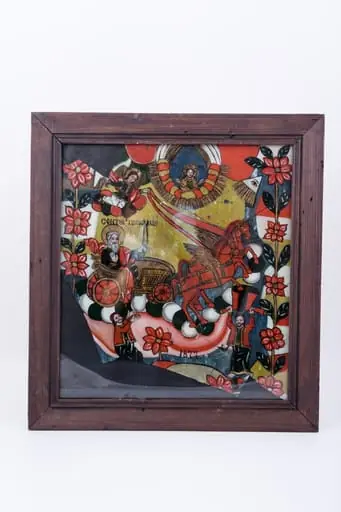 Icoana îl reprezintă pe Sfântul Mare Prooroc Ilie Tesviteanul, traversând Cerurile, în carul de foc, tras de doi cai roșii. Sfântul este îmbrăcat în straie brun-negre și mantie roșie și mână caii roșii cu aripi bronzii. Chipul Sfântului Ilie este unul ascetic, asemenea Sfântului Ioan Botezătorul. În registrul inferior sunt Sfântul Prooroc Elisei, ucenicul Sfântului Ilie, care prinde cojocul aruncat și un țăran plugar, care se ține de carul de foc al sfântului prooroc. Cele două registre paralele, cerul și pământul, sunt despărțite de un lanț din nouri albi-negrii, o mandorlă, care lasă Cerurile să se deschidă. Asemenea țăranului plugar, care ară pământul, așa și Sfântul Ilie Tesviteanul ară Cerurile cu carul de foc și biciul în mână. Cerurile albastru-întunecate, de apus de soare, au firicele roșiatice, iar câmpurile albastre au denivelări și movile roșiatice, astfel în registrul inferior, pământul este reprezentat pe straturi și benzi cromatice alternative de brun, kaki, roșu, albastru și alb. Întreaga narațiune este segmentată de lanțuri de nouri, mandorle mari sau mici, albe sau aurii. Inscripția din româno-chirilică se traduce Sfântul Prooroc Ilie. Compoziția este amplă, dezvoltată pe registre și relații între personaje. Compoziția este încadrată de un chenar fitomorf, format dintr-o ghirlandă de flori roșii, frunze negre. Cromatica este armonioasă: roșu vermillon, roz, albastru violaceu, gri, brun, cafeniu, verde kaki, negru, alb. Icoana aparține lui Matei Țimforea, Cârțișoara, Țara Făgărașului. Icoana este datată 1877.
 Icoana îl reprezintă pe Sfântul Mare Prooroc Ilie Tesviteanul, traversând Cerurile, în carul de foc, tras de doi cai roșii înaripați. Sfântul este îmbrăcat în straie roșii și mantie omofor turcoaz și un înger, alături de prooroc în trăsură, mână caii. În registrul inferior este Sfântul Prooroc Elisei, ucenicul Sfântului Ilie, care prinde cojocul roșu-turcoaz aruncat. În registrul superior este Dumnezeu-Tatăl, dăruind Binecuvântări, dintr-o mandorlă de nouri albi, care deschid Cerurilie, în partea dreaptă este Maica Domnului cu Pruncul Iisus Hristos în brațe, ocrotind întreaga scenă, iar în stânga sunt doi îngeri care îndrumă și călătoresc dimpreună cu întreaga trăsură a Sfântului Ilie și doi serafimi. Cele două registre paralele, cerul și pământul, sunt despărțite de un lanț din nouri albi, o mandorlă, care lasă Cerurile să se deschidă. Între cele două registre există comunicare și interferență, atât semantică, cât și cromatică. Fondul este albastrul bleu-ciel deschis și senin al cerului. Întreaga narațiune este segmentată de lanțuri de nouri, mandorle mari sau mici, albe. Densitatea și alternanța cromatică foarte vie și armonioasă este specifică Țării Făgărașului. Compoziția este amplă, dezvoltată pe registre și relații între personaje. Întreaga tematică iconografică este încadrată e un chenar decorativ geometrizant, format din alternanță de triunghiuri romboidale alb și roz cu contur auriu. Cromatica este armonioasă: roșu vermillon, roz, albastru bleu-ciel, turcoaz, gri, bronziu, brun și alb, negru. Inscripția din româno-chirilică se traduce Sf Proroc Ilie Elisei IC XC Iisus Hristos MP Maica Domnului. Icoana este datată 1895 și este atribuită lui Matei Țimforea din Cârțișoara.
 Icoana Judecata de Apoi imaginează a doua Venire a Lui Iisus Hristos pe pământ, după sfârșitul lumii. Toată lumea va fi chemată și judecată după faptele săvârșite. În cadrul tribunalului ceresc, se hotărăsc bucuria și fericirea veșniciei sau osânda. Icoana este realizată pe șase registre paralele: trei mandorle pe partea stângă, trei pe partea dreaptă. Dumnezeu-Tatăl este în ipostasul de Pantocrator în Slavă. Alături sunt Maica Domnului și Sfântul Ioan Botezătorul înaintemergătorul Domnului. Urmează Apostolii și cetele de îngeri. Tronul Hetimasiei - a Judecății de Apoi - păstrează Sfântul Duh, reprezentat prin porumbel, dar și prin culoarea verde. Cetele oamenilor drepți sunt conduse de Sfântul Apostol Pavel, iar cetele oamenilor păcătoși sunt conduse de Moise. Spațiile reprezentate în icoană sunt: Raiul, râul de foc, cetatea Ierusalimului. Elementul antro-zoomorf este prezent - Leviathanul. Este descrisă și învierea morților. Sunt cântărite pe taler faptele bune și fărădelegile, păcatele, greșelile. Se remarcă numărul mare de personaje, complexitatea tematicii iconografice abordate. Întreaga tematică iconografică este încadrată de construcții arhitectonice; Împărăția Cerurilor. Cromatica este armonioasă, specifică stilului lui Matei Țimforea, din Cârțișoara: albastru bleu-ciel; roșu-roz, ivoriu, bej, verde kaki, verde olive, brun-bronziu, orange, alb, negru. Inscripția din româno-chirilică se traduce Judecata de Apoi 1898.
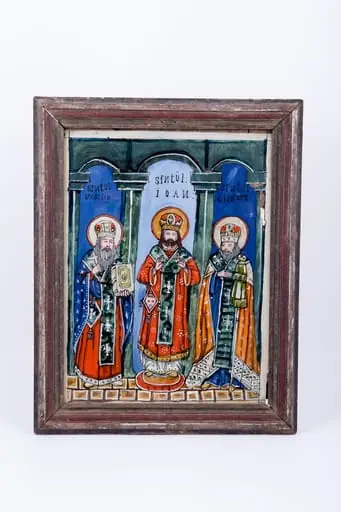
 Cei Sfinți Trei Ierarhi Vasile cel Mare, Grigorie de Dumnezeu Cuvântătorul și Ioan Gură-de-Aur slujesc și săvârșesc Sfânta Liturghie împreună. Sunt înveșmântați în veșminte liturgice: sacos, felon și epitrahil mithră și aureolă. Cromatica veșmintelor este vie și luminoasă: roșu vermillon, galben-ocru și albastru regal, verde. Sfinții Vasile cel Mare și Sfântul Grigorie, așezați în laterale, au Sfânta Evanghelie și crucile de mână, cu care binecuvântează. Între cei doi sfinți ierarhi, în miezul icoanei este Sfântul Ierarh Ioan Gură-de-Aur, mai tânăr, care binecuvântează cu ambele mâini. Fondul întregii tematici iconografice este format din 3 câmpuri paralele: alb, albastru și roz, cu elemente decorative circulare. Cromatica este luminoasă și armonioasă: roșu vermillon, roz, orange, verde spanac-avocado, galben-ocru, albastru regal și bleu-ciel, alb și negru. Întreaga compoziție iconografică este încadrată de un chenar decorativ fitomorf, format dintr-o ghirlandă de flori albe, roșii și verzi. Inscripiția din româno-chirilică se traduce: Sf Vasile cel Mare Sf Ioan Gură-de-Aur Sf Grigorie Bagoslovu (Cuvântătorul). Icoana este pictată de Matei Țimforea, din Cârțișoara, Țara Făgărașului, fiind datată 1887.
 Cei Sfinți Trei Ierarhi Vasile cel Mare, Grigorie de Dumnezeu Cuvântătorul și Ioan Gură-de-Aur slujesc și săvârșesc Sfânta Liturghie împreună. Sunt înveșmântați în veșminte liturgice: sacos, felon și epitrahil mithră și aureolă. Cromatica veșmintelor este vie și luminoasă: roșu vermillon, orange-cărămiziu, galben-ocru și albastru ceruleum și bleu-ciel, verde și alb. Sfântul Vasile cel Mare are crucea în mâna dreaptă și binecuvântează și în mâna stângă ține Sfânta Evanghelie închisă. Sfântul Ioan Gură-de-Aur, central, tânăr cu barba brunetă, binecuvântează cu ambele mâini și are pe bedernița romboidală un chip de sfânt, element antrpomorf. Alături este Sfântul Grigorie care ține în mâna stângă cârja-sceptrul arhiepiscopală și binecuvântează. Fondul întregii tematici iconografice este albastru ceruleum în exterior și central bleu-ciel. Sfinții trei ierarhi sunt încadrați de coloane și arcade-bolți, schițându-se astfel structura arhitecturală de biserică. În registrul inferior este un un caroiaj alb-ocru, o lespede de fundație puternică - reprezentând credința creștin-ortodoxă. Cromatica este luminoasă și armonioasă: roșu vermillon, orange, verde spanac-avocado, galben-ocru, brun, albastru ceruleum și bleu-ciel, gri, alb și negru. Este o icoană de Valea Sebeșului. Inscripiția din româno-chirilică se traduce: Sfântul Vasilie Sfântul Ioan Sfântul Grigorie. Icoana este datată 1908.
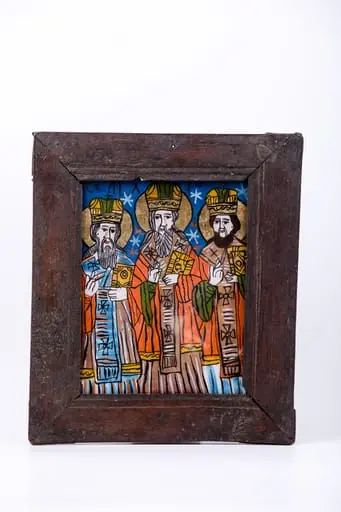 Cei Trei Sfinți Ierarhi Vasile cel Mare, Grigorie de Dumnezeu Cuvântătorul și Ioan Gură-de-Aur slujesc și săvârșesc Sfânta Liturghie împreună. Sunt înveșmântați în veșminte liturgice: sacos crem-albastru-alb-crem, felon roșu vermillon, epitrahil albastru-verde cu câte patru cruci negre. Sfântul Vasile cel Mare are Sfânta Evanghelie în mâna dreaptă. Sfântul Ierarh Grigorie de Dumnezeu Cuvântătorul Binecuvântează. Fondul registrului superior este cerul albastru-regal, bogat ornamentat cu elemente astrale - stele roșii și albe. Cromatica este luminoasă și armonioasă: verde văratic, alb, roșu vermillon, galben-ocru, bej, crem, albastru regal și bleu-ciel, negru. Este o icoană specifică picturii de Țara Oltului, cu un desen fin cu conturul negru și cromatica pastelată. Inscripția din româno-chirilică se traduce Vasile Grigorie Ioan.
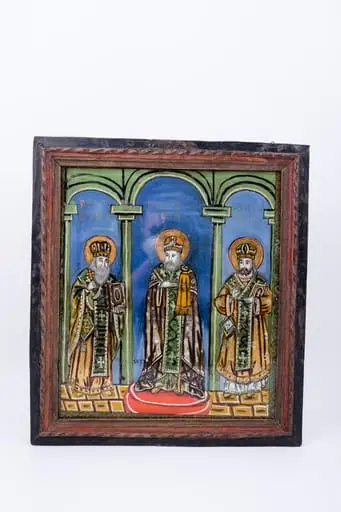 Cei Trei Sfinți Ierarhi Vasile cel Mare, Grigorie de Dumnezeu Cuvântătorul și Ioan Gură-de-Aur slujesc și săvârșesc Sfânta Liturghie împreună. Sunt înveșmântați în veșminte liturgice: sacos, felon și epitrahil verde, brun-ocru, kaki, brun-bronziu cu câte patru cruci pe mijlocul patrafirului. Sfântul Vasile cel Mare binecuvântează cu crucea în mâna dreaptă și ține în mâna stângă Sfânta Evanghelie. Sfântul Ioan Gură-de-Aur este în mijloc, așezat cu picioarele pe o pernă rotundă roșie, are mâna dreaptă lipită la piept, în semn de evlavie și cu mâna stângă ține cârja arhierească, Sfântul Grigorie binecuvântează cu mâna dreaptă și ține în mâna stângă Sfânta Evanghelie. Fondul este albastru ceruleum în registrul superior, în registrul inferior este un caroiaj brun-ocru-galben chihlimbar. Cromatica este armonioasă și săracă în nuanțe: verde smarald, absint, kaki, alb, roșu vermillon, albastru, alb, negru. Este o icoană specifică picturii de Valea Sebeșului, cu un desen fin cu conturul negru și cromatica pastelată. Inscripția din româno-chirilică se traduce Sfântul Vasile Sfântul Ioan Sfântul Grigorie.
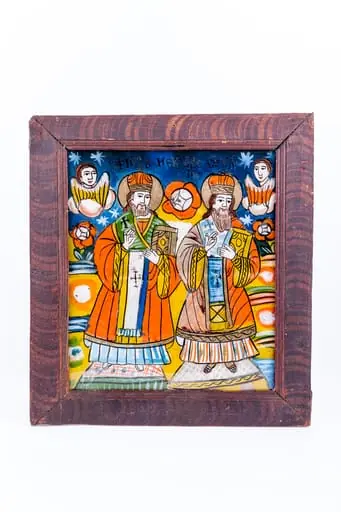 Sfinții Ierarhi Nicolae făcătorul de minuni și Vasile cel Mare sunt reprezentați împreună, binecuvântând cu mâna dreaptă și ținând în mâna stângă Sfânta Evanghelie. Sunt îmbrăcați în veșmânt-sacos și cu felon roșu vermillon și epitrahil albastru, verde, galben-ocru. Împreună slujesc și săvârșesc Sfânta Liturghie. În registrul îndepărtat superior, este pictat cerul albastru cu stele albe și ruje mari roșii. În registrul superior, în colțurile din stânga și din dreapta, este câte un înger pe o mandorlă. Cromatica este armonioasă: roșu vermillon, verde, albastru, galben-ocru, alb. Sfinții arhierei poartă și mithră arhierească. Amândoi Sfinții Ierarhi au aureole aurii. Rama este pictată cu tușe negre pe maro-roșcat, alternanță de brunuri. Este o icoană specifică picturii de Țara Oltului, din centrul Șcheii Brașovului. Din inscripția româno-chirilică se traduce Sf Nicolae Sf Vasile. În registrul inferior, fondul este format din câmpuri alternative de galben, albastru și verde.
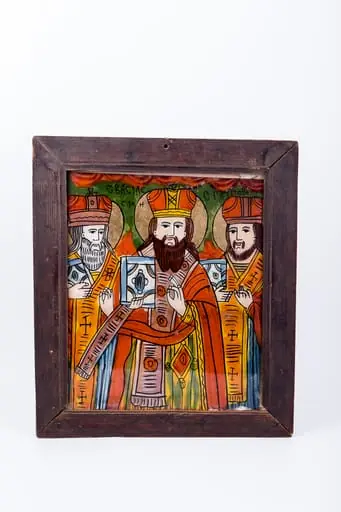 Cei Sfinți Trei Ierarhi Vasile cel Mare, Grigorie de Dumnezeu Cuvântătorul și Ioan Gură-de-Aur slujesc și săvârșesc Sfânta Liturghie împreună. Sunt înveșmântați în veșminte liturgice: sacos, felon și epitrahil mithră și aureolă. Cromatica veșmintelor este vie și luminoasă: roșu vermillon, verde spanac-avocado, galben-ocru și albastru bleu-ciel. Ceea ce este inedit este că în această icoană, cei trei sfinți ierarhi binecuvântează cu mâna stângă. Este o licență poetică picturală - pictura pe sticlă se realizează în oglindă. Fondul întregii tematici iconografice este format din alternanța de verde și roșu vermillon. Cromatica este luminoasă și armonioasă, vie și luminoasă: roșu vermillon, orange, verde spanac-avocado, galben-ocru, albastru bleu-ciel, alb și negru. Este o icoană specifică picturii de Țara Oltului, din centrul Șcheii Brașovului. Inscripiția din româno-chirilică se traduce: Vasile Ioan Grigorie
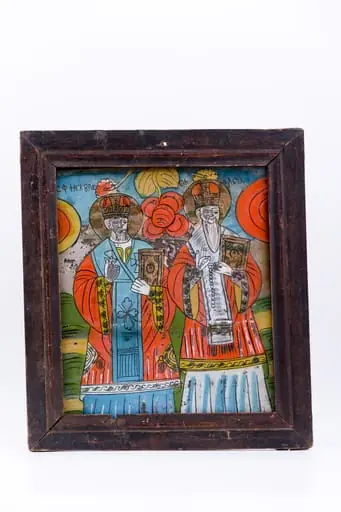 Icoana îi reprezintă pe Sfântul Ierarh Nicolae și Sfântul Vasile cel Mare, amândoi ierarhi, în veșminte liturgice arhierești, binecuvântând. Sfântul Mare Ierarh Nicolae, făcător de minuni, este îmbrăcat în veșminte liturgice, de ierarh, sacos roșu-vermillon, cu epitrahil-patrafir albastru bleu-ciel. Sfântul Nicolae are în mâna stângă Sfânta Evanghelie închisă și cu mâna dreaptă Binecuvântează. Este unul dintre cei mai populari și iubiți sfinți, ocrotitor al caselor, familiilor și copiilor. Are barbă sură, mithră arhierească și aureolă. Alături este Sfântul Ierarh Vasile cel Mare, în veșminte roșii vermillon, cu interiorul galben, sacos gri-albăstrui și epitrahil gri. Fondul este albastru bleu-ciel cu elemente decorative fitomorfe ruje galbene și roșii. Cromatica este armonioasă și pastelată: roșu vermillon, albastru bleu-ciel, verde, galben-ocru, negru, alb. Icoana este de Țara Oltului. Inscripția din româno-chirilică se traduce Sf Nicolae Sf Vasile.
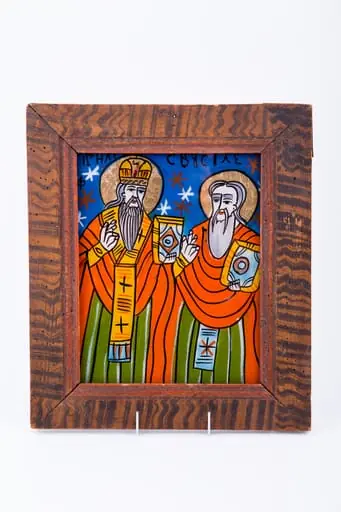 Sfinții Ierarhi Ioan Gură-de-Aur și Vasile cel Mare sunt reprezentați împreună, binecuvântând cu mâna dreaptă și ținând în mâna stângă Sfânta Evanghelie. Sunt îmbrăcați în veșmânt-sacos verde, cu felon roșu vermillon și epitrahil galben-ocru. Împreună slujesc și săvârșesc Sfânta Liturghie. În registrul îndepărtat superior, este pictat cerul albastru cu stele albe și roșii. Cromatica este armonioasă: roșu vermillon, verde, albastru, galben-ocru, alb. Sfântul Ierarh Ioan Gură-de-Aur poartă și mithră arhierească. Amândoi Sfinții Ierarhi au aureole aurii. Rama este pictată cu tușe negre pe maro-roșcat, alternanță de brunuri. Este o icoană specifică picturii de Țara Oltului, din centrul Șcheii Brașovului. Tematica este rară.
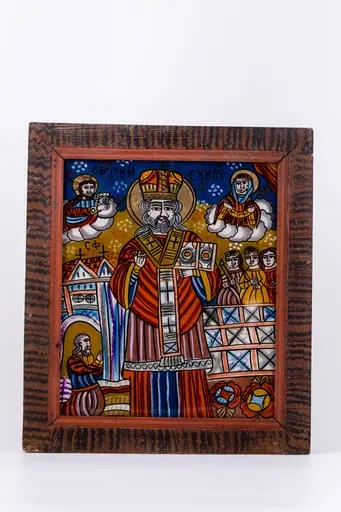 Sfântul Mare Ierarh Nicolae, făcător de minuni, îmbrăcat în veșminte liturgice, de ierarh, sacos roz-stacojiu, felon roșu vermillon-stacojiu, cu interiorul albastru și epitrahil-patrafir gri-bronziu, cu patru cruci negre brodate. Ține în mâna stângă Sfânta Evanghelie și cu mâna dreaptă Binecuvântează. Este unul dintre cei mai populari și iubiți sfinți, ocrotitor al caselor, familiilor și copiilor. Are barbă sură și mithră arhierească și aureolă. În registrul superior, sunt Dumnezeu-Tatăl Binecuvântând și Maica Domnului Ocrotind. Fondul este cerul albastru cobalt-ceruleum, împodobit cu elemente astrale - punctiflorale roșii și albe și un câmp luminos galben-auriu, în registrul mediu. În registrul mediu și inferior, sunt cele trei fete salvate și ajutate de Sfântul Nicolae și tatăl lor îngenuncheat, mulțumind pentru minunea săvârșită. Desenul este fin conturat. Cromatica este armonioasă: roșu vermillon, stacojiu-roz putred, albastru ceruleum și cobalt, galben muștar ocru, bronz, brun, bej, crem, auriu, alb, negru. Inscripția în chirilică se traduce Sfântul Nicolae. Icoana este de Țara Oltului.
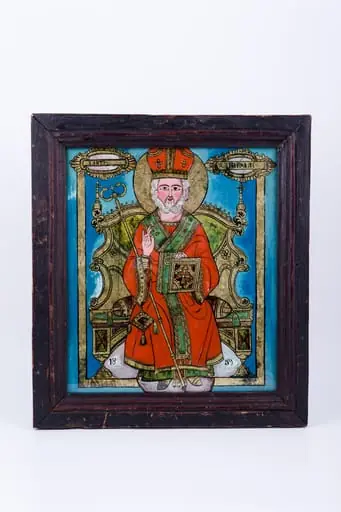 Sfântul Mare Ierarh Nicolae Făcătorul de minuni este redat central, așezat fiind pe un tron arhieresc, ținând în mâna stângă Sfânta Evanghelie închisă și binecuvântează cu mâna dreaptă. Veșmintele arhierești liturgice ale sfântului ierarh sunt într-o alternanță cromatică de roșu vermillon și verde spanac-avocado, kaki și galben-auriu. Epitrahilul, patrafirul este verde, cu patru cruci pe el, sacosul roșu, cu bordură galben-aurie. Poartă mithră și are aureolă. Ține în mâna stângă Sfânta Evanghelie închisă și binecuvântează. Întreaga tematică iconografică este încadrată de un chenar liniar auriu, cu un fond al icoanei albastru-gri. Inscripția din româno-chirilică se traduce Sf Nicolae. Icoana are o cromatică armonioasă și vie-luminoasă: roșu vermillon, roz, verde spanac-avocado, verde kaki, galben-auriu, alb, negru. Icoana este de Țara Făgărașului, este datată 1859 și este atribuită lui Savu Moga.
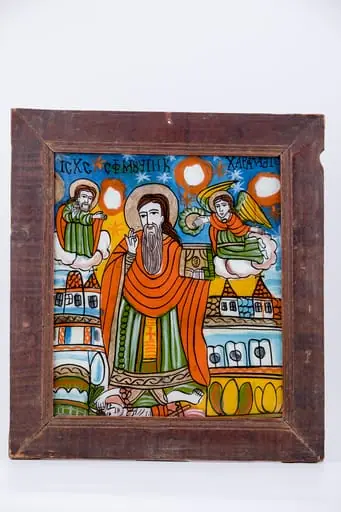 Sfântul Mare Mucenic Haralambie, făcător-de-minuni, este cel mai bătrân mucenic din cei prăznuiți de creștini. Este cunoscut ca și făcător-de-minuni, vindecător de boli și ocrotitor al caselor familiilor creștine. Central este pictat Sfântul, îmbrăcat cu veșminte liturgice, arhierești, cu sacos verde-văratic, felon roșu vermillon și epitrahil galben, cu o cruce mică orange, cu aureolă. Fiind foarte bătrân, are barbă albă, lungă sură și părul șaten-castaniu lăsat pe umeri. În mâna stângă are Sfânta Evanghelie închisă și cu mâna dreaptă Binecuvântează, și ține în lanț ciuma, reprezentată antropomorfic. Ciuma, simbolizând boala incurabilă și moartea, are secera în mână și coarne de diavol, fiind, totodată și păcatul, patima, aducătoare de moartea duhovnicească. În registrul superior, în dreapta este Dumnezeu-Tatăl Binecuvântând, de pe o mandorlă de nouri albi-crem și în stânga sfântului ierarh, este un înger îngenuncheat pe un nor, cu aripile galbene, care așează cununa de mucenicie pe capul Sfântului Haralambie. În registrul inferior, este o alternanță de câmpuri galbene-verzi cu elemente florale de câmp, iar în registrul mediu sunt elemente de arhitectură. Fondul icoanei este cerul albastru regal cu steluțe albe-roșii, astfel creându-se o simetrie compozițională. Cromatica este armonioasă: albastru regal, cobalt, roșu vermillon, galben chihlimbar, verde văratic, brun, bej, crem, alb, negru se întrepătrunde estetic cu detaliile minuțioase ale desenului. Inscripția din româno-chirilică se traduce IC XC Iisus Hristos Sf Mucenic Haralambie. Icoana este din Țara Oltului, Șcheii Brașovului.
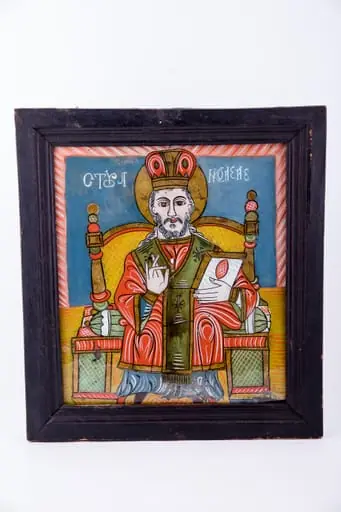 Sfântul Mare Ierarh Nicolae Făcătorul de minuni este redat central, șezând pe tron arhieresc, ținând în mâna stângă Sfânta Evanghelie și binecuvintează cu mâna dreaptă. Veșmintele arhierești liturgice ale sfântului ierarh sunt într-o alternanță cromatică de roșu vermillon-verde-albastru-alb. Epitrahilul, patrafirul este verde, cu patru cruci pe el, sacosul albastru. Poartă mithră și are aureolă. Sfântul ierarh este așezat pe un tron foarte frumos și bogat ornamentat decorativ geometric, în nuanțe de verde olive, gri și galben muștar și ocru. Pe tron este și o pernă rulou. Icoana are cu o combinație cromatică mai deosebită, cizelată: albastru, portocaliu-orange, galben citrone, brun roșcat, verde olive, alb, negru. Fondul este albastru și întreaga tematică iconografică este încadrată de un semi-chenar decorativ-geometrizant, din liniuțe delicate de alb și roșu, alternativ expuse, asemenea unui fir de mărțișor. Inscripția în româno-chirilică de pe albastrul cerului se traduce Sfântul Nicolae. În desenul trăsăturilor chipului și minuțiozitatea detaliilor se observă stilul pictorului zugrav Ioan Pop de Făgăraș, presupus autorul icoanei.