Artwork
Shakyamuni Triad: Buddha Attended by Manjushri and Samantabhadra (Bodhisattva with Lion)
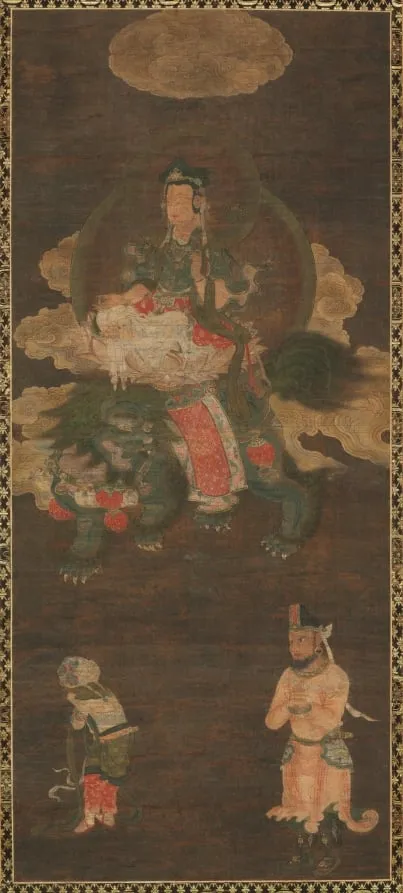
Shakyamuni Triad: Buddha Attended by Manjushri and Samantabhadra (Bodhisattva with Lion) is an unspecified painting by the Ming dynasty painting artist Unknown. It dates from 1304 and is held in the collection of the Cleveland Museum of Art.
About this work
The clouds around the figures aren’t just decoration—they swirl like smoke, separating the human world from the divine.
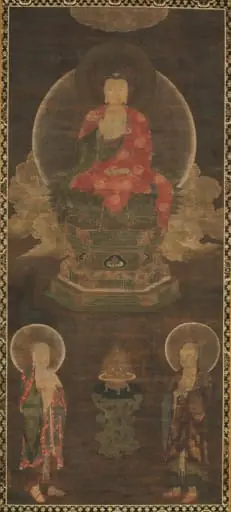
You see a golden Buddha sitting on a lotus, flanked by two holy figures—one on a lion, one on an elephant. Below them, smaller people kneel in prayer, including a boy with twisted topknots and a woman in a long robe.
This painting comes from a time when most Buddhist art in China was destroyed. It survived in Fujian, a coastal province where local artists kept the tradition alive. The clouds around the figures aren’t just decoration—they swirl like smoke, separating the human world from the divine.
To see more art from this place and time, look up *yuan dynasty (1271-1368)*.
Overview
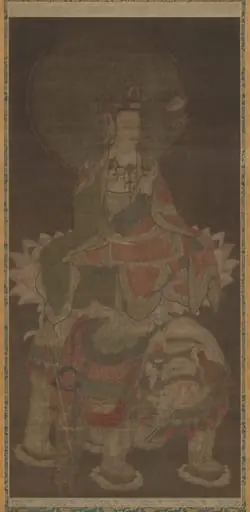
The work is a three‑panel painting from the Yuan period that presents the historical Buddha Shakyamuni seated on a lotus throne, accompanied by two attendant bodhisattvas. Manjushri, the embodiment of wisdom, is shown riding a lion, while Samantabhadra, representing universal virtue, rides an elephant. Beneath the divine trio, a group of smaller figures kneel in reverence, creating a hierarchical composition that links the celestial and the mortal realms.
Subject & Meaning
The central scene illustrates a passage from the Lotus Sutra, a text that shaped Mahayana Buddhist doctrine across East Asia. The presence of the two bodhisattvas underscores the sutra’s themes of wisdom and compassionate action, while the kneeling disciples, a boy with distinctive topknots, a female worshiper, and two foreign figures suggest the universal appeal of the teaching.
Technique & Style
Rendered in mineral pigments on silk, the painting employs a luminous gold background that highlights the figures’ outlines. The cloud motifs surrounding the deities are rendered with swirling, smoke‑like strokes, delineating a celestial space that separates the divine from the earthly participants below. The use of vivid colors and precise brushwork reflects the continuation of Chinese court painting traditions during a period of widespread iconoclasm.
History & Provenance
Created during the Yuan dynasty (1271–1368), the piece survived the extensive destruction of Buddhist images that occurred under Mongol rule. It remained in the coastal province of Fujian, where local workshops preserved Buddhist artistic practices. The painting’s survival in this region testifies to the resilience of regional patronage and the continuity of religious art despite broader political upheavals.
Context
In the Yuan era, Buddhist institutions faced suppression, yet the Lotus Sutra retained a central role in Mahayana practice. This artwork functions both as a devotional object and as a visual exegesis of the sutra’s teachings, embodying the doctrinal emphasis on enlightenment accessible to all beings, regardless of status or origin.
Artist & collection

 Domestic Scene
 Giacomo and Cardinal Marco, investing Andrea, Abbot of San Zeno, with his Benefice
 The Nymph of Fontainebleau
 Portrait of a Woman
 Madonna and Child with Saints in the Enclosed Garden
 Venus and Minerva
 Family Group of Four on Sofa
 Wall painting from Room H of the Villa of P. Fannius Synistor at Boscoreale
 Shakyamuni Triad: Buddha Attended by Manjushri and Samantabhadra (Buddha)
 Monju with Five Hair Knots
 Samantabhadra
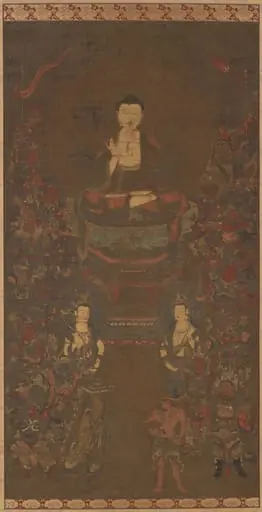 Shakyamuni with the Sixteen Benevolent Deities
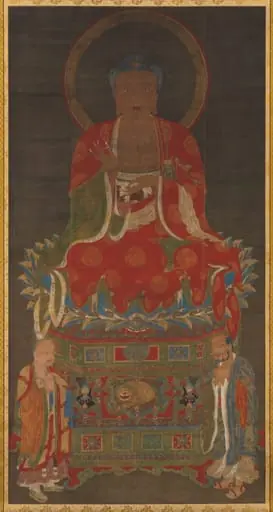 Shakyamuni with two attendants
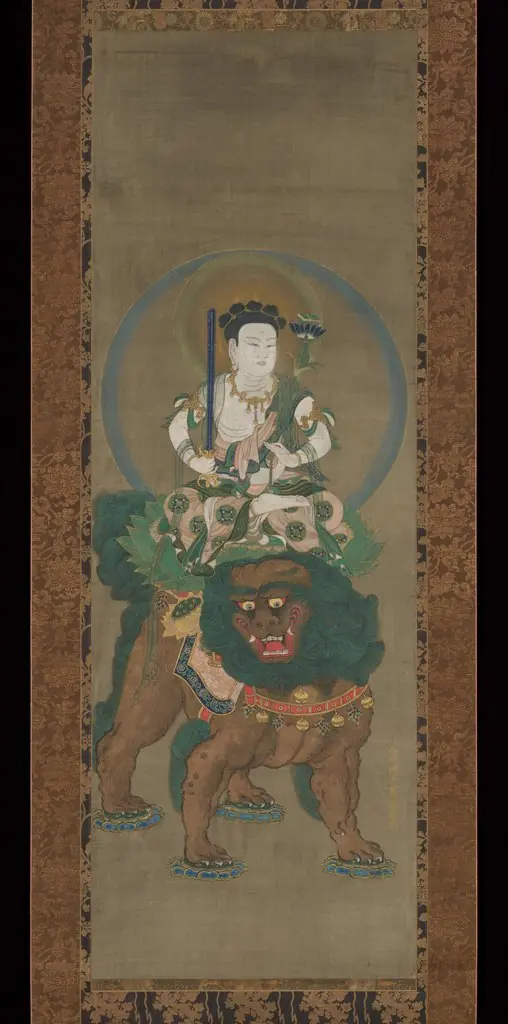 The Bodhisattva Five-Topknot Monju (Manjushri) (Gokei Monju Bosatsu zō)
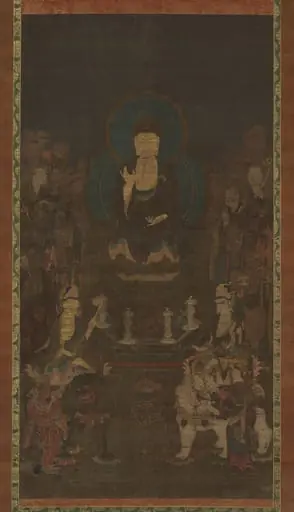 釈迦三尊十大弟子像|Shaka (Shakyamuni), the Historical Buddha, with Two Attendant Bodhisattvas and the Ten Great Disciples
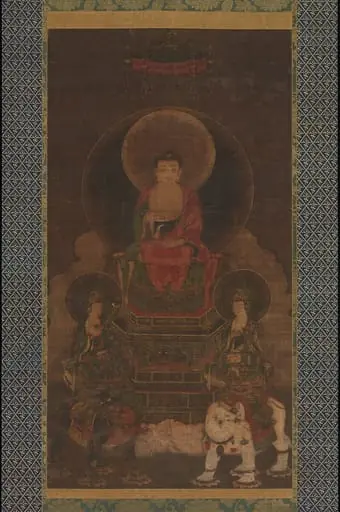 釈迦三尊像|Shaka (Shakyamuni) Triad
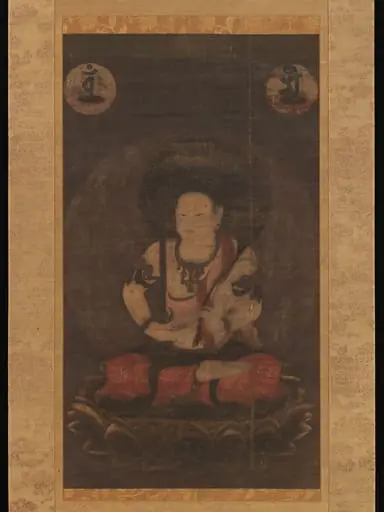 五髻文殊菩薩像|The Bodhisattva Monju (Manjushri) with Five Topknots
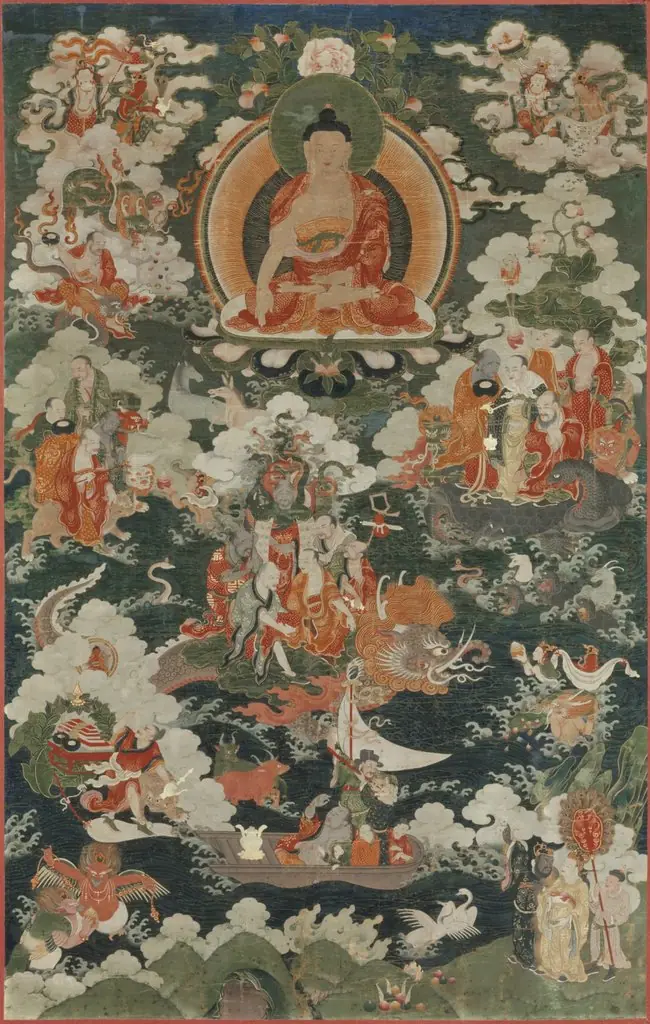 Buddha Shakyamuni and the Eighteen Arhats