Artwork
Sharraddha
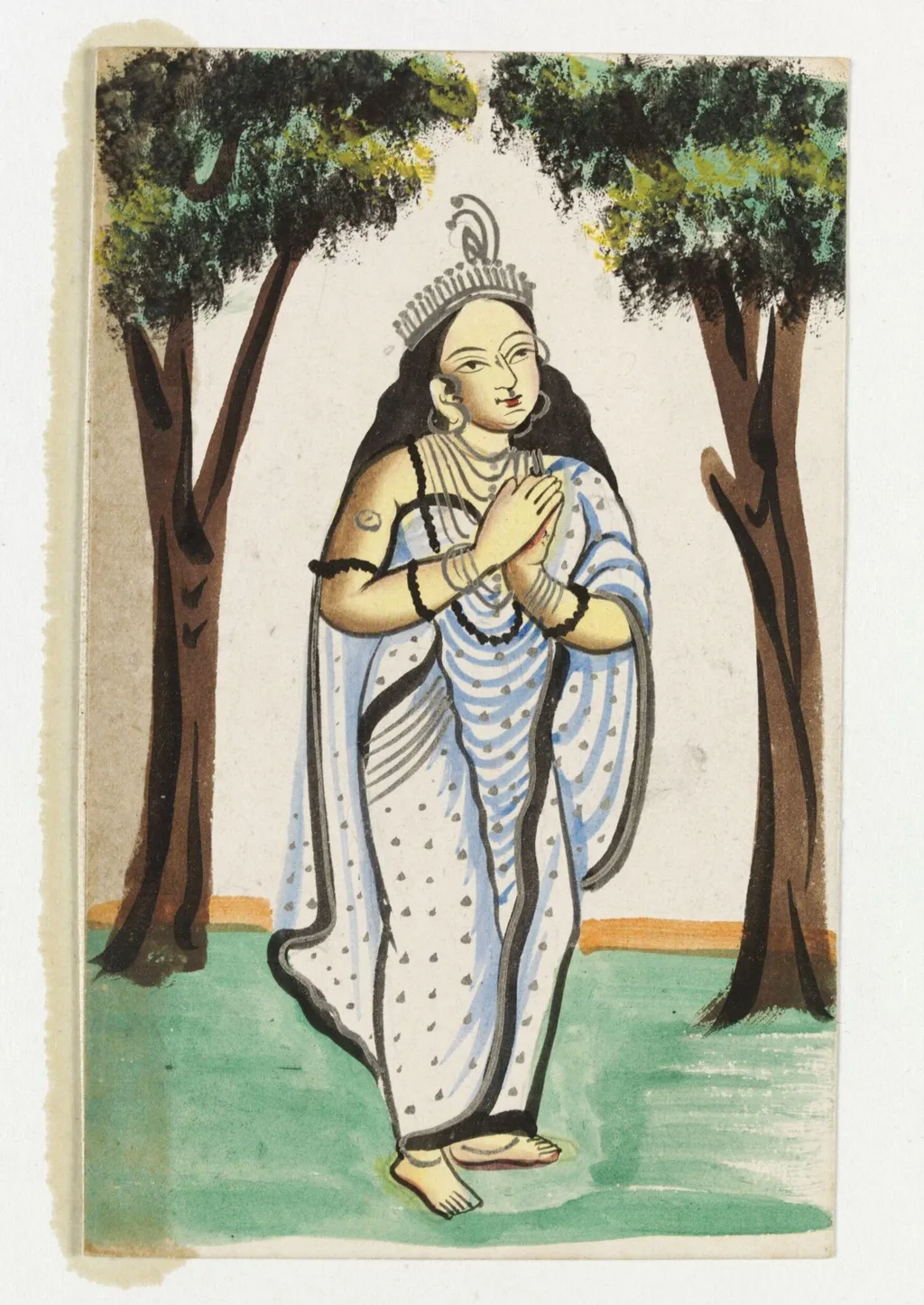
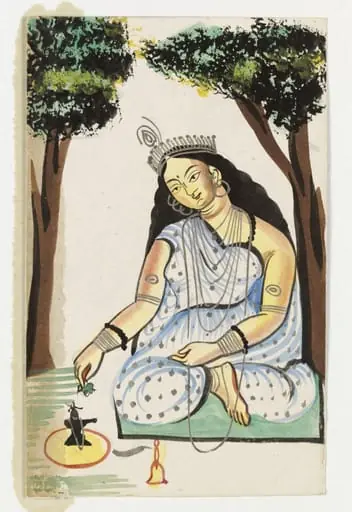
Sharraddha is a paint painting by the Impressionist artist Unknown. It dates from 1890 and is held in the collection of the Victoria and Albert Museum.
About this work
Overview
The use of tin alloy for embroidery adds a subtle metallic sheen, distinguishing it from conventional watercolours of the period.
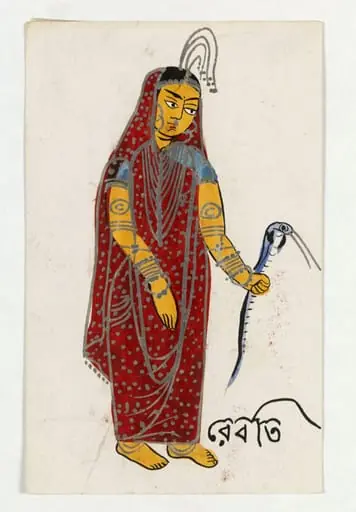
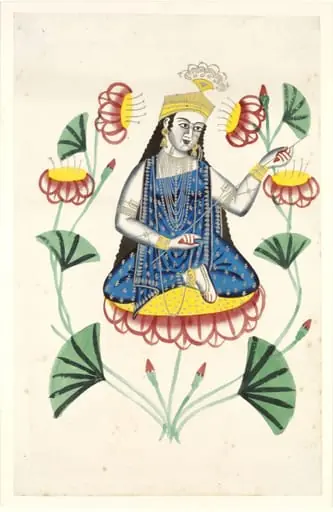
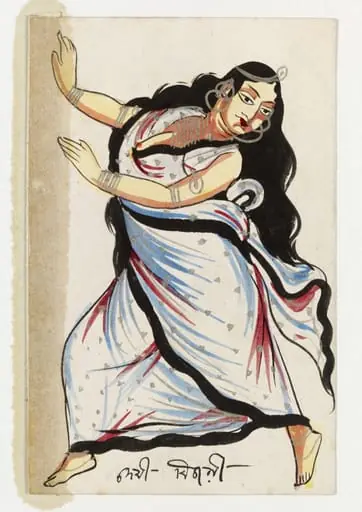
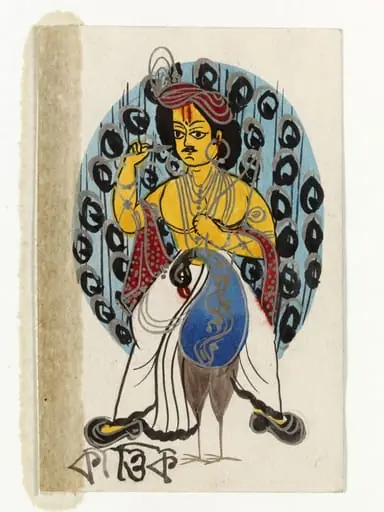
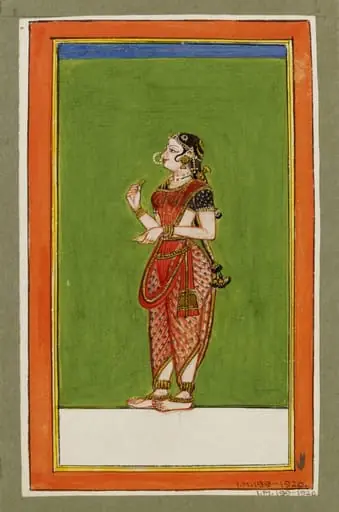
Created in 1890, *Sharraddha* is a watercolour and tin alloy painting on cardboard by an unidentified artist. It portrays a woman in a devotional pose beneath two trees, rendered with flat, bright hues and minimal shading. The use of tin alloy for embroidery adds a subtle metallic sheen, distinguishing it from conventional watercolours of the period. The work’s simplicity and focus on gesture suggest an intent to convey spiritual presence rather than realistic detail.
Subject & Meaning
The figure represents Sharraddha, wife of the Vedic sage Angiras, depicted in a moment of quiet reverence. Her hands are pressed together in anjali mudra, a gesture of prayer or devotion, and her gentle smile reinforces a sense of inner peace. The bare feet and unadorned setting imply humility, aligning with ascetic ideals in Indian spiritual traditions. The scene evokes a personal, intimate devotion rather than a grand mythological narrative.
Technique & Style
The painting employs watercolour on cardboard, with tin alloy applied as fine metallic thread to outline geometric patterns on the garment. Colours are applied in flat planes without gradation or shadow, creating a stylized, two-dimensional effect. The brushwork is deliberate but unrefined, prioritizing symbolic clarity over naturalism. The background is reduced to two trees and a faint ground line, emphasizing the figure’s stillness and spiritual focus.
History & Provenance
The artist remains unidentified, and the painting’s early ownership history is undocumented. Its survival suggests it may have been produced for private devotion or as part of a regional artistic tradition rather than for commercial exhibition. The materials—tin alloy and cardboard—indicate a modest, possibly local production context, distinct from elite courtly or colonial art practices of the time.
Context
Made during the late 19th century, *Sharraddha* reflects a period when Indian religious iconography was being reinterpreted outside formal academies. While European-style realism dominated institutional art, this work aligns with vernacular traditions that valued symbolic expression over technical precision. Its subject matter and materials suggest ties to devotional art practices in rural or semi-urban India, where spiritual figures were rendered with personal, localized aesthetics.
Legacy
Though not widely exhibited or documented, *Sharraddha* contributes to a broader understanding of non-elite Indian painting traditions from the colonial era. Its use of unconventional materials and emphasis on spiritual gesture offer insight into how religious narratives were visually sustained beyond canonical forms. It remains a quiet example of how devotion shaped artistic choices in everyday contexts.
Artist & collection

 Domestic Scene
 Giacomo and Cardinal Marco, investing Andrea, Abbot of San Zeno, with his Benefice
 The Nymph of Fontainebleau
 Portrait of a Woman
 Madonna and Child with Saints in the Enclosed Garden
 Venus and Minerva
 Family Group of Four on Sofa
 Wall painting from Room H of the Villa of P. Fannius Synistor at Boscoreale