Artwork
Kamala Kamini
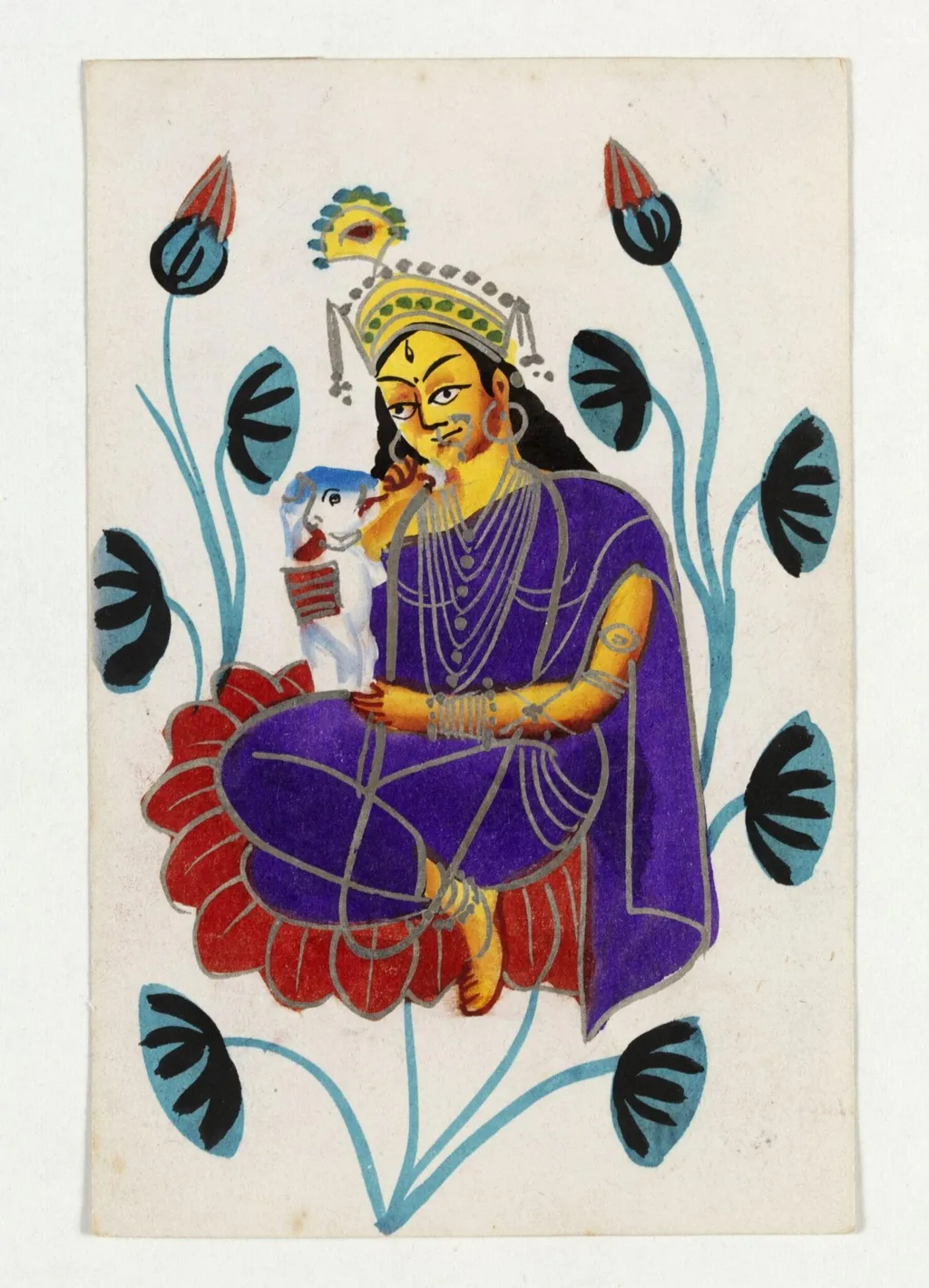
Kamala Kamini is a paint painting by the Impressionist artist Unknown. It dates from 1890 and is held in the collection of the Victoria and Albert Museum.
About this work
Overview
The work employs bold, unmodulated hues and linear precision, reflecting conventions associated with regional painting practices of the nineteenth century.
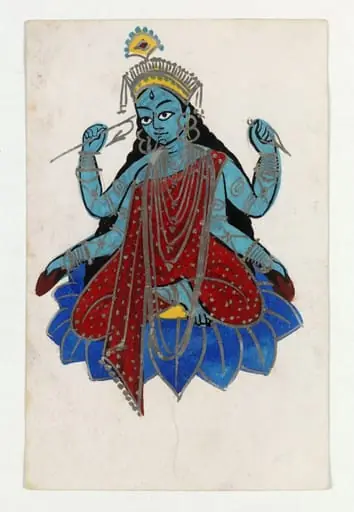
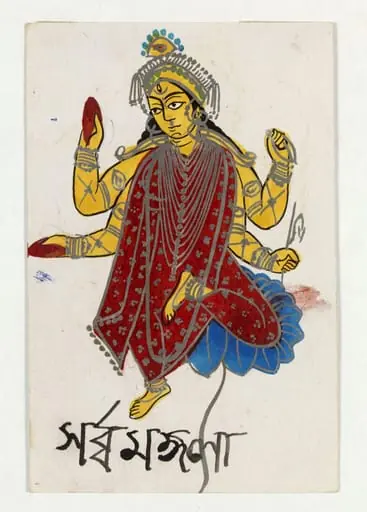
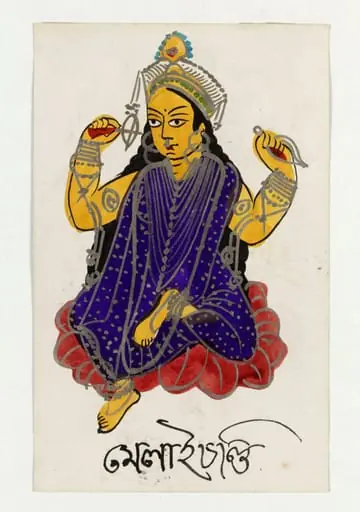
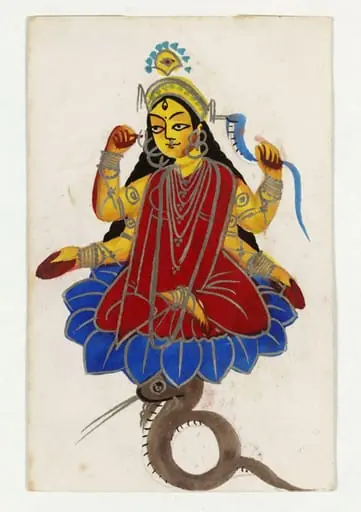
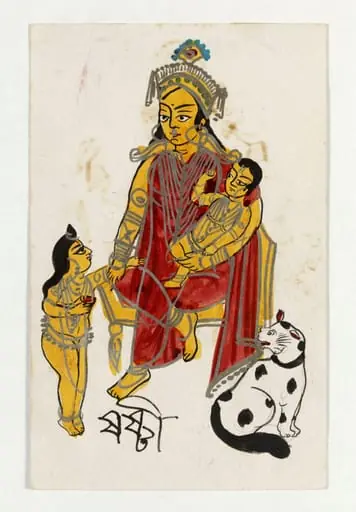
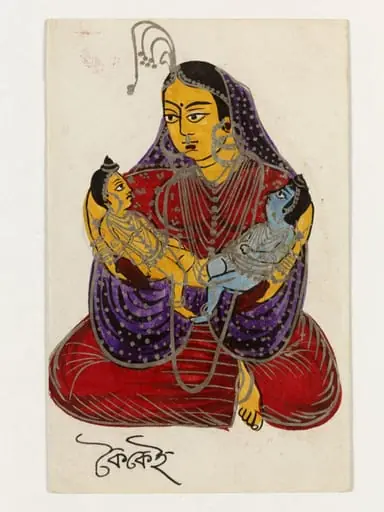
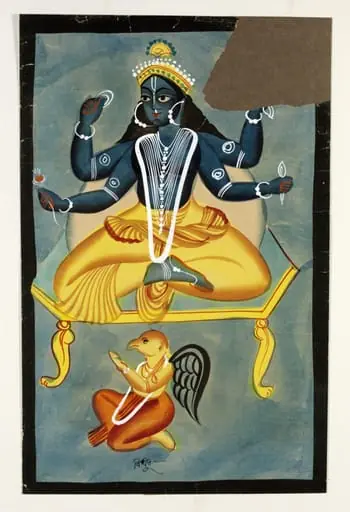
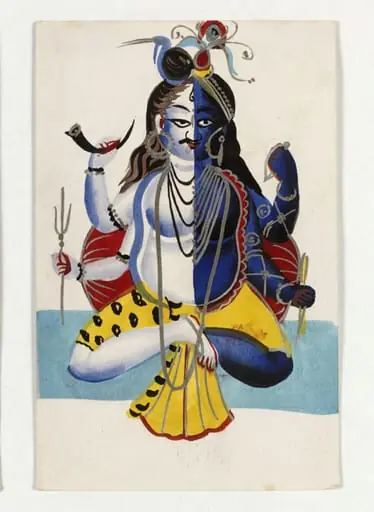
This painting presents a seated female figure identified as Kamala Kamini, executed in watercolour and metallic pigment on paper. The composition merges devotional imagery with natural motifs, a characteristic feature of its artistic tradition. The work employs bold, unmodulated hues and linear precision, reflecting conventions associated with regional painting practices of the nineteenth century.
Subject & Meaning
The central figure, Kamala Kamini, is portrayed nursing a juvenile elephant while seated on a lotus, suggesting themes of nurture and fertility. Such imagery often aligns with Hindu concepts of abundance, where deities or semi-divine figures embody generative forces. The presence of the elephant, an animal linked to rain and prosperity, reinforces associations with life-sustaining cycles.
Technique & Style
The painting adheres to the kalighat style, distinguished by its flat, vibrant colours and absence of chiaroscuro. Outlines are sharply defined, with minimal gradation, creating a graphic rather than illusionistic effect. Metallic pigments, likely tin alloy, accentuate jewellery and decorative elements, while the lotus and foliage are rendered in broad, stylised forms rather than naturalistic detail.
History & Provenance
Kalighat paintings emerged in Calcutta during the early nineteenth century, catering to pilgrims and urban patrons. This work likely originated within that context, though specific details of its creation and early ownership remain unrecorded. The medium and subject matter situate it within a broader tradition of devotional and narrative art produced for both local and visiting audiences.
Context
The painting reflects the cultural and religious milieu of colonial Bengal, where Hindu iconography intersected with popular artistic production. Works like this were often created as affordable devotional objects, blending mythological themes with accessible visual language. The kalighat style itself responded to the demands of a growing urban market, adapting traditional motifs for new viewers.
Legacy
Kalighat paintings, including this example, are recognised for their role in preserving and reinterpreting Hindu narratives during a period of social change. Their bold, economical style influenced later Indian art movements, particularly in the balance between iconographic clarity and expressive immediacy. Today, such works are studied as documents of religious practice and artistic adaptation in nineteenth-century South Asia.
Artist & collection

 Domestic Scene
 Giacomo and Cardinal Marco, investing Andrea, Abbot of San Zeno, with his Benefice
 The Nymph of Fontainebleau
 Portrait of a Woman
 Madonna and Child with Saints in the Enclosed Garden
 Venus and Minerva
 Family Group of Four on Sofa
 Wall painting from Room H of the Villa of P. Fannius Synistor at Boscoreale