Artwork
Simon van Haarlem (toegeschreven aan). Dood van Maria
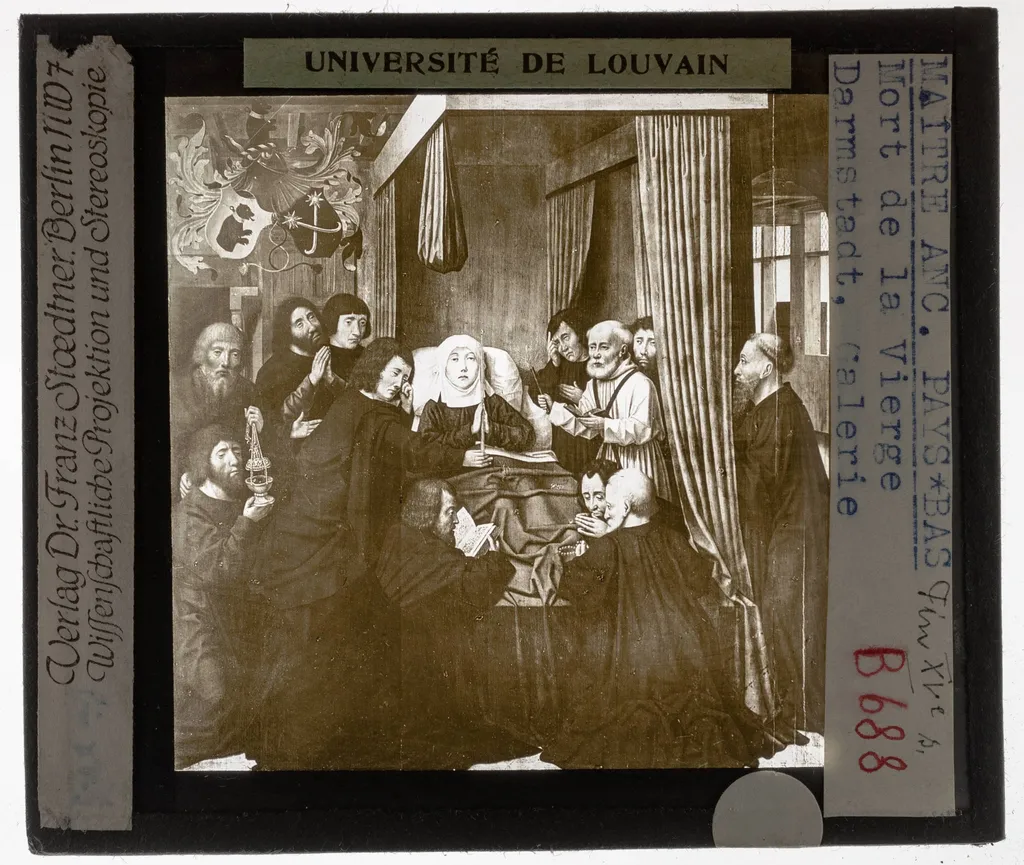
Simon van Haarlem (toegeschreven aan). Dood van Maria is an unspecified painting by the Northern Renaissance artist Unknown. It dates from 1495 and is held in the collection of the Catholic University of Leuven. The work, traditionally linked to Simon van Haarlem, depicts the death of the Virgin Mary.
About this work
Overview
The work, traditionally linked to Simon van Haarlem, depicts the death of the Virgin Mary. Executed in oil on panel around the close of the 15th century, it belongs to the Flemish Primitive tradition. The painting is presently housed in the Hessisches Landesmuseum in Darmstadt, Germany.
Subject & Meaning
The scene presents Mary reclining on a bed, her hand gently clasped by the infant Jesus. Surrounding them are several angels, some marked by subtle halos, emphasizing the sacred nature of the moment and the transition from earthly life to heavenly assumption.
Technique & Style
Rendered in the characteristic flat, linear style of early Netherlandish art, the figures display stylised, almost rigid facial features, a hallmark before the full adoption of linear perspective. Despite its age, the palette retains a vivid brightness, and the soft illumination of the interior suggests careful handling of light.
History & Provenance
Created between 1490 and 1500, the painting entered the collection of the Hessisches Landesmuseum Darmstadt, where it remains on display. Its attribution to Simon van Haarlem is based on stylistic comparison, though the original documentation is lacking.
Context
The composition reflects the devotional trends of late medieval Flanders, where the death of the Virgin—known as the Dormition—was a frequent subject for private contemplation. Such works often served as focal points for personal piety within domestic settings.
Artist & collection
 Domestic Scene
 Giacomo and Cardinal Marco, investing Andrea, Abbot of San Zeno, with his Benefice
 The Nymph of Fontainebleau
 Portrait of a Woman
 Madonna and Child with Saints in the Enclosed Garden
 Venus and Minerva
 Family Group of Four on Sofa
 Wall painting from Room H of the Villa of P. Fannius Synistor at Boscoreale
 Bernard van Orley (kopie). Heilige Familie
 Hugo van der Goes. Triptych
 Jan van Hemessen. De verloren zoon
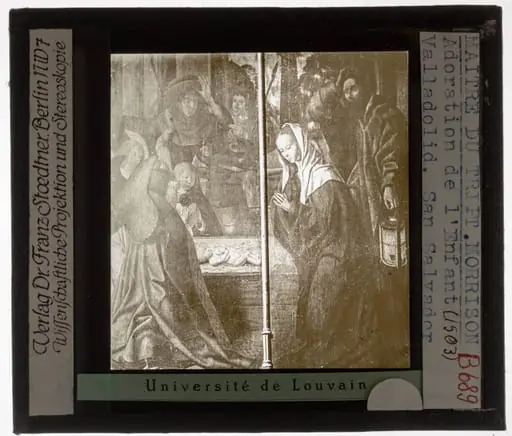 Master of the Morrison Triptych. Adoration of Christ
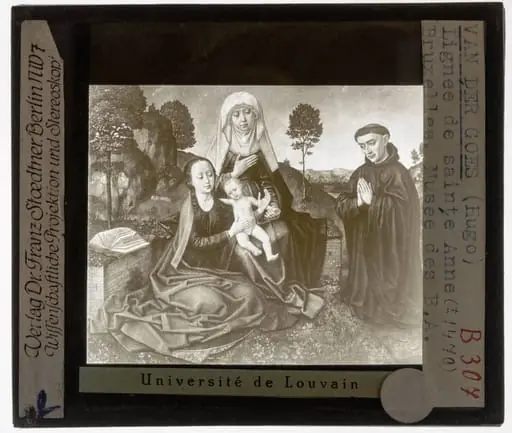 Hugo van der Goes. St Anne's with a Franciscan donor
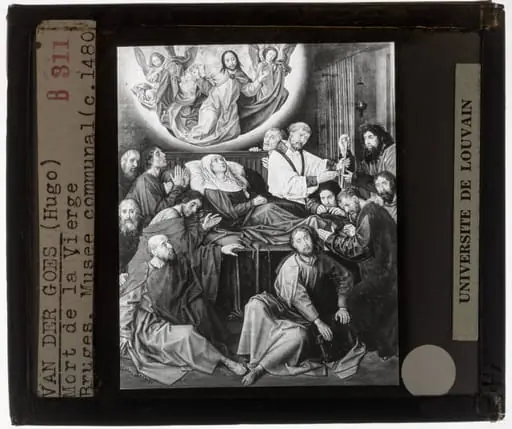 Hugo van der Goes. Death of Mary
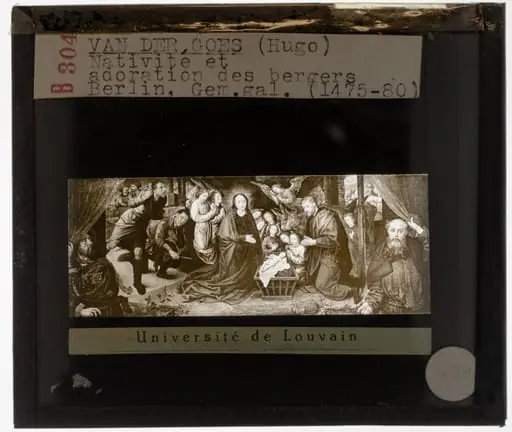 Hugo van der Goes. Kerstverhaal. Aanbidding der Herders
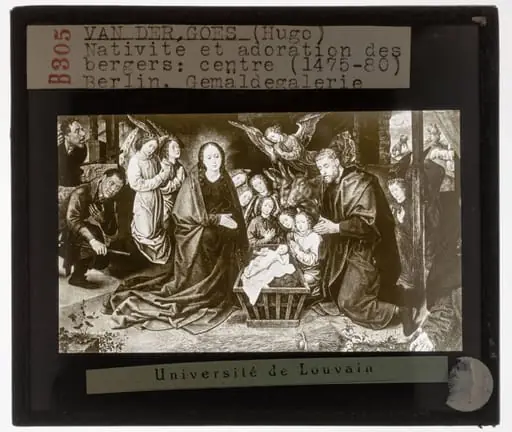 Hugo van der Goes. Kerstverhaal. Aanbidding der Herders Detail, centraal
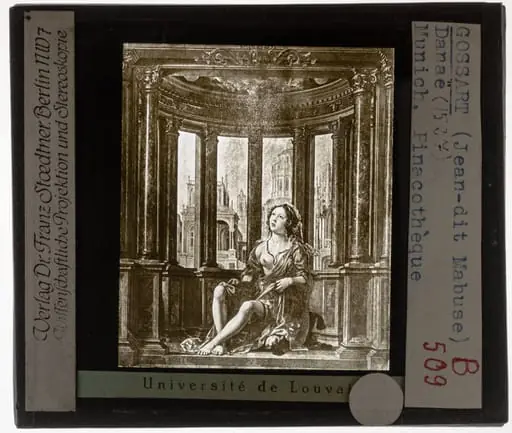 Jan Gossaert. Danaë
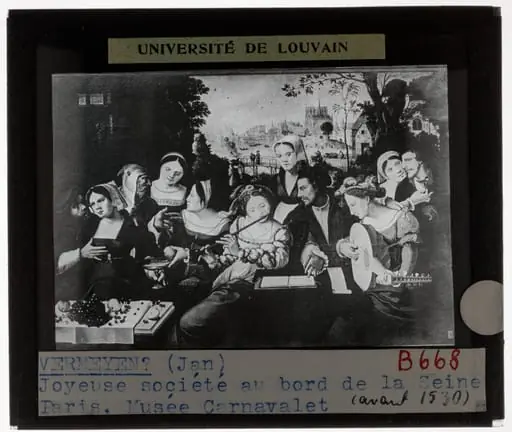 Jan Cornelis Vermeyen (onzeker). De verloren zoon tussen de courtisannes
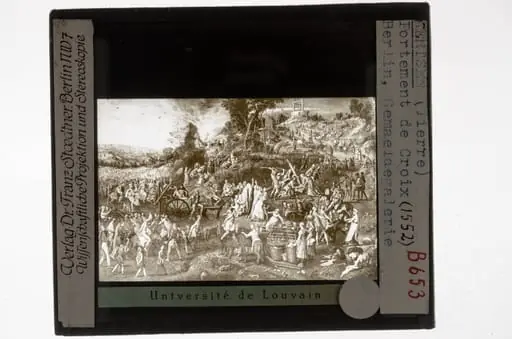 Pieter Aertsen. Crucifixion