Artwork
Sketches of Horses and Riders (recto)
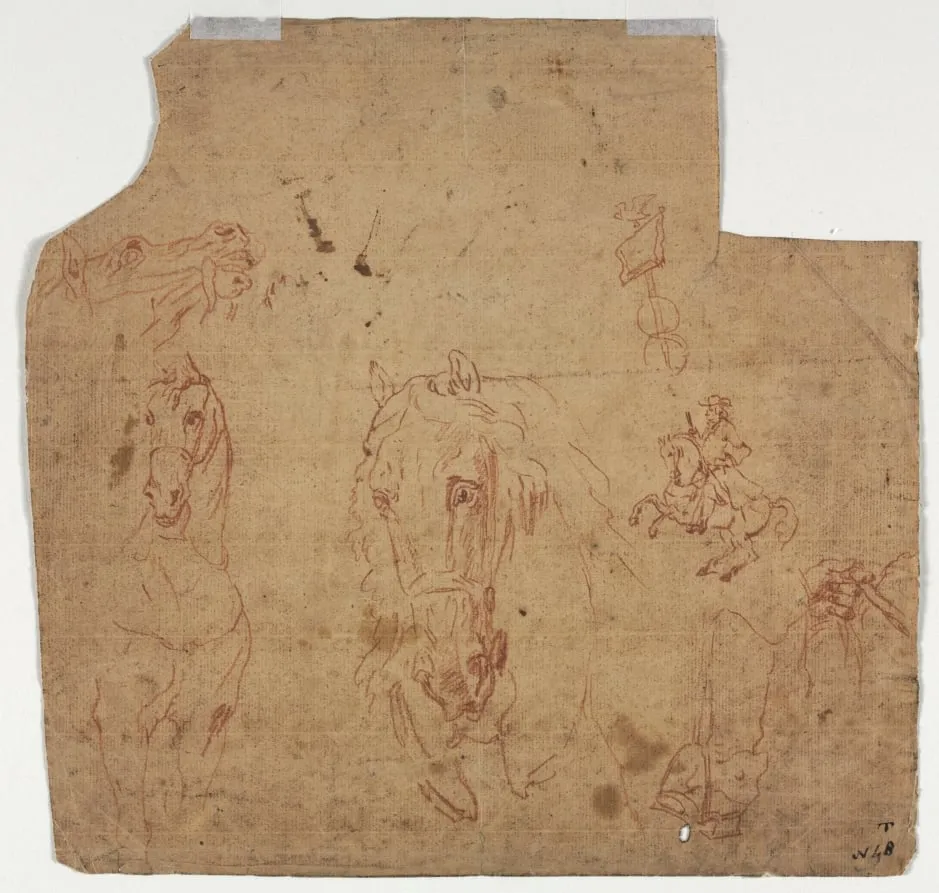
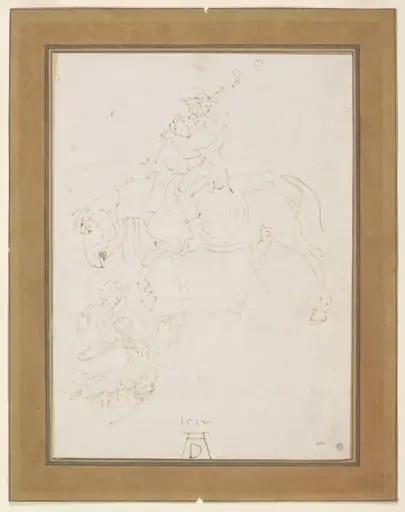
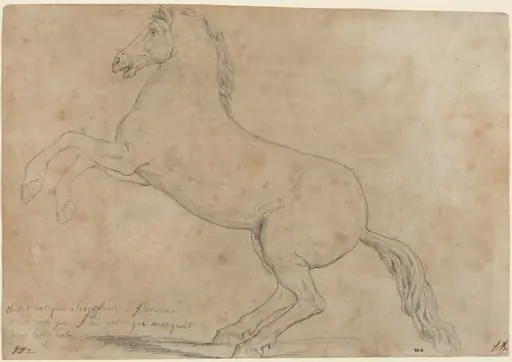
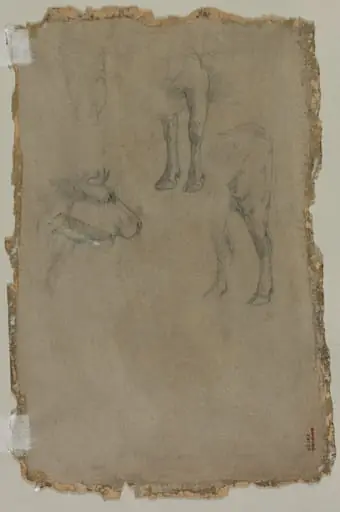
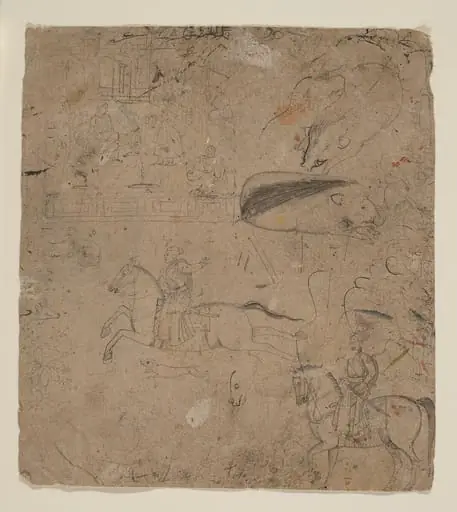
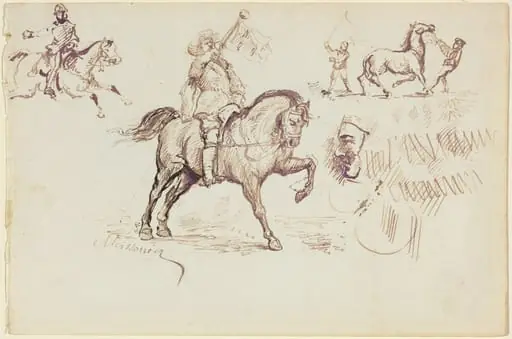
Sketches of Horses and Riders (recto) is a drawing by the Baroque artist Unknown. It dates from 1604 and is held in the collection of the Cleveland Museum of Art. A fragmented sheet of aged paper holds a series of spontaneous sketches depicting horses and riders in varying poses.
About this work
Overview
A fragmented sheet of aged paper holds a series of spontaneous sketches depicting horses and riders in varying poses. The lines, rendered in a faded brown medium, are lightly applied and show signs of wear—smudges, stains, and ink bleed suggest frequent handling. The paper’s torn edges and weathered surface indicate prolonged use, typical of working studies rather than finished compositions.
Subject & Meaning
The drawings capture fleeting moments of equine movement and rider posture: one horse stands calmly, another rears, and a third carries a figure leaning forward. A fourth figure is sketched in an unusual sideways position, possibly an experimental pose. These are not idealized scenes but observational notes, likely intended to explore motion, balance, and anatomy for later use in larger works.
Technique & Style
The artist employed a dry, economical line with minimal shading, emphasizing gesture over detail. The light, uneven strokes suggest rapid execution, possibly done en plein air or from life. The medium, likely chalk or diluted ink, has faded over time, enhancing the sketch’s ephemeral quality. The absence of background or context focuses attention entirely on form and motion.
History & Provenance
The drawing’s condition and style align with 17th-century artistic practice, where such studies were common among painters and draftsmen. Its worn state implies it was carried and reused over time, possibly in a studio or on travel. No definitive provenance is recorded, but its aesthetic and material traits suggest it originated in a European workshop of the Baroque period.
Context
In the Baroque era, artists increasingly turned to direct observation to capture dynamic movement and emotional intensity. This sketch reflects a broader trend of using quick drawings to study anatomy, posture, and action—preparatory tools for larger compositions in painting or sculpture. Similar studies survive in the notebooks of artists like Rubens and Rembrandt.
Legacy
Though unsigned and unattributed, the sketch exemplifies the quiet, essential role of preparatory work in artistic development. Its survival underscores how informal, utilitarian drawings preserved the visual thinking of past artists. Today, such fragments offer insight into the process behind grander works, revealing the labor beneath the finished image.
Artist & collection

 Domestic Scene
 Giacomo and Cardinal Marco, investing Andrea, Abbot of San Zeno, with his Benefice
 The Nymph of Fontainebleau
 Portrait of a Woman
 Madonna and Child with Saints in the Enclosed Garden
 Venus and Minerva
 Family Group of Four on Sofa
 Wall painting from Room H of the Villa of P. Fannius Synistor at Boscoreale