Artwork
Snow Alchemy by Master Geng of the Southern Tang
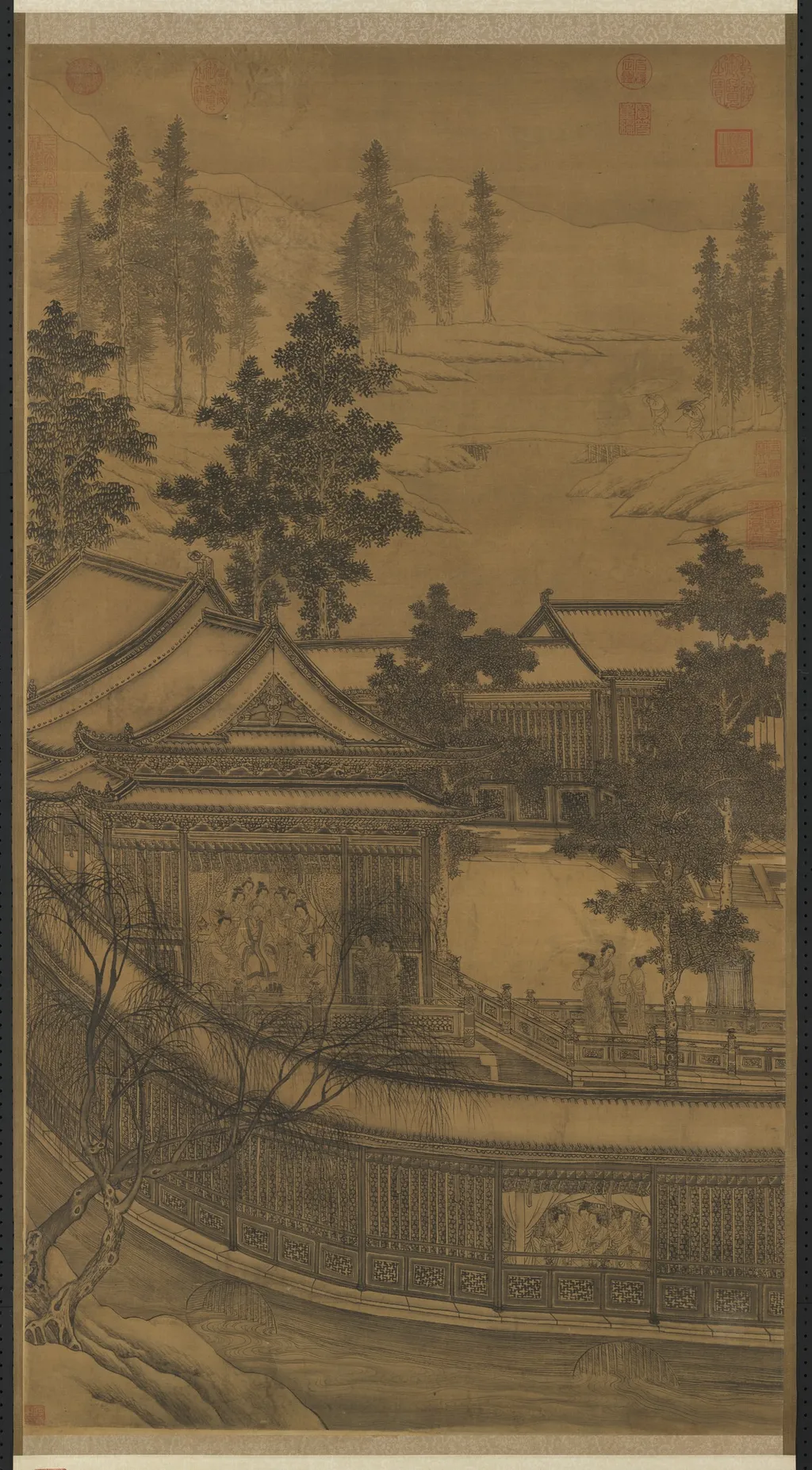
Snow Alchemy by Master Geng of the Southern Tang is an unspecified painting by Unknown. It dates from 1850 and is held in the collection of the National Palace Museum.
About this work
Overview
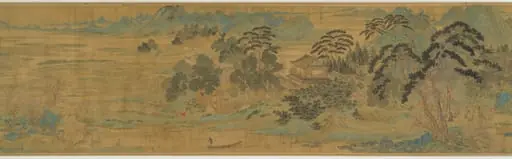
Snow Alchemy by Master Geng of the Southern Tang is a serene landscape painting characterized by a predominantly gray palette with selective red accents. The composition features a foreground tree branch, a central building, and a group of people gathered in the background, evoking a sense of tranquility.
Subject & Meaning
The subject of Snow Alchemy is a peaceful winter landscape, suggesting themes of serenity and possibly the contemplation of nature. The gathering near the building may imply a social or communal aspect amidst the serene environment.
Technique & Style
Master Geng employs a range of grays to achieve depth and dimension, complemented by strategic red accents. The painting showcases skilled use of shading and texture, reminiscent of chiaroscuro techniques, to create a pronounced atmosphere and mood.
History & Provenance
Due to the lack of specific historical records provided, detailed provenance and creation date of Snow Alchemy by Master Geng of the Southern Tang cannot be accurately described here.
Context
This work is contextualized within the artistic traditions of the Southern Tang dynasty, reflecting the period's emphasis on landscape painting and the use of monochrome or near-monochrome color schemes to convey emotional depth.
Legacy
The legacy of Snow Alchemy lies in its representation of Southern Tang dynasty's artistic values, particularly in landscape painting techniques and the evocation of mood through subtle color and shading choices, influencing subsequent Chinese landscape art.
Artist & collection

 Domestic Scene
 Giacomo and Cardinal Marco, investing Andrea, Abbot of San Zeno, with his Benefice
 The Nymph of Fontainebleau
 Portrait of a Woman
 Madonna and Child with Saints in the Enclosed Garden
 Venus and Minerva
 Family Group of Four on Sofa
 Wall painting from Room H of the Villa of P. Fannius Synistor at Boscoreale
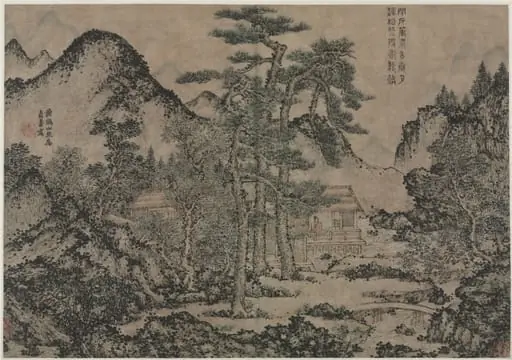 Writing Books under the Pine Trees
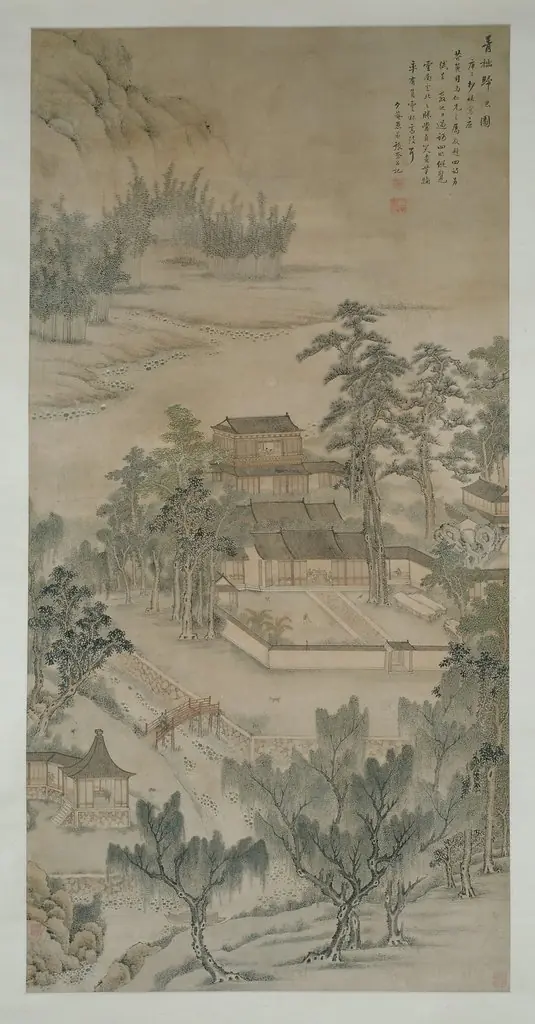 Mansion by the River
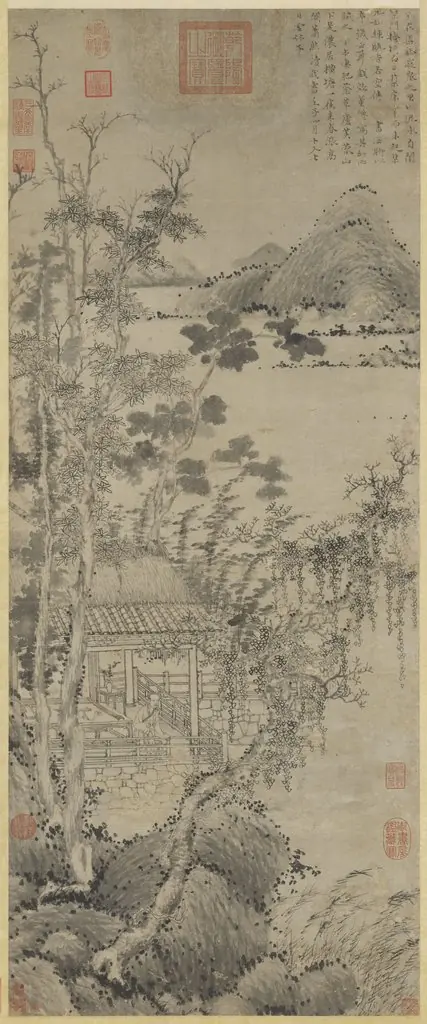 Qing Bi Pavilion
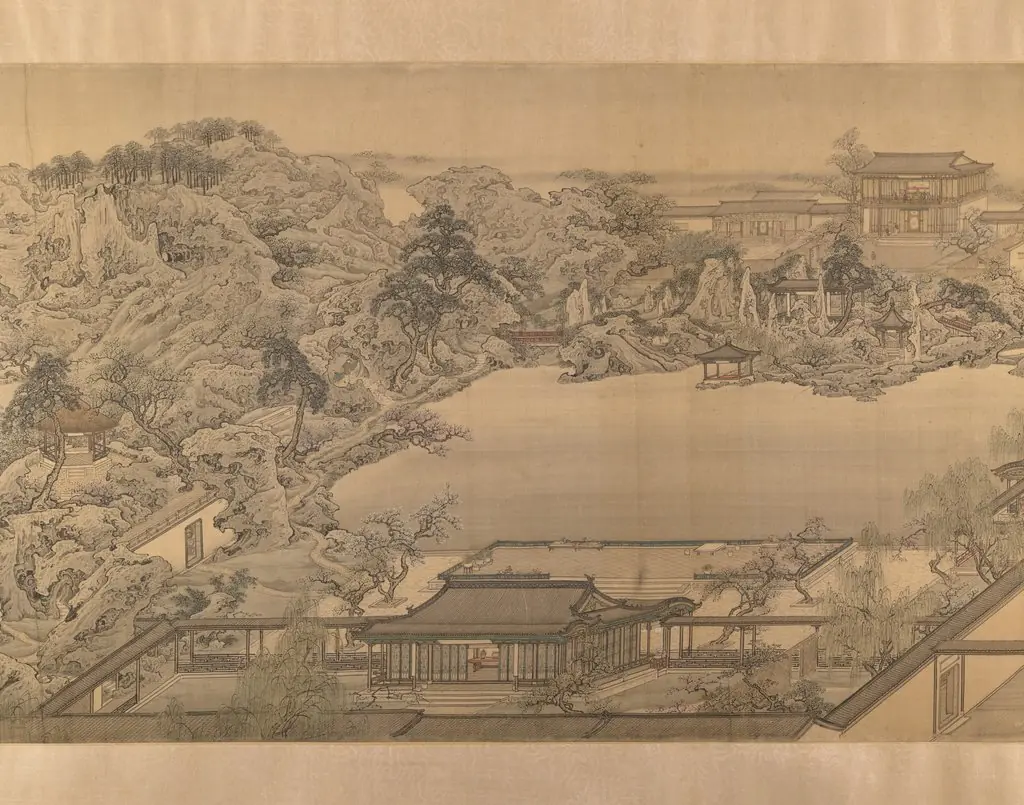 清 佚名 臨袁江瞻園圖 卷|View of a Garden Villa
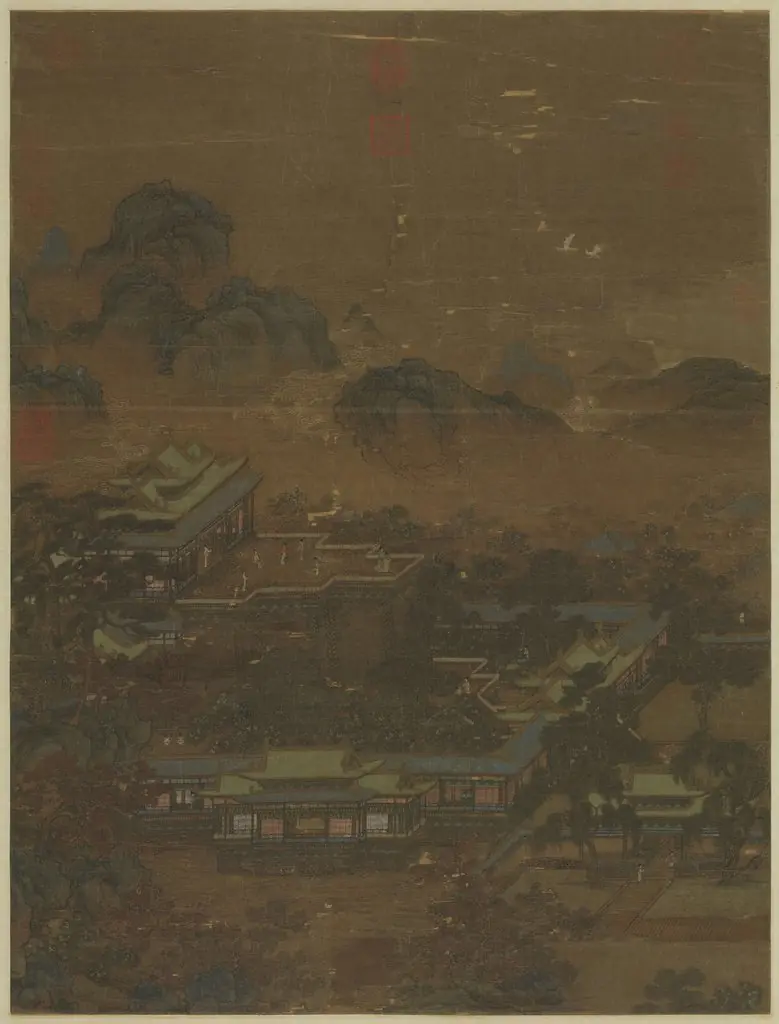 宋趙伯駒阿閣圖 軸
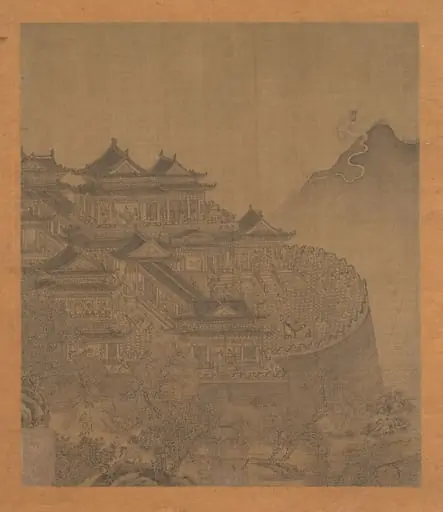 元 佚名 倣夏永 呂洞賓過岳陽樓 冊頁|明 佚名 呂洞賓過岳陽樓圖 冊頁|The Immortal Lü Dongbin Appearing over the Yueyang Pavilion
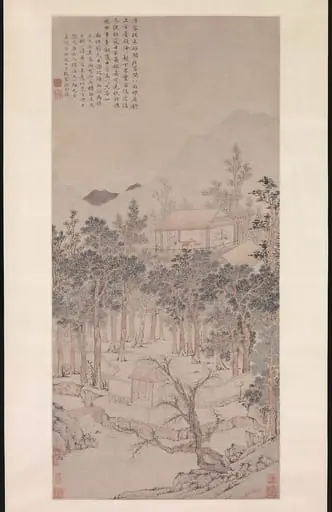 明 文徵明 樓居圖軸|Living Aloft: Master Liu's Retreat
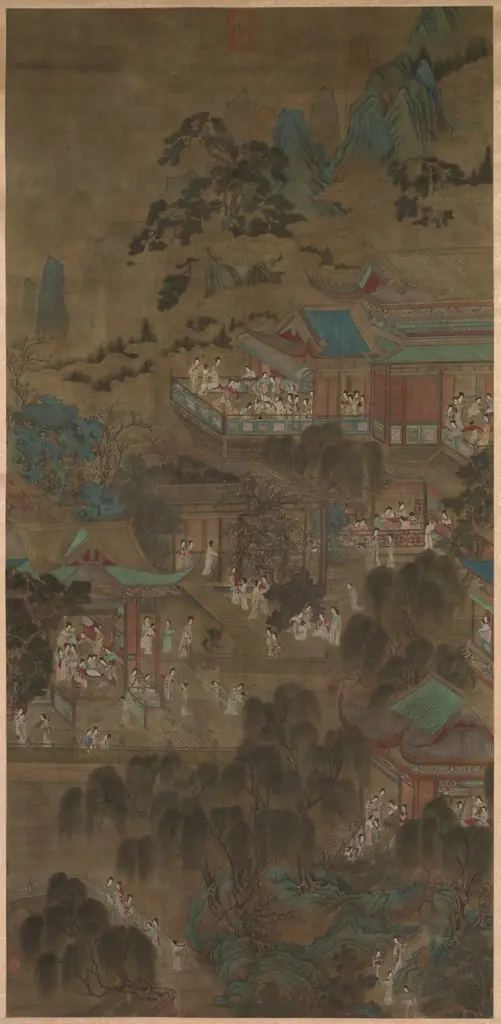 Court Ladies in the Imperial Palace
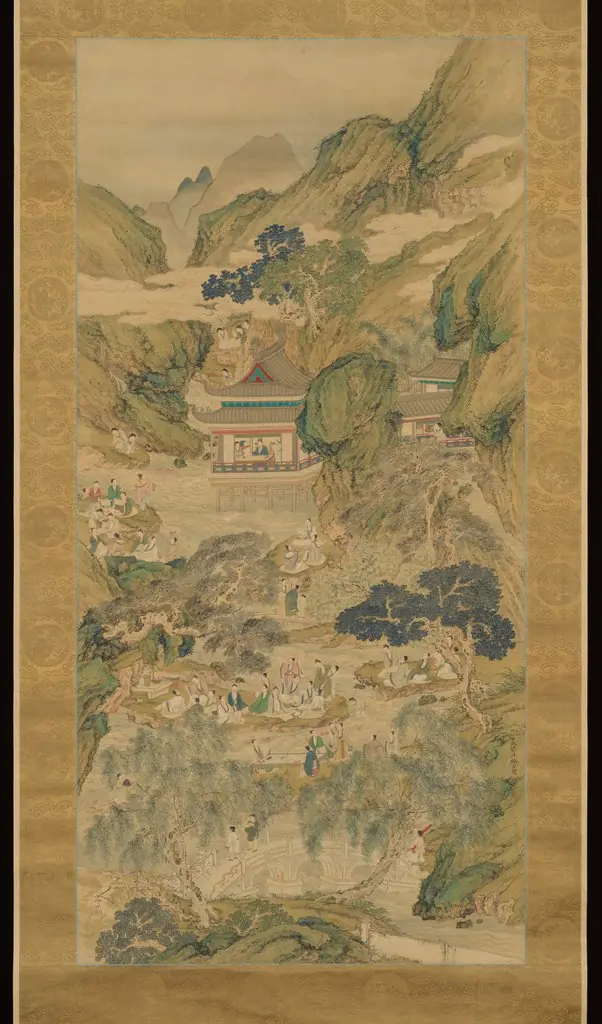 Lanting Gathering in Blue and Green 青緑蘭亭脩禊図 (Seiryoku rantei shūkei zu)
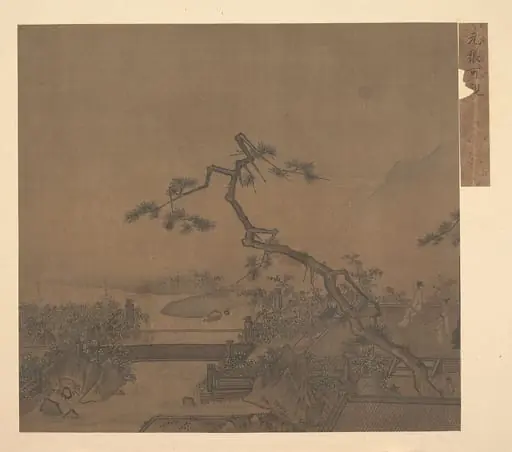 明/清 佚名 舊傳 元張可觀 月映松臺圖 冊頁|Moonlit terrace
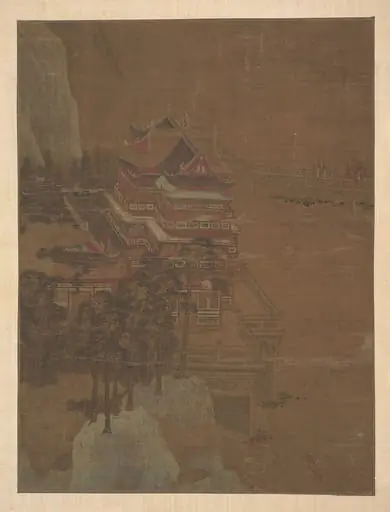 Untitled
 The Peach Blossom Spring 桃花源圖