Artwork
Sophia von Brukenthal, fiica lui Samuel von Brukenthal (în registrul inventar: Fiica guvernatorului Samuel von Brukenthal)
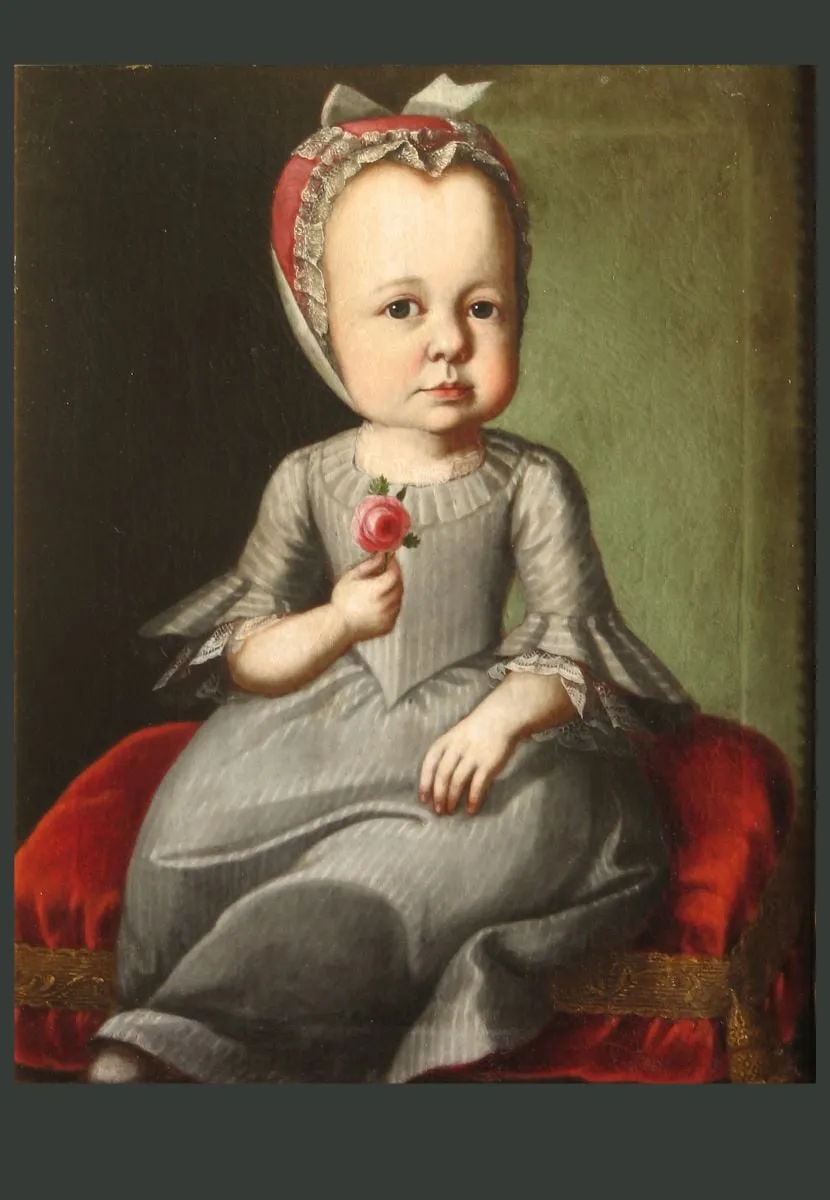
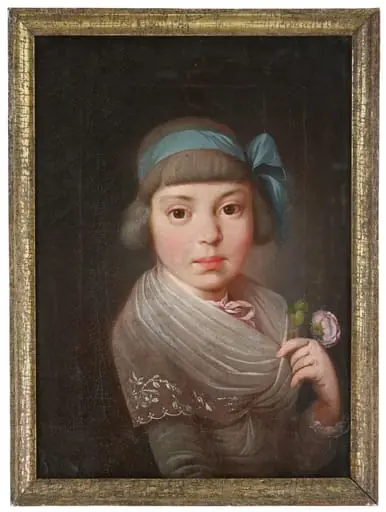
Sophia von Brukenthal, fiica lui Samuel von Brukenthal (în registrul inventar: Fiica guvernatorului Samuel von Brukenthal) is an unspecified painting by the Rococo painting artist Unknown. It dates from 1752 and is held in the collection of the Brukenthal National Museum. Painted in 1752, this portrait depicts Sophia von Brukenthal, daughter of Samuel von Brukenthal, governor of Transylvania.
About this work
The background is mostly dark, with a greenish wall behind her, and the chair she sits on is red with a gold trim.
A little girl sits in a chair, dressed in a gray dress with lace at the cuffs and neckline. She wears a red hat with a white bow and holds a single red rose in her right hand. The background is mostly dark, with a greenish wall behind her, and the chair she sits on is red with a gold trim.
This portrait was painted in 1752, showing off the soft folds of her dress and the gentle glow on her face. The lighting makes her stand out against the dark background.
Look up chiaroscuro to see how this strong light-and-dark contrast works.
Overview
Painted in 1752, this portrait depicts Sophia von Brukenthal, daughter of Samuel von Brukenthal, governor of Transylvania. The composition centers on the child seated in a red-gilt chair against a dark, green-tinted wall. Subtle lighting enhances her delicate features and the texture of her clothing, emphasizing her presence without overt grandeur. The work belongs to a tradition of aristocratic portraiture that valued quiet intimacy over ceremonial display.
Subject & Meaning
Sophia, dressed in a gray gown with lace trim and a red hat adorned with a white bow, holds a single red rose—a symbol often associated with innocence or fleeting youth. Her poised posture and restrained expression suggest the expectations placed on noble children to embody decorum. The rose, held gently in her right hand, may hint at early cultivation of virtue or the transience of childhood, common themes in 18th-century portraiture.
Technique & Style
The artist employs chiaroscuro to model the girl’s face and dress, using soft gradations of light to define form against a deep background. The folds of her gown are rendered with delicate brushwork, while the gold trim on the chair and lace details on her attire are rendered with precision. The muted palette, save for the red hat and rose, directs focus to the child’s serene expression and the tactile quality of her clothing.
History & Provenance
Commissioned during Samuel von Brukenthal’s tenure as governor, the portrait likely served to affirm family status within Transylvanian aristocracy. It remained within the Brukenthal family collection, later entering the Brukenthal National Museum in Sibiu, Romania, where it is preserved as part of the estate’s historical inventory. Its inclusion in early inventories confirms its recognized importance within the household.
Context
In mid-18th-century Transylvania, portraits of noble children were not merely personal mementos but assertions of lineage and social standing. The restrained elegance of this work reflects the influence of Central European courtly aesthetics, blending local traditions with broader Baroque conventions. Unlike overtly theatrical portraits, this image favors quiet dignity, aligning with the values of a provincial elite seeking cultural legitimacy.
Legacy
The portrait endures as a quiet testament to childhood in aristocratic circles of Habsburg-era Transylvania. Its preservation in the Brukenthal Museum offers insight into domestic life and artistic patronage beyond major capitals. While not widely known outside regional collections, it remains a significant example of intimate portraiture from a lesser-documented cultural sphere.
Artist & collection

 Domestic Scene
 Giacomo and Cardinal Marco, investing Andrea, Abbot of San Zeno, with his Benefice
 The Nymph of Fontainebleau
 Portrait of a Woman
 Madonna and Child with Saints in the Enclosed Garden
 Venus and Minerva
 Family Group of Four on Sofa
 Wall painting from Room H of the Villa of P. Fannius Synistor at Boscoreale
 Elizabeth Greenleaf
 Infantin Maria Theresa von Neapel (1772-1807)
 Hedvig Ulrika Hedengran
 Sarra de Peyster
 Louis XIV, King of France (1638-1715)
 Portrait of Glafira Zimina, a Girl from a Merchant Family
 Child with a Peach
 Portrait of Jacoba Bontemantel (1643-?)
 Portrait of Charles Joseph, Archduke of Austria (1745-1761)
 Portrait of Carl Christian Laurentius Birch
 Carlos Manuel Víctor duque de Aosta
 Bildnis eines kleinen Mädchens mit gepuderter Pagenfrisur