Artwork
Carlos Manuel Víctor duque de Aosta
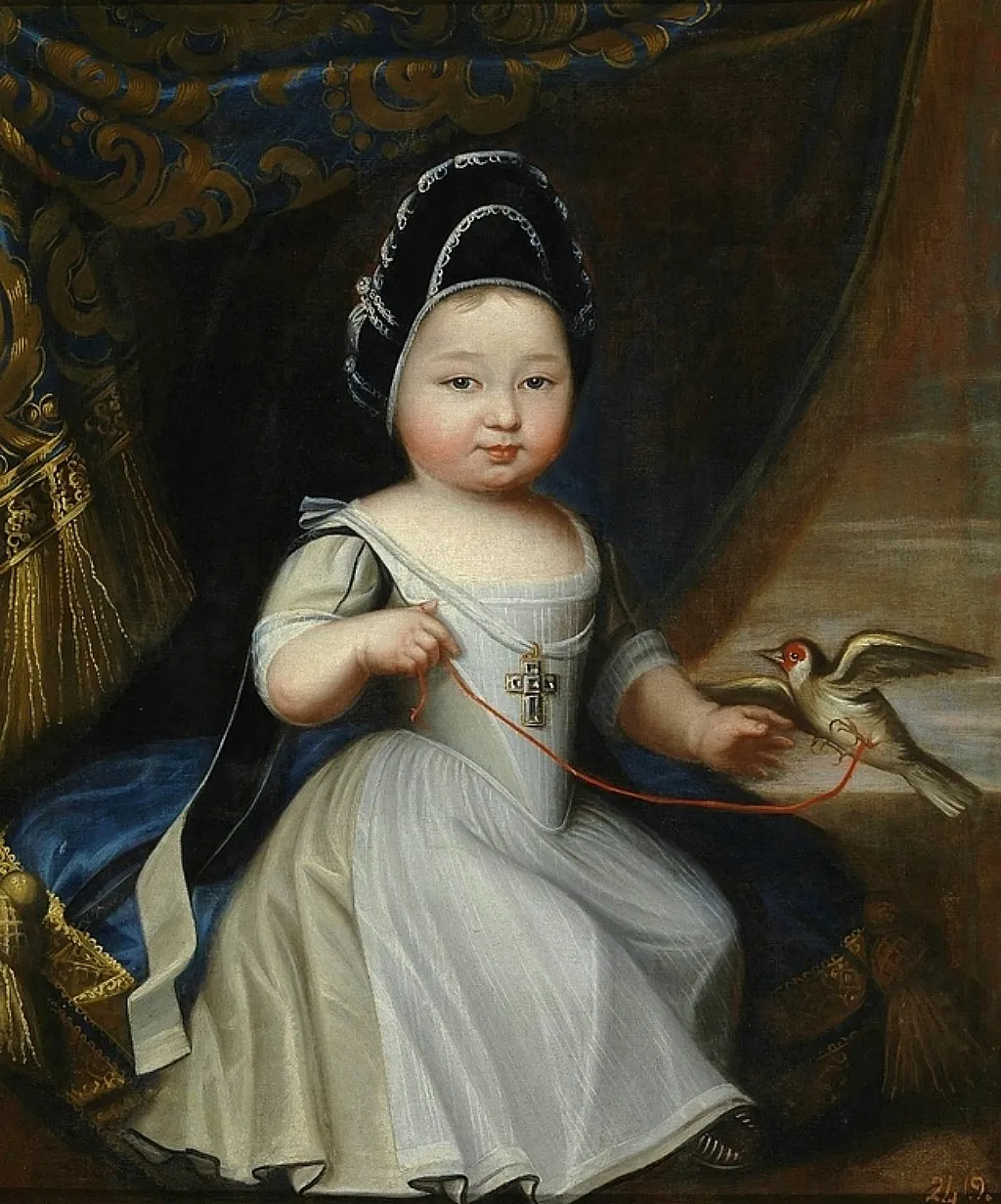
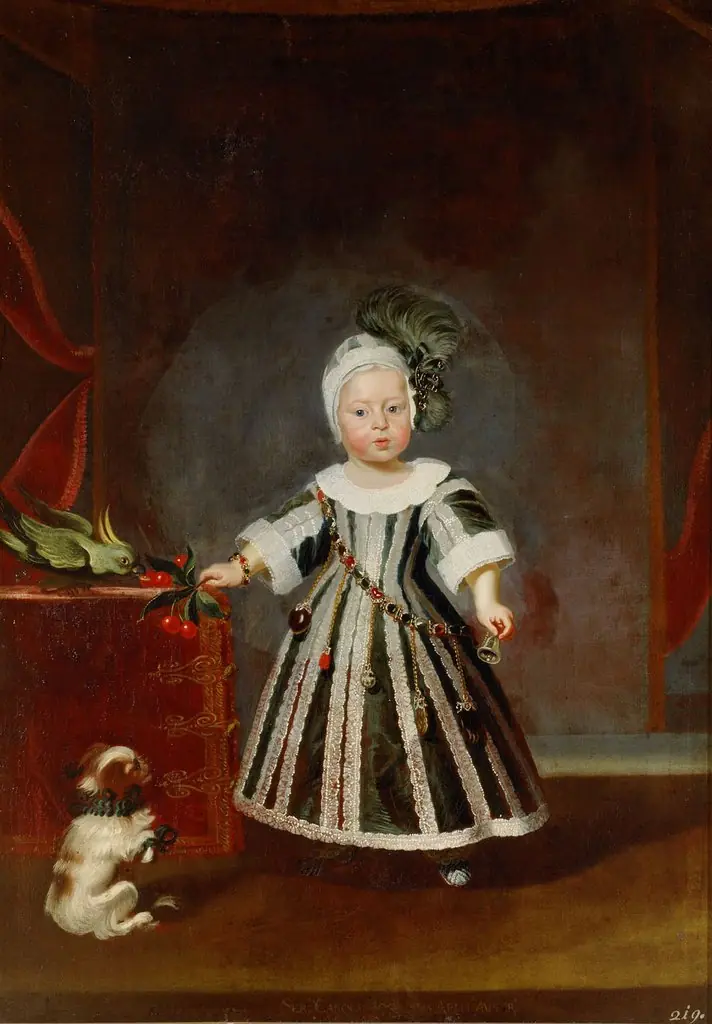
Carlos Manuel Víctor duque de Aosta is an oil painting by the Rococo painting artist Unknown. It dates from 1701 and is held in the collection of the Museo del Prado.
About this work
The child is seated on a blue cushion, with a dark background and a gold patterned fabric hanging behind them.
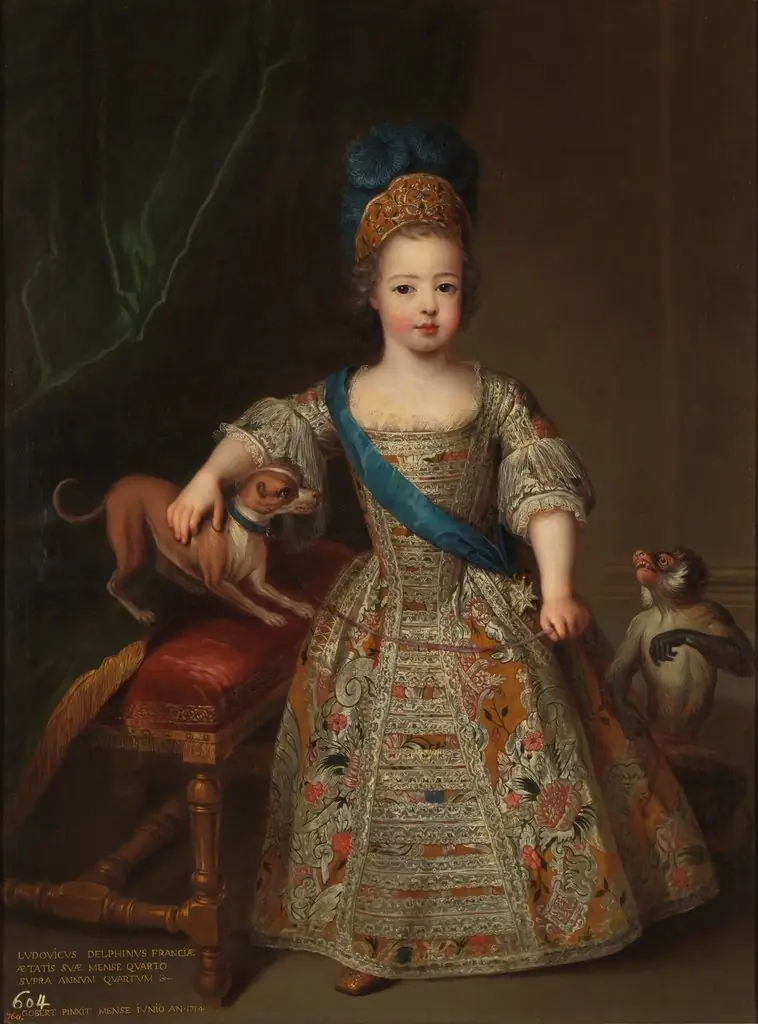
The painting features a young child in a white dress, adorned with a large cross around their neck, holding a red string attached to a bird perched on their hand. The child is seated on a blue cushion, with a dark background and a gold patterned fabric hanging behind them.
The child's attire and the ornate background suggest a formal portrait, possibly from the 18th century. The use of oil paint and the level of detail in the painting indicate a high level of skill and craftsmanship.
To learn more about the artist's use of chiaroscuro, explore the technique further.
Overview
The work is an oil painting titled “Carlos Manuel Víctor duque de Aosta.” It depicts a young child dressed in white, a prominent cross around the neck, and a red string tied to a bird that rests on the child’s hand. The figure sits on a blue cushion before a dark backdrop accented by a gold‑patterned drapery.
Subject & Meaning
The central figure is a child, likely of noble or religious background, as suggested by the white garment, the conspicuous cross, and the careful handling of the bird. The red string may symbolize a bond or devotion, while the bird could represent innocence or the soul, themes common in portraiture of the period.
Technique & Style
Executed in oil on canvas, the painting demonstrates refined handling of light and shadow, creating a subtle chiaroscuro that models the child’s form against the dark background. The detailed rendering of fabric, the luminous quality of the white dress, and the delicate treatment of the bird’s feathers reveal a high level of technical skill characteristic of 18th‑century portraiture.
Context
The composition’s formal pose, sumptuous textiles, and inclusion of religious iconography align with aristocratic portrait conventions of the late Baroque and early Rococo periods. Such works often served to affirm lineage, piety, and social status within courtly or ecclesiastical circles.
Legacy
While specific information about the painting’s provenance remains limited, its careful execution and thematic content provide insight into the visual language used to convey youth, virtue, and noble identity in European art of the era.
Artist & collection

 Domestic Scene
 Giacomo and Cardinal Marco, investing Andrea, Abbot of San Zeno, with his Benefice
 The Nymph of Fontainebleau
 Portrait of a Woman
 Madonna and Child with Saints in the Enclosed Garden
 Venus and Minerva
 Family Group of Four on Sofa
 Wall painting from Room H of the Villa of P. Fannius Synistor at Boscoreale
 Infantin Maria Theresa von Neapel (1772-1807)
 Marie-Louise de France (1728-1733), dite Madame Louise / Madame Troisième
 Louis XIV, King of France (1638-1715)
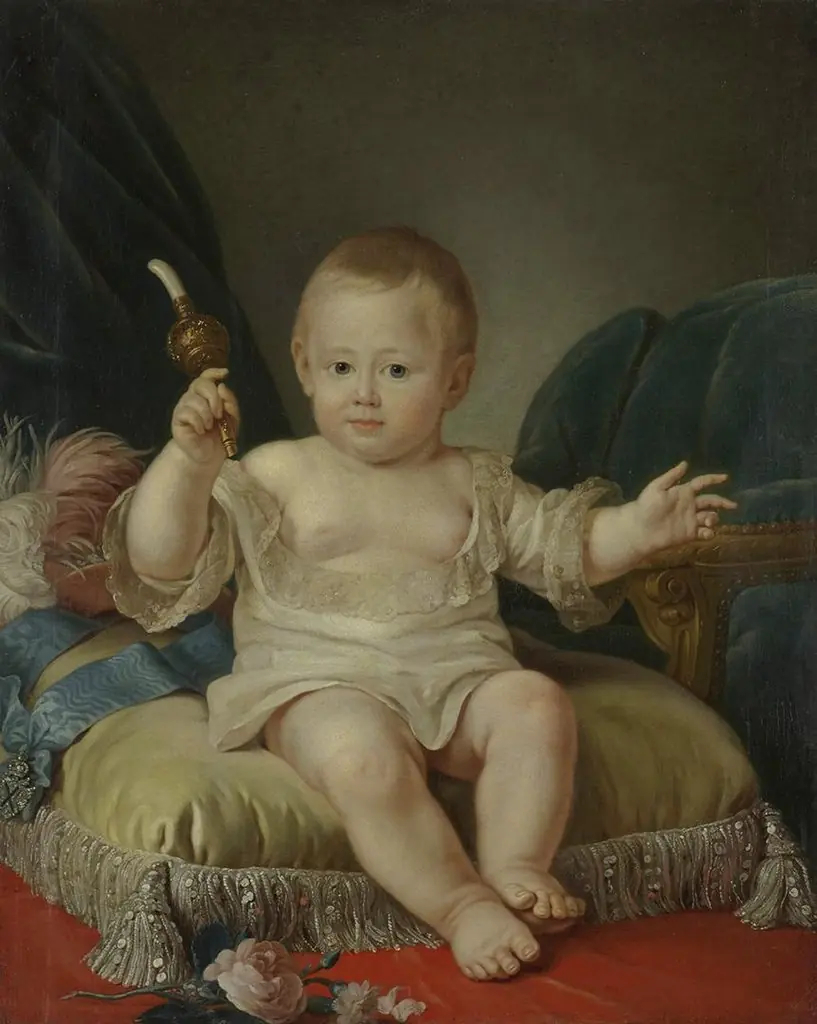 Portrait of Grand Duke Alexander Pavlovich as a Child
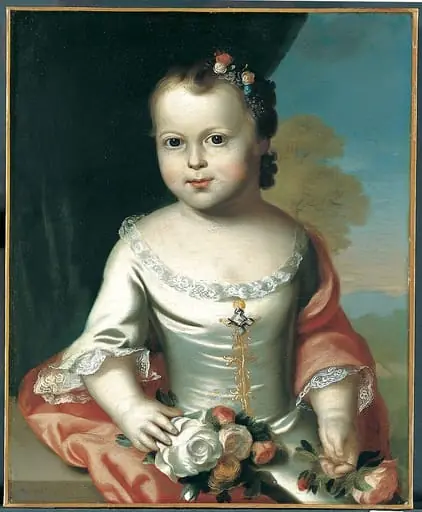 Elizabeth Greenleaf
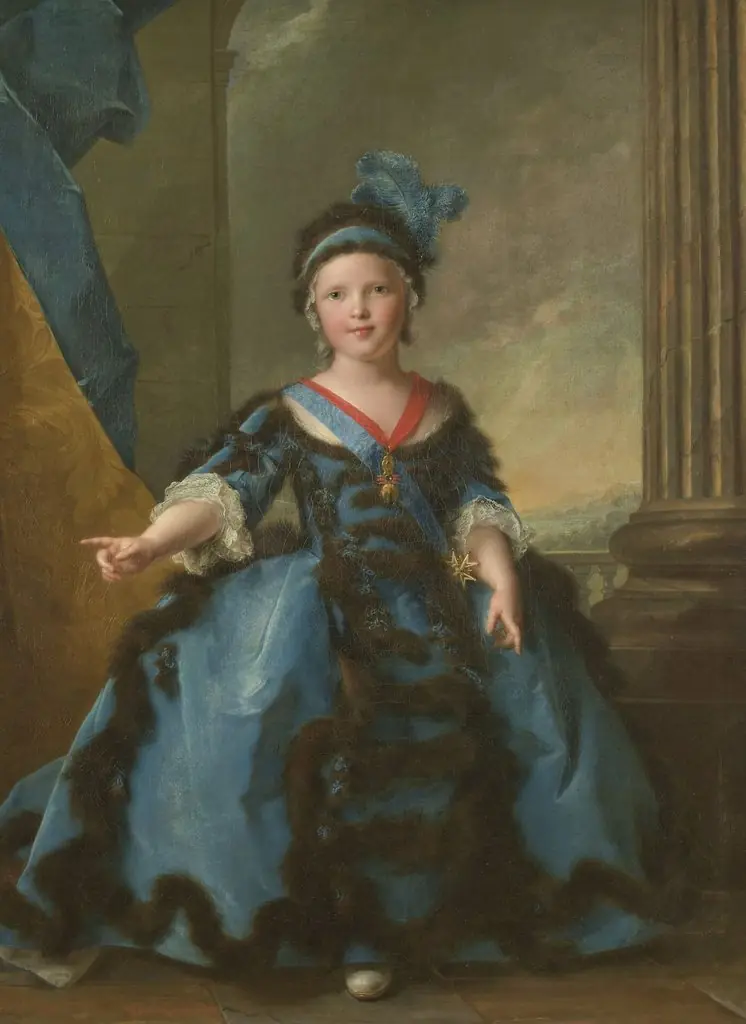 Louis-Joseph-Xavier de France, Duke of Burgundy (1751–1761), son of Louis, Dauphin of France
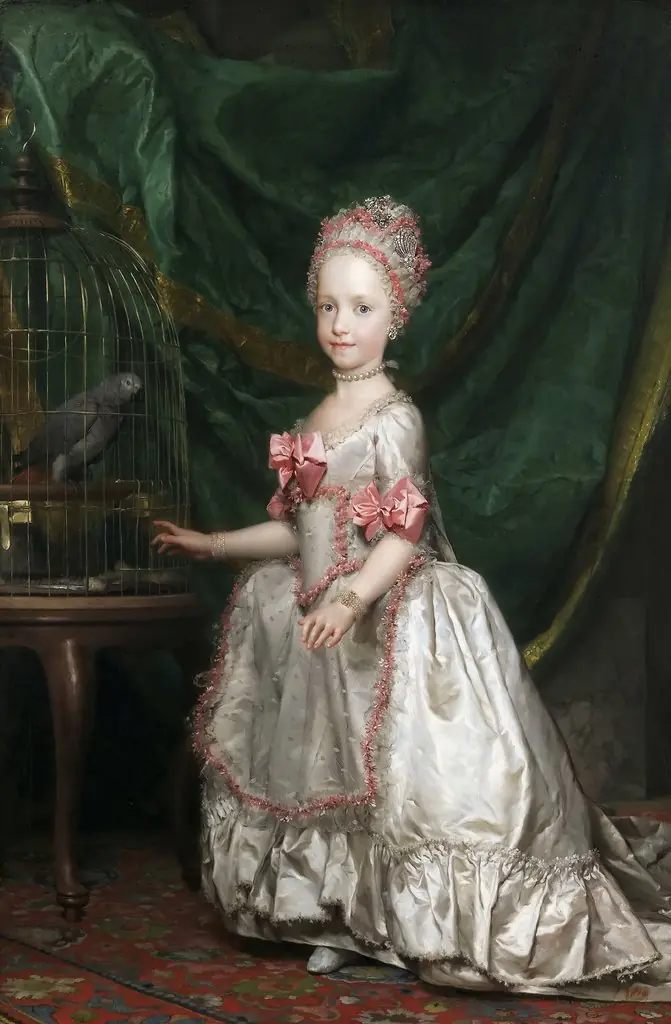 The Archduchess Maria Teresa of Austria
 Portrait of Jacoba Bontemantel (1643-?)
 Portrait of Anna Bogusławska née Linowska (1734–1762)
 Portrait of Charles Joseph, Archduke of Austria (1745-1761)
 Hedvig Ulrika Hedengran
 The Young Louis XV