Artwork
Spiegel Menslicher Behaltnis: The Virgin Mary Overcoming a Devil
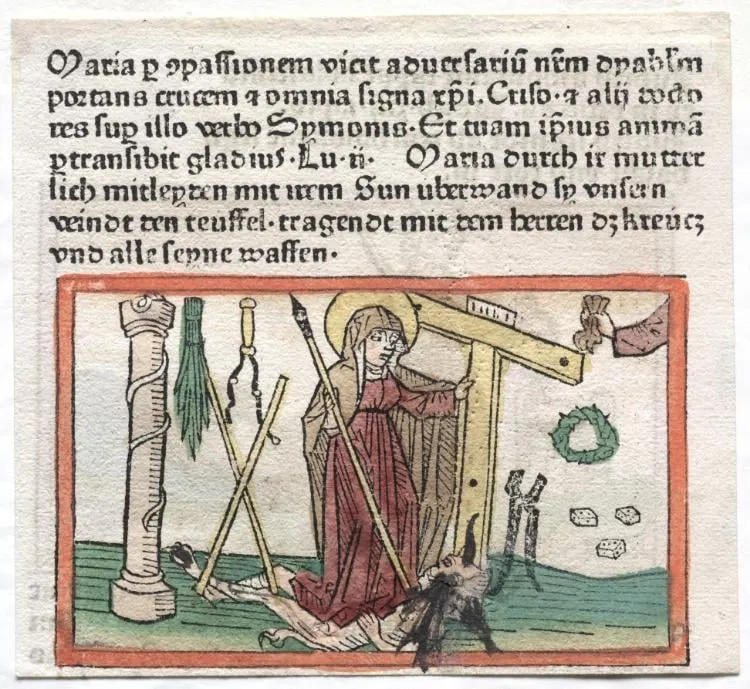
Spiegel Menslicher Behaltnis: The Virgin Mary Overcoming a Devil is a print by the Renaissance artist Unknown. It dates from 1404 and is held in the collection of the Cleveland Museum of Art. This woodcut depicts the Virgin Mary triumphing over a demonic figure with a serpentine tail.
About this work
Overview
The composition centers Mary in a red robe, standing over the fallen entity, while symbolic objects—cross, spear, wreath—surround her.
This woodcut depicts the Virgin Mary triumphing over a demonic figure with a serpentine tail. Rendered in flat, unmodulated colors and rigid forms, the image reflects early Northern Renaissance printmaking conventions. The composition centers Mary in a red robe, standing over the fallen entity, while symbolic objects—cross, spear, wreath—surround her. Text inscribed around the image reinforces the narrative of spiritual victory.
Subject & Meaning
The image illustrates a theological allegory in which the Virgin Mary, as the New Eve, defeats the devil symbolized by the serpent-tailed figure. The cross and spear signify divine authority and judgment, while the wreath may represent victory or eternal life. The fallen devil, stripped of power, echoes biblical passages describing Mary’s role in the redemption narrative through her obedience.
Technique & Style
Executed as a woodcut, the print employs bold outlines and minimal shading, characteristic of early 16th-century Northern European printmaking. Forms are stylized and static, lacking naturalistic perspective or anatomical fluidity. The limited palette—predominantly red, greenish-blue, and black—enhances symbolic clarity over realism, aligning with devotional imagery meant for mass reproduction and moral instruction.
History & Provenance
The print likely originated in the German-speaking regions during the early Reformation period, when devotional imagery was widely circulated. Its textual inscriptions suggest a connection to popular religious pamphlets or broadsheets. Though its exact origin and printer remain unconfirmed, similar compositions appear in collections from southern Germany and the Low Countries, indicating regional dissemination.
Context
Created amid religious upheaval, the image responds to contemporary debates over Marian devotion. While Protestant reformers questioned the veneration of saints, Catholic communities upheld Mary’s intercessory role. This print served as a visual affirmation of her spiritual supremacy, aligning with broader traditions of Marian iconography that drew from apocryphal and liturgical sources.
Legacy
Though not widely reproduced in later centuries, the print exemplifies how early print media translated theological concepts into accessible imagery. Its stylistic simplicity and symbolic clarity influenced subsequent devotional prints, particularly in regions where literacy was limited. It remains a tangible artifact of how religious narratives were visually codified during the transition from medieval to early modern visual culture.
Artist & collection

 Domestic Scene
 Giacomo and Cardinal Marco, investing Andrea, Abbot of San Zeno, with his Benefice
 The Nymph of Fontainebleau
 Portrait of a Woman
 Madonna and Child with Saints in the Enclosed Garden
 Venus and Minerva
 Family Group of Four on Sofa
 Wall painting from Room H of the Villa of P. Fannius Synistor at Boscoreale
 The Crucifixion with Saint Mary Magdalene
 Adam and Eve
 Descent from the Cross
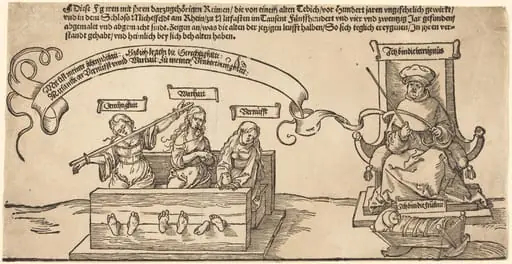 Justice, Truth and Reason in the Stocks with the Seated Judge and Sleeping Piety
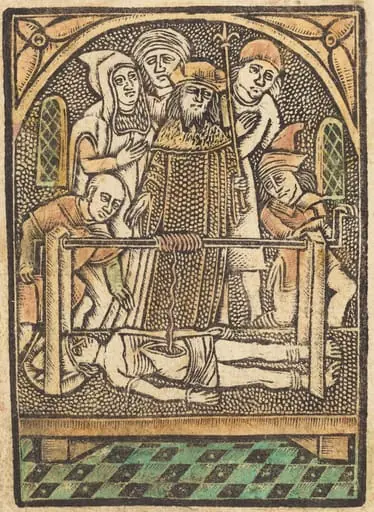 Saint Erasmus
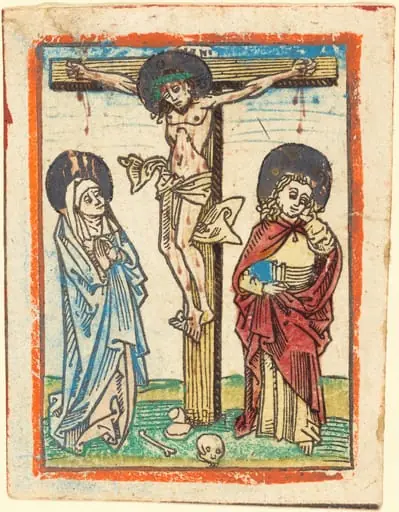 Christ on the Cross
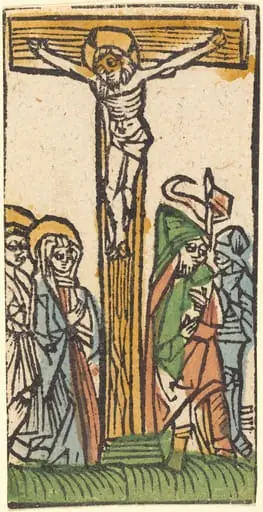 The Crucifixion
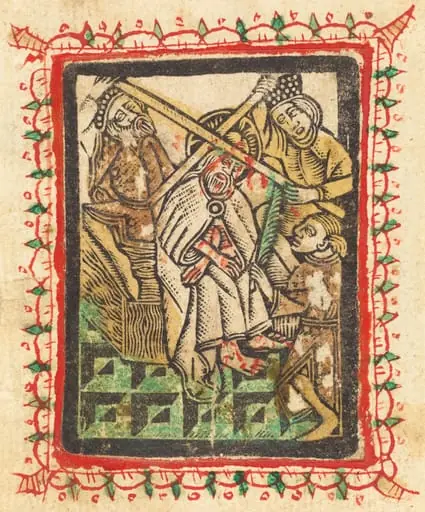 Christ Crowned with Thorns
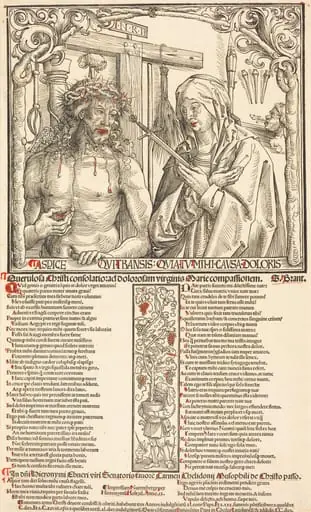 The Man of Sorrows and Mater Dolorosa
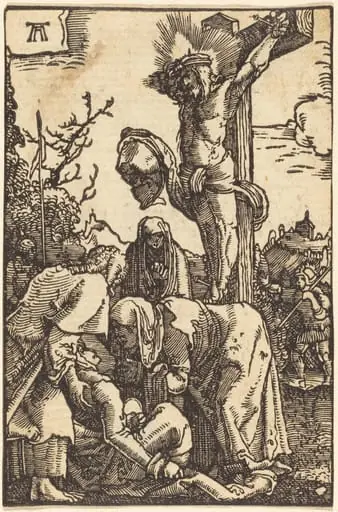 Christ on the Cross
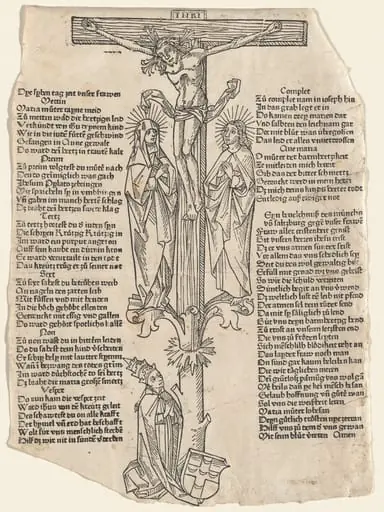 Christ on the Cross with Pope Pius II
 The Flagellation in the Presence of Mary