Artwork
Saint Erasmus
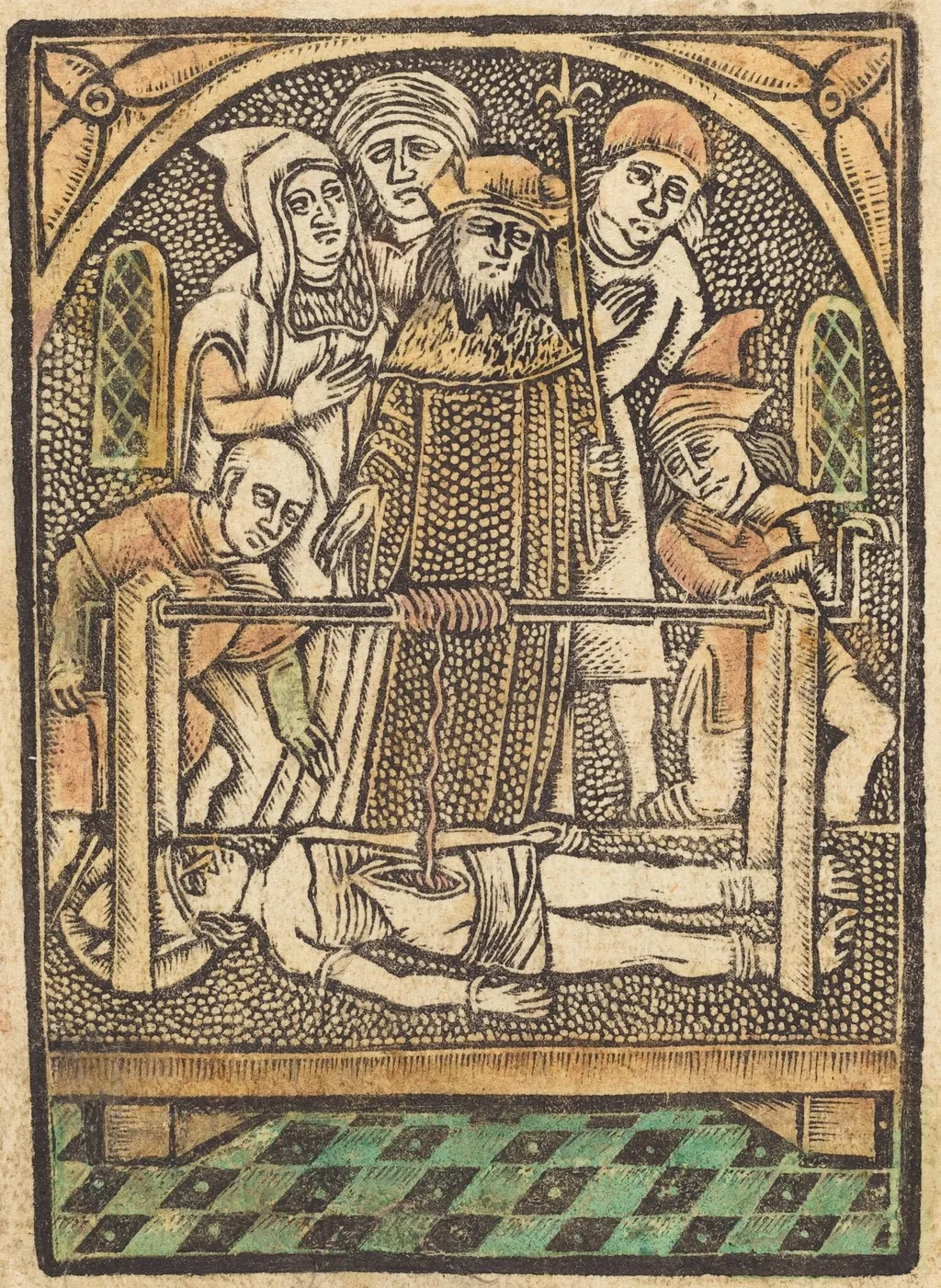
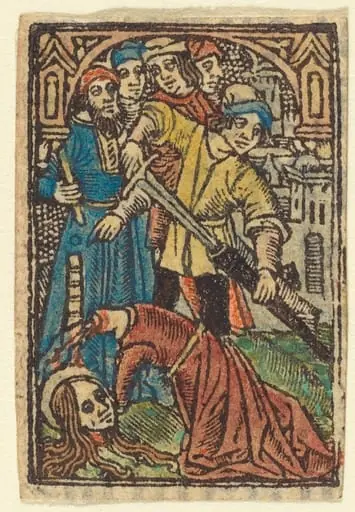
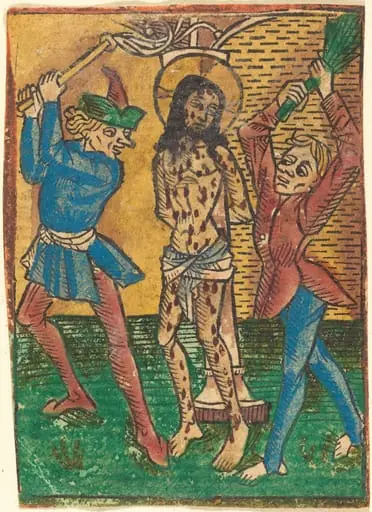
Saint Erasmus is a paint print by the Renaissance artist German 15th Century. It dates from 1475 and is held in the collection of the National Gallery of Art. This 15th-century print depicts a saint, likely Erasmus, in a straightforward composition.
About this work
You can learn more about this style by looking into the technique: chiaroscuro.
You see a saint, likely Erasmus, in a simple setting.
He's dressed in traditional clothing.
The artist used a metalcut technique and added colors by hand.
This painting is interesting because it's from the 15th century.
The hand-colored parts, like the green and yellow, make it stand out.
It's not very big, but the details are still clear.
You can learn more about this style by looking into the technique: chiaroscuro.
Overview
This 15th-century print depicts a saint, likely Erasmus, in a straightforward composition. Created using the metalcut technique, it features hand-applied colors.
Subject & Meaning
The figure is dressed in traditional attire, suggesting a representation rooted in historical or devotional context. The identity of the saint as Erasmus is inferred from the visual elements.
Technique & Style
The metalcut process was used to produce the print, with colors added by hand in green, yellow, and red. The application of chiaroscuro, an artistic technique using strong contrasts between light and dark, contributes to the visual effect.
Context
The print's creation in the 15th century situates it within the early history of printmaking, a period of significant development in artistic techniques and technologies.
Artist & collection

Artist
This 15th-century German artist carved vivid religious scenes into metal and wood, then hand-painted them in bright, symbolic colors.

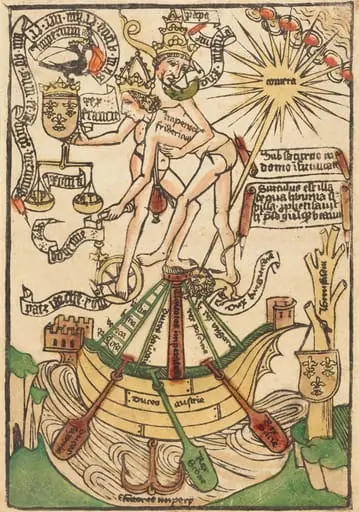 Allegory of the Meeting of Pope Paul II and Emperor Frederick III
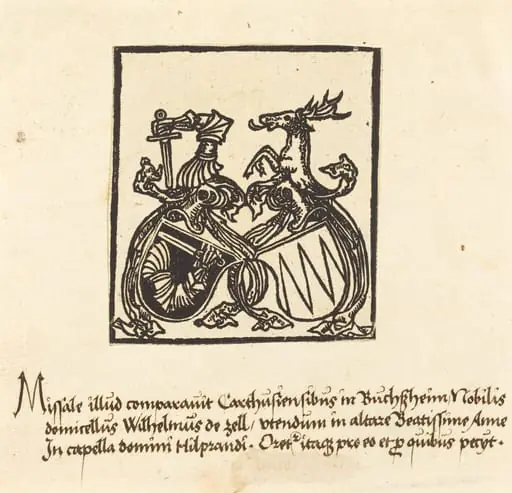 Bookplate of Wilhelm von Zell
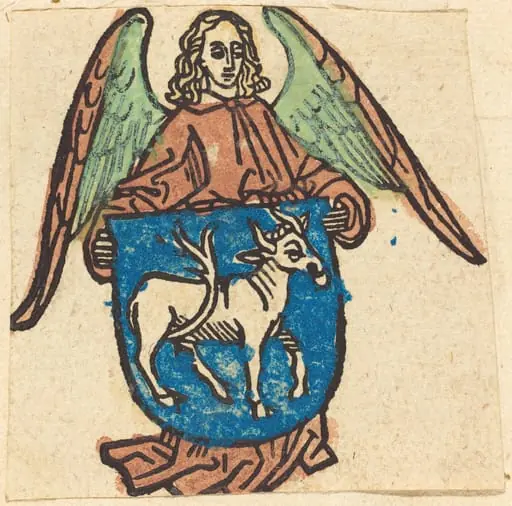 Bookplate of Hilprand Brandenburg of Bibrach
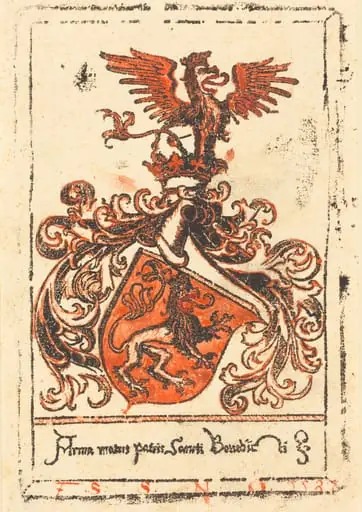 Bookplate of the Abbey of Ottobeuren
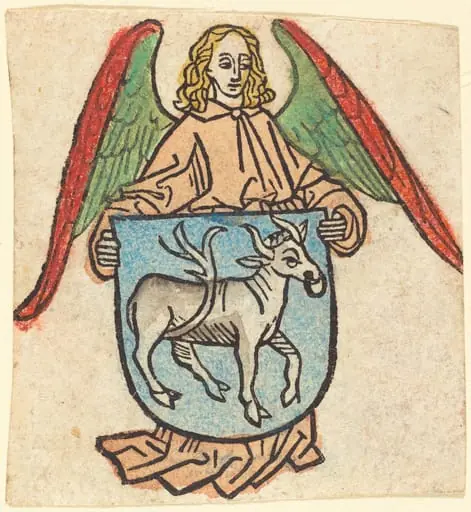 Bookplate of Hilprand Brandenburg of Bibrach
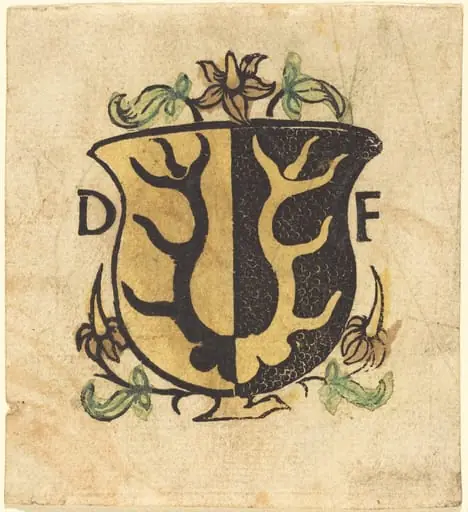 Bookplate of Dominicus Frauenfelder
![Studies for Six Figures (sheet from a model book) [recto], by German 15th Century](https://artifactworldgallery.com/img/german-15th-century--studies-for-six-figures-sheet-from-a-model-book-recto--4837429e0755bc3f-w320.webp) Studies for Six Figures (sheet from a model book) [recto]
Studies for Six Figures (sheet from a model book) [recto]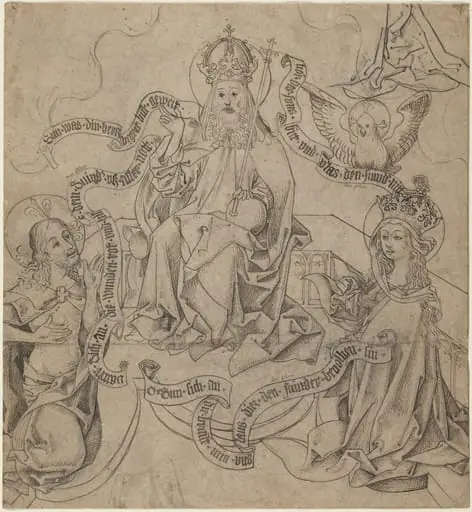 Christ and Mary Interceding with God the Father