Artwork
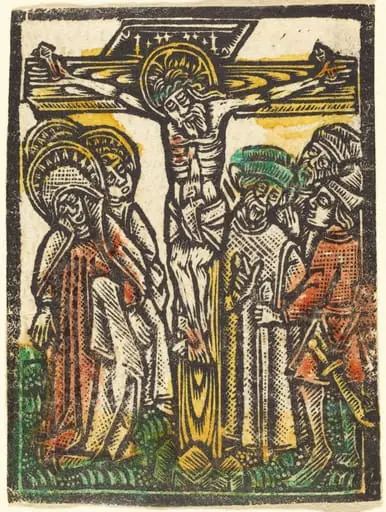
The Crucifixion
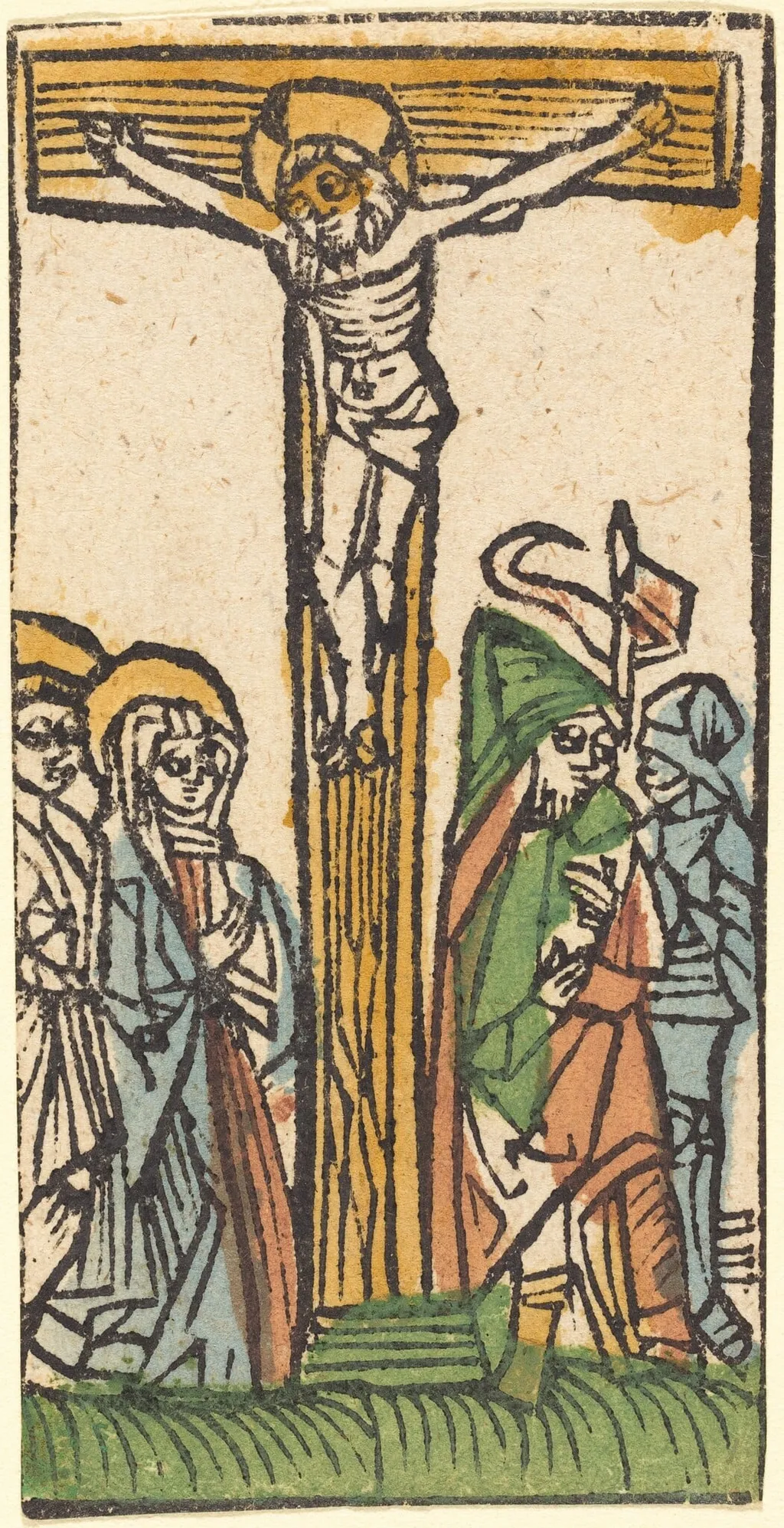
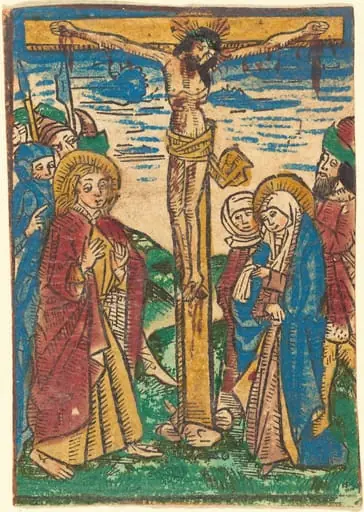
The Crucifixion is an ink print by the Renaissance artist German 15th Century. It dates from 1500 and is held in the collection of the National Gallery of Art.
About this work
Overview
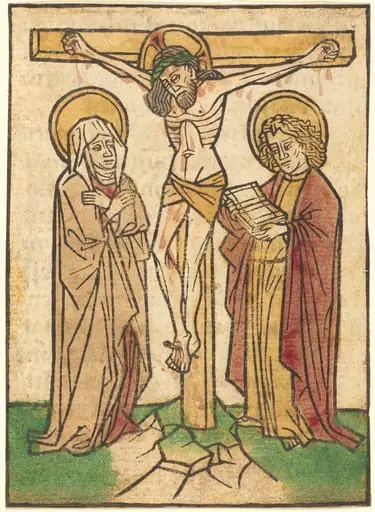
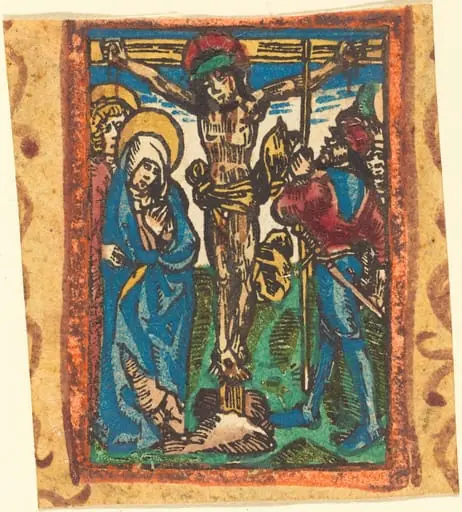
The work is a hand‑colored woodcut fragment depicting the crucifixion of a naked figure on a cross, modestly draped with a small cloth. Beneath the cross stand two attendants: one clothed in blue and holding a staff, the other in green and orange, bearing a spear and a flag. The background consists of a plain yellow sky and a strip of green ground.
Subject & Meaning
The central figure represents the Christian narrative of the crucifixion, a focal point of devotion and theological reflection. The accompanying figures likely symbolize the Roman soldiers or witnesses, their staffs and weapons underscoring the violence of the event, while the flag may denote triumph over death, a common motif in devotional imagery.
Technique & Style
Carved from a wood block, the image was printed and subsequently colored by hand using blue, green, yellow, and brown pigments. The sharp, incised lines and flat areas of color are characteristic of early printmaking, allowing multiple reproductions while preserving a graphic clarity that emphasizes the starkness of the scene.
History & Provenance
The piece exists as a fragment, indicating it was once part of a larger composition or series. Its hand‑colored woodcut format places it within the tradition of early modern religious prints, which were widely circulated for private devotion and instruction. Specific details of its origin or ownership remain undocumented.
Artist & collection

Artist
This 15th-century German artist carved vivid religious scenes into metal and wood, then hand-painted them in bright, symbolic colors.

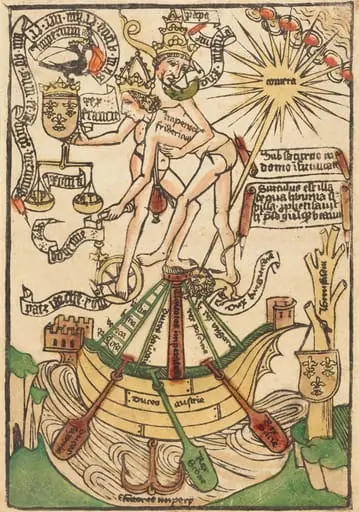 Allegory of the Meeting of Pope Paul II and Emperor Frederick III
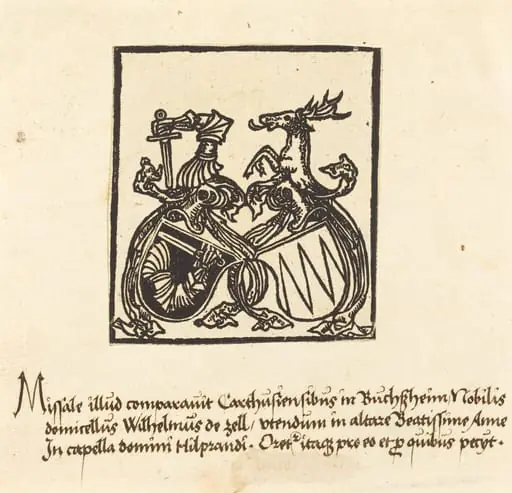 Bookplate of Wilhelm von Zell
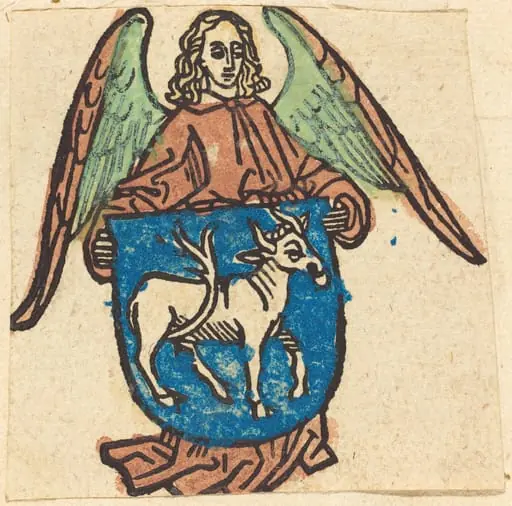 Bookplate of Hilprand Brandenburg of Bibrach
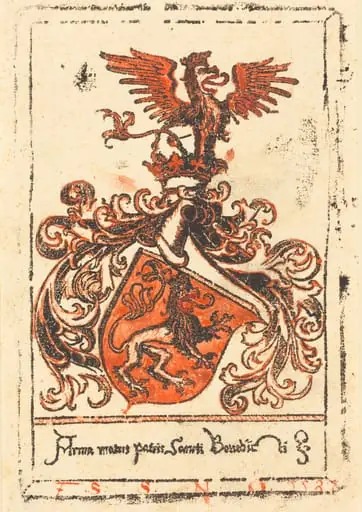 Bookplate of the Abbey of Ottobeuren
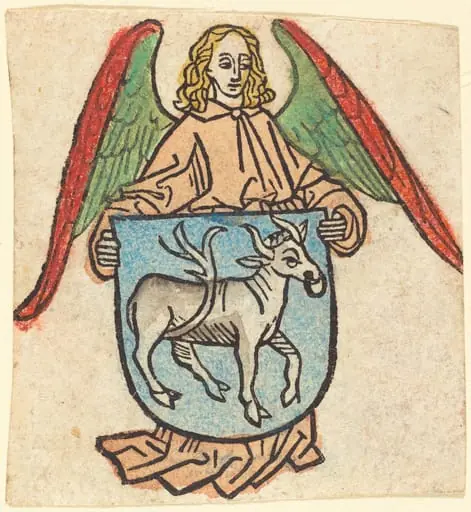 Bookplate of Hilprand Brandenburg of Bibrach
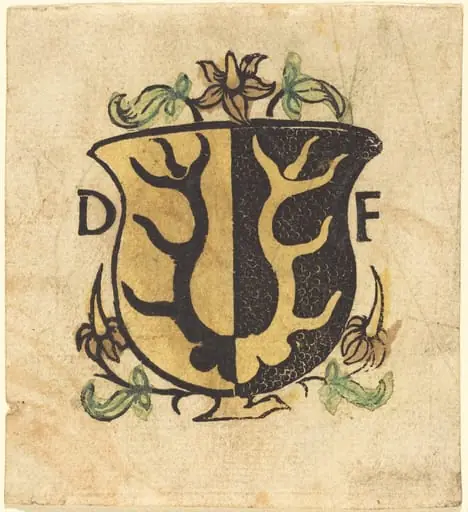 Bookplate of Dominicus Frauenfelder
![Studies for Six Figures (sheet from a model book) [recto], by German 15th Century](https://artifactworldgallery.com/img/german-15th-century--studies-for-six-figures-sheet-from-a-model-book-recto--4837429e0755bc3f-w320.webp) Studies for Six Figures (sheet from a model book) [recto]
Studies for Six Figures (sheet from a model book) [recto]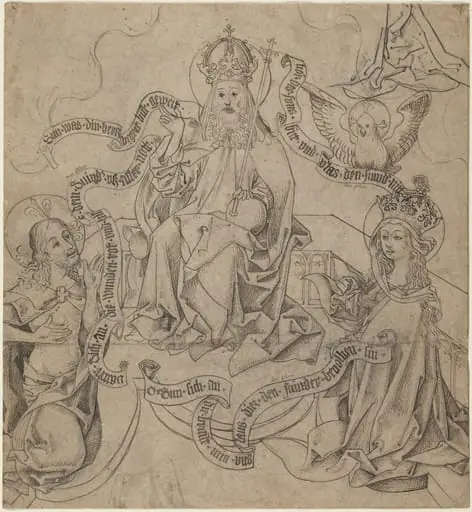 Christ and Mary Interceding with God the Father