Artwork
The Flagellation in the Presence of Mary
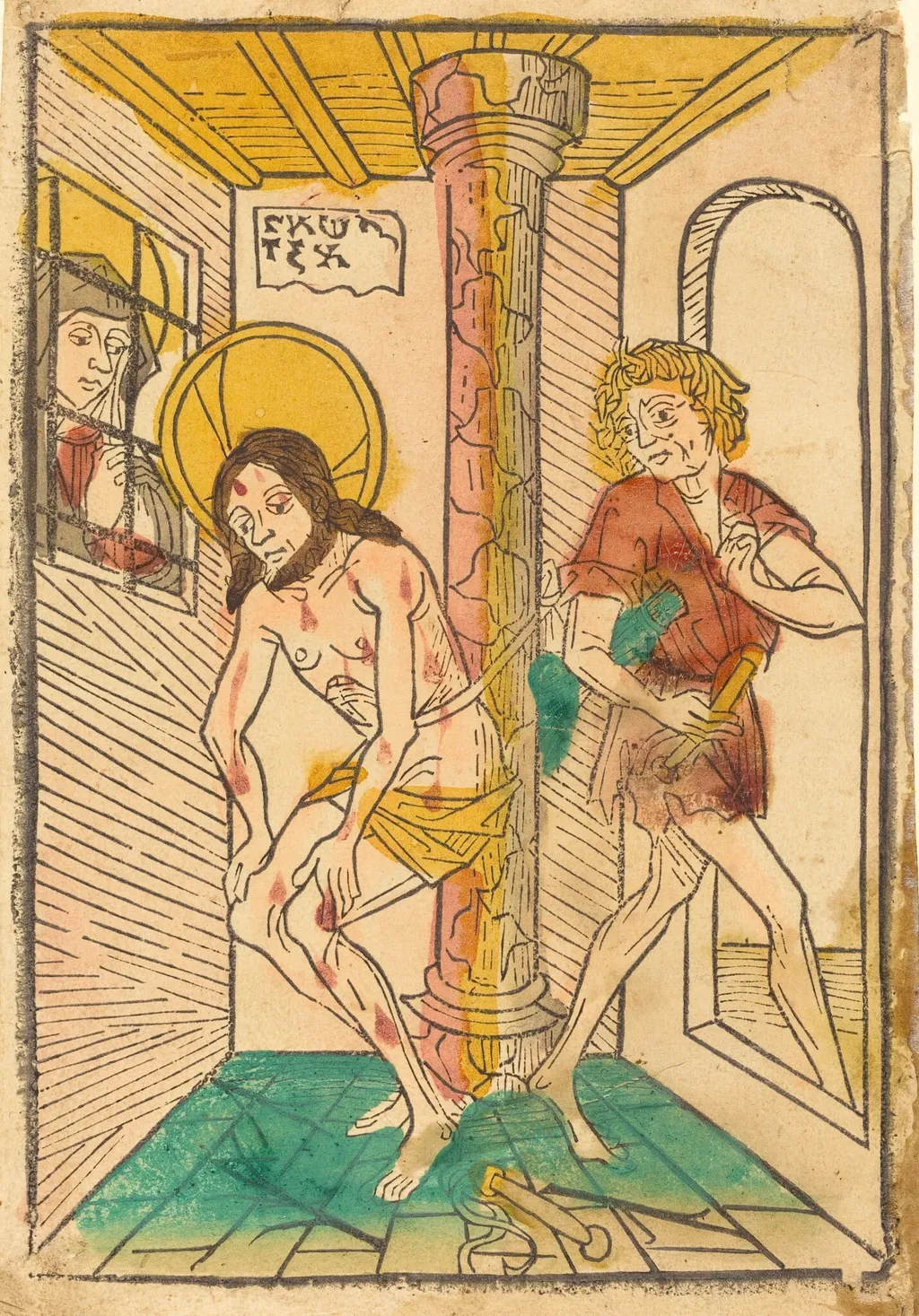
The Flagellation in the Presence of Mary is an ink print by the Renaissance artist German 15th Century. It dates from 1470 and is held in the collection of the National Gallery of Art.
About this work
Overview
Executed on a single block, the image combines black line work with applied pigments of red lake, rose, yellow‑orange, green and tan.
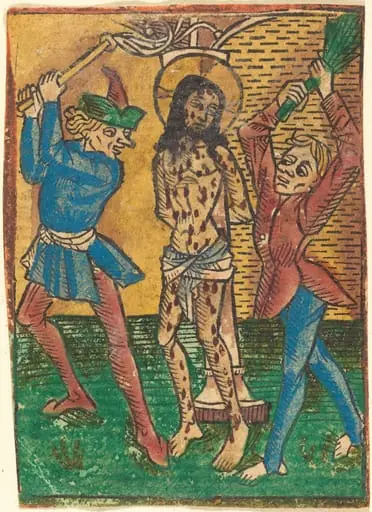
The work titled *The Flagellation in the Presence of Mary* is a hand‑colored woodcut print. Executed on a single block, the image combines black line work with applied pigments of red lake, rose, yellow‑orange, green and tan. The composition presents a stark interior scene in which a bound figure is subjected to punishment while two onlookers observe, one appearing mournful and the other holding a green cloth.
Subject & Meaning
The central figure, a man bound to a pillar with outstretched arms, evokes the biblical episode of Christ’s flagellation, though the depiction is not overtly narrative. The presence of a sorrowful figure on the left and a detached figure on the right suggests a contemplation of suffering and witness. The setting—a simple wooden room with planked roofing—reinforces the work’s focus on the act itself rather than elaborate scenery.
Technique & Style
Created through the woodcut process, the artist carved the image in relief, inked the raised surfaces, and transferred the print onto paper. After printing, selective areas were hand‑colored with vivid pigments, a common practice in early modern European prints to enhance visual impact. The design is characterized by flat, unmodulated planes and bold outlines, giving the scene a graphic clarity that contrasts with the bright, slightly faded hues.
Context
Woodcut prints of religious subjects were widely circulated in the 15th and 16th centuries as affordable devotional images. This piece reflects that tradition, employing a straightforward visual language that could be reproduced and distributed. The use of hand‑coloring indicates a higher‑quality edition intended for collectors or patrons who valued the added chromatic detail beyond the monochrome standard.
Artist & collection

Artist
This 15th-century German artist carved vivid religious scenes into metal and wood, then hand-painted them in bright, symbolic colors.

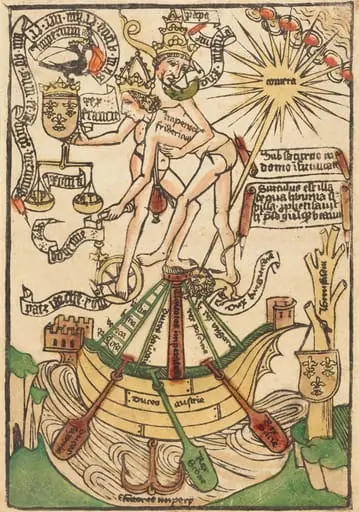 Allegory of the Meeting of Pope Paul II and Emperor Frederick III
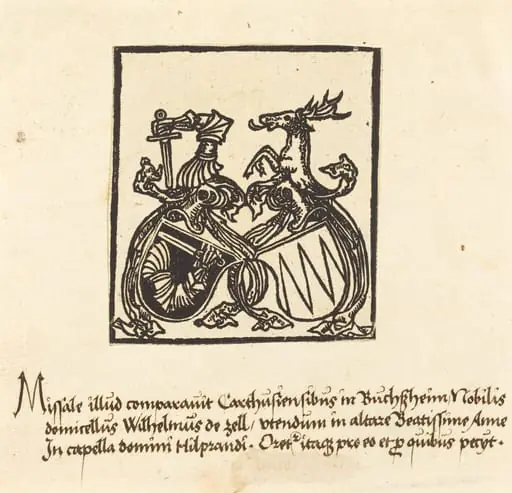 Bookplate of Wilhelm von Zell
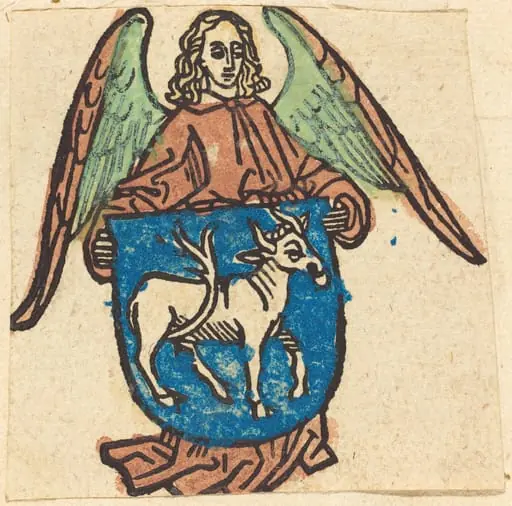 Bookplate of Hilprand Brandenburg of Bibrach
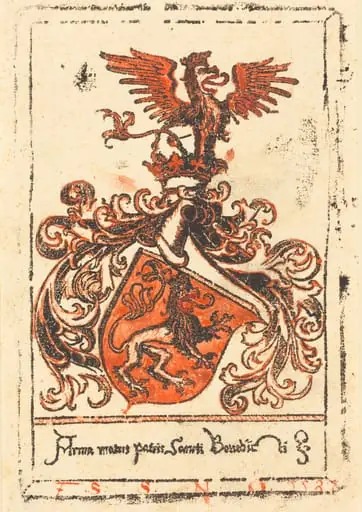 Bookplate of the Abbey of Ottobeuren
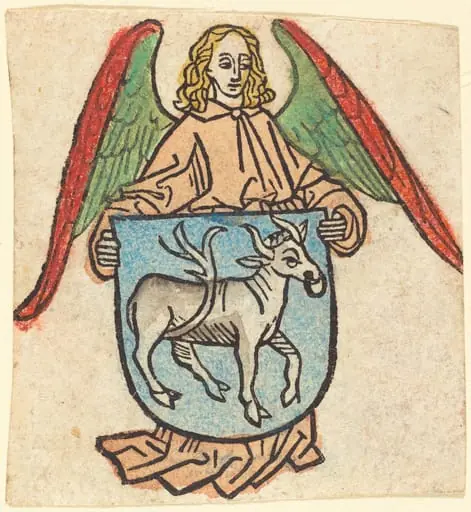 Bookplate of Hilprand Brandenburg of Bibrach
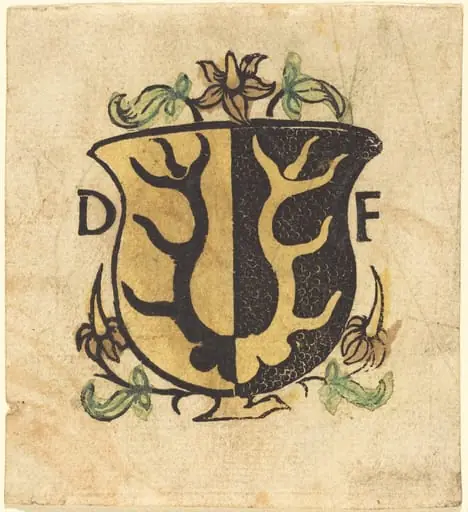 Bookplate of Dominicus Frauenfelder
![Studies for Six Figures (sheet from a model book) [recto], by German 15th Century](https://artifactworldgallery.com/img/german-15th-century--studies-for-six-figures-sheet-from-a-model-book-recto--4837429e0755bc3f-w320.webp) Studies for Six Figures (sheet from a model book) [recto]
Studies for Six Figures (sheet from a model book) [recto]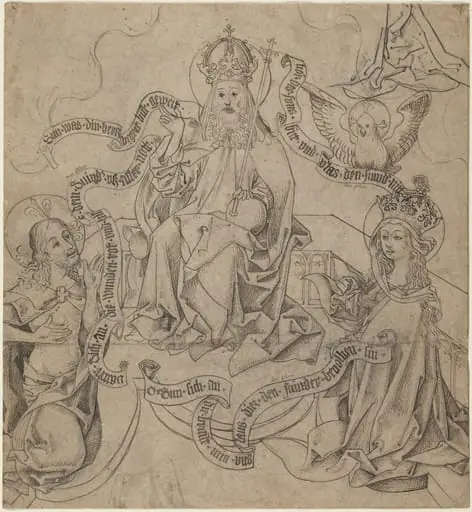 Christ and Mary Interceding with God the Father
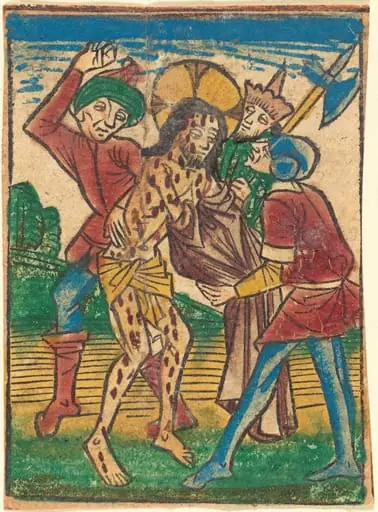
![Ecce Homo [verso], by German 15th Century](https://artifactworldgallery.com/img/german-15th-century--ecce-homo-verso--355663726e7bd572-w320.webp)