Artwork
St. Christopher, St. Erasmus, St. Barbara, and another female saint
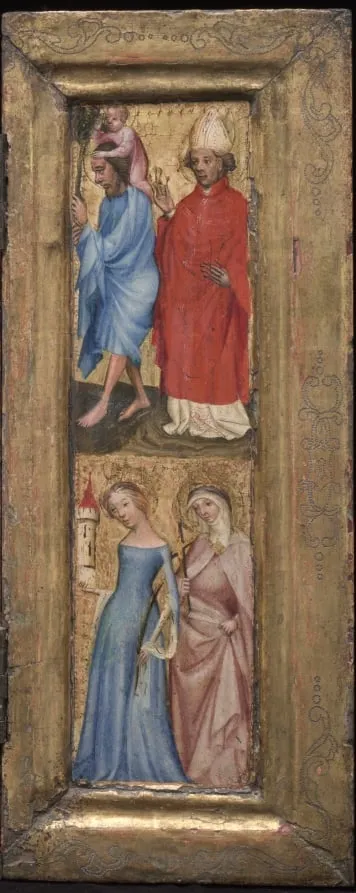
St. Christopher, St. Erasmus, St. Barbara, and another female saint is an unspecified painting by the Northern Renaissance artist Unknown. It dates from 1424 and is held in the collection of the Cleveland Museum of Art. The work is a small, hinged triptych intended for private devotion.
About this work
Overview
The work is a small, hinged triptych intended for private devotion. Its central panel depicts a kneeling donor couple before the Virgin, Saint Anne, and the infant Christ, while the upper register shows the Epiphany with the Magi presenting gifts. The side panels present four standing saints—Christopher, Erasmus, Barbara, and an additional female saint—set against a gilded sky.
Subject & Meaning
The upper Epiphany reinforces the theme of revelation, with the three kings offering tribute to the newborn Christ.
The central scene emphasizes the patron’s piety, placing them in the presence of the Holy Family and the venerable Saint Anne, a model of intergenerational devotion. The upper Epiphany reinforces the theme of revelation, with the three kings offering tribute to the newborn Christ. The flanking saints embody virtues and martyrdom: Christopher as protector of travelers, Erasmus as a symbol of suffering, Barbara as a patron of safe childbirth, and the unnamed female saint adding further intercessory presence.
Technique & Style
Rendered in tempera on panel with gold leaf background, the figures are outlined with delicate brushwork typical of late medieval Austrian devotional art. The saints are dressed in contemporary local attire, reflecting regional costume trends of Salzburg, while their attributes—Christopher’s child, Erasmus’s windlass, Barbara’s tower—are rendered with precise symbolic clarity.
History & Provenance
Originally the central component of a portable altarpiece, the panel was likely commissioned by a private patron for use in a domestic chapel. The inclusion of the donor couple identifies the original owners, though their names remain unknown. The work has remained associated with the Salzburg area, suggesting it was produced by a local workshop serving the Austrian market.
Context
In early sixteenth‑century Austria, small triptychs were common in affluent households, serving both liturgical and decorative functions. Artists often clothed saints in familiar regional dress to make the holy figures more relatable to patrons. This practice is evident in the attire of the saints, aligning the piece with contemporary devotional trends in Salzburg and surrounding territories.
Artist & collection

 Domestic Scene
 Giacomo and Cardinal Marco, investing Andrea, Abbot of San Zeno, with his Benefice
 The Nymph of Fontainebleau
 Portrait of a Woman
 Madonna and Child with Saints in the Enclosed Garden
 Venus and Minerva
 Family Group of Four on Sofa
 Wall painting from Room H of the Villa of P. Fannius Synistor at Boscoreale
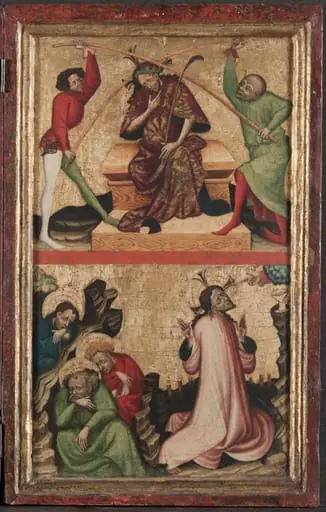 Diptych with the Passion of Christ (right wing): Crowning with Thorns and Agony on the Garden
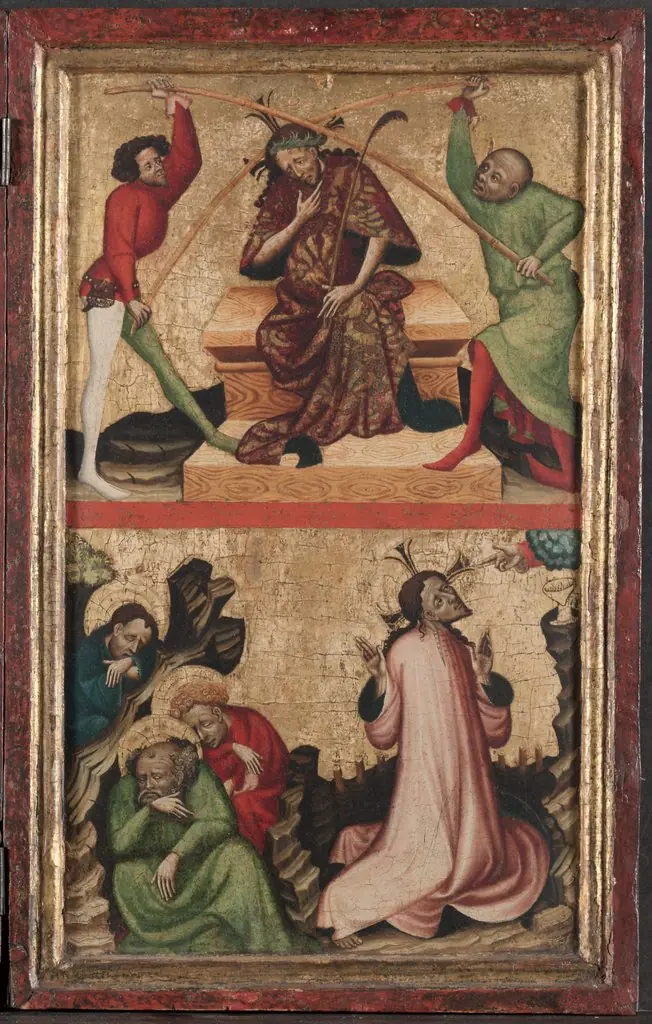 Diptych with the Passion of Christ (right wing): Crowning with Thorns and Agony on the Garden
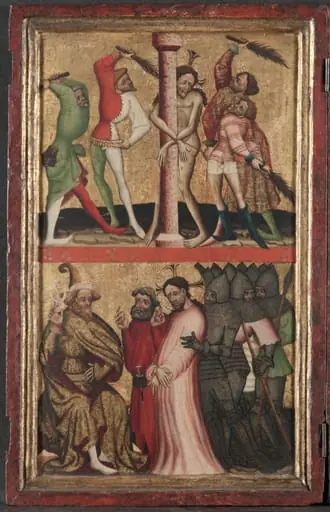 Diptych with the Passion of Christ (left wing):Flagellation and Christ Before Pilate
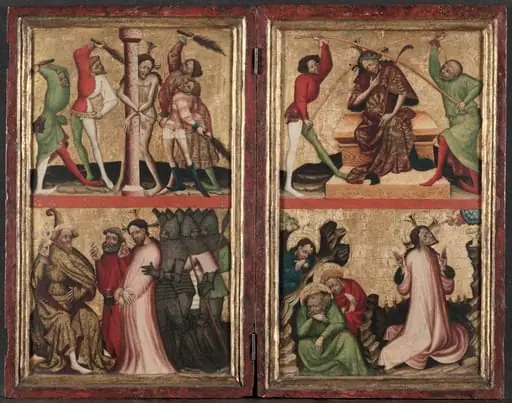 Diptych with the Passion of Christ
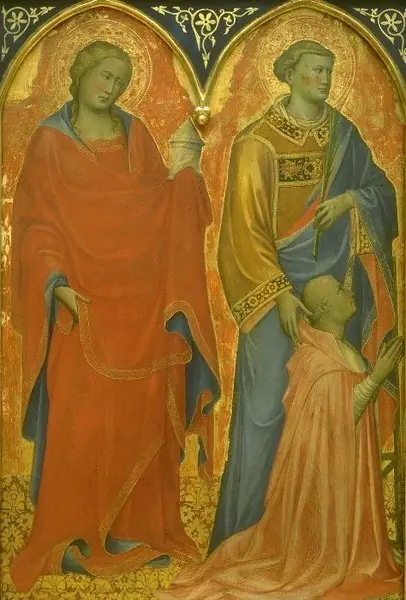 Saints Mary Magdalene, Lawrence and a donor/ Angelo Acciaiuolo
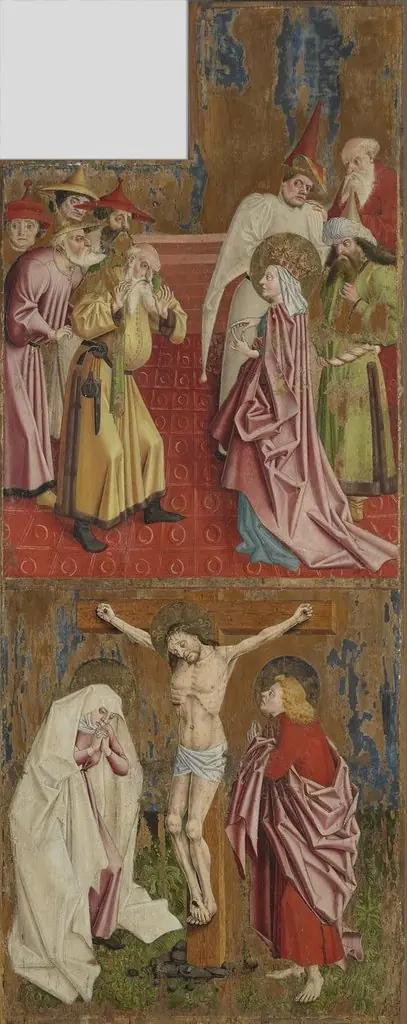 Kreuzaltar, Flügelaußenseite: Die Kaiserin Helena befragt die Juden und Kreuzigung Christi
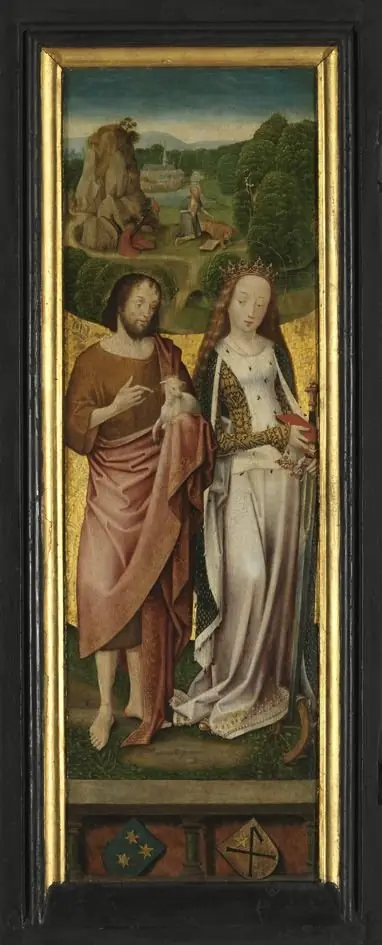 Flügelpaar: Die hll. Johannes der Täufer und Katharina (Außenseite: Engel der Verkündigung)
 The Annunciation
 The Crucifixion