Artwork
Tablou, ulei pe pânză, portret Elena Ceaușescu, nesemnat, nedatat. Elena Ceaușescu este reprezentată alături de recipiente folosite în laboratoare, alături de o diplomă și o garoafă roz. Comandat și oferit de Comitetul Județean de Partid Caraș Severin, 6 ianuarie 1979.
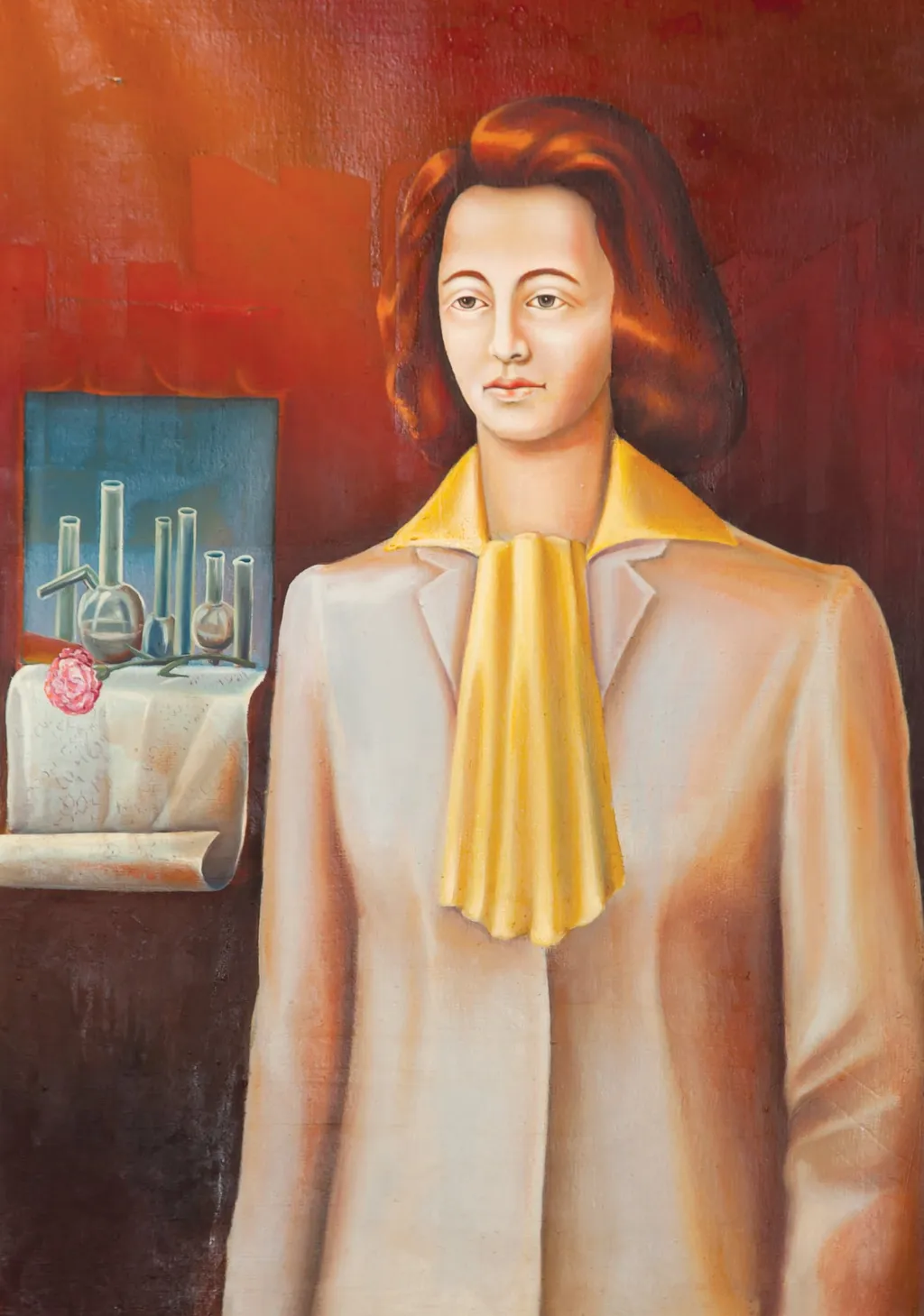
Tablou, ulei pe pânză, portret Elena Ceaușescu, nesemnat, nedatat. Elena Ceaușescu este reprezentată alături de recipiente folosite în laboratoare, alături de o diplomă și o garoafă roz. Comandat și oferit de Comitetul Județean de Partid Caraș Severin, 6 ianuarie 1979. is a print by Unknown. It dates from 1850 and is held in the collection of the National Museum of Romanian History.
About this work
Overview
A portrait painted in oil on canvas depicts Elena Ceaușescu, dressed in a light coat and yellow scarf, standing before a warm red background.
A portrait painted in oil on canvas depicts Elena Ceaușescu, dressed in a light coat and yellow scarf, standing before a warm red background. The composition includes laboratory glassware, a rolled diploma, and a single pink carnation. The work is unsigned and undated, commissioned by the Caraș-Severin County Party Committee and presented on January 6, 1979. Its tone blends official symbolism with subtle naturalism.
Subject & Meaning
The painting positions Elena Ceaușescu as both a political figure and a cultivated intellectual. The presence of scientific equipment and an academic diploma implies a background in science, aligning with state-promoted narratives of her expertise. The pink carnation introduces a personal, almost domestic element, softening the institutional setting. Together, these symbols construct an image of authority tempered by refinement.
Technique & Style
The artist employs soft chiaroscuro to model the face and coat, creating gentle volume against the flat, warm red background. Laboratory instruments are rendered with precise detail, contrasting with the looser handling of the scarf and background. The lighting is even and diffused, avoiding dramatic contrasts, which lends the scene a calm, controlled atmosphere consistent with state portraiture conventions of the era.
History & Provenance
Commissioned by the Caraș-Severin County Party Committee, the painting was presented as a gift on January 6, 1979. It was not signed or dated, a common practice in official portraits produced under the regime. Its origin reflects the institutional practice of commissioning art to reinforce the public image of party leaders, particularly through the association of power with intellectual achievement.
Context
During the late 1970s, Romanian state propaganda increasingly emphasized the personal qualities of the Ceaușescus, blending scientific credibility with moral authority. Portraits like this one were distributed to institutions to cultivate an image of leadership rooted in education and discipline. The inclusion of lab equipment was deliberate, countering perceptions of political elitism by suggesting technical competence.
Legacy
The painting remains a documented artifact of state-sponsored imagery under Nicolae and Elena Ceaușescu’s regime. It exemplifies how visual culture was mobilized to construct mythic identities. Unlike official portraits that were widely reproduced, this piece was likely displayed locally, making its survival and current location significant for understanding regional propaganda practices.
Artist & collection

 Domestic Scene
 Giacomo and Cardinal Marco, investing Andrea, Abbot of San Zeno, with his Benefice
 The Nymph of Fontainebleau
 Portrait of a Woman
 Madonna and Child with Saints in the Enclosed Garden
 Venus and Minerva
 Family Group of Four on Sofa
 Wall painting from Room H of the Villa of P. Fannius Synistor at Boscoreale
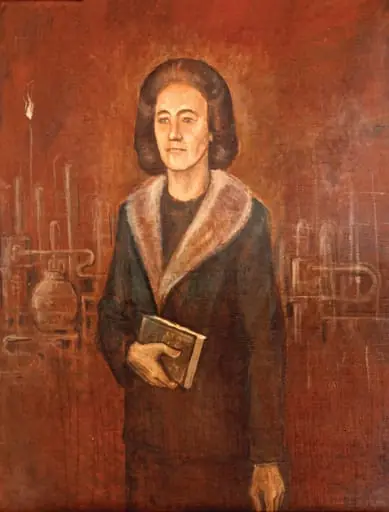 Tablou, ulei pe pânză, Portret Elena Ceaușescu, lucrarea nu este semnată sau datată. Elena Ceaușescu este prezentată ținând în mâna dreaptă un volum (probabil lucrarea sa de doctorat), în fundal se disting instalații industriale din domeniul chimic și petrochimic. Comandat și oferit de Comitetul Municipal al Femeilor, București, 6 ianuarie 1979.
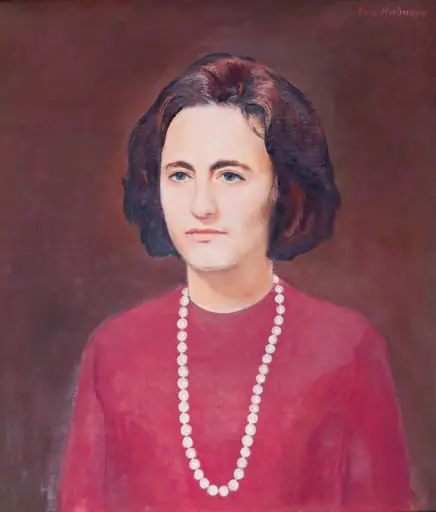 Tablou, ulei pe pânză, „Elena Ceaușescu”, semnat în partea dreaptă sus Dan Hatmanu. Oferit de autor, 6 ianuarie 1979.
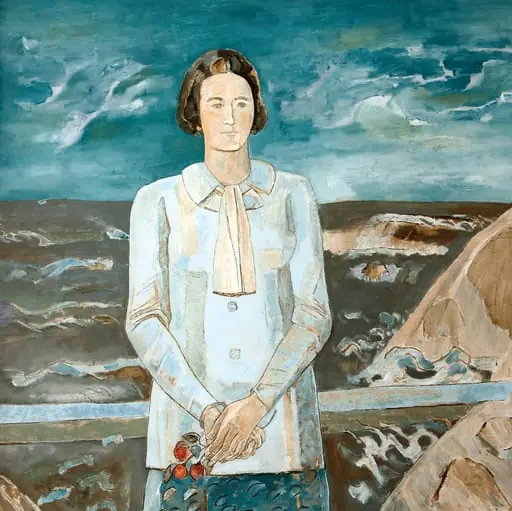 Tablou reprezentând-o pe Elena Ceaușescu, atribuit lui Traian Brădeanu. Tablou comandat de Consiliul Culturii și Educației Socialiste și oferit în dar Elenei Ceaușescu la împlinirea vârstei de 60 de ani (ianuarie 1979).
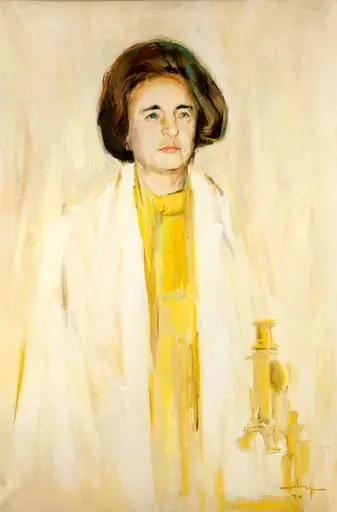 Tablou „Elena Ceușescu” semnat dreapta jos indescifrabil, atribuit lui Ion Țarălungă. Tabloul o prezintă pe Elena Ceaușescu într-o postură gravă de cercetător (halat alb și microscop alăturat). Comandat de Consiliul de Conducere al Ministerului Apărării Naționale și oferit Elenei Ceaușescu la 5 ianuarie 1979.
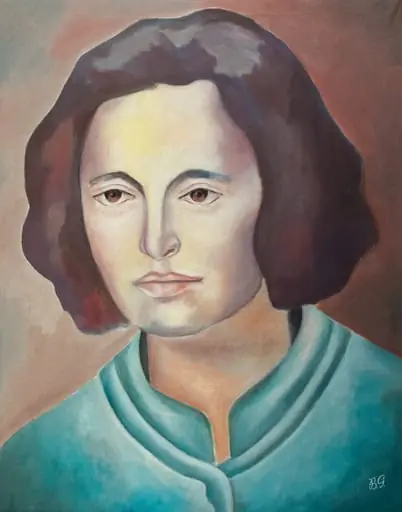 Tablou, ulei pe pânză, portret Elena Ceaușescu, semnat dreapta jos B.G. Comandat și oferit de Comitetul Județean de Partid Caraș Severin, 6 ianuarie 1979.
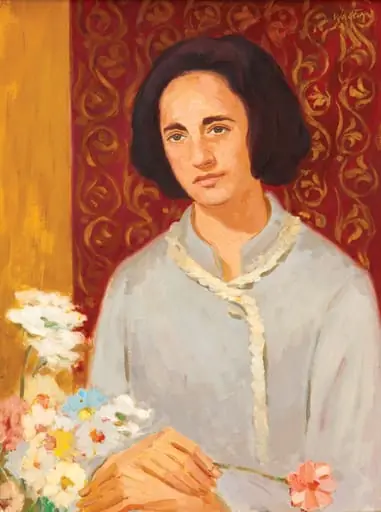 Tablou, ulei pe pânză, Portret Elena Ceaușescu, atribuit lui Fredric Bytoy. Elena Ceaușescu reprezentată înt-o atitudine melancolică alături de un buchet de flori. Comandat și oferit de Comitetul de Partid Maramureș, 7 ianuarie 1979.
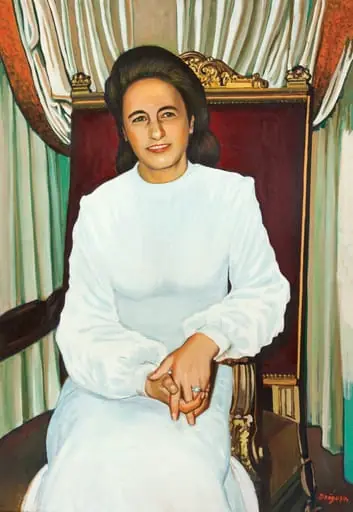 Tablou, ulei pe pânză, „Portret Elena Ceaușescu”, semnat Drăgușin în partea dreaptă jos, nedatat. Elena Ceaușescu, stând pe un scaun cu spătar înalt (jilț) într-o rochie elegantă de culoare albă. Comandat și oferit de Ministerul de Interne, 5 ianuarie 1979.