Artwork
Tara, Sakala and Nishkala Shiva
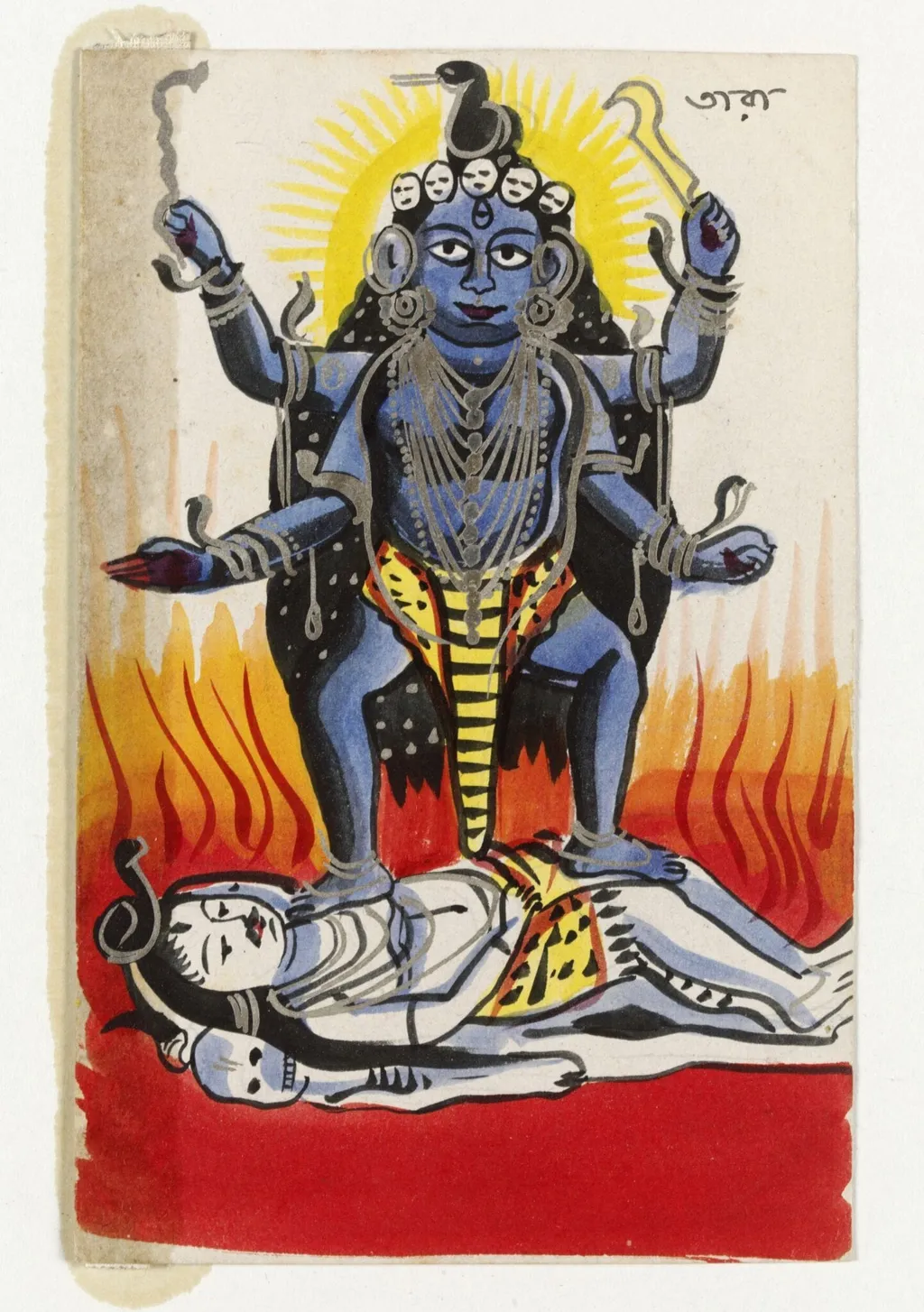
Tara, Sakala and Nishkala Shiva is a paint painting by the Impressionist artist Unknown. It dates from 1890 and is held in the collection of the Victoria and Albert Museum.
About this work
The painting is part of the *kalighat* tradition, a style of Indian folk art from the 19th century.
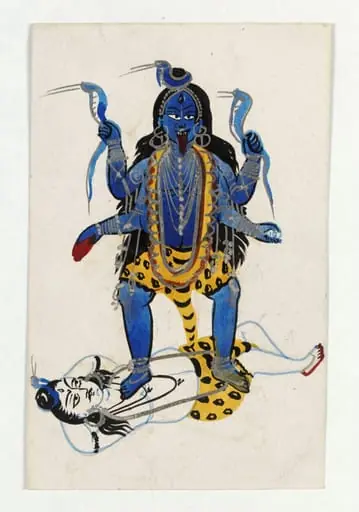
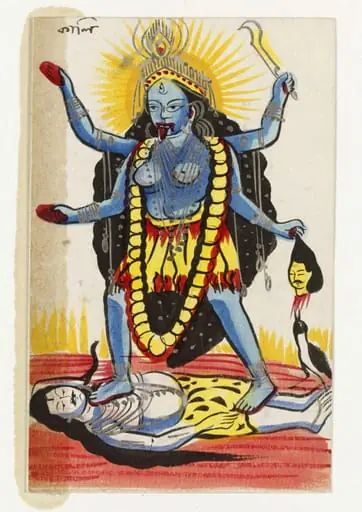
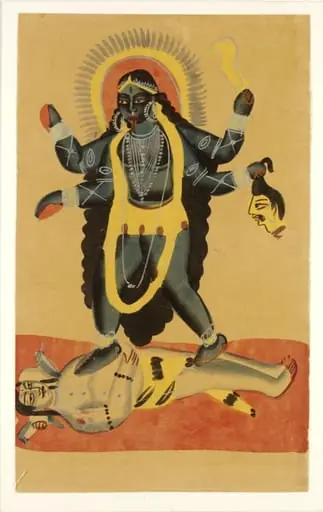
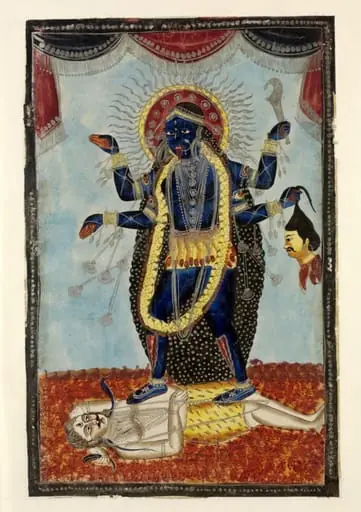
This painting shows a blue-skinned figure with multiple arms standing on a prone man. The figure has a snake around its neck, a third eye, and a crown of skulls. Bright flames surround the scene, and the background glows with yellow light. The standing figure holds a small object in one hand and a weapon in another.
The painting is part of the *kalighat* tradition, a style of Indian folk art from the 19th century.
Check out the Victoria and Albert Museum to see more works like this.
Overview
This 1890 watercolour and tin alloy on cardboard painting, of unknown authorship, depicts a complex Hindu deity scene within the Kalighat folk art tradition.
Subject & Meaning
The artwork illustrates Tara, a blue-skinned, multi-armed goddess, standing on two forms of Shiva: Sakala (manifest) as a prone figure, and Nishkala (unmanifest), implied beneath. Tara is adorned with a snake, third eye, and skull crown, holding an object and a weapon amidst engulfing flames on a yellow-lit background.
Technique & Style
Executed in watercolour and tin alloy on cardboard, the painting exemplifies the Kalighat style, a 19th-century Indian folk art movement characterized by vivid imagery and symbolic detail.
History & Provenance
Created in 1890, the painting was later featured in the 1971 *Tantra* exhibition at London's Hayward Gallery, catalogued as item 184. Its pre-exhibition history and artist remain unknown.
Context
As part of the Kalighat tradition, this work reflects the syncretic religious practices and artistic expressions prevalent in 19th-century India, particularly around the Kalighat Temple in Kolkata.
Legacy
Now recognized as part of a significant folk art movement, the painting is comparable to other works in collections like the Victoria and Albert Museum, contributing to the understanding and appreciation of Indian folk art globally.
Artist & collection

 Domestic Scene
 Giacomo and Cardinal Marco, investing Andrea, Abbot of San Zeno, with his Benefice
 The Nymph of Fontainebleau
 Portrait of a Woman
 Madonna and Child with Saints in the Enclosed Garden
 Venus and Minerva
 Family Group of Four on Sofa
 Wall painting from Room H of the Villa of P. Fannius Synistor at Boscoreale