Artwork
Text, Folio 20 (recto), from a Kalpa-sutra
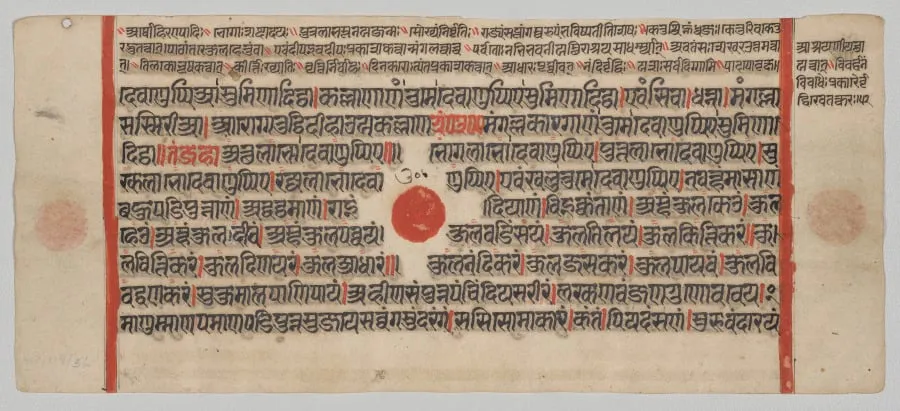
Text, Folio 20 (recto), from a Kalpa-sutra is an unspecified painting by the Mughal Painting artist Unknown. It dates from 1488 and is held in the collection of the Cleveland Museum of Art. The work is a painted folio identified as Folio 20 (recto) from a Kalpa‑sutra, a Buddhist text.
About this work
Overview
The work is a painted folio identified as Folio 20 (recto) from a Kalpa‑sutra, a Buddhist text. Executed as a single sheet, the piece presents a page of dense black calligraphy, punctuated by red markings that highlight specific words, and a small red circular seal positioned near the centre. The paper bears aged, brownish margins and shows signs of wear, indicating its antiquity.
Subject & Meaning
The page functions as a religious manuscript, the Kalpa‑sutra being a collection of doctrinal rules and rituals. The red accents serve to draw attention to key passages, a common practice in devotional and scholarly copies to aid memorisation and recitation. The central red circle likely represents a scribe’s seal, authenticating the text within its monastic tradition.
Technique & Style
The composition combines ink calligraphy with pigment highlights. Black ink, applied in a uniform hand, forms the primary script, while vermilion or a similar red pigment is used for emphasis and the seal. The paper’s surface, now discoloured and frayed at the edges, reflects the materials and methods typical of manuscript production in pre‑modern Buddhist contexts.
History & Provenance
The folio originates from a larger Kalpa‑sutra codex, though its precise geographic origin and date are not specified. Its current condition—faded borders and a worn substrate—suggests prolonged use and storage, likely within a monastic library before entering a modern collection.
Context
Kalpa‑sutras were compiled to codify monastic discipline and ritual practice, forming part of the broader Buddhist literary corpus that circulated throughout Asia. Manuscripts of this type were often produced by trained scribes in monastic scriptoria, where colour coding aided the study and transmission of complex doctrinal material.
Legacy
Such illuminated manuscript pages provide insight into the textual transmission and visual conventions of Buddhist scholasticism. The integration of red annotation and seal exemplifies the practical aesthetics employed to preserve and navigate sacred texts, informing contemporary scholarship on manuscript culture.
Artist & collection

 Domestic Scene
 Giacomo and Cardinal Marco, investing Andrea, Abbot of San Zeno, with his Benefice
 The Nymph of Fontainebleau
 Portrait of a Woman
 Madonna and Child with Saints in the Enclosed Garden
 Venus and Minerva
 Family Group of Four on Sofa
 Wall painting from Room H of the Villa of P. Fannius Synistor at Boscoreale
 Text, Folio 19 (recto), from a Kalpa-sutra
 Text, Folio 21 (recto), from a Kalpa-sutra
 Text, Folio 56 (recto), from a Kalpa-sutra
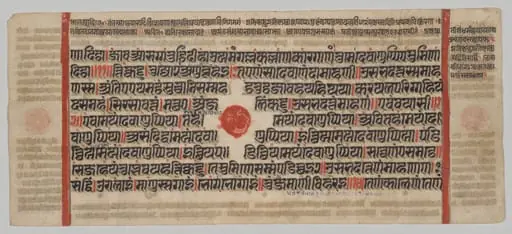 Text, Folio 5 (recto), from a Kalpa-sutra
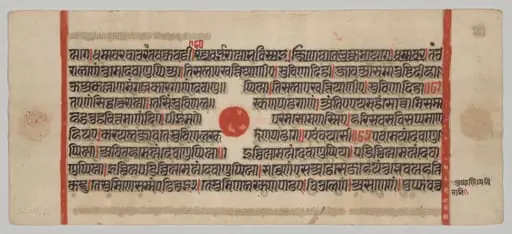 Text, Folio 27 (recto), from a Kalpa-sutra
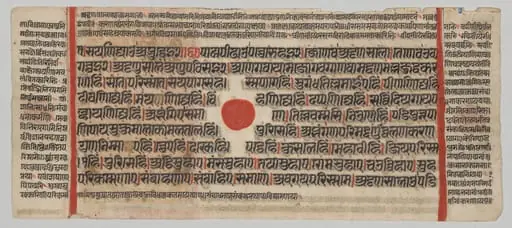 Text, Folio 22 (recto), from a Kalpa-sutra
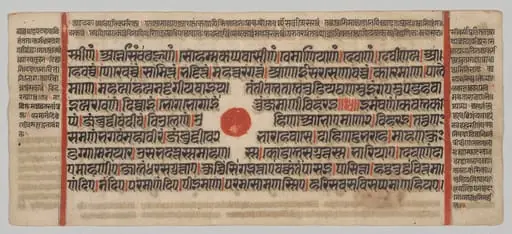 Text, folio 6 (recto), from a Kalpa-sutra
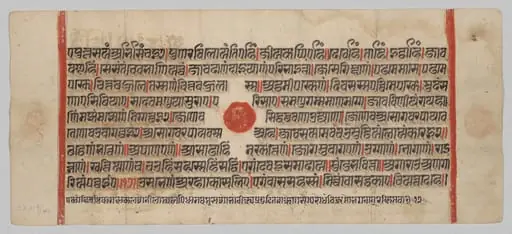 Text, Folio 55 (recto), from a Kalpa-sutra
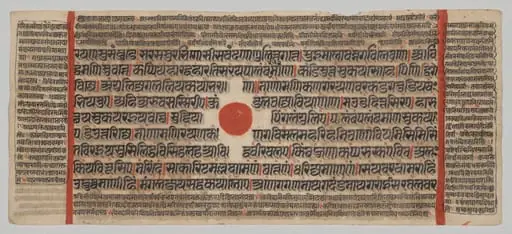 Text, Folio 23 (recto), from a Kalpa-sutra
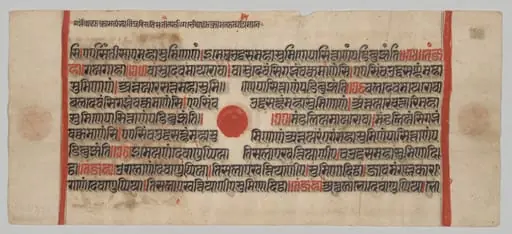 Text, Folio 26 (recto), from a Kalpa-sutra