Artwork
Text, Folio 48 (recto), from a Kalpa-sutra
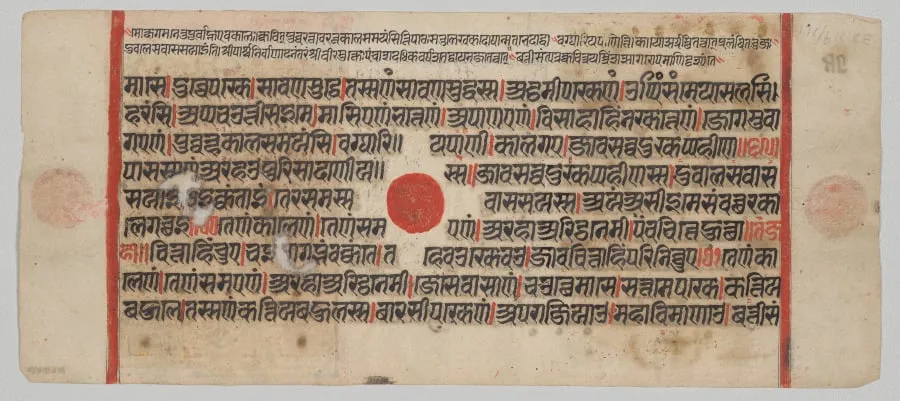
Text, Folio 48 (recto), from a Kalpa-sutra is an unspecified painting by the Mughal Painting artist Unknown. It dates from 1488 and is held in the collection of the Cleveland Museum of Art. The object is a painted folio, recto side of page 48, from a Kalpa‑sutra manuscript.
About this work
Overview
The object is a painted folio, recto side of page 48, from a Kalpa‑sutra manuscript. It consists of densely set text rendered in red, blue, and black ink, occupying most of the surface. A prominent red circle appears near the centre, and a thin red border frames the page. The paper shows signs of age, with a yellowed tone typical of historic South Asian documents.
Subject & Meaning
The script records passages from a Kalpa‑sutra, a genre of Buddhist literature dealing with monastic discipline and ritual. The vivid coloration and the central red circle likely serve to highlight key doctrinal points or structural divisions within the text, aiding readers in navigating the instructional material.
Technique & Style
Ink in three pigments—black for the main body, red for emphasis, and blue for supplementary notes—was applied with fine brushes onto a paper support. The layout follows a tight, columnar arrangement, characteristic of South Asian manuscript traditions, where visual order supports readability and ritual use.
History & Provenance
The folio originates from a South Asian Buddhist manuscript, though the precise region and date are not specified. Its material condition—yellowed, slightly brittle paper—indicates considerable antiquity, suggesting it was produced before the widespread adoption of modern paper-making techniques in the region.
Context
Kalpa‑sutras formed part of the broader corpus of Buddhist canonical and commentarial literature, used in monastic training and liturgical contexts. The decorative elements, such as the red circle and border, reflect a tradition of integrating visual cues into textual media to reinforce doctrinal hierarchy.
Legacy
Manuscripts like this folio illustrate the intersection of textual transmission and visual culture in pre‑modern South Asia. Their study informs understanding of Buddhist pedagogical practices and the material history of scriptoria, contributing to comparative analyses with contemporaneous manuscript traditions elsewhere.
Artist & collection

 Domestic Scene
 Giacomo and Cardinal Marco, investing Andrea, Abbot of San Zeno, with his Benefice
 The Nymph of Fontainebleau
 Portrait of a Woman
 Madonna and Child with Saints in the Enclosed Garden
 Venus and Minerva
 Family Group of Four on Sofa
 Wall painting from Room H of the Villa of P. Fannius Synistor at Boscoreale
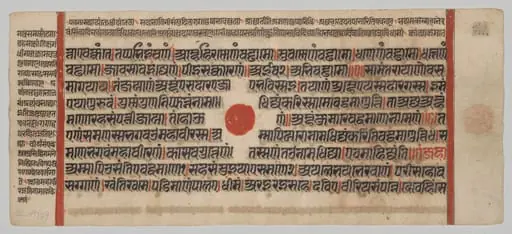 Text, Folio 34 (recto), from a Kalpa-sutra
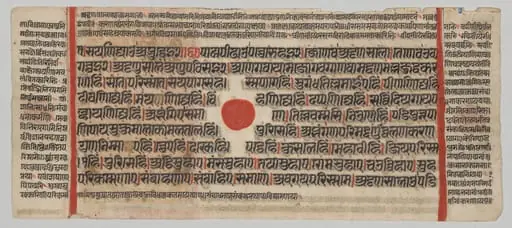 Text, Folio 22 (recto), from a Kalpa-sutra
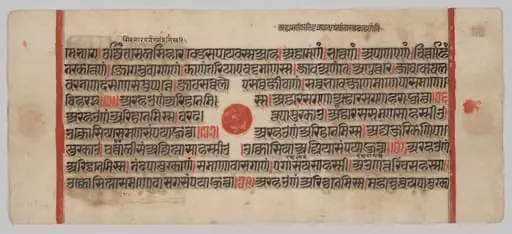 Text, Folio 50 (recto), from a Kalpa-sutra
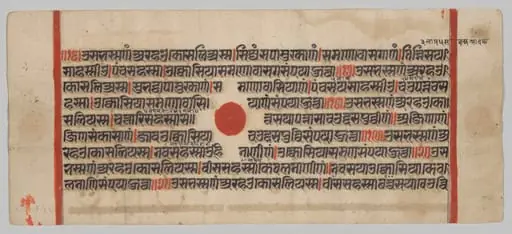 Text, Folio 56 (recto), from a Kalpa-sutra
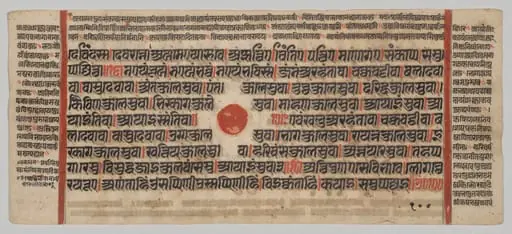 Text, Folio 8 (recto), from a Kalpa-sutra
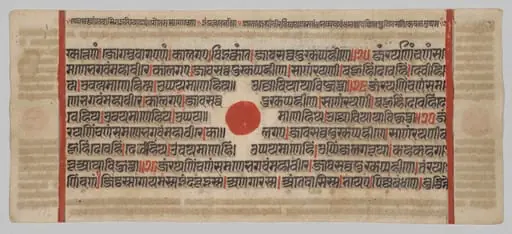 Text, Folio 41 (recto), from a Kalpa-sutra
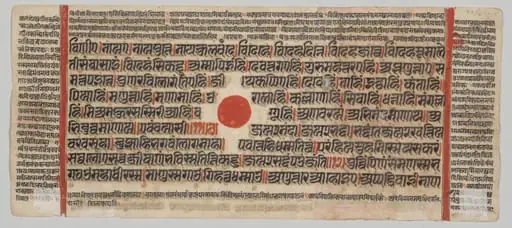 Text, Folio 35 (recto), from a Kalpa-sutra
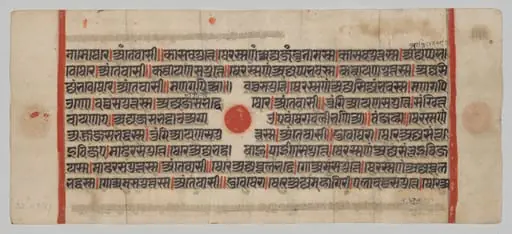 Text, Folio 59 (recto), from a Kalpa-sutra
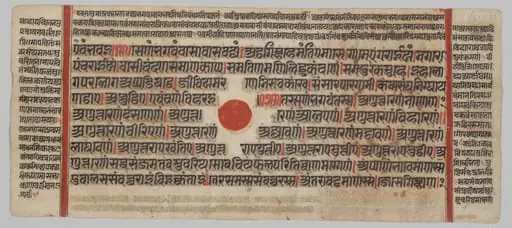 Text, Folio 39 (recto), from a Kalpa-sutra
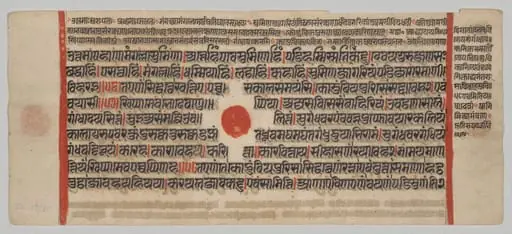 Text, Folio 21 (recto), from a Kalpa-sutra