Artwork
Text, folio 60 (recto), from a Kalpa-sutra
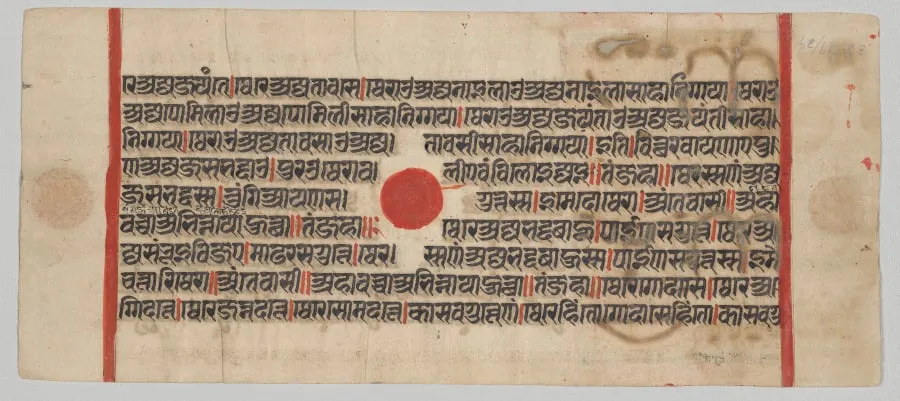
Text, folio 60 (recto), from a Kalpa-sutra is an unspecified painting by the Mughal Painting artist Unknown. It dates from 1450 and is held in the collection of the Cleveland Museum of Art. This folio, numbered 60 and presented on its recto side, originates from a Kalpa‑sutra manuscript.
About this work
Overview
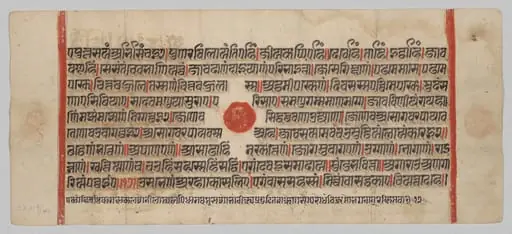
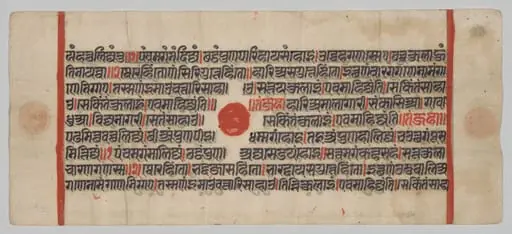
This folio, numbered 60 and presented on its recto side, originates from a Kalpa‑sutra manuscript. The sheet is a thin, aged paper bearing dense black ink script arranged in tight rows, framed by thin red lines at the top and bottom. A prominent red disc occupies the central area, contrasting with the monochrome text.
Subject & Meaning
The black script is most likely Sanskrit, the liturgical language of many Buddhist and Hindu texts, suggesting the folio contains ritual or doctrinal passages typical of a Kalpa‑sutra. The central red circle may function as a visual marker, highlighting a key passage, a mantra, or a symbolic emblem within the religious context.
Technique & Style
The manuscript employs traditional ink on paper techniques, with the text rendered in a compact, columnar layout characteristic of South Asian scriptoria. Red pigment, applied as a disc and bordering lines, provides a visual hierarchy, a common practice for emphasizing important sections in devotional manuscripts.
History & Provenance
The folio is part of a larger collection of Kalpa‑sutra manuscripts, now held by the Cleveland Museum of Art. Its paper, ink, and pigment composition indicate an origin in a historic Indian or Tibetan workshop, though precise dating and ownership prior to museum acquisition remain undocumented.
Context
Kalpa‑sutras are a genre of Buddhist literature that outline ritual procedures and monastic regulations. Such manuscripts were produced for use in monastic settings, serving both as instructional manuals and as objects of reverence, often copied by hand in scriptoria attached to monasteries or royal courts.
Legacy
Preserved examples like this folio provide insight into the material culture of Buddhist textual transmission, illustrating the interplay of textual precision and visual cues in religious manuscripts. Their study informs scholars of historical script styles, pigment use, and the devotional practices surrounding sacred texts.
Artist & collection

 Domestic Scene
 Giacomo and Cardinal Marco, investing Andrea, Abbot of San Zeno, with his Benefice
 The Nymph of Fontainebleau
 Portrait of a Woman
 Madonna and Child with Saints in the Enclosed Garden
 Venus and Minerva
 Family Group of Four on Sofa
 Wall painting from Room H of the Villa of P. Fannius Synistor at Boscoreale
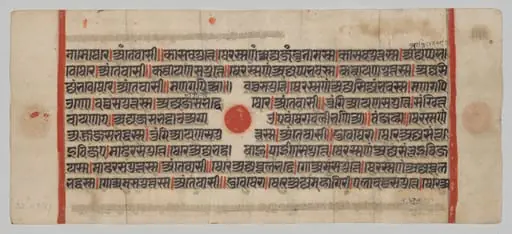 Text, Folio 59 (recto), from a Kalpa-sutra
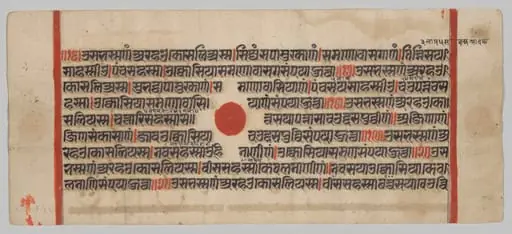 Text, Folio 56 (recto), from a Kalpa-sutra
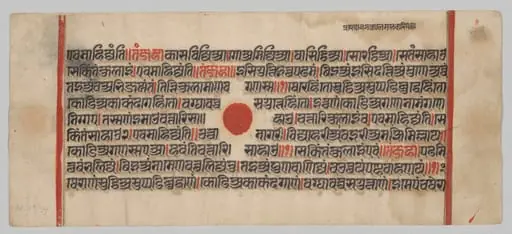 Text, Folio 63 (recto), from a Kalpa-sutra
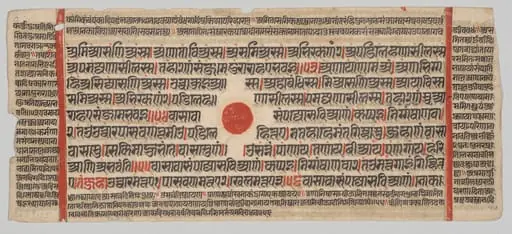 Text, Folio 76 (recto), from a Kalpa-sutra
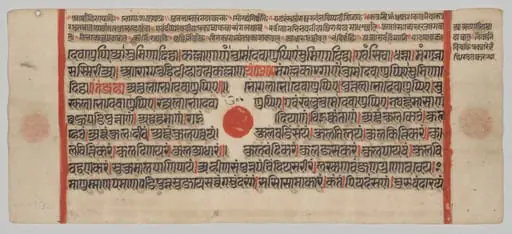 Text, Folio 20 (recto), from a Kalpa-sutra
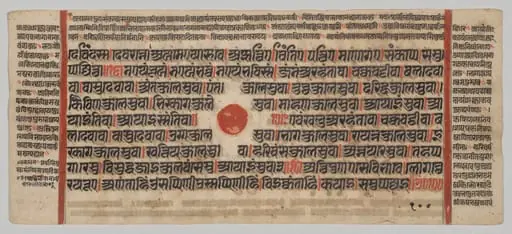 Text, Folio 8 (recto), from a Kalpa-sutra
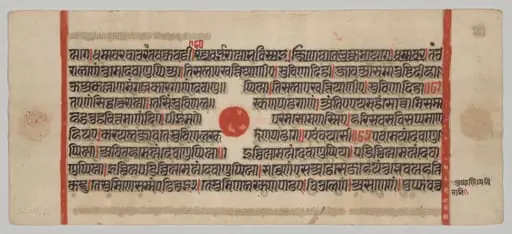 Text, Folio 27 (recto), from a Kalpa-sutra
 Text, Folio 55 (recto), from a Kalpa-sutra
 Text, Folio 62 (recto), from a Kalpa-sutra