Artwork
Text, Folio 13 (recto), from a Kalpa-sutra
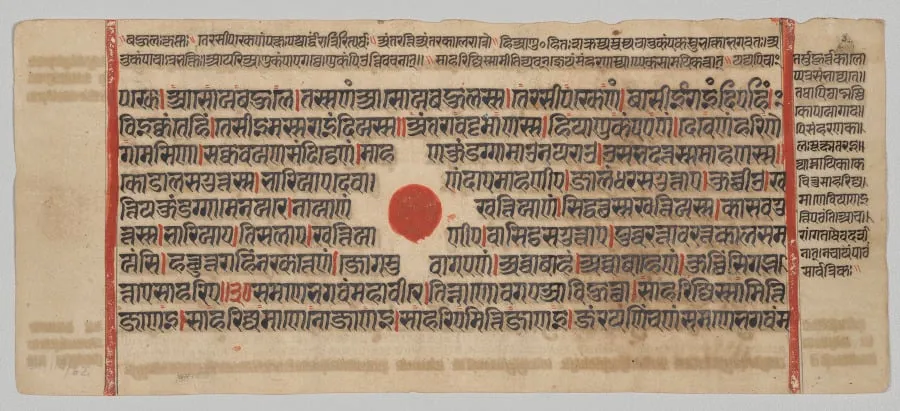
Text, Folio 13 (recto), from a Kalpa-sutra is an unspecified painting by the Mughal Painting artist Unknown. It dates from 1488 and is held in the collection of the Cleveland Museum of Art. This folio comes from a manuscript of the Kalpa-sutra, a Jain religious text written in Prakrit.
About this work
Overview
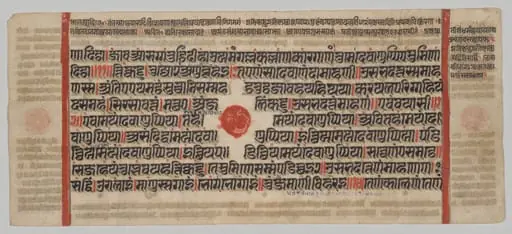
Red ink highlights select words and frames the page’s edges, while a central red circle serves as a visual marker.
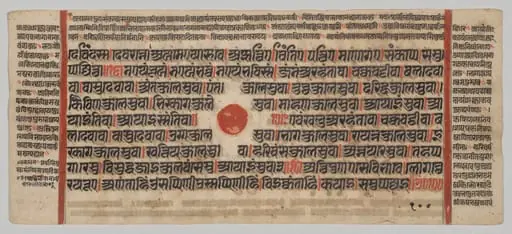
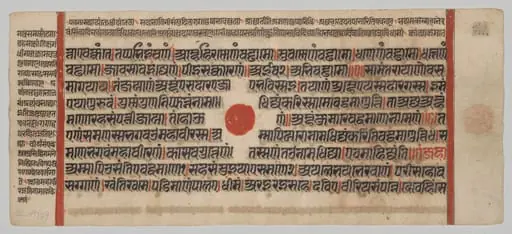
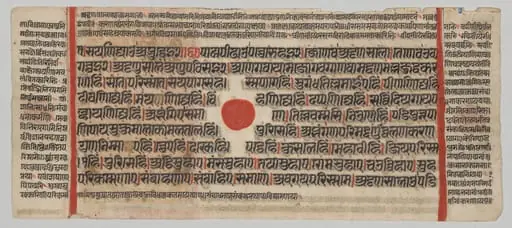
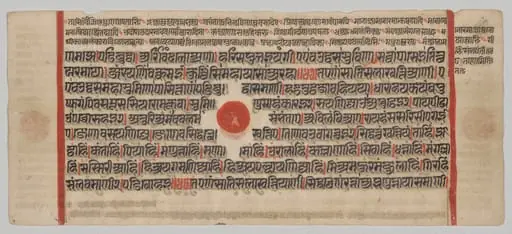
This folio comes from a manuscript of the Kalpa-sutra, a Jain religious text written in Prakrit. The page is densely covered with small, black ink script arranged in orderly lines. Red ink highlights select words and frames the page’s edges, while a central red circle serves as a visual marker. The paper shows signs of age and handling, suggesting repeated use in a devotional or instructional setting.
Subject & Meaning
The text contains passages from the Kalpa-sutra, which outlines monastic rules and recounts the lives of Jain Tirthankaras. The red underlinings may indicate key doctrinal points or liturgical cues, aiding oral recitation. The central red circle could denote a structural division in the text, a ritual marker, or a symbolic representation of spiritual focus, common in Jain manuscript traditions.
Technique & Style
The script is executed in a precise, uniform hand typical of Jain scribal practice. Red ink, derived from vermilion or cinnabar, was used sparingly for emphasis and decoration. The layout prioritizes legibility and ritual function over ornamentation. The paper’s texture and slight discoloration reflect natural aging and frequent handling, consistent with manuscripts used in daily religious practice.
History & Provenance
This folio likely originated in western India between the 14th and 16th centuries, a period when Jain communities produced numerous illustrated and textual manuscripts. Its survival suggests it was carefully preserved, possibly within a temple library or monastic collection. The Cleveland Museum of Art holds similar folios, indicating a shared provenance among institutional collections of Jain manuscripts.
Context
Jain manuscripts like this were not merely books but ritual objects, used in recitation, teaching, and meditation. Their production required skilled scribes and patrons, often wealthy merchants or monks. The minimal decoration and focus on text reflect Jain values of austerity and reverence for the spoken word, distinguishing them from more ornate Hindu or Buddhist manuscripts of the same era.
Legacy
Surviving folios such as this one offer insight into the transmission of Jain doctrine through handwritten texts. They preserve linguistic, scribal, and devotional practices that might otherwise be lost. Today, they serve as critical resources for scholars of South Asian religion, paleography, and manuscript culture, anchoring modern understanding of pre-modern Jain intellectual life.
Artist & collection

 Domestic Scene
 Giacomo and Cardinal Marco, investing Andrea, Abbot of San Zeno, with his Benefice
 The Nymph of Fontainebleau
 Portrait of a Woman
 Madonna and Child with Saints in the Enclosed Garden
 Venus and Minerva
 Family Group of Four on Sofa
 Wall painting from Room H of the Villa of P. Fannius Synistor at Boscoreale
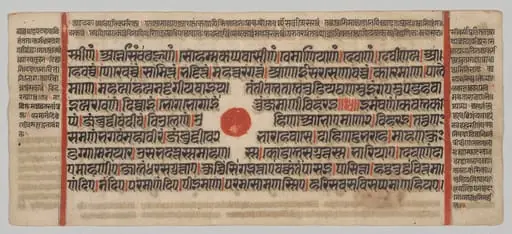 Text, folio 6 (recto), from a Kalpa-sutra
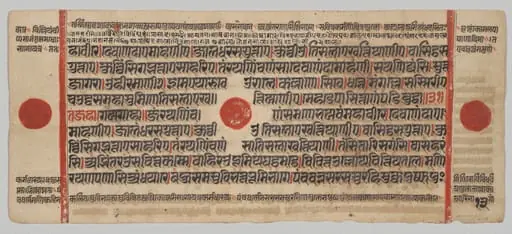 Text, Folio 13 (verso), from a Kalpa-sutra
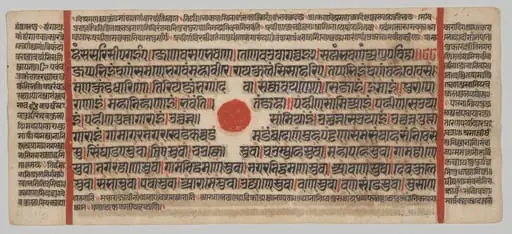 Text, Folio 28 (recto), from a Kalpa-sutra
 Text, Folio 8 (recto), from a Kalpa-sutra
 Text, Folio 34 (recto), from a Kalpa-sutra
 Text, Folio 22 (recto), from a Kalpa-sutra
 Text, Folio 19 (recto), from a Kalpa-sutra
 Text, Folio 5 (recto), from a Kalpa-sutra
 Text, Folio 68 (recto), from a Kalpa-sutra