Artwork
The Acropolis from the Pnyx, Athens, Greece
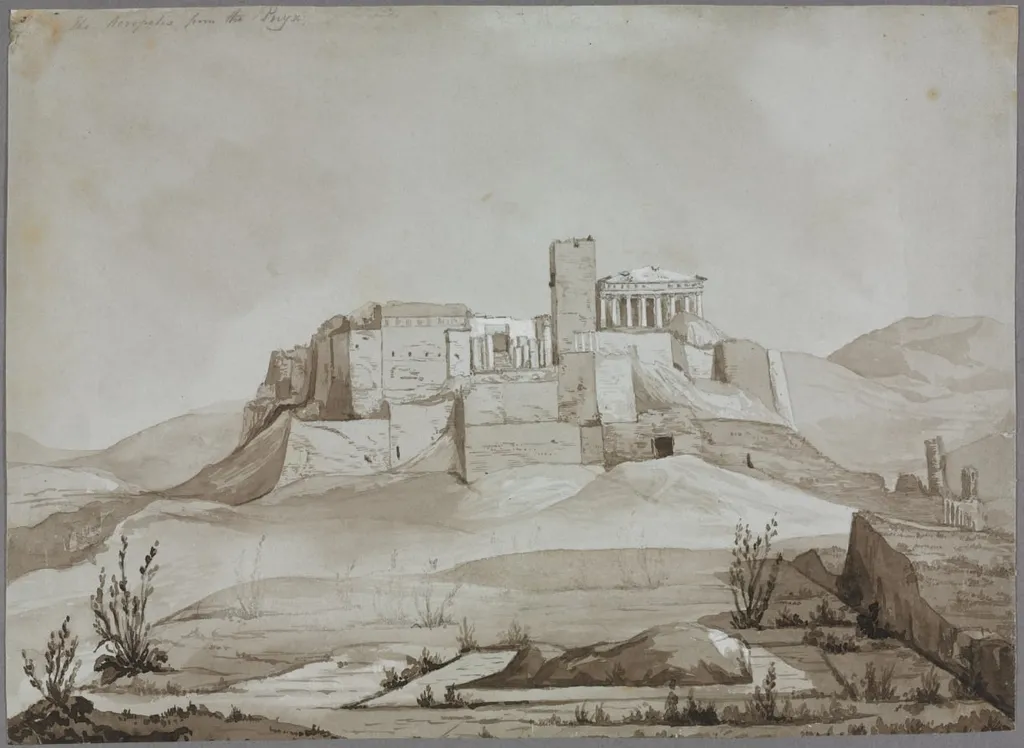
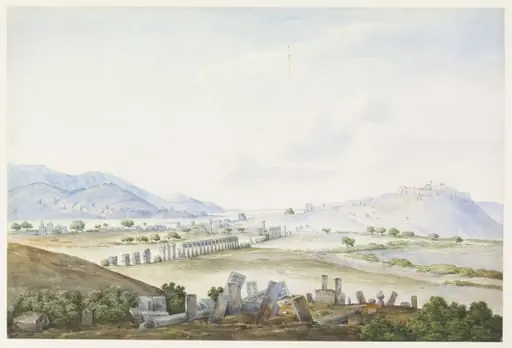
The Acropolis from the Pnyx, Athens, Greece is a drawing by the Romanticist artist Unknown. It dates from 1844 and is held in the collection of the Cleveland Museum of Art. This pencil drawing captures the Acropolis as seen from the Pnyx, a nearby hill in Athens.
About this work
Overview
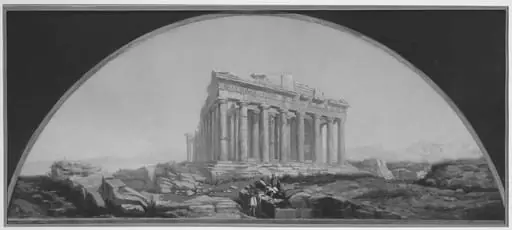
The composition emphasizes distance and atmosphere, with the Parthenon as the central form surrounded by fragmented ruins.
This pencil drawing captures the Acropolis as seen from the Pnyx, a nearby hill in Athens. Rendered with restrained lines and muted tonalities, it presents the ancient citadel in a state of quiet decay. The composition emphasizes distance and atmosphere, with the Parthenon as the central form surrounded by fragmented ruins. The landscape below, marked by uneven terrain and sparse vegetation, reinforces a sense of time-worn solitude.
Subject & Meaning
The drawing focuses on the enduring presence of classical architecture amid natural erosion. The Acropolis, once a sacred and political center, is shown not as a monument of grandeur but as a ruin absorbed by the earth. This perspective reflects a Romantic sensibility, where the passage of time and the humility of nature are given equal weight to human achievement.
Technique & Style
The artist employs light, linear strokes to suggest form without heavy shading. Contours are delicate, avoiding dramatic contrast, while the texture of stone and soil is implied through varied pressure and hatching. The soft, diffused lighting suggests early morning or late afternoon, enhancing the contemplative mood. There is no attempt at idealization—only observation.
History & Provenance
The drawing likely dates to the early 19th century, when European travelers and artists began documenting Greece’s ancient sites after its independence from the Ottoman Empire. It may have been made by a visitor to Athens during a period of renewed interest in classical antiquity, though the artist’s identity remains unrecorded in available sources.
Context
During the Romantic era, ruins were not merely archaeological subjects but symbols of transience and cultural memory. Artists often depicted classical sites in solitude, contrasting their former glory with present neglect. This drawing aligns with that trend, offering a quiet meditation on history rather than a celebratory record.
Legacy
As a modest, unadorned sketch, it contributes to a broader visual archive of Greece’s ancient landscape during its modern revival. Though not widely exhibited, such works helped shape European perceptions of the Acropolis as a place of poetic decay rather than imperial triumph, influencing later archaeological and artistic engagements with the site.
Artist & collection

 Domestic Scene
 Giacomo and Cardinal Marco, investing Andrea, Abbot of San Zeno, with his Benefice
 The Nymph of Fontainebleau
 Portrait of a Woman
 Madonna and Child with Saints in the Enclosed Garden
 Venus and Minerva
 Family Group of Four on Sofa
 Wall painting from Room H of the Villa of P. Fannius Synistor at Boscoreale
![View of an Egyptian Temple. [Dendara]. 1807, by Dominique Vivant Denon](https://artifactworldgallery.com/img/dominique-vivant-denon--view-of-an-egyptian-temple-dendara-1807--69b7b6b17d97f4dc-w320.webp)