Artwork
The Attractions of Music
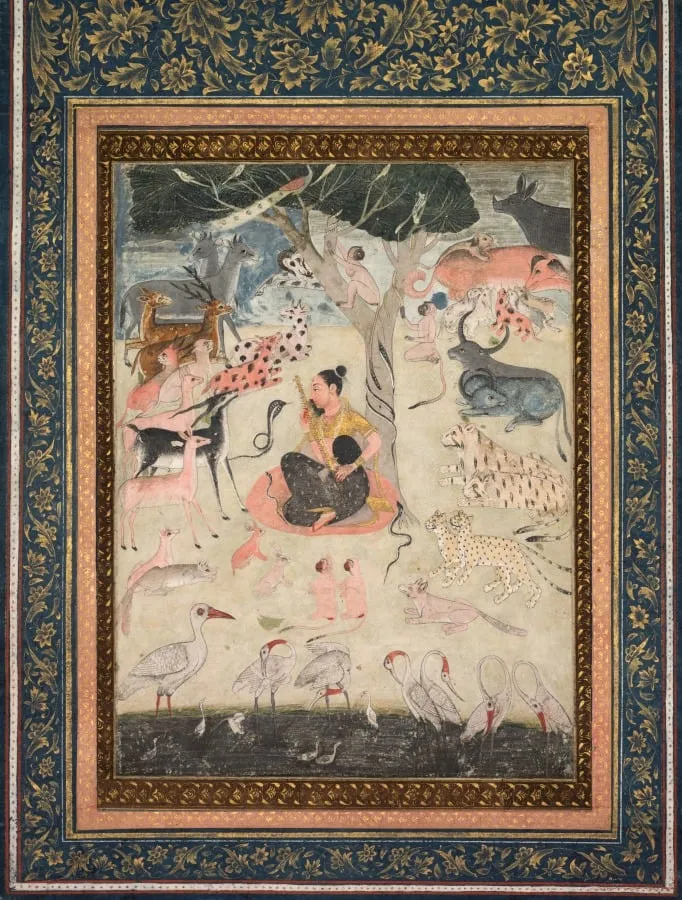
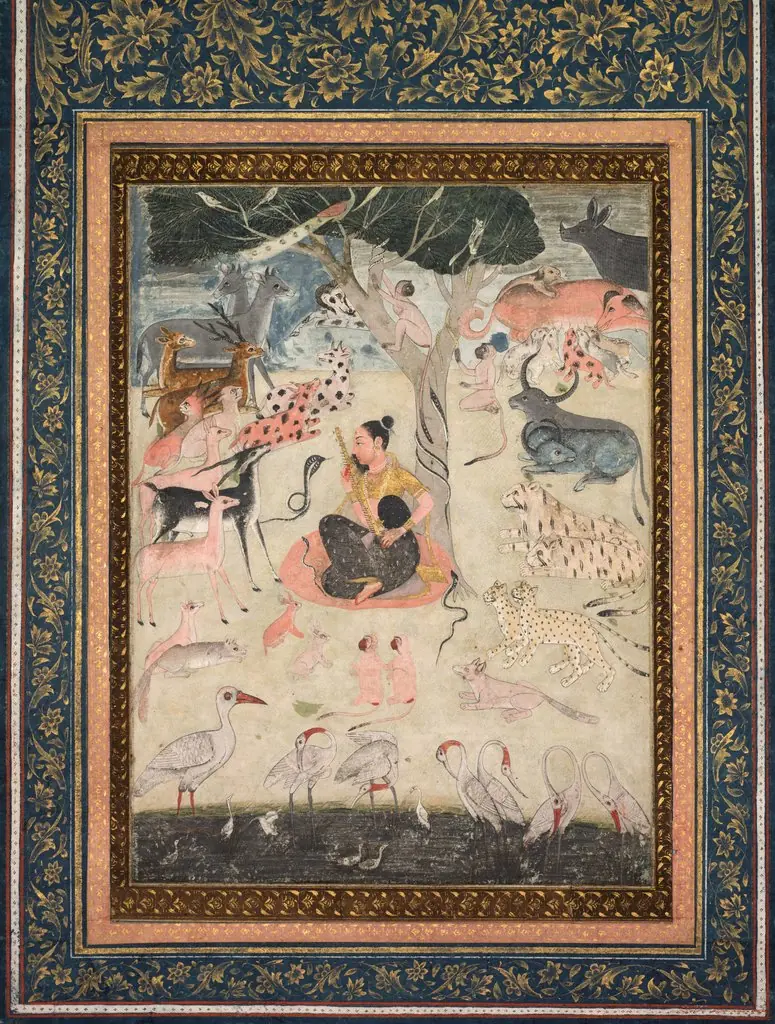
The Attractions of Music is an unspecified painting by the Baroque artist Unknown. It dates from 1680 and is held in the collection of the Cleveland Museum of Art.
About this work
Overview
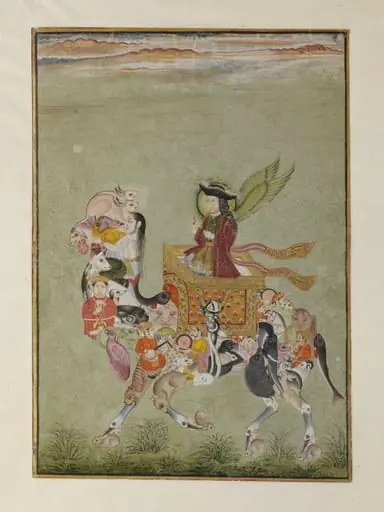
This painting depicts a solitary musician seated on the ground, strumming a stringed instrument as a surreal assembly of hybrid beings gathers around him.
This painting depicts a solitary musician seated on the ground, strumming a stringed instrument as a surreal assembly of hybrid beings gathers around him. Human-animal figures, mythical birds, and fantastical creatures converge in a dreamlike circle, suspended in a space defined by swirling clouds and gnarled trees. The palette favors muted golds, pinks, and blues, softened by time, while a dark, ornate border encloses the scene like a framed vision.
Subject & Meaning
The scene suggests music as a unifying, otherworldly force, drawing together beings from different realms—part human, part animal, part spirit. The musician, isolated yet central, acts as a conduit between the natural and the imagined. The gathering creatures, neither hostile nor playful, imply a quiet ritual or trance, where sound transcends species and form, evoking a mythic harmony beyond earthly logic.
Technique & Style
The figures are rendered with delicate, almost ethereal lines, floating without clear grounding, enhancing the sense of unreality. Colors, though once vivid, now appear weathered, lending an antique luminescence. The background employs soft gradients and hazy forms, while the border features intricate, repetitive patterns that echo manuscript illumination, reinforcing the painting’s liminal, ceremonial tone.
History & Provenance
The work’s origins are tied to late Renaissance or early Baroque circles, likely created in a region where allegorical and fantastical imagery flourished. Its decorative border and intimate scale suggest it was made for private contemplation, perhaps as part of a collector’s cabinet or devotional object. No definitive record of its early ownership survives, but its style aligns with Northern European traditions of symbolic fantasy.
Context
Emerging in an era when natural philosophy and folklore intersected, the painting reflects a fascination with hybrid creatures and the power of music to alter perception. Similar imagery appears in alchemical texts and courtly entertainments, where music symbolized cosmic order. The work belongs to a visual tradition that blurred science, myth, and mysticism, appealing to those seeking hidden meanings in nature’s anomalies.
Legacy
Though not widely known today, the painting exemplifies a vein of early modern art that prioritized symbolic imagination over realism. Its influence can be traced in later Romantic and Symbolist works that explored music, transformation, and the supernatural. It remains a quiet testament to the enduring human impulse to visualize the invisible through layered, enchanted forms.
Artist & collection

 Domestic Scene
 Giacomo and Cardinal Marco, investing Andrea, Abbot of San Zeno, with his Benefice
 The Nymph of Fontainebleau
 Portrait of a Woman
 Madonna and Child with Saints in the Enclosed Garden
 Venus and Minerva
 Family Group of Four on Sofa
 Wall painting from Room H of the Villa of P. Fannius Synistor at Boscoreale
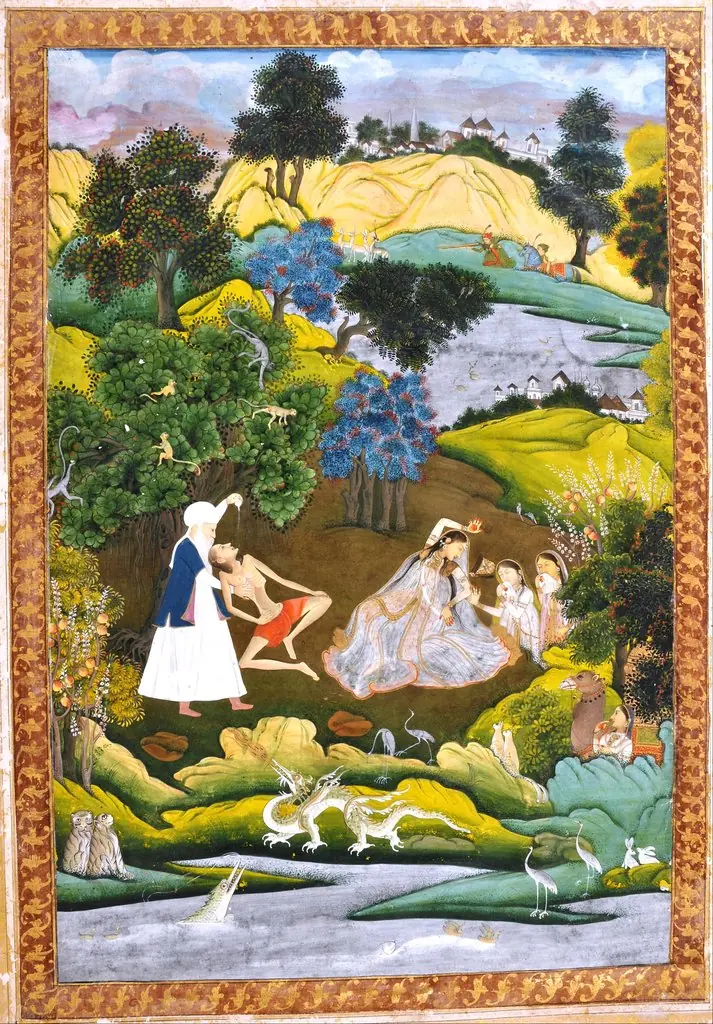 Fainted Laila and Majnun-Based on the Khamsa of Persian poet Nizami
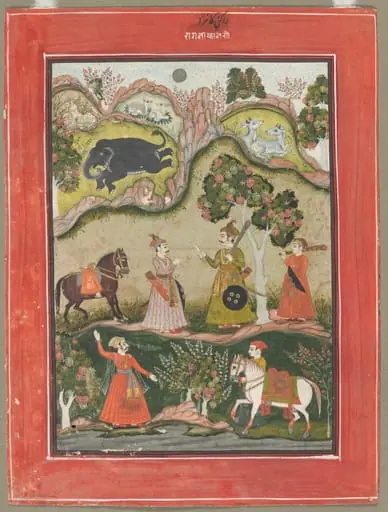 Kanhara Ragini: Song of Inspiration to Krishna for Killing the Elephant Demon, from the Ragamala Series
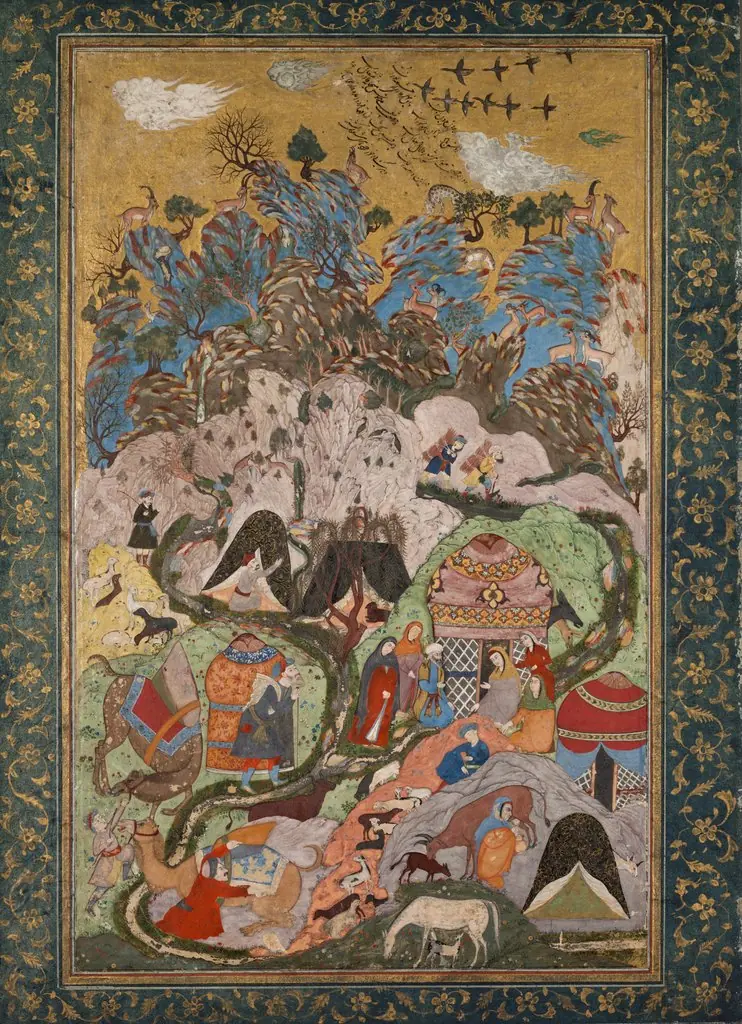 Encampment in the Mountains
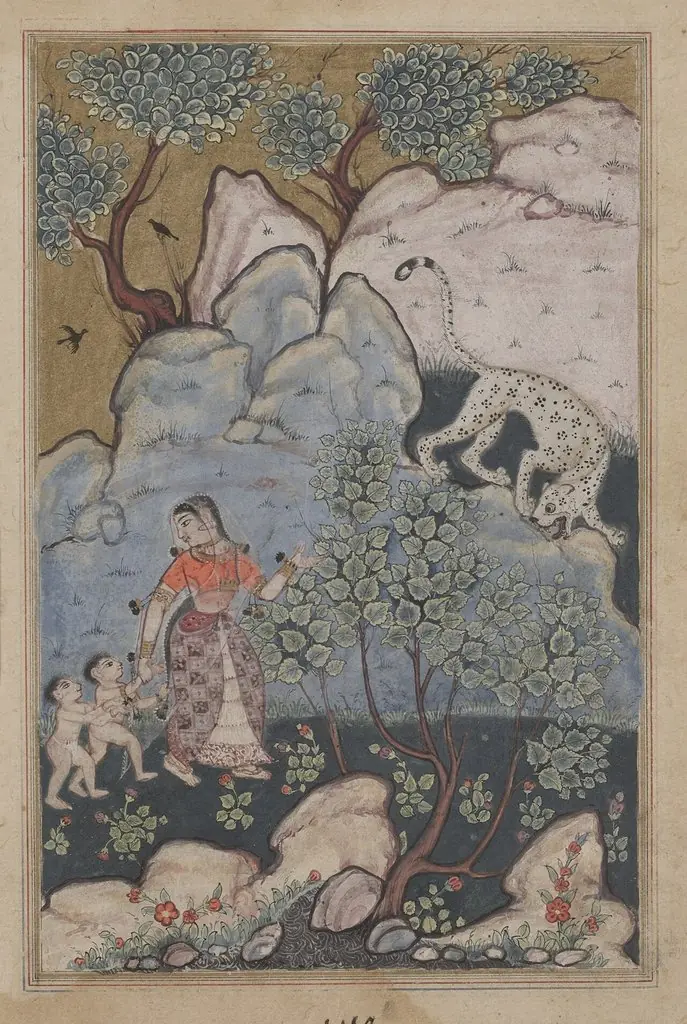 A woman with two children, having abandoned her home, goes into the forest where she encounters a leopard, from a Tuti-nama (Tales of a Parrot): Thirtieth Night
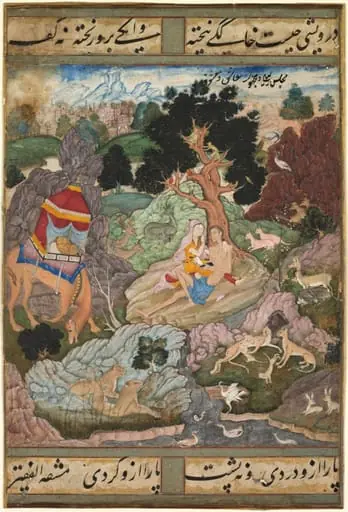 Layla and Majnun in the wilderness with animals, from a Khamsa (Quintet) of Amir Khusrau Dihlavi
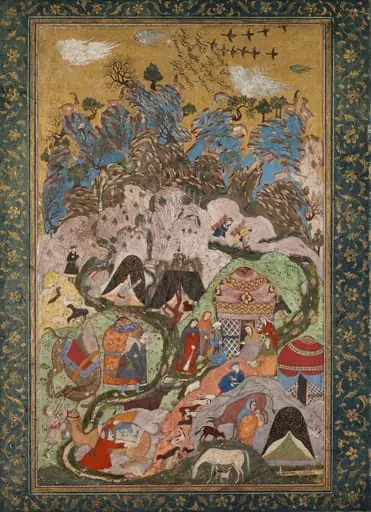 Encampment in the Mountains
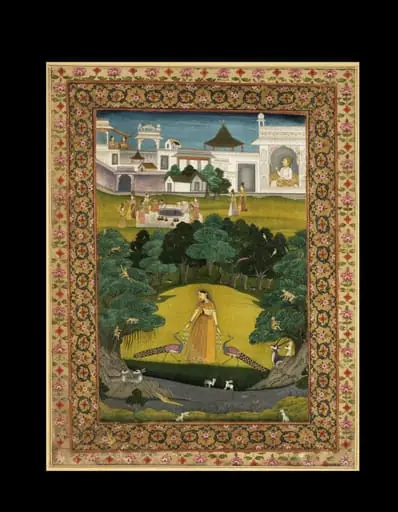 Kakubha ragini
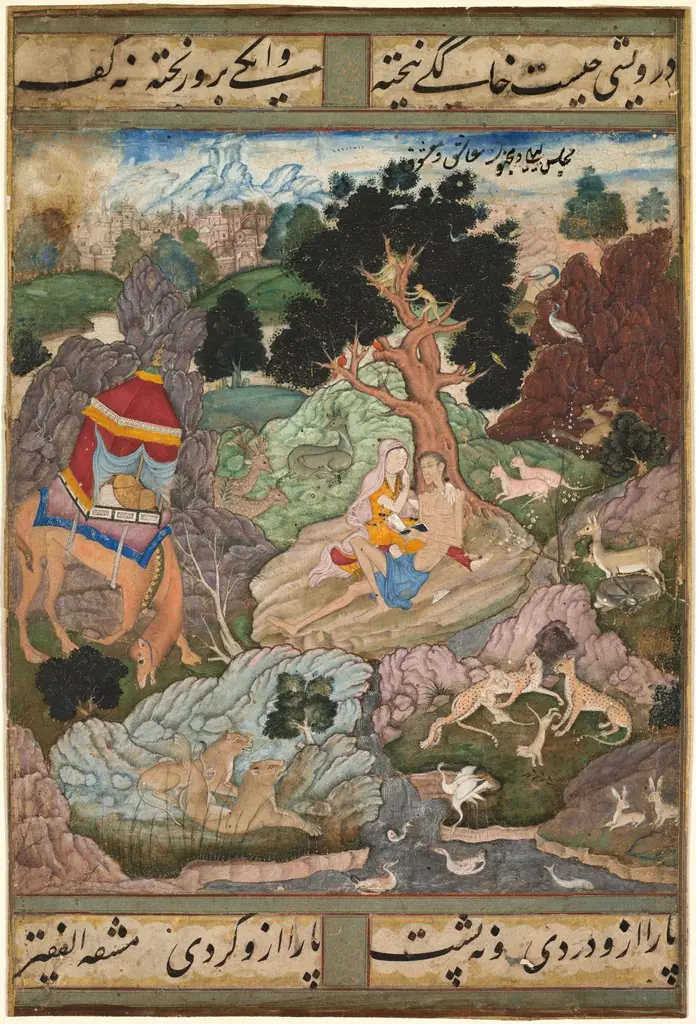 Layla and Majnun in the wilderness with animals, from a Khamsa (Quintet) of Amir Khusrau Dihlavi
 Untitled
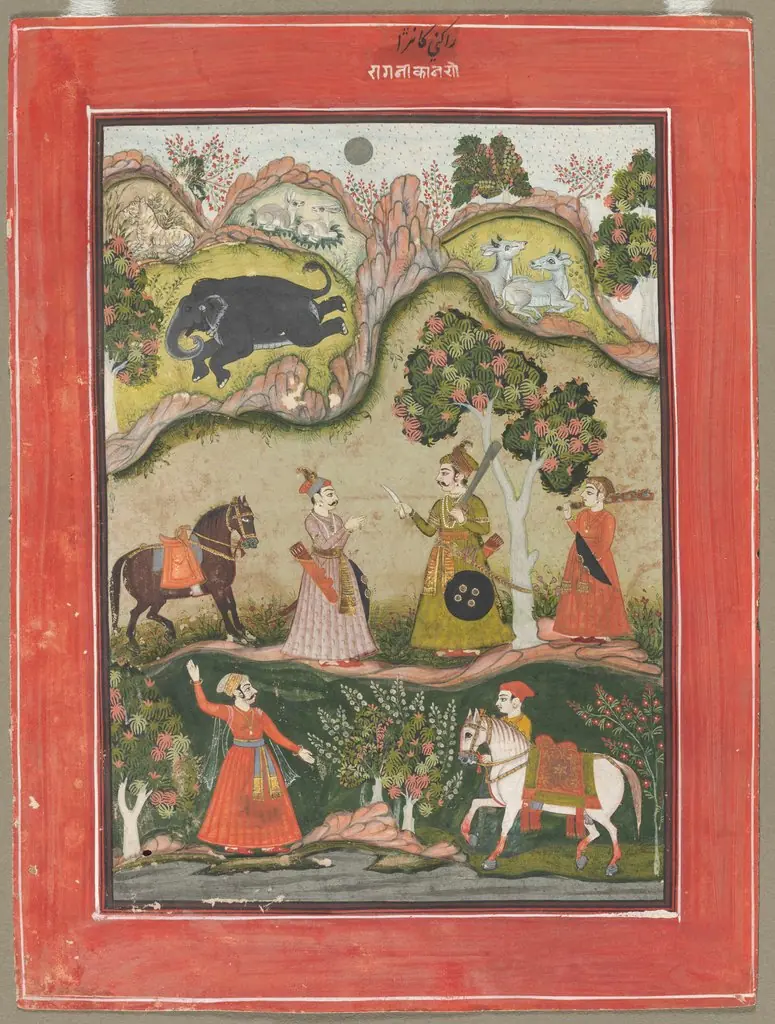 Kanhara Ragini: Song of Inspiration to Krishna for Killing the Elephant Demon, from the Ragamala Series
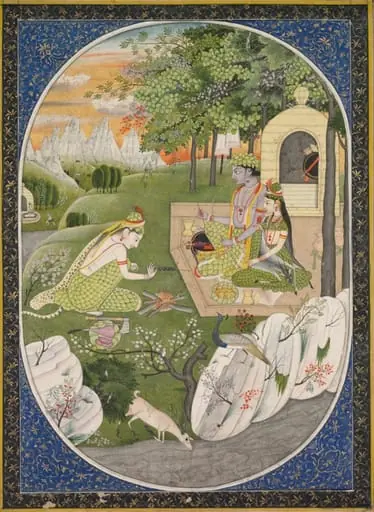 Rama, Sita, and Lakshmana in the forest
 The Attractions of Music