Artwork
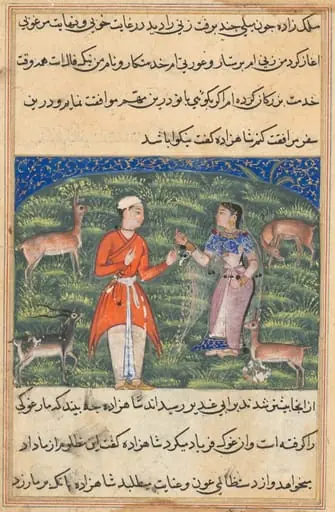
Layla and Majnun in the wilderness with animals, from a Khamsa (Quintet) of Amir Khusrau Dihlavi
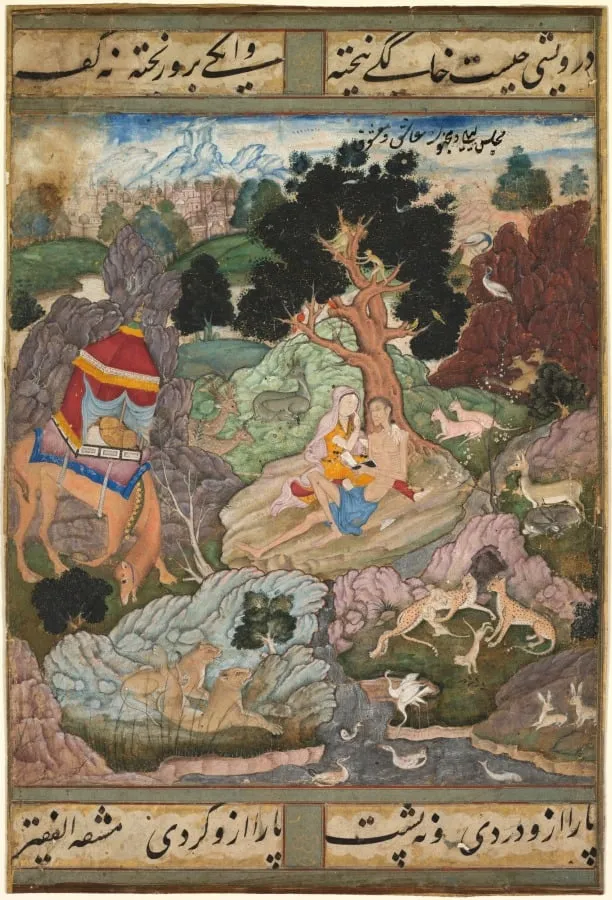
Layla and Majnun in the wilderness with animals, from a Khamsa (Quintet) of Amir Khusrau Dihlavi is an unspecified painting by the Mughal Painting artist Sanwalah. It dates from 1595 and is held in the collection of the Cleveland Museum of Art. The painting portrays the legendary lovers Layla and Majnun seated upon pinkish rocks within a vivid desert landscape.
About this work
Overview
The painting portrays the legendary lovers Layla and Majnun seated upon pinkish rocks within a vivid desert landscape. Around them gather a variety of animals—deer, lions, rabbits—set against a backdrop of multicoloured stone. The composition captures the moment of their reunion after years of forced separation, emphasizing both the human figures’ frailty and the surrounding wilderness.
Subject & Meaning
Layla and Majnun, central figures of a classic Persian love narrative, are shown reunited after a long exile that drove Majnun to the brink of madness. Their presence amid the fauna suggests that the purity of their bond attracts and comforts the natural world, implying a universal resonance of love that transcends human society and even draws protection from wild creatures.
Technique & Style
Rendered in bright, saturated hues, the work employs a stylised representation of the northern Indian hillscape, diverging from traditional Persian settings.
Rendered in bright, saturated hues, the work employs a stylised representation of the northern Indian hillscape, diverging from traditional Persian settings. The figures are rendered with slender, elongated forms, while the animals are depicted with a delicate, almost ornamental quality. The overall composition balances intricate detail in the fauna with a simplified, almost schematic treatment of the rocky terrain.
History & Provenance
The scene derives from a version of the Layla‑Majnun tale recorded in a Khamsa (Quintet) by Amir Khusrau Dihlavi, an Indian poet who wrote in Persian. Khusrau’s adaptation modifies earlier Bedouin endings, allowing the lovers to meet alive rather than die apart. The painting’s provenance traces to a collection of Indian‑Persian illustrated manuscripts, though the exact date of execution remains uncertain.
Context
The narrative originates in ancient Arabian Bedouin folklore, later absorbed into Persian literary tradition and further reshaped by Indian authors like Khusrau. By situating the reunion in a northern Indian wilderness, the artist blends cultural motifs, reflecting the cross‑regional exchange of stories along medieval trade routes. The inclusion of diverse wildlife underscores the syncretic aesthetic common in Indo‑Persian visual culture.
Artist & collection

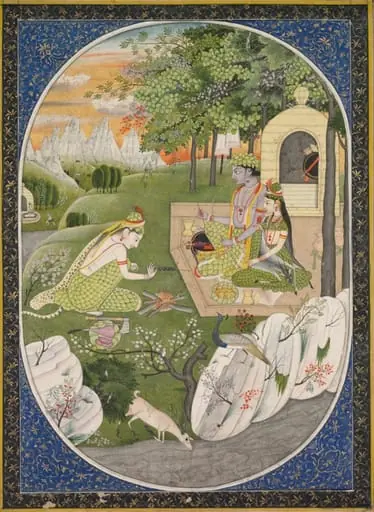 Rama, Sita, and Lakshmana in the forest
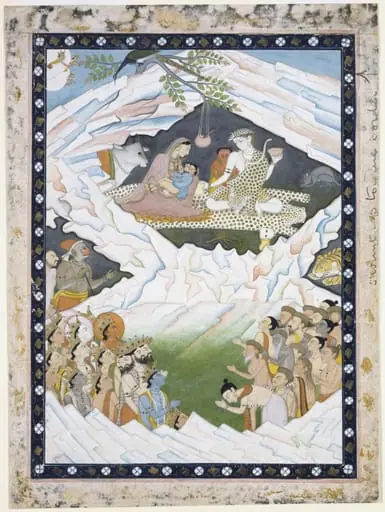 Shiva and Parvati
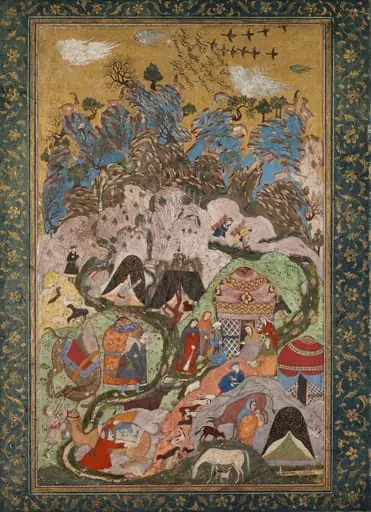 Encampment in the Mountains
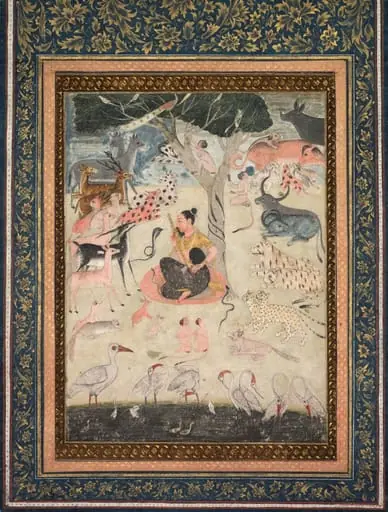 The Attractions of Music
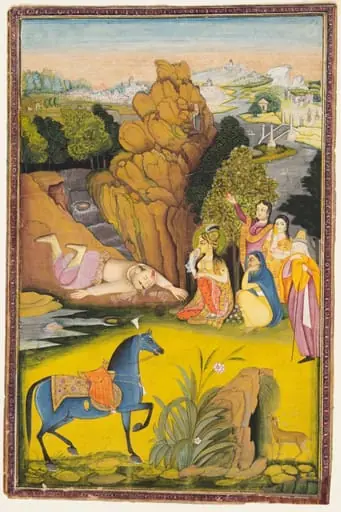 Farhad Kills Himself After Hearing the False News of Shirin’s Death
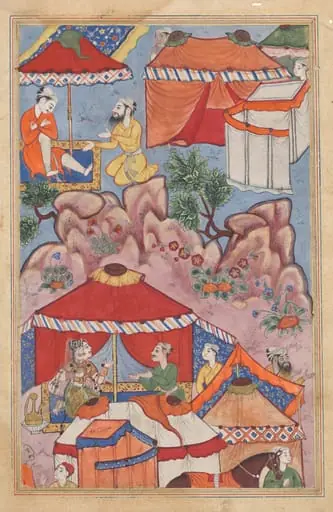 Bashir confides his love for Habbaza to an Arab friend, and sends him to her with a message, from a Tuti-nama (Tales of a Parrot): Twenty-fourth Night
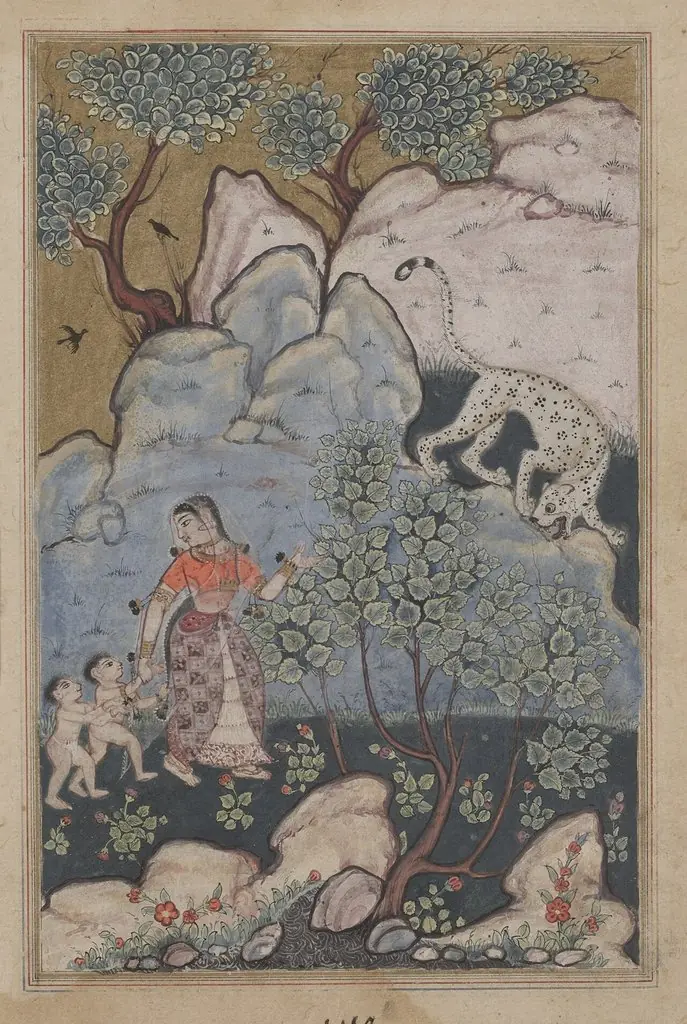 A woman with two children, having abandoned her home, goes into the forest where she encounters a leopard, from a Tuti-nama (Tales of a Parrot): Thirtieth Night
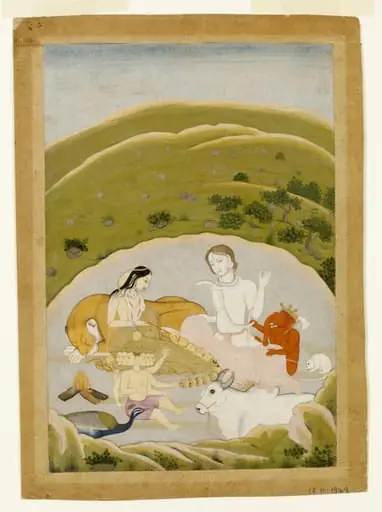 Shiva and Parvati, Ganesh, Karttikeya and Nandi
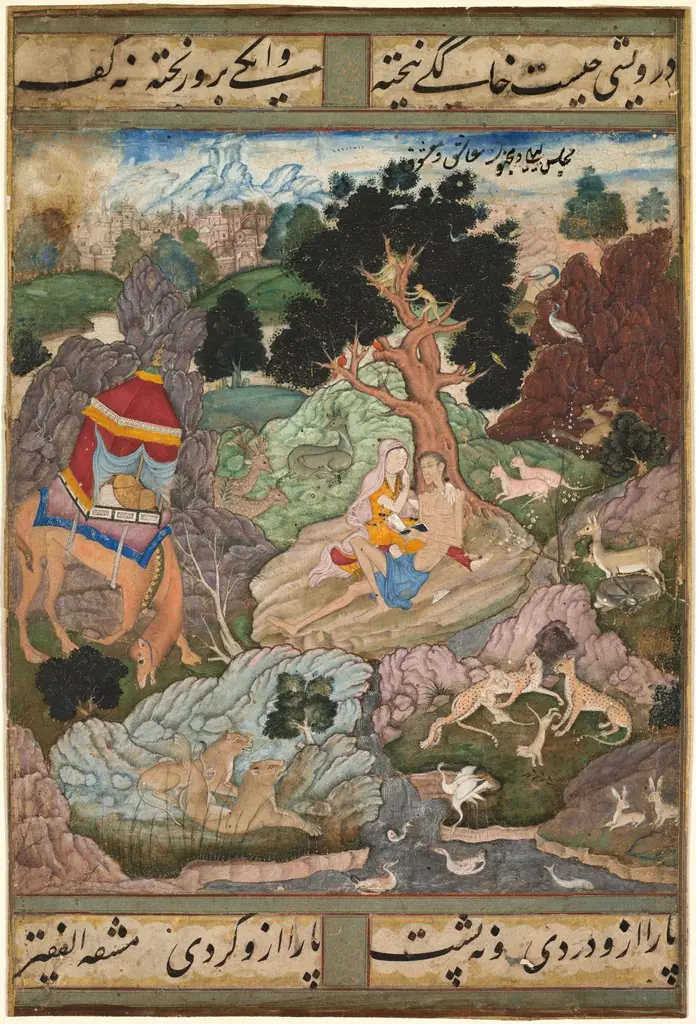 Layla and Majnun in the wilderness with animals, from a Khamsa (Quintet) of Amir Khusrau Dihlavi
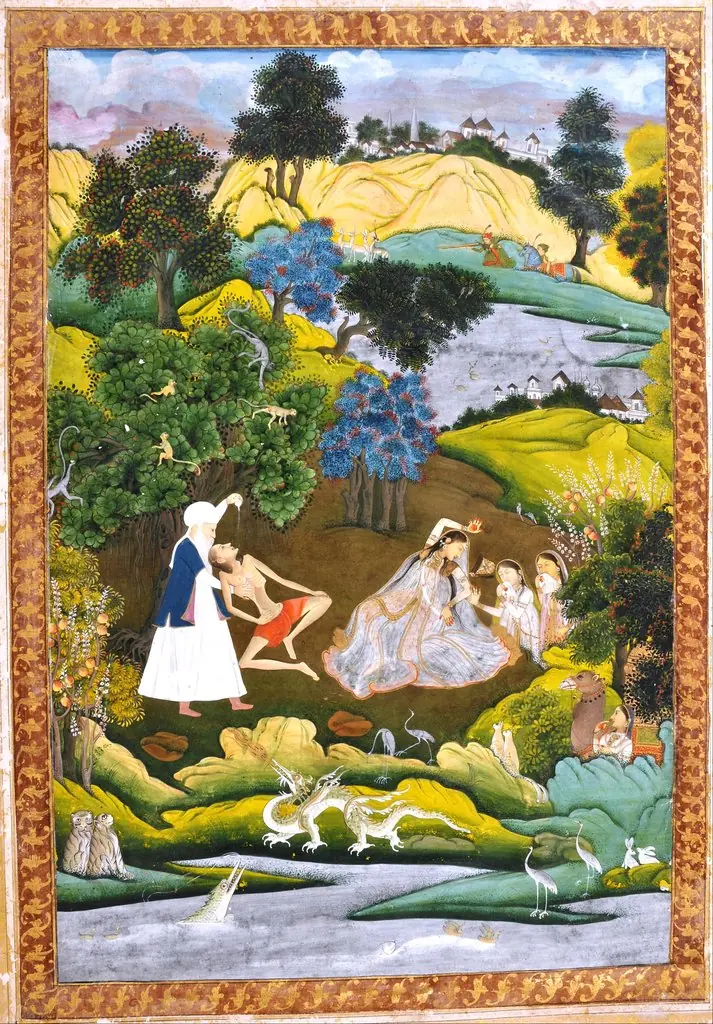 Fainted Laila and Majnun-Based on the Khamsa of Persian poet Nizami
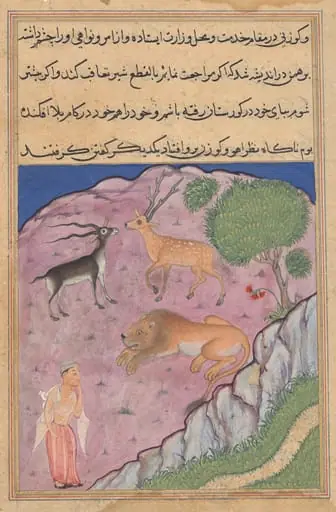 The Brahman comes upon a lion who has a deer and a gazelle as his viziers, from a Tuti-nama (Tales of a Parrot): Twenty-first Night
 Nikfal, the fortune of the prince in the form of a woman, offers to accompany him, from a Tuti-nama (Tales of a Parrot): Eighteenth Night