Artwork
The court of the Raja of Ujjain, from a Tuti-nama (Tales of a Parrot): Forty-sixth Night
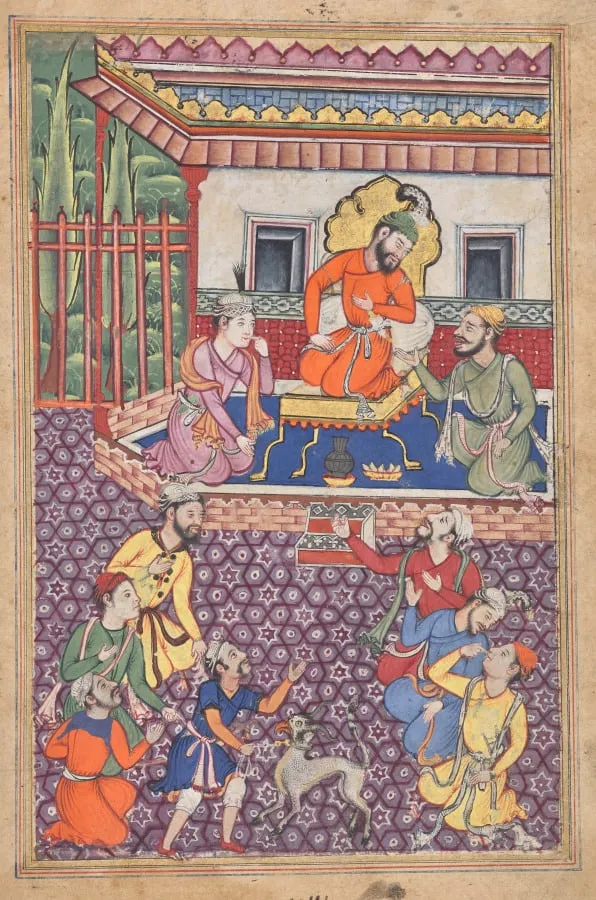
The court of the Raja of Ujjain, from a Tuti-nama (Tales of a Parrot): Forty-sixth Night is an unspecified painting by the Mughal Painting artist Unknown. It dates from 1560 and is held in the collection of the Cleveland Museum of Art.
About this work
You see a crowded royal court: turbaned nobles, musicians, and a strange creature with hooves, a beak, and horns standing before a raja on a golden throne.
You see a crowded royal court: turbaned nobles, musicians, and a strange creature with hooves, a beak, and horns standing before a raja on a golden throne.
The animal is from a story told by a parrot to keep a queen from sneaking out at night. The artist mixed Persian, Indian, and European ideas—cloven hooves look like something from a griffin, but the fur is drawn to look impossibly soft.
To see more paintings like this, look up Mughal India, court of Akbar (reigned 1556–1605).
Overview
The miniature portrays a royal audience in Ujjain, where the ruler sits upon a gilded throne surrounded by courtiers, musicians, and an extraordinary beast. The creature, presented as a hunting trophy, combines cloven hooves, a beak and horns with a luxuriant coat, creating a hybrid that dominates the composition while the surrounding figures observe it with a mixture of curiosity and reverence.
Subject & Meaning
The scene derives from a night‑time tale narrated by a parrot, intended to deter a queen from nocturnal escapades. In the story, the formidable raja captures a fantastical animal whose fur is described as softer than sable and smoother than ermine, emphasizing the ruler’s power to obtain the unattainable and the moral of restraint conveyed through the parrot’s warning.
Technique & Style
The artist blends Persian miniature conventions with Indian courtly motifs and European fantastical iconography. The beast’s cloven hooves and horned beak echo griffin imagery common in European bestiaries, while the rendering of its fur employs delicate brushwork to suggest an implausibly silky texture. The composition’s crowded court, intricate turbaned dress, and gold accents reflect the lavish aesthetic of Mughal court paintings.
History & Provenance
The work forms part of a Tuti‑nama, a collection of illustrated stories, and is dated to the late 16th‑early 17th century during the reign of Emperor Akbar (1556–1605). It exemplifies the cross‑cultural exchanges that characterized Mughal artistic production, incorporating motifs from Persian, Indian, and European sources as the empire engaged with diverse artistic traditions.
Artist & collection

 Domestic Scene
 Giacomo and Cardinal Marco, investing Andrea, Abbot of San Zeno, with his Benefice
 The Nymph of Fontainebleau
 Portrait of a Woman
 Madonna and Child with Saints in the Enclosed Garden
 Venus and Minerva
 Family Group of Four on Sofa
 Wall painting from Room H of the Villa of P. Fannius Synistor at Boscoreale
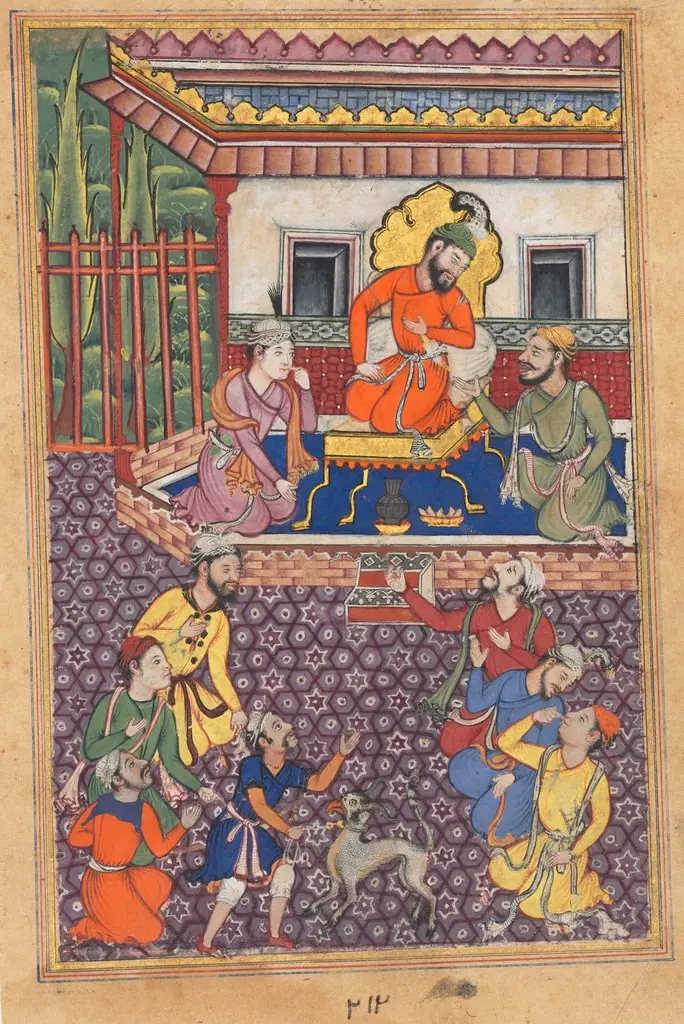 The court of the Raja of Ujjain, from a Tuti-nama (Tales of a Parrot): Forty-sixth Night
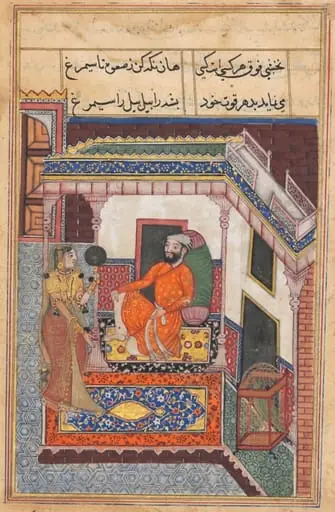 The parrot laughs on hearing the Raja of Ujjain’s wife admire her beauty in a mirror, from a Tuti-nama (Tales of a Parrot: Forty-sixth Night
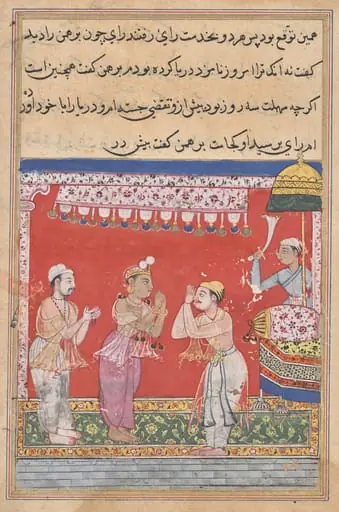 The king of the Ocean, having assumed human form, arrives at the court of the Raja, from a Tuti-nama (Tales of a Parrot): Eleventh Night
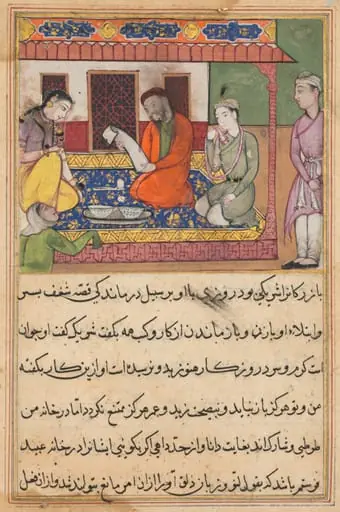 The marriage of ‘Ubaid, son of a merchant of Tirmiz, from a Tuti-nama (Tales of a Parrot): Forty-second Night
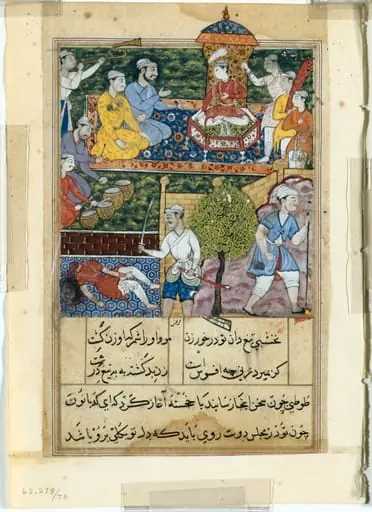 The young prince is crowned and the wicked handmaiden is executed, from a Tuti-nama (Tales of a Parrot): Eighth Night
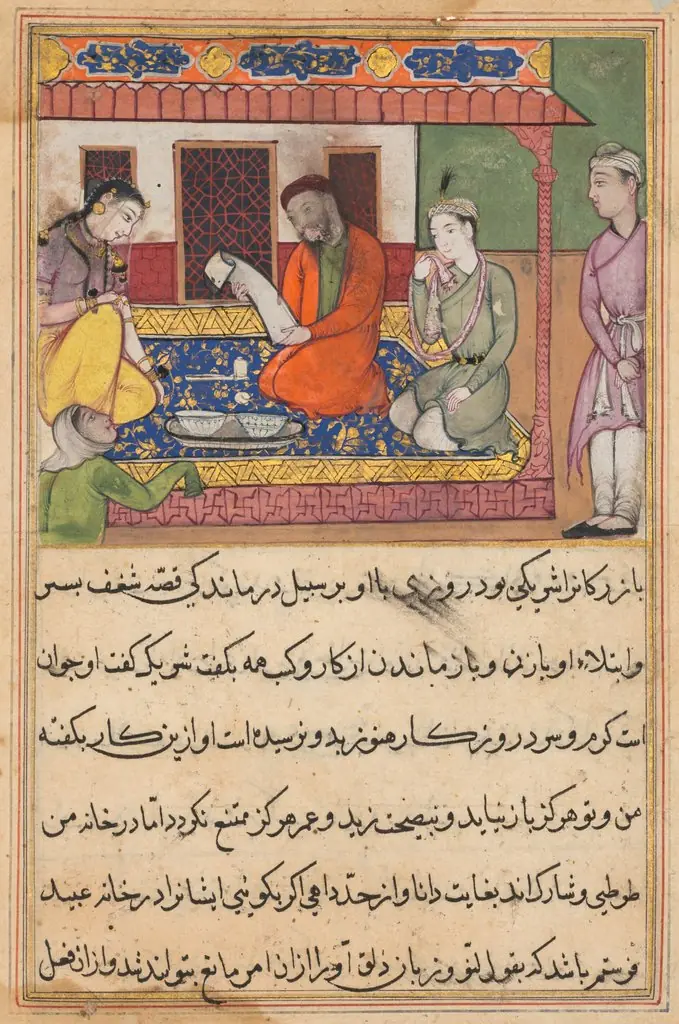 The marriage of ‘Ubaid, son of a merchant of Tirmiz, from a Tuti-nama (Tales of a Parrot): Forty-second Night
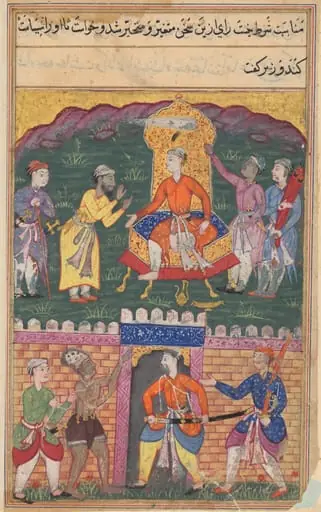 The vizier dissuades the king of Bahilistan from executing the dervish who asks for his daughter’s hand in marriage, from a Tuti-nama (Tales of a Parrot): Seventh Night