Artwork
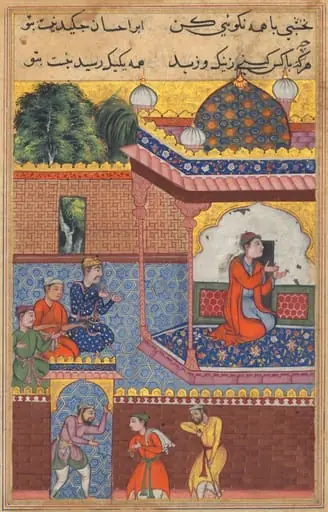
The vizier dissuades the king of Bahilistan from executing the dervish who asks for his daughter’s hand in marriage, from a Tuti-nama (Tales of a Parrot): Seventh Night
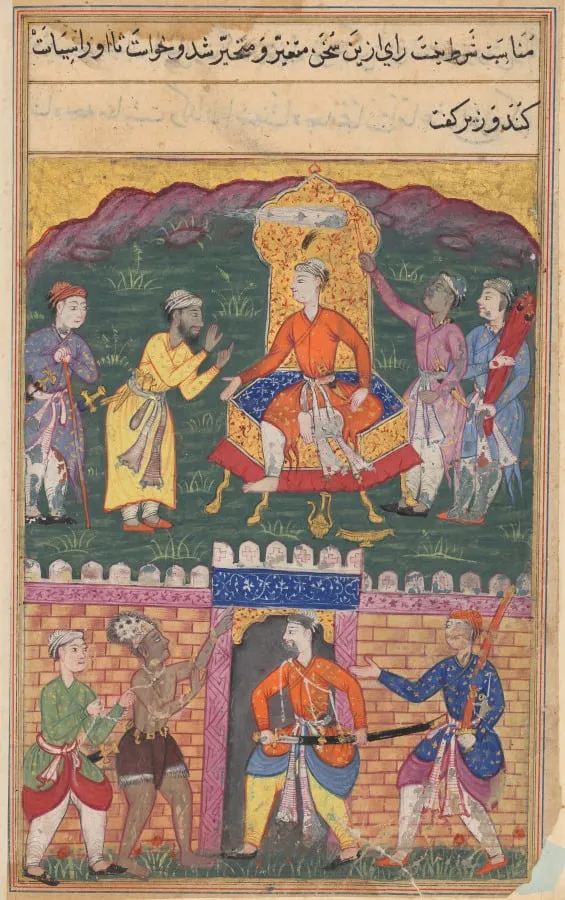
The vizier dissuades the king of Bahilistan from executing the dervish who asks for his daughter’s hand in marriage, from a Tuti-nama (Tales of a Parrot): Seventh Night is an unspecified painting by the Mughal Painting artist Unknown. It dates from 1560 and is held in the collection of the Cleveland Museum of Art. This painting illustrates a scene from the Tuti-nama, a collection of tales told by a parrot to a Mughal emperor.
About this work
The artist packed the moment with tiny details—embroidered slippers, a jeweled dagger, even the parrot perched above.
A king in a red robe points his sword at a ragged man in a fur cap. Behind them, a vizier in green whispers in the king’s ear. Servants and guards stand frozen, watching.
This scene comes from a *Tuti-nama*, a book of parrot tales told to a Mughal emperor. The story warns kings not to act in anger. The artist packed the moment with tiny details—embroidered slippers, a jeweled dagger, even the parrot perched above.
To see more stories like this, look up Mughal India, court of Akbar (reigned 1556–1605).
Overview
This painting illustrates a scene from the Tuti-nama, a collection of tales told by a parrot to a Mughal emperor. It depicts a dramatic moment where a king is dissuaded from executing a dervish who has asked for his daughter's hand in marriage.
Subject & Meaning
The scene shows a king, enraged and sword drawn, confronting a dervish. A vizier intervenes, cautioning the king against harming the mendicant. The story conveys a moral warning to kings against acting impulsively.
Technique & Style
The artist has densely populated the scene with detailed elements, including ornate clothing and accessories, such as embroidered slippers and a jeweled dagger. The composition is characterized by its rich textures and intricate depiction of characters.
Context
The Tuti-nama was created for a Mughal emperor, and this painting is an example of the artistic production during the reign of Akbar (1556–1605). The work reflects the cultural and artistic values of the Mughal court during this period.
Artist & collection

 Domestic Scene
 Giacomo and Cardinal Marco, investing Andrea, Abbot of San Zeno, with his Benefice
 The Nymph of Fontainebleau
 Portrait of a Woman
 Madonna and Child with Saints in the Enclosed Garden
 Venus and Minerva
 Family Group of Four on Sofa
 Wall painting from Room H of the Villa of P. Fannius Synistor at Boscoreale
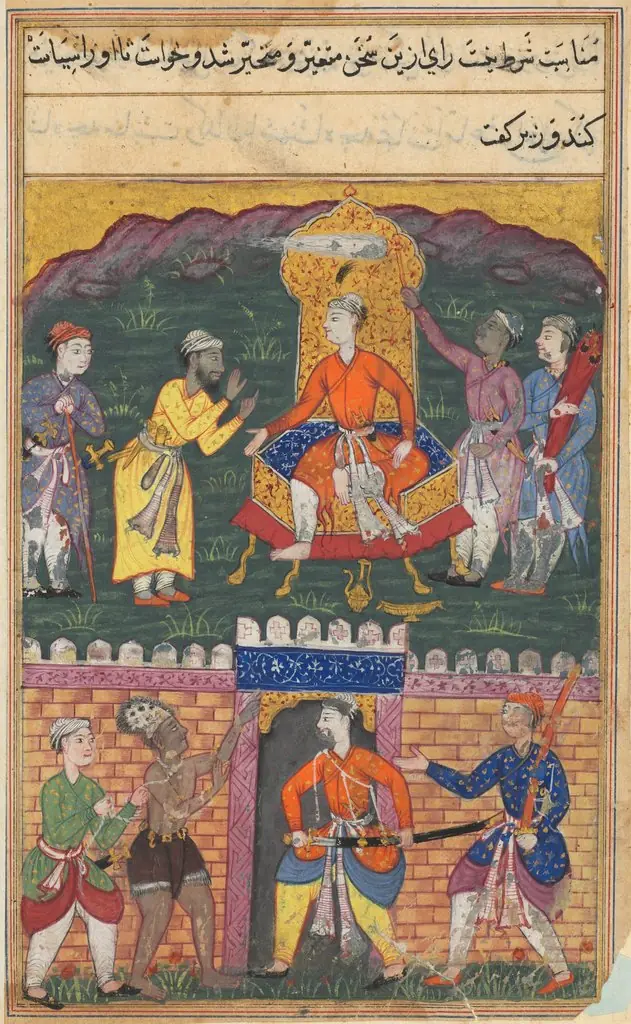 The vizier dissuades the king of Bahilistan from executing the dervish who asks for his daughter’s hand in marriage, from a Tuti-nama (Tales of a Parrot): Seventh Night
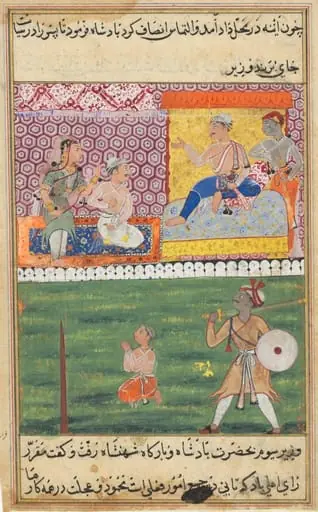 The handmaiden again appeals for justice and the prince is led to the place of execution for the third time, from a Tuti-nama (Tales of a Parrot): Eighth Night
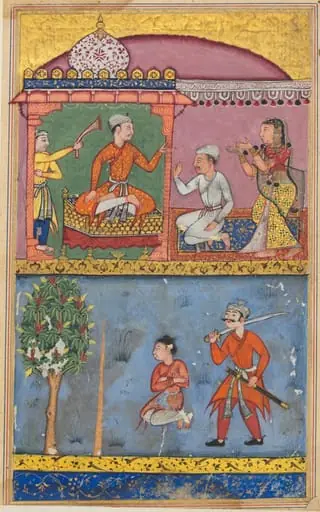 The handmaiden appeals for justice and the prince is taken to the execution site for the fourth time, from a Tuti-nama (Tales of a Parrot): Eighth Night
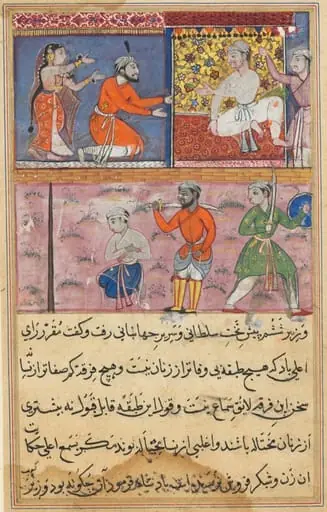 The prince sent back to the place of execution for the sixth time, from a Tuti-nama (Tales of a Parrot): Eighth Night
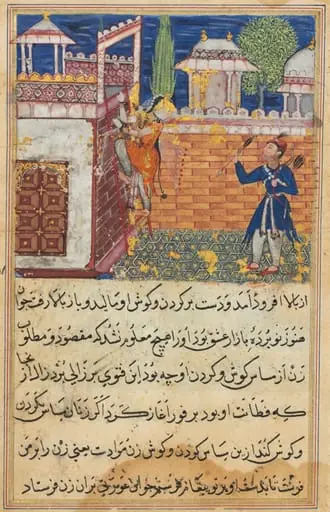 The deceitful wife returns to her terrace after caressing her lover, from a Tuti-nama (Tales of a Parrot): Eighth Night
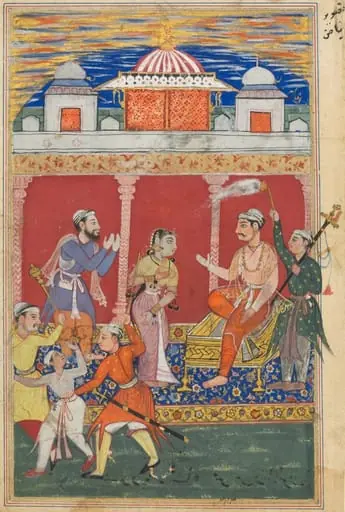 The prince’s ordeal continues, he is ordered away to be executed for the fifth time, from a Tuti-nama (Tales of a Parrot): Eighth Night
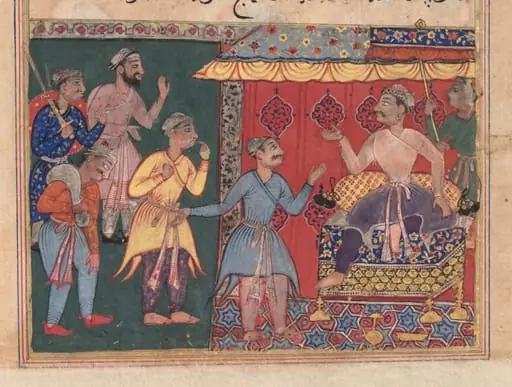 King Bhojaraja tries in vain to ascertain the whereabouts of the pearl from the four travelling companions, from a Tuti-nama (Tales of a Parrot): Twelfth Night
 Kaiwan, Latif, and Sharif arrive at a house of worship, where they seek help from Khurshid who has become a mystical healer, from a Tuti-Nama (Tales of a Parrot): Thirty-second Night