Artwork
The marriage of ‘Ubaid, son of a merchant of Tirmiz, from a Tuti-nama (Tales of a Parrot): Forty-second Night
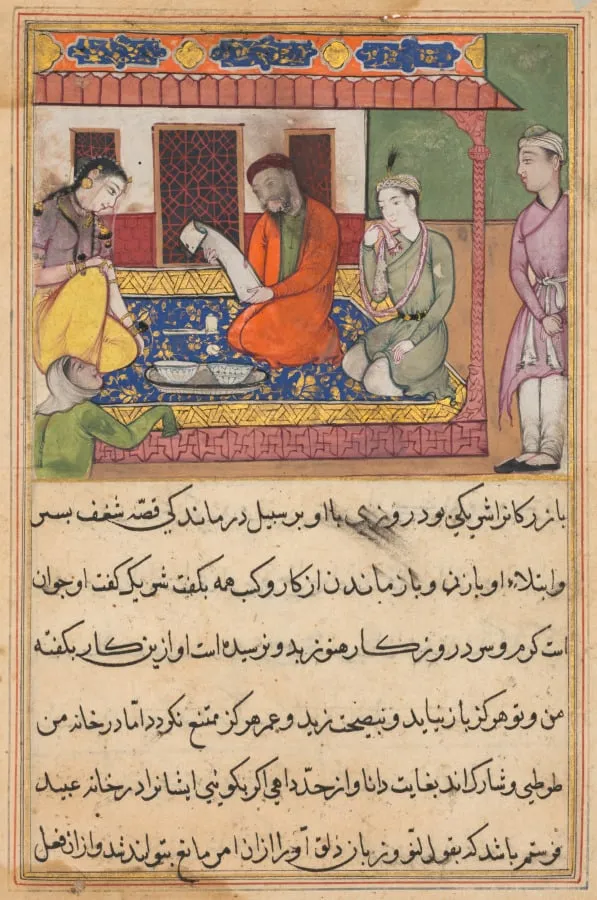
The marriage of ‘Ubaid, son of a merchant of Tirmiz, from a Tuti-nama (Tales of a Parrot): Forty-second Night is an unspecified painting by the Mughal Painting artist Unknown. It dates from 1560 and is held in the collection of the Cleveland Museum of Art. This painting depicts a scene from the Tuti-nama, a collection of tales about a parrot.
About this work
The tiny birds in the corner aren’t just decoration; they’re the wise parrot and myna giving advice to his worried father.
You see a young man in green sitting on a bright blue carpet, holding hands with his bride under a flowering tree.
This painting comes from a book of parrot tales told to Emperor Akbar’s court. The story warns against love that distracts from duty—here, the groom is so smitten he forgets his work. The tiny birds in the corner aren’t just decoration; they’re the wise parrot and myna giving advice to his worried father.
To see more paintings like this, look up Mughal India, court of Akbar (reigned 1556–1605).
Overview
This painting depicts a scene from the Tuti-nama, a collection of tales about a parrot. It illustrates the forty-second night's story, showing the marriage of 'Ubaid, son of a merchant from Tirmiz.
Subject & Meaning
The scene shows 'Ubaid, dressed in green, seated with his bride on an ornate carpet. His infatuation with her beauty leads to neglect of his duties, prompting his father to seek advice from a parrot and myna bird.
Technique & Style
The painting features intricate details, including a blue and gold arabesque carpet and a flowering tree. The inclusion of small birds in the corner, representing the advising parrot and myna, adds to the narrative.
Context
This artwork is part of a manuscript created for Emperor Akbar's court, warning against the dangers of all-consuming love that distracts from one's responsibilities.
History & Provenance
The painting is associated with the Mughal Indian court during Akbar's reign (1556–1605), a period known for its rich cultural and artistic productions.
Artist & collection

 Domestic Scene
 Giacomo and Cardinal Marco, investing Andrea, Abbot of San Zeno, with his Benefice
 The Nymph of Fontainebleau
 Portrait of a Woman
 Madonna and Child with Saints in the Enclosed Garden
 Venus and Minerva
 Family Group of Four on Sofa
 Wall painting from Room H of the Villa of P. Fannius Synistor at Boscoreale
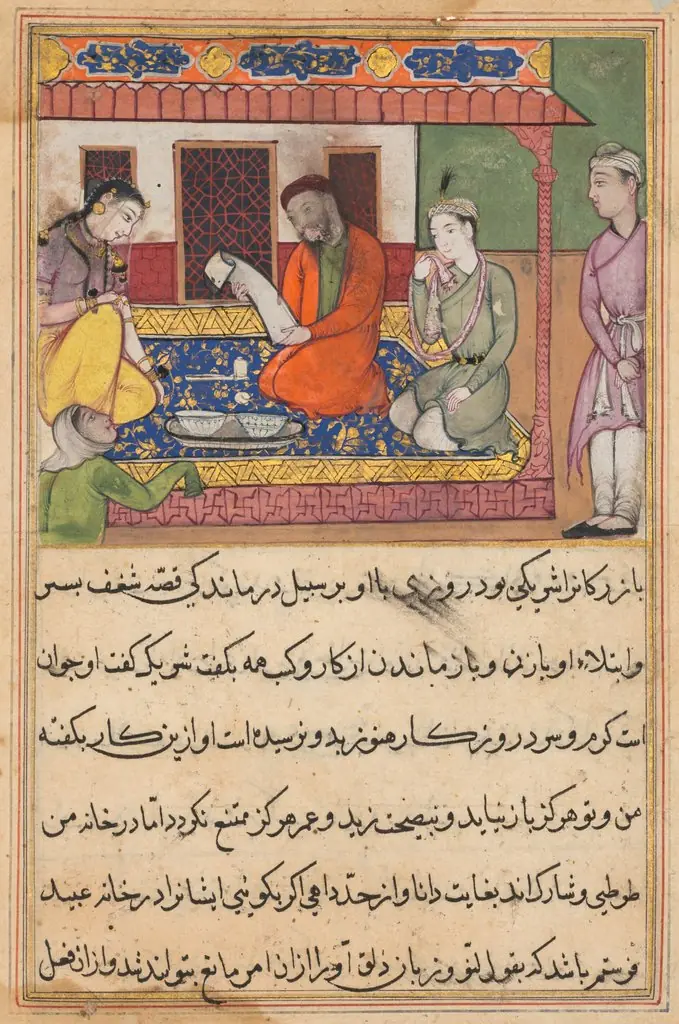 The marriage of ‘Ubaid, son of a merchant of Tirmiz, from a Tuti-nama (Tales of a Parrot): Forty-second Night
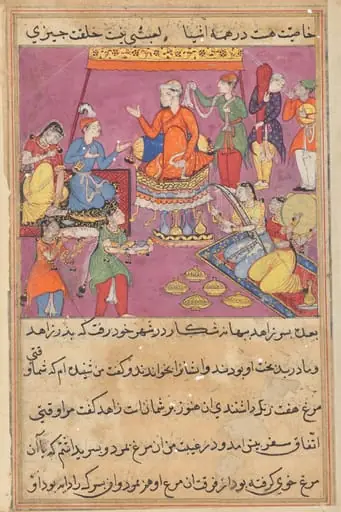 The king gives his daughter in marriage to the pious man’s son, from a Tuti-nama (Tales of a Parrot): Fifty-second Night
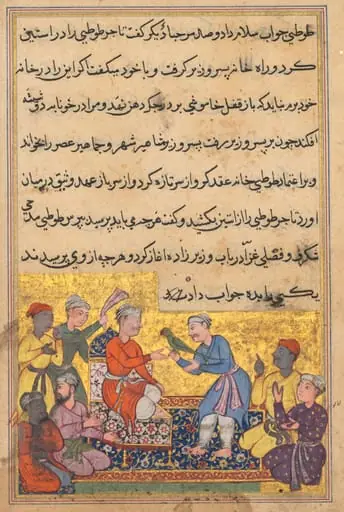 The magic parrot of the merchant talks to the vizier’s son, from a Tuti-nama (Tales of a Parrot): Tenth Night
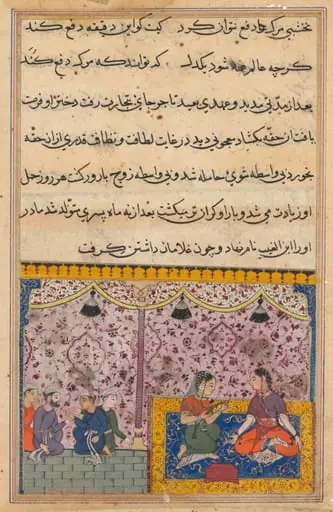 The merchant’s daughter gives birth to a son as a result of eating out of the box. The clever child recognizes the false gems from true, from a Tuti-nama (Tales of a Parrot): Twenty-third Night
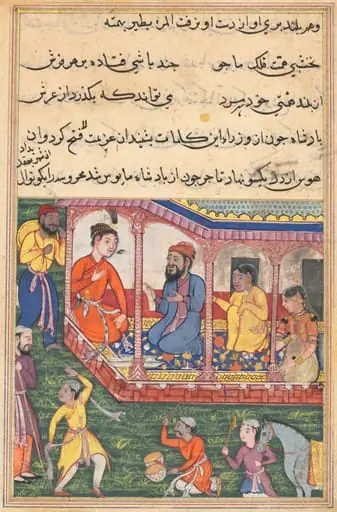 Mahrusa’s marriage to the prefect of the city, from a Tuti-nama (Tales of a Parrot): Thirty-sixth Night
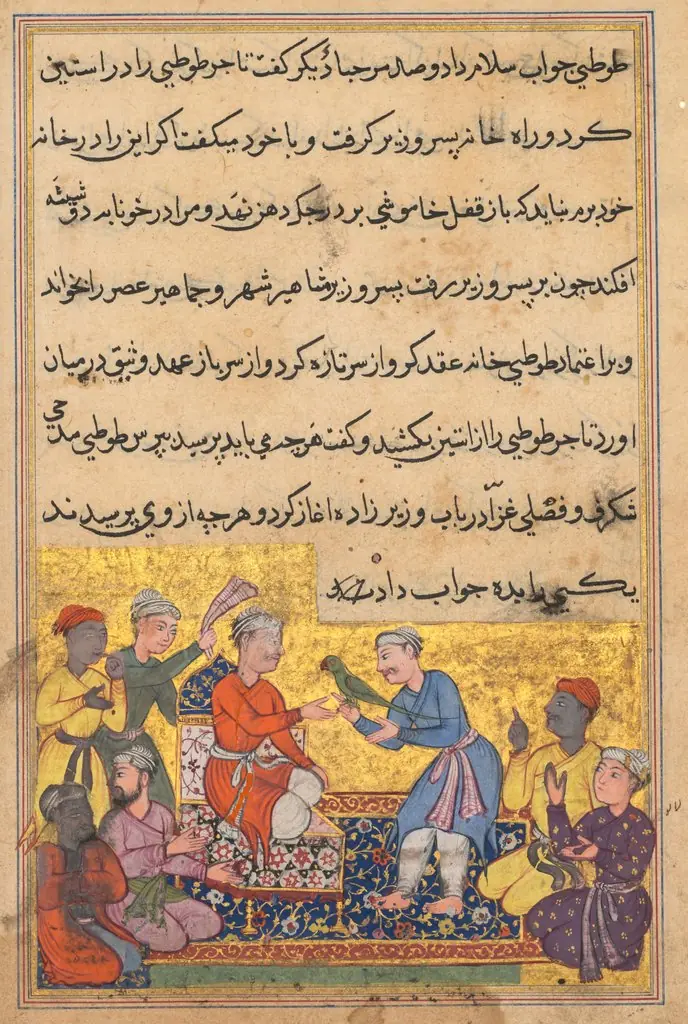 The magic parrot of the merchant talks to the vizier’s son, from a Tuti-nama (Tales of a Parrot): Tenth Night
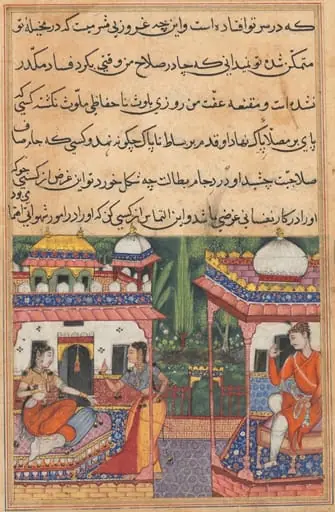 Kaiwan sends a message of love to Khurshid, wife of his brother Utarid who is away on a journey, from a Tuti-nama (Tales of a Parrot): Thirty-second Night
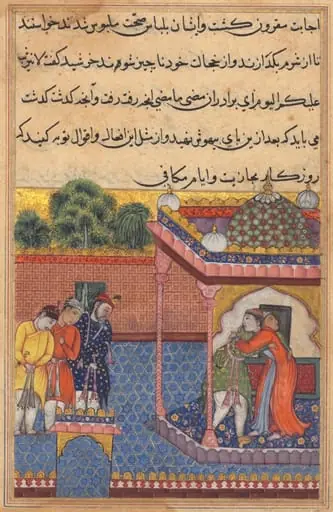 Khurshid reunited with her husband Utarid, from a Tuti-nama (Tales of a Parrot): Thirty-second Night
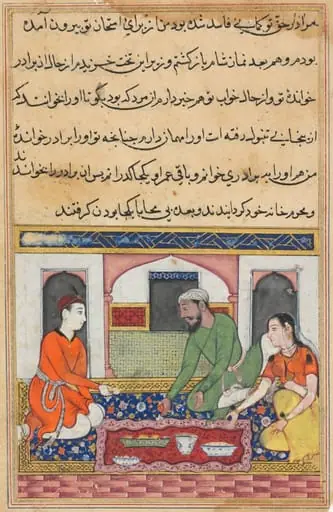 Shahr-Arai and her husband adopt her lover as a brother in the family, from a Tuti-nama (Tales of a Parrot): Fortieth Night
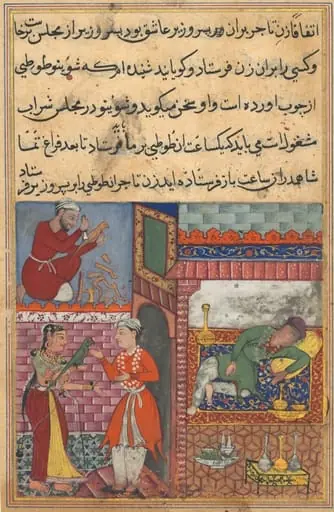 The vizier’s son receives the magic wooden parrot from the wife of the merchant, who is drunk, and has a replica made by a carpenter, from a Tuti-nama (Tales of a Parrot): Tenth Night
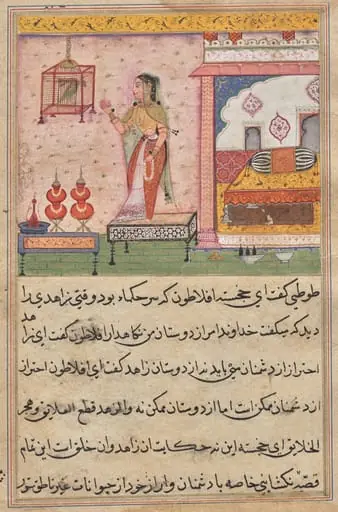 The Parrot Addresses Khujasta at the Beginning of the Twenty-third Night, from a Tuti-nama (Tales of a Parrot)