Artwork
The destitute Mukhtar meets his wife Maimuna at a holy shrine, from a Tuti-nama (Tales of a Parrot): Twenty-fifth Night
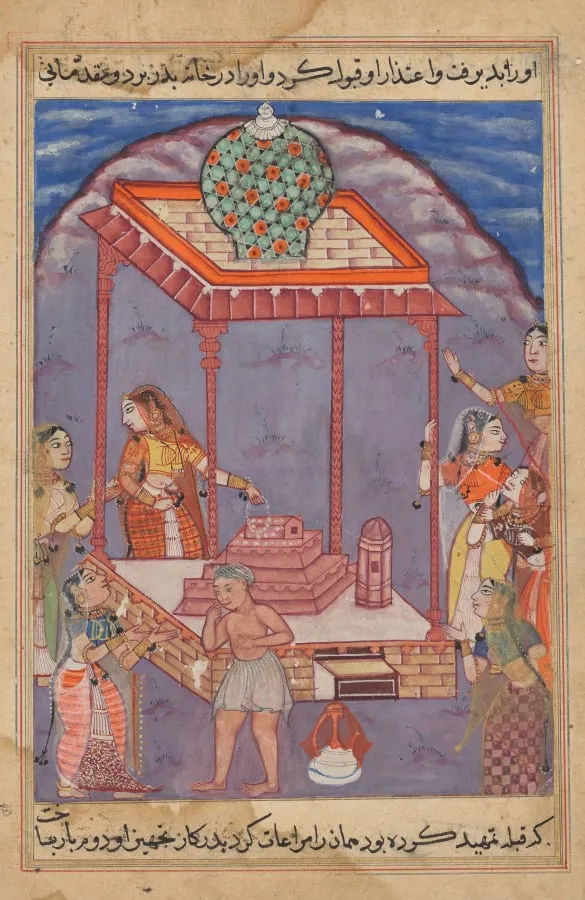
The destitute Mukhtar meets his wife Maimuna at a holy shrine, from a Tuti-nama (Tales of a Parrot): Twenty-fifth Night is an unspecified painting by the Mughal Painting artist Unknown. It dates from 1560 and is held in the collection of the Cleveland Museum of Art. The miniature depicts a destitute man, Mukhtar, kneeling before his wife Maimuna at a sacred shrine.
About this work
Look up *Mughal India, court of Akbar (reigned 1556–1605)* to see more of these tiny, detailed story paintings.
A man in torn clothes kneels in front of a woman at a shrine. She wears fine robes and holds a book. Around them, people pray under arches and trees.
This scene is from a story told by a parrot to keep its owner from leaving home. The man tried to kill his wife for her money, but now he’s broke and begging. She forgives him—though the painting doesn’t say why.
Look up *Mughal India, court of Akbar (reigned 1556–1605)* to see more of these tiny, detailed story paintings.
Overview
The miniature depicts a destitute man, Mukhtar, kneeling before his wife Maimuna at a sacred shrine. He is clothed in tattered garments, while she is adorned in elegant robes and holds an open book. Around them, worshippers gather beneath arched gateways and leafy trees, creating a tranquil setting for the dramatic encounter.
Subject & Meaning
The scene illustrates a moment from the twenty‑fifth night of the *Tuti‑nama* (Tales of a Parrot), in which Mukhtar, having previously plotted to murder his wife for her wealth, returns impoverished and pleading for forgiveness. Maimuna’s calm acceptance, though unexplained in the image, underscores themes of repentance, mercy, and the moral instruction conveyed by the parrot’s storytelling.
Technique & Style
Executed in the refined Mughal miniature tradition of Akbar’s court (1556–1605), the painting combines delicate brushwork with intricate detailing. Fine lines render the textiles and foliage, while the use of luminous pigments highlights the contrast between Mukhtar’s ragged attire and Maimuna’s sumptuous dress, reflecting the period’s emphasis on realism and narrative clarity.
Context
Miniatures of this type were produced for illustrated manuscripts that blended Persian literary forms with Indian courtly aesthetics. The *Tuti‑nama* served both as entertainment and moral instruction, employing a parrot narrator to retain the listener’s attention. Such works exemplify the cultural synthesis characteristic of Mughal art under Emperor Akbar.
Legacy
The painting remains a valuable example of narrative art in Mughal India, illustrating how visual storytelling complemented literary works. Its preservation offers insight into the social values, artistic techniques, and devotional settings that shaped courtly culture during the late sixteenth century.
Artist & collection

 Domestic Scene
 Giacomo and Cardinal Marco, investing Andrea, Abbot of San Zeno, with his Benefice
 The Nymph of Fontainebleau
 Portrait of a Woman
 Madonna and Child with Saints in the Enclosed Garden
 Venus and Minerva
 Family Group of Four on Sofa
 Wall painting from Room H of the Villa of P. Fannius Synistor at Boscoreale
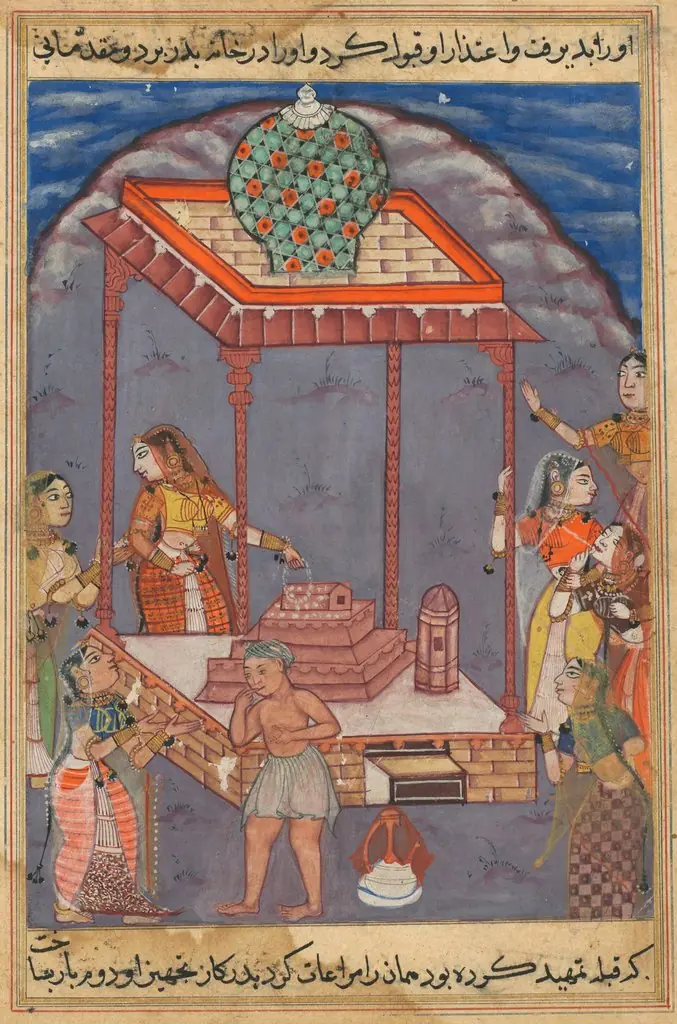 The destitute Mukhtar meets his wife Maimuna at a holy shrine, from a Tuti-nama (Tales of a Parrot): Twenty-fifth Night
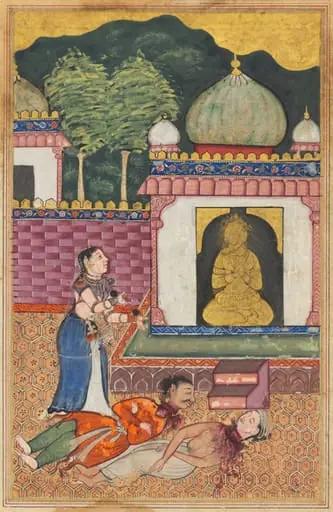 The princess discovers the dead bodies, with heads severed, of her husband and his Brahman friend, from a Tuti-nama (Tales of a Parrot): Thirty-fourth Night
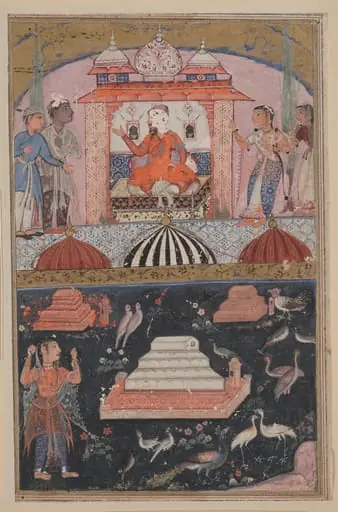 The merchant hears of his wife’s unfaithfulness (above); the unfaithful wife performs penance by plucking her hair (below), from a Tuti-nama (Tales of a Parrot): First Night
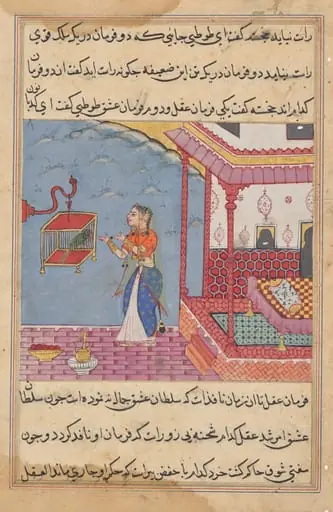 The Parrot Addresses Khujasta at the Beginning of the Twenty-Fourth Night, from a Tuti-nama (Tales of a Parrot)
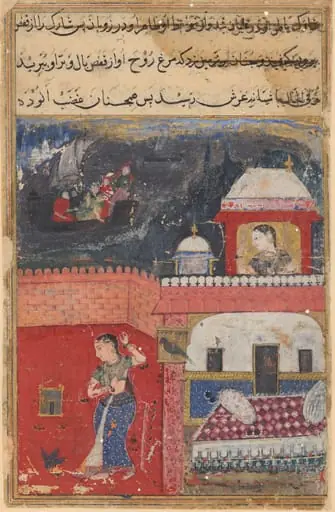 Khujasta kills the pet mynah who advises her not to be unfaithful to Maymun, her husband, from a Tuti-nama (Tales of the Parrot): First Night
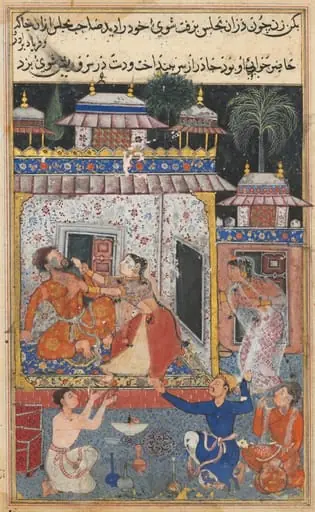 The deceitful wife assaults her erring husband, from a Tuti-nama (Tales of a Parrot): Eighth Night