Artwork
Khujasta kills the pet mynah who advises her not to be unfaithful to Maymun, her husband, from a Tuti-nama (Tales of the Parrot): First Night
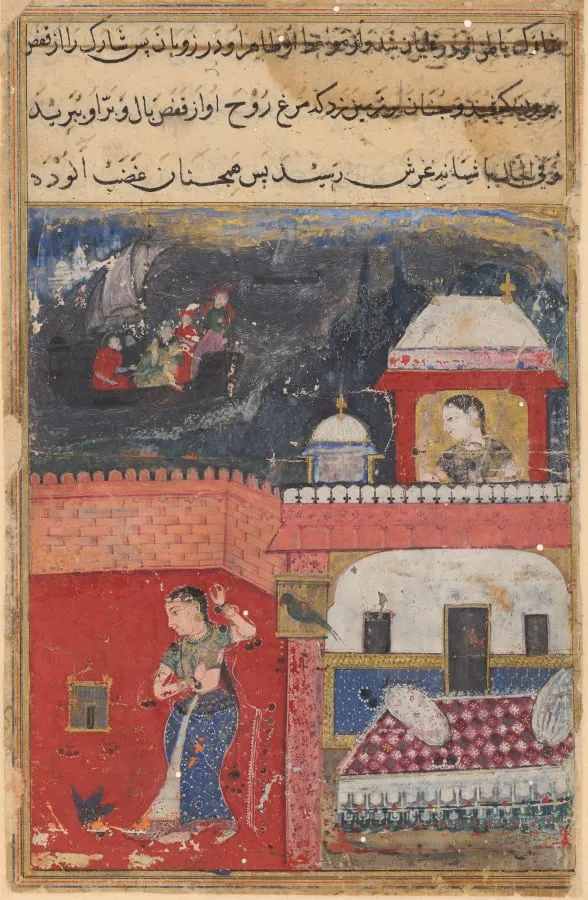
Khujasta kills the pet mynah who advises her not to be unfaithful to Maymun, her husband, from a Tuti-nama (Tales of the Parrot): First Night is an unspecified painting by the Mughal Painting artist Unknown. It dates from 1560 and is held in the collection of the Cleveland Museum of Art. The painting is the opening illustration of the Cleveland manuscript of the Tuti‑nama, a collection of cautionary parrot stories.
About this work
The bright red and tiny details show three cultures blending: Indian color, Persian linework, and Mughal light effects.
A woman in a green dress stands over a dead bird on the floor. Her husband’s ship sails away in the background. The room glows with a deep red wall.
This painting comes from a book of parrot tales told to delay a wife’s betrayal. The bright red and tiny details show three cultures blending: Indian color, Persian linework, and Mughal light effects. The bird’s death is the story’s turning point.
Look up *mughal india, court of akbar (reigned 1556–1605)* to see more of these mixed styles.
Overview
The painting is the opening illustration of the Cleveland manuscript of the Tuti‑nama, a collection of cautionary parrot stories. It depicts a merchant’s departure while his wife, dressed in green, stands over a slain mynah that had warned her against infidelity. A ship recedes in the background and the interior is suffused with a deep red hue.
Subject & Meaning
The scene captures the moment the wife silences the bird that serves as a moral voice, urging her not to betray her husband Maymun. The killing of the mynah marks the narrative’s turning point, emphasizing the consequences of disloyalty within the didactic framework of the parrot tales.
Technique & Style
The composition employs a vivid Indian‑style red background, while the fine, linear drawing reflects Persian manuscript traditions. Light and atmospheric effects in the upper left corner reveal a Mughal influence, creating a layered visual language that merges three artistic vocabularies.
History & Provenance
This illustration is part of the Cleveland Tuti‑nama, a Persian‑language codex assembled in the late 16th to early 17th century. The manuscript entered the Cleveland Museum of Art’s collection in the early 20th century, where it has been studied for its cross‑cultural artistic synthesis.
Context
The Tuti‑nama belongs to a genre of moralizing literature that used talking birds to counsel wives against adultery, a common theme in Mughal court culture. The work reflects the broader artistic exchanges among Indian, Persian, and Mughal workshops during the reign of Akbar (1556–1605).
Artist & collection

 Domestic Scene
 Giacomo and Cardinal Marco, investing Andrea, Abbot of San Zeno, with his Benefice
 The Nymph of Fontainebleau
 Portrait of a Woman
 Madonna and Child with Saints in the Enclosed Garden
 Venus and Minerva
 Family Group of Four on Sofa
 Wall painting from Room H of the Villa of P. Fannius Synistor at Boscoreale
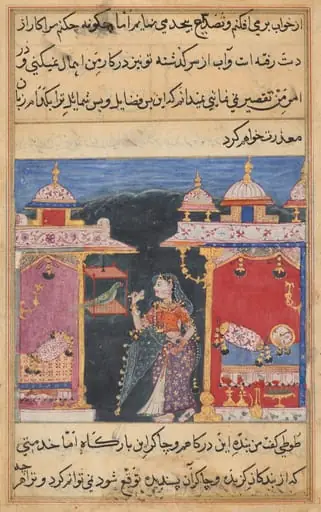 The Parrot Addresses Khujasta at the Beginning of the Seventh Night, from a Tuti-nama (Tales of a Parrot)
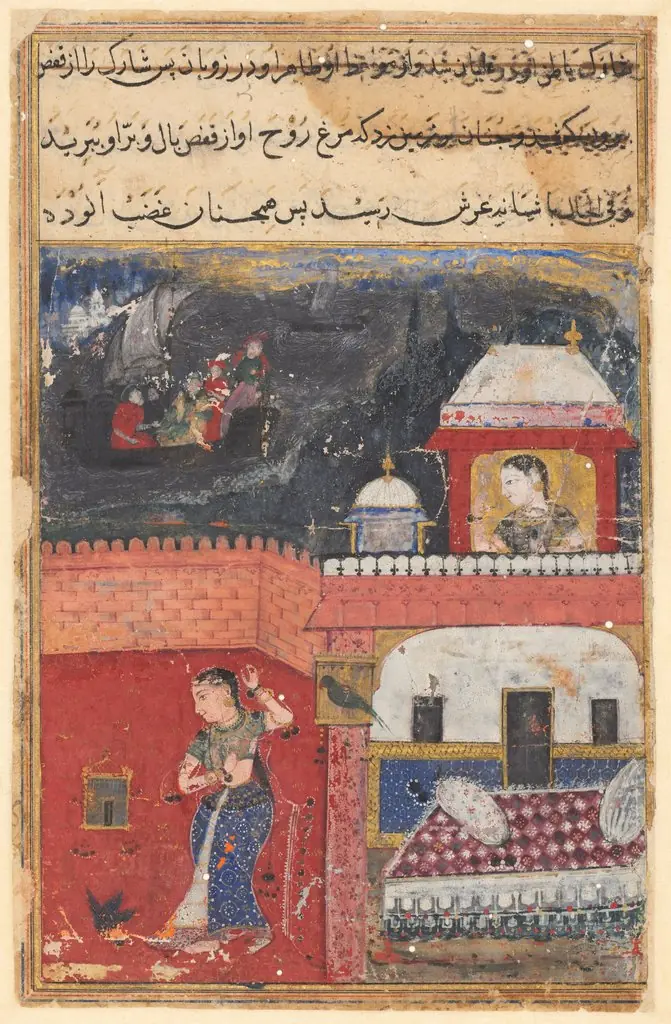 Khujasta kills the pet mynah who advises her not to be unfaithful to Maymun, her husband, from a Tuti-nama (Tales of the Parrot): First Night
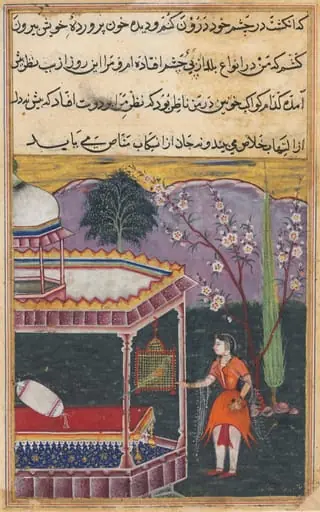 The Parrot Addresses Khujasta at the Beginning of the Eighth Night, from a Tuti-nama (Tales of a Parrot)
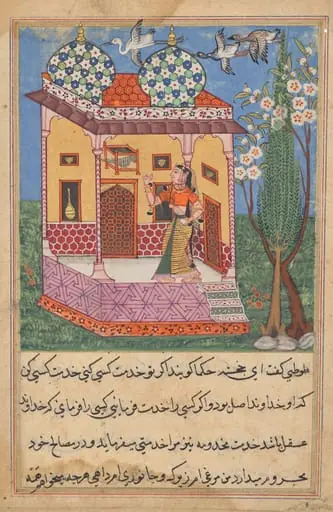 The Parrot Addresses Khujasta at the Beginning of the Twenty-sixth Night, from a Tuti-nama (Tales of a Parrot)
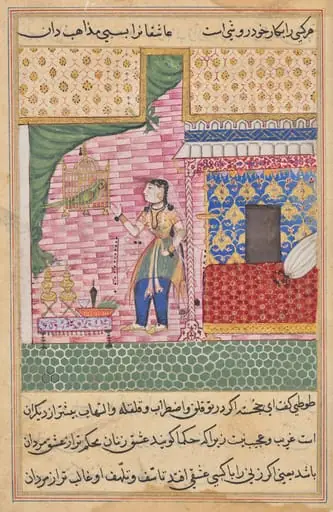 The Parrot Addresses Khujasta at the Beginning of the Seventeenth Night, from a Tuti-nama (Tales of a Parrot)
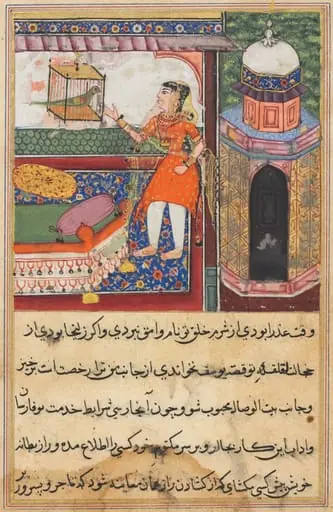 The Parrot Addresses Khujasta at the Beginning of the Tenth Night, from a Tuti-nama (Tales of a Parrot)
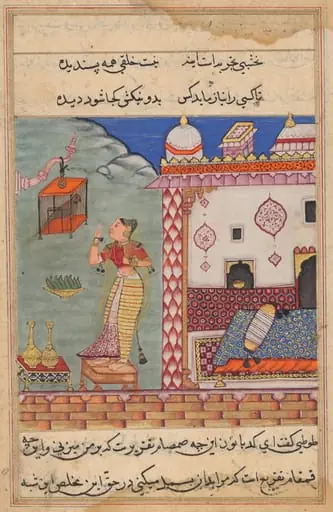 The Parrot Addresses Khujasta at the Beginning of the Twenty-seventh Night, form a Tuti-nama (Tales of a Parrot)
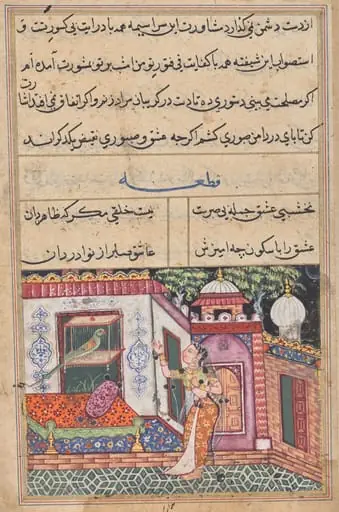 The Parrot Addresses Khujasta at the Beginning of the Eleventh Night, from a Tuti-nama (Tales of a Parrot)
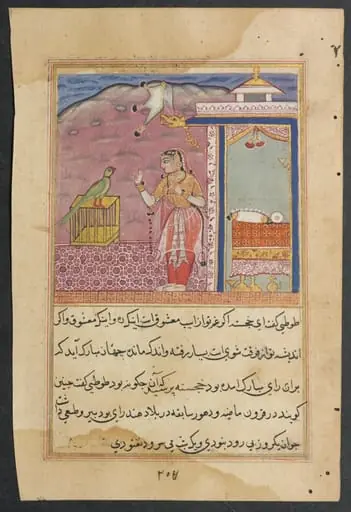 The parrot addresses Khujasta at the beginning of the forty-fourth night, from a Tuti-nama (Tales of a Parrot)
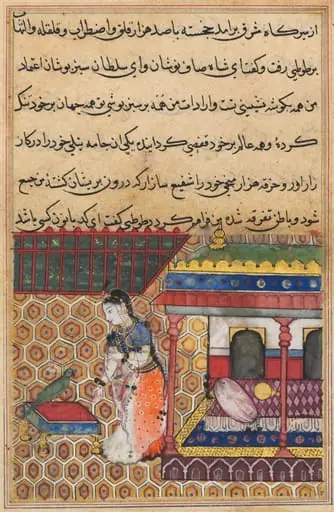 The parrot addresses Khujasta at the beginning of the thirty-eighth night, from a Tuti-nama (Tales of a Parrot)
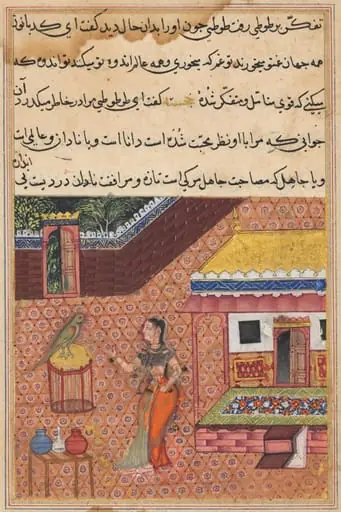 The parrot addresses Khujasta at the beginning of the thirty-fourth night, from a Tuti-nama (Tales of a Parrot)