Artwork
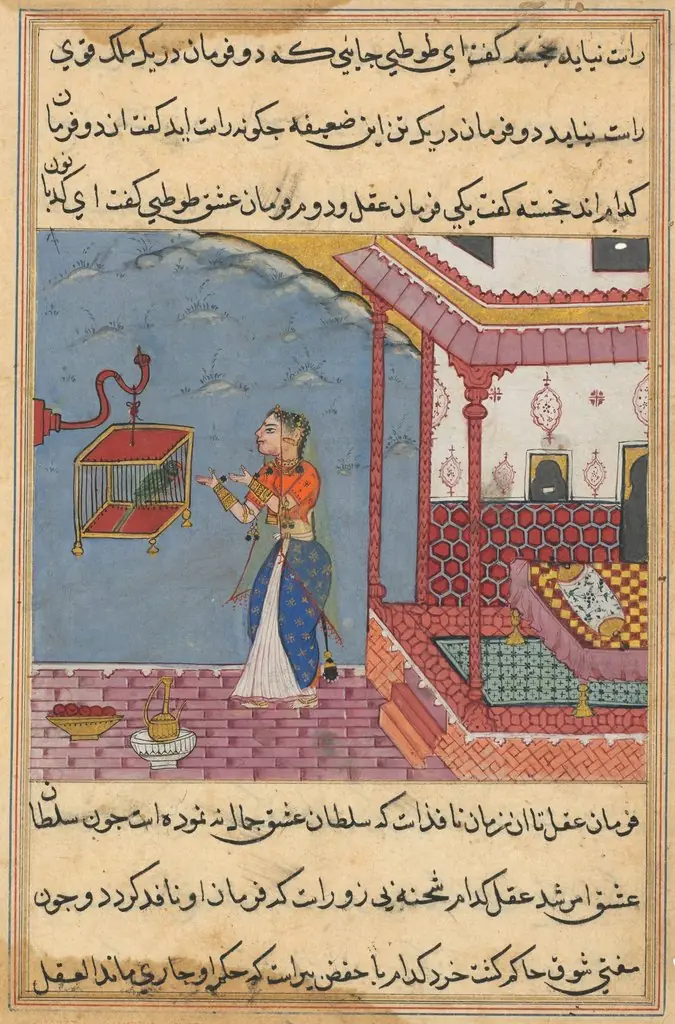
The Parrot Addresses Khujasta at the Beginning of the Twenty-Fourth Night, from a Tuti-nama (Tales of a Parrot)
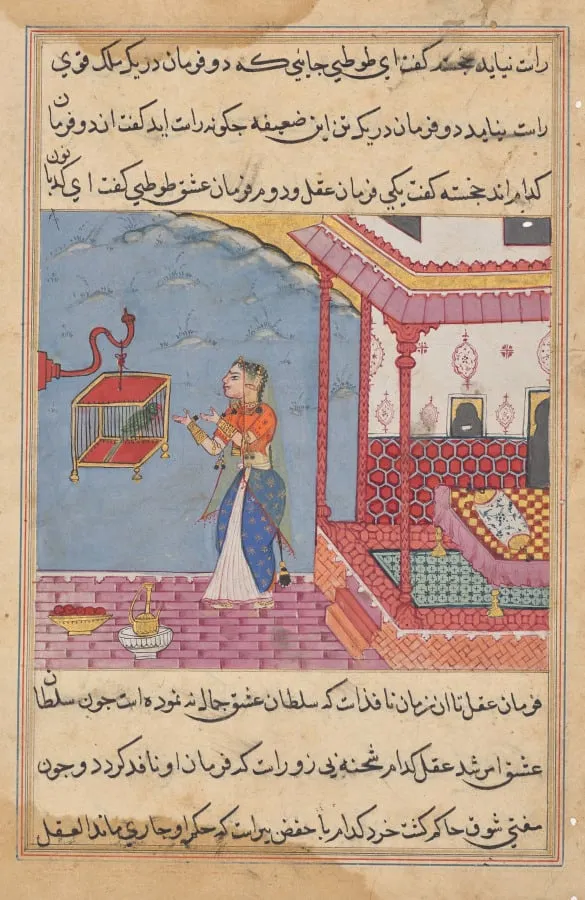
The Parrot Addresses Khujasta at the Beginning of the Twenty-Fourth Night, from a Tuti-nama (Tales of a Parrot) is an unspecified painting by the Mughal Painting artist Unknown. It dates from 1560 and is held in the collection of the Cleveland Museum of Art. This painting illustrates a scene from the Tuti-nama, a collection of tales featuring a parrot as the main storyteller.
About this work
The parrot isn’t just a bird—it’s a trickster, telling stories to stop the woman from sneaking out to meet her lover.
You see a woman in a rich red robe sitting on the floor, listening to a green parrot perched on a stand beside her.
This painting is from a book of stories called the *Tuti-nama*, or *Tales of a Parrot*. The parrot isn’t just a bird—it’s a trickster, telling stories to stop the woman from sneaking out to meet her lover. The tales are meant to teach a lesson, like a fable.
If you like this, look up Mughal India, court of Akbar (reigned 1556–1605) for more art from this time.
Overview
This painting illustrates a scene from the Tuti-nama, a collection of tales featuring a parrot as the main storyteller. The artwork depicts a pivotal moment in the narrative, capturing the parrot's attempt to divert the woman's attention from her secret plans.
Subject & Meaning
The scene shows a woman, Khujasta, seated on the floor, listening intently to a parrot perched on a nearby stand. The parrot's tale is intended to deter her from meeting her lover, conveying a moral message characteristic of the stories in the Tuti-nama.
Technique & Style
The painting features a woman dressed in a rich red robe, while the parrot is depicted in green. The use of vibrant colors and detailed rendering of the figures reflects the artistic style prevalent during the Mughal period.
Context
The Tuti-nama, from which this painting originates, is a work of Indian literature. The artwork is associated with the court of Akbar, who ruled from 1556 to 1605, a period marked by significant cultural and artistic developments in Mughal India.
Artist & collection

 Domestic Scene
 Giacomo and Cardinal Marco, investing Andrea, Abbot of San Zeno, with his Benefice
 The Nymph of Fontainebleau
 Portrait of a Woman
 Madonna and Child with Saints in the Enclosed Garden
 Venus and Minerva
 Family Group of Four on Sofa
 Wall painting from Room H of the Villa of P. Fannius Synistor at Boscoreale
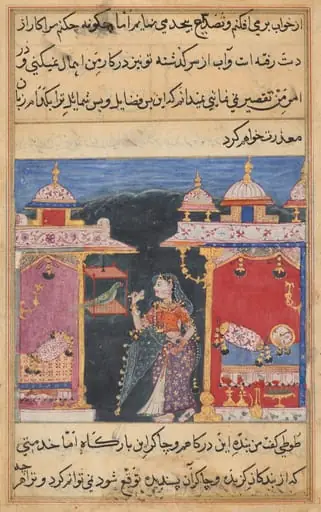 The Parrot Addresses Khujasta at the Beginning of the Seventh Night, from a Tuti-nama (Tales of a Parrot)
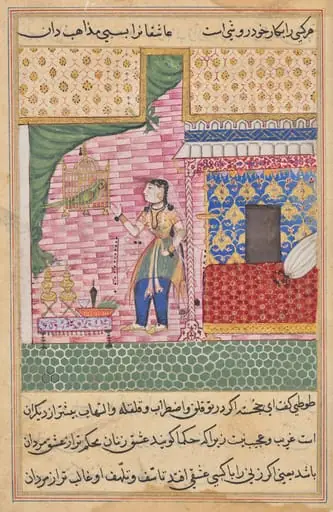 The Parrot Addresses Khujasta at the Beginning of the Seventeenth Night, from a Tuti-nama (Tales of a Parrot)
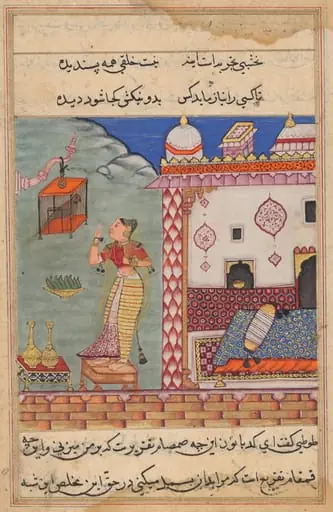 The Parrot Addresses Khujasta at the Beginning of the Twenty-seventh Night, form a Tuti-nama (Tales of a Parrot)
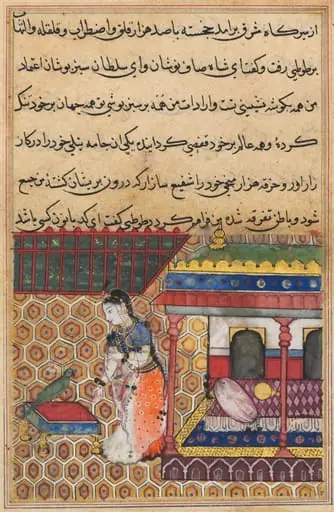 The parrot addresses Khujasta at the beginning of the thirty-eighth night, from a Tuti-nama (Tales of a Parrot)
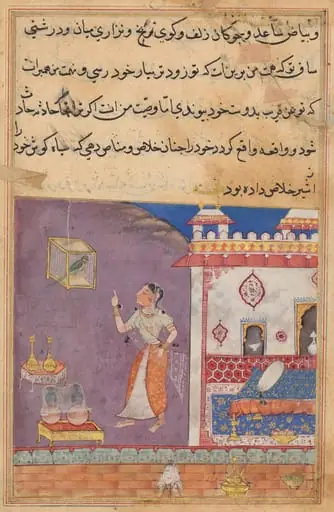 The Parrot Addresses Khujasta at the Beginning of the Twenty-ninth Night, from a Tuti-nama (Tales of a Parrot)
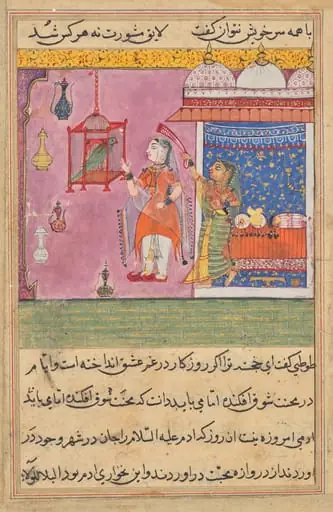 The Parrot Addresses Khujasta at the Beginning of the Nineteenth Night, from a Tuti-nama (Tales of a Parrot)
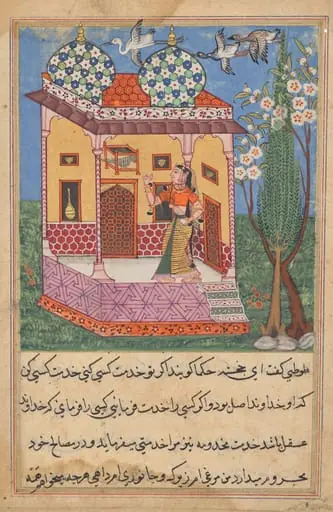 The Parrot Addresses Khujasta at the Beginning of the Twenty-sixth Night, from a Tuti-nama (Tales of a Parrot)
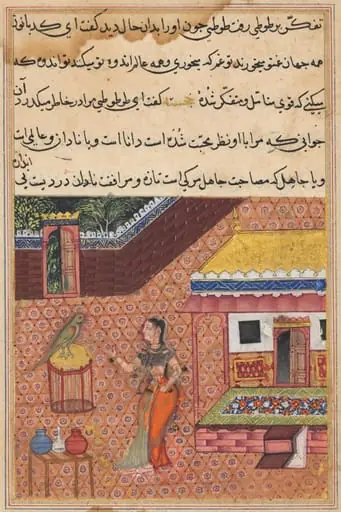 The parrot addresses Khujasta at the beginning of the thirty-fourth night, from a Tuti-nama (Tales of a Parrot)
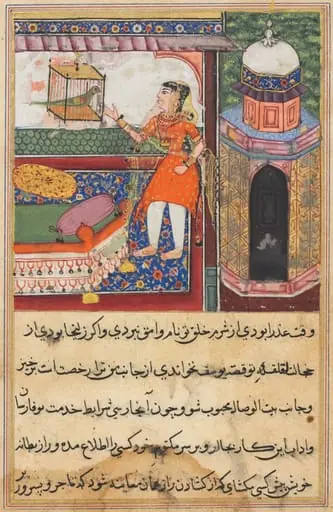 The Parrot Addresses Khujasta at the Beginning of the Tenth Night, from a Tuti-nama (Tales of a Parrot)
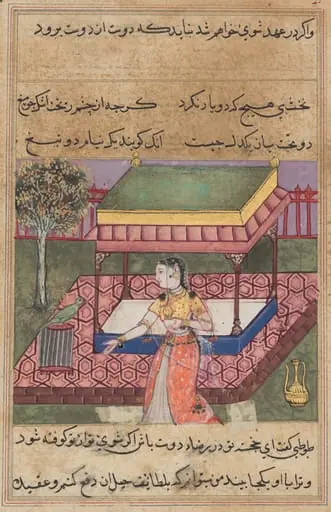 The parrot addresses Khujasta at the beginning of the fortieth night, from a Tuti-nama (Tales of a Parrot)
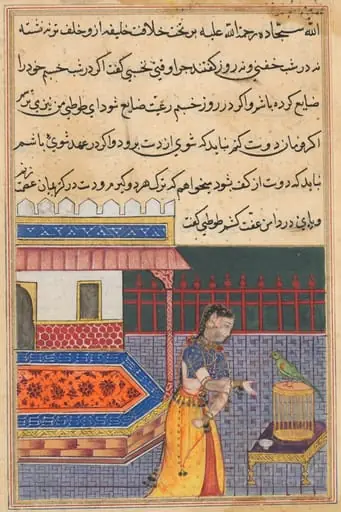 The parrot addresses Khujasta at the beginning of the forty-first night, from a Tuti-nama (Tales of a Parrot): Forty-first Night
 The Parrot Addresses Khujasta at the Beginning of the Twenty-Fourth Night, from a Tuti-nama (Tales of a Parrot)