Artwork
The Taj Mahal
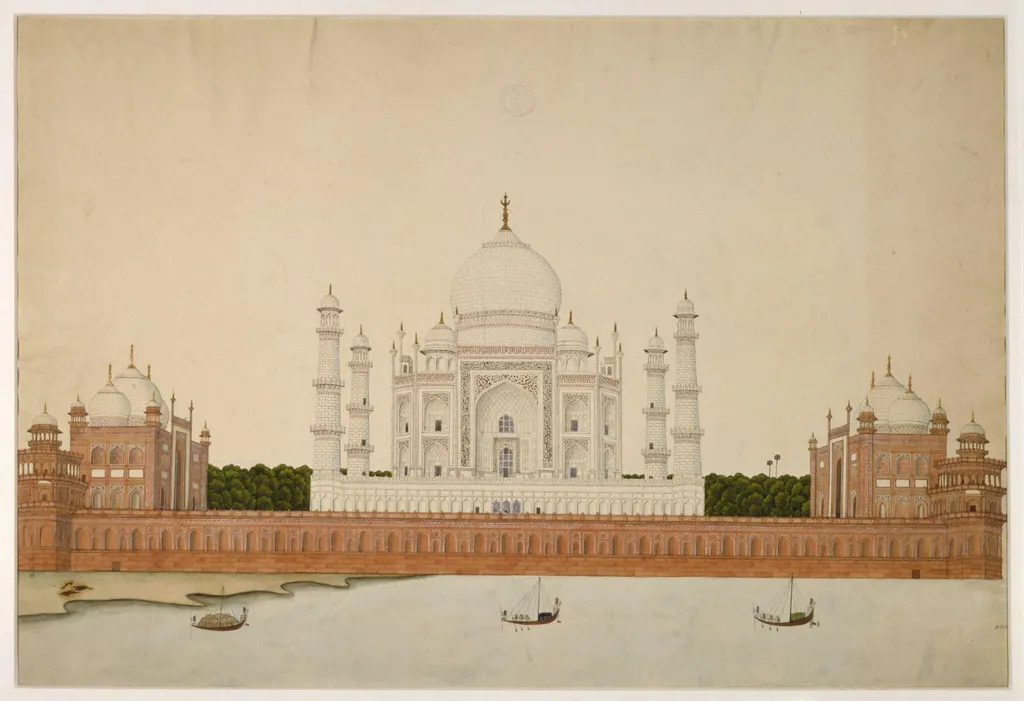
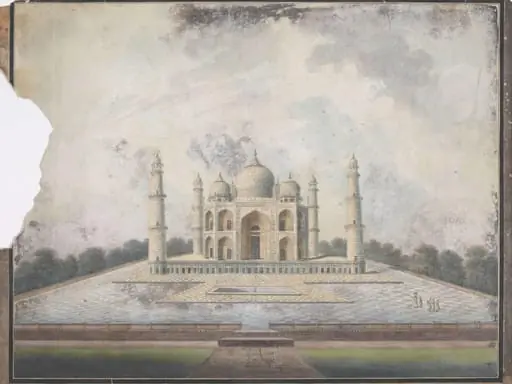
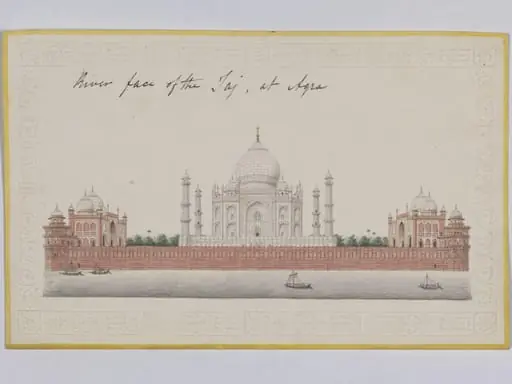
The Taj Mahal is a paint painting by the Romanticist artist Unknown. It dates from 1820 and is held in the collection of the Victoria and Albert Museum.
About this work
The artist used tiny brushstrokes to copy the real marble’s cool shine and the inlaid flowers’ bright colors.
This painting shows the Taj Mahal in white marble, its dome glowing under soft light. The artist used tiny brushstrokes to copy the real marble’s cool shine and the inlaid flowers’ bright colors.
Built between 1632 and 1643, the real Taj Mahal looks almost weightless. Its four slender towers lean outward on purpose so they won’t fall on the tomb if an earthquake hits.
See one of these for yourself next: Victoria and Albert Museum.
Overview
The painting portrays the Taj Mahal, the white‑marble mausoleum erected by Emperor Shah Jahan in memory of his wife Mumtaz Mahal, who died in 1631. The composition emphasizes the central dome bathed in gentle light, while surrounding minarets and the reflecting pool recede into a calm atmosphere, echoing the monument’s reputation for serene elegance.
Subject & Meaning
As a funerary monument, the Taj Mahal embodies the emperor’s devotion and the Islamic tradition of commemorating the dead with elaborate architecture. The painting highlights this sentiment by focusing on the luminous dome and the delicate floral inlays, suggesting both the spiritual aspiration of the structure and the personal grief that motivated its creation.
Technique & Style
The artist renders the marble surface through fine, stippled brushstrokes that capture the cool sheen of the stone and the subtle play of light on the dome. Brightly colored, meticulously painted inlays echo the original semi‑precious stone work, while the overall palette remains restrained, reinforcing the monument’s tranquil ambience.
History & Provenance
The Taj Mahal was constructed between 1632 and 1643 using white marble quarried at Makrana in Rajasthan. Its walls are adorned with Qur’anic verses and intricate floral motifs set with semi‑precious stones. Shah Jahan himself was interred beside Mumtaz in 1666, completing the complex’s role as a dynastic tomb.
Context
The structure’s four slender minarets are deliberately inclined outward, a structural precaution against seismic forces. This architectural feature, visible in the painting’s background, reflects the blend of aesthetic refinement and practical engineering that characterizes Mughal architecture of the early 17th century.
Artist & collection

 Domestic Scene
 Giacomo and Cardinal Marco, investing Andrea, Abbot of San Zeno, with his Benefice
 The Nymph of Fontainebleau
 Portrait of a Woman
 Madonna and Child with Saints in the Enclosed Garden
 Venus and Minerva
 Family Group of Four on Sofa
 Wall painting from Room H of the Villa of P. Fannius Synistor at Boscoreale
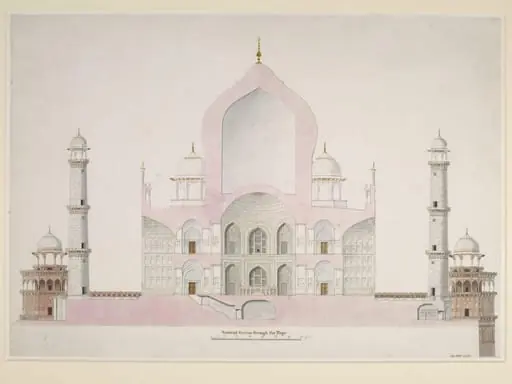 Vertical Section through the Tage
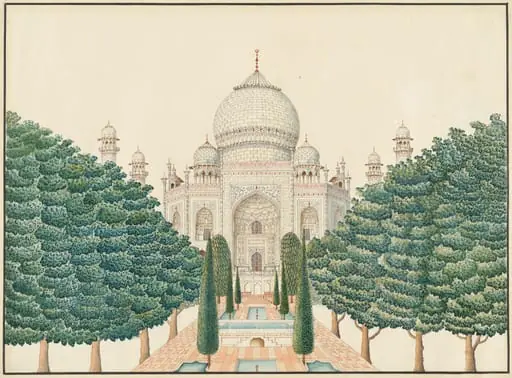 Taj Mahal
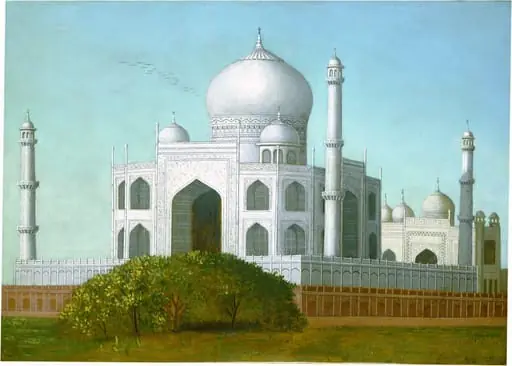 The Taj Mahal
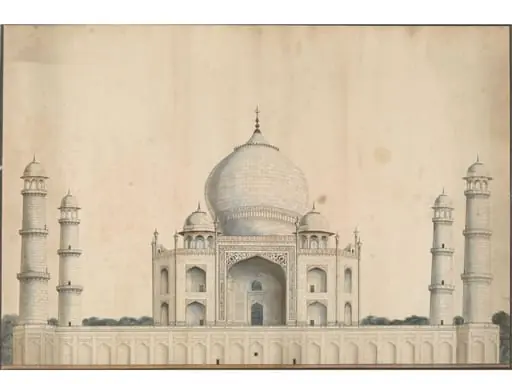 Three drawings of the Taj Mahal
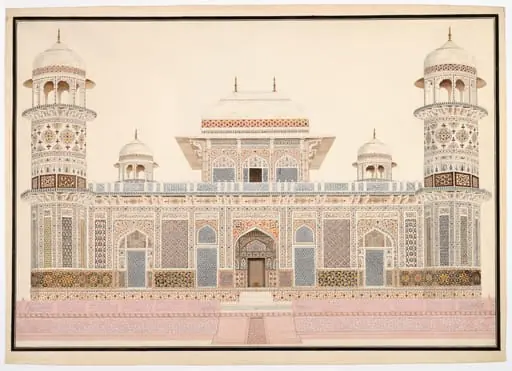 I'timad-ud-Daula's Tomb at Agra
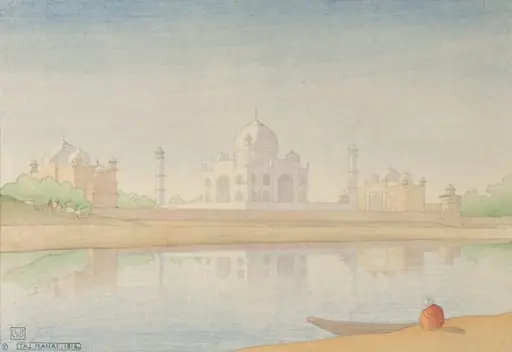 Taj Mahal
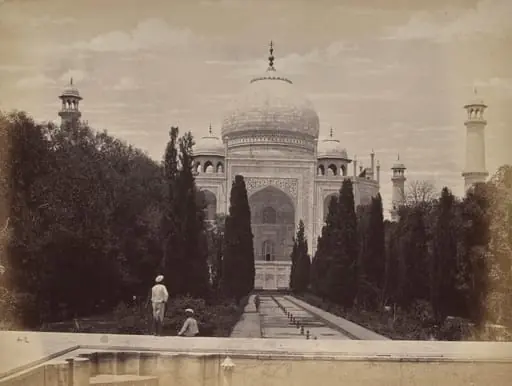 Agra. View of the Taj in Front of Nootkan (The Light of the World), Wife of the Emperor Akbar, View from the River
 The Taj Mahal, Agra
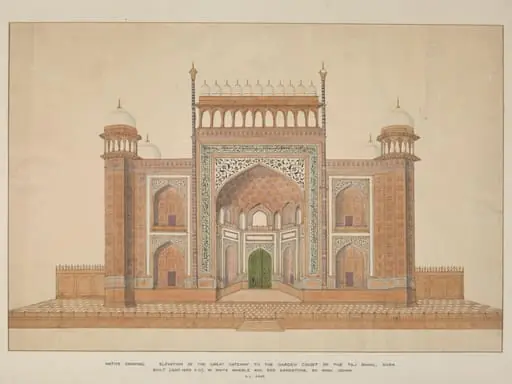 Gateway to the Taj Mahal
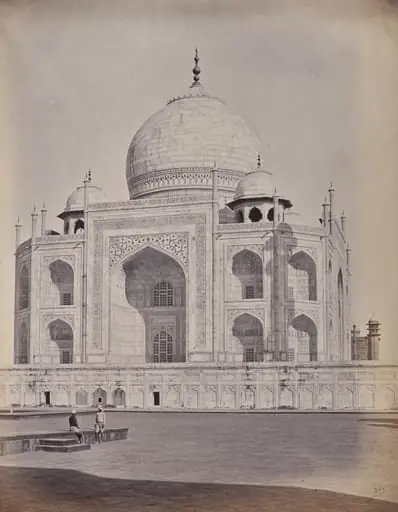 Agra. The Taj, the Central of Principal City
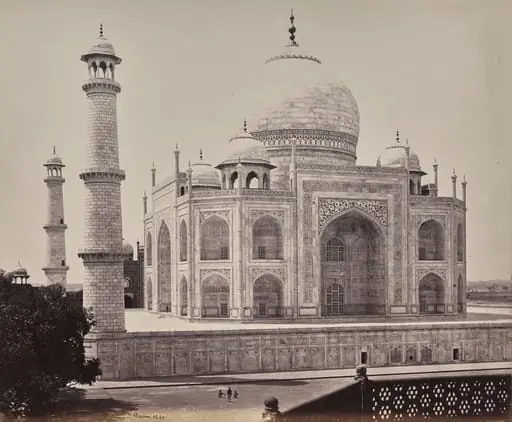 Agra. View of the Taj from a Corner in the Quadrangle
 View of the Taj Mahal from across the Jumna river.