Artwork
The Holme Family
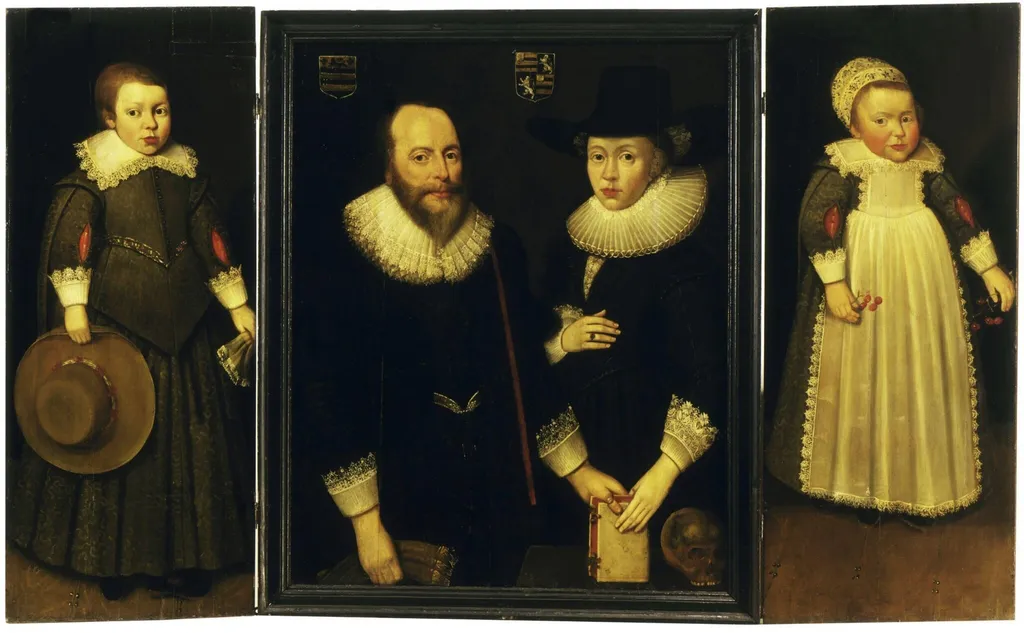
The Holme Family is a paint painting by the Baroque artist Unknown. It dates from 1628 and is held in the collection of the Victoria and Albert Museum.
About this work
Overview
The portable, foldable format reinforces the intimate, personal nature of the piece.
The Holme Family is a painted panel work composed of multiple folding sheets that portray members of the Holme household alongside emblematic motifs for birth, marriage and death. Such multi‑panel compositions were traditionally used as commemorative objects, serving both as visual records of family events and as moral reminders of life's transience. The portable, foldable format reinforces the intimate, personal nature of the piece.
Subject & Meaning
The interior scenes juxtapose youthful figures with older ones, underscoring the passage of time. On the outer right panel, two rebus‑style inscriptions combine images and text; one depicts Christ, while a clock face supplies the words that complete the phrase “We Must Die All,” a stark memento mori. Together, the imagery weaves together the cycles of birth, marriage, and mortality that defined the family's narrative.
Technique & Style
Executed in oil on wood, the panels employ a chiaroscuro handling of light and shadow that models the figures with a subtle three‑dimensionality. The clothing is rendered with careful attention to texture: Henry Holme’s ruff and cuffs feature fine imported needle lace, whereas Dorothy’s attire includes bobbin lace of a typical English pattern and a broad‑brimmed beaver hat, reflecting the modest yet affluent dress of the merchant class.
Context
In the early modern period, painted family panels functioned as heirlooms, often passed down through generations. The inclusion of symbolic motifs for life’s rites of passage aligns the work with contemporary devotional and moralizing art, which sought to remind viewers of their own mortality while celebrating familial continuity.
Legacy
While not a display of high fashion, the work offers valuable insight into the material culture of well‑to‑do merchants, illustrating how status was expressed through subtle details such as lace trims and headwear. Its preservation as a folding panel continues to inform scholars about the domestic visual language of remembrance in its era.
Artist & collection

 Domestic Scene
 Giacomo and Cardinal Marco, investing Andrea, Abbot of San Zeno, with his Benefice
 The Nymph of Fontainebleau
 Portrait of a Woman
 Madonna and Child with Saints in the Enclosed Garden
 Venus and Minerva
 Family Group of Four on Sofa
 Wall painting from Room H of the Villa of P. Fannius Synistor at Boscoreale
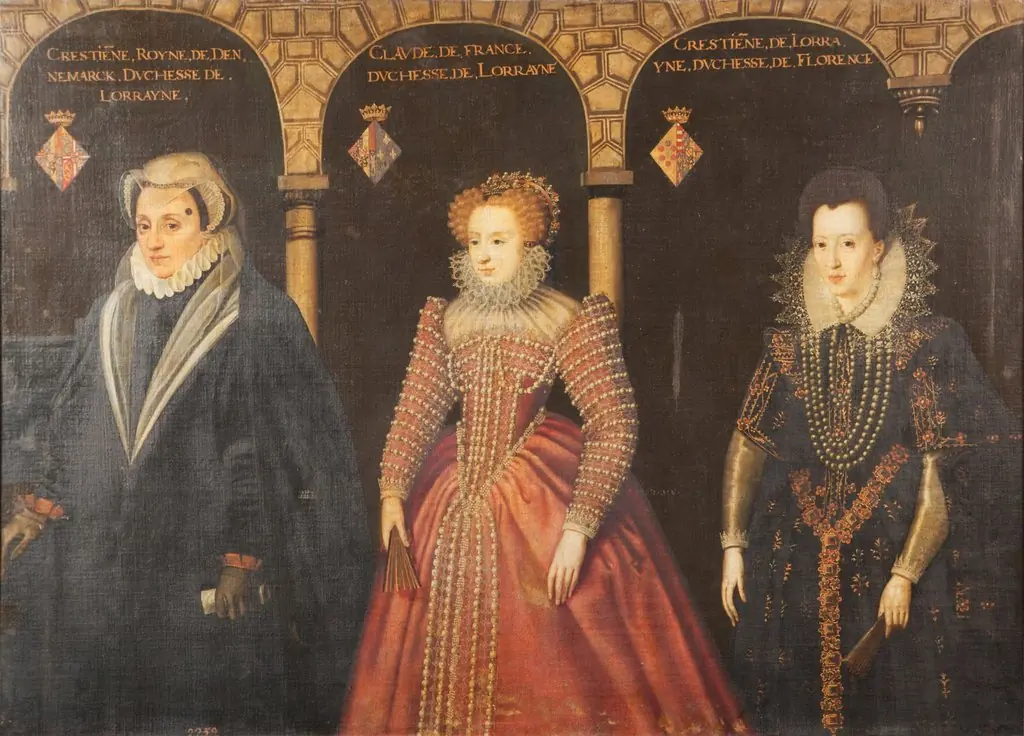 Portrait of Christina of Denmark, Claude of Valois and Christina of Lorraine
 Portrait of Gillis Hooftman, Shipowner, and his Wife Margaretha van Nispen (Gilles van Eichelenberg, called Hoffman)
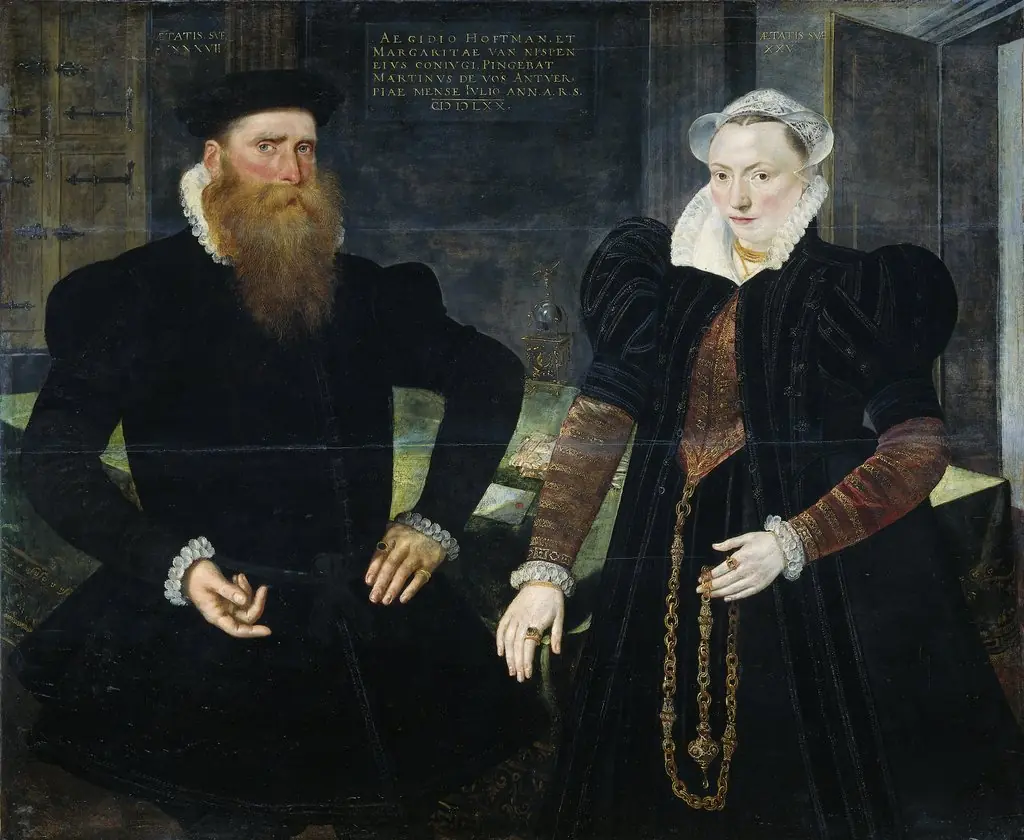 Portrait of Gillis Hooftman (1521-81). Shipowner, and his wife Margaretha van Nispen (b 1545)
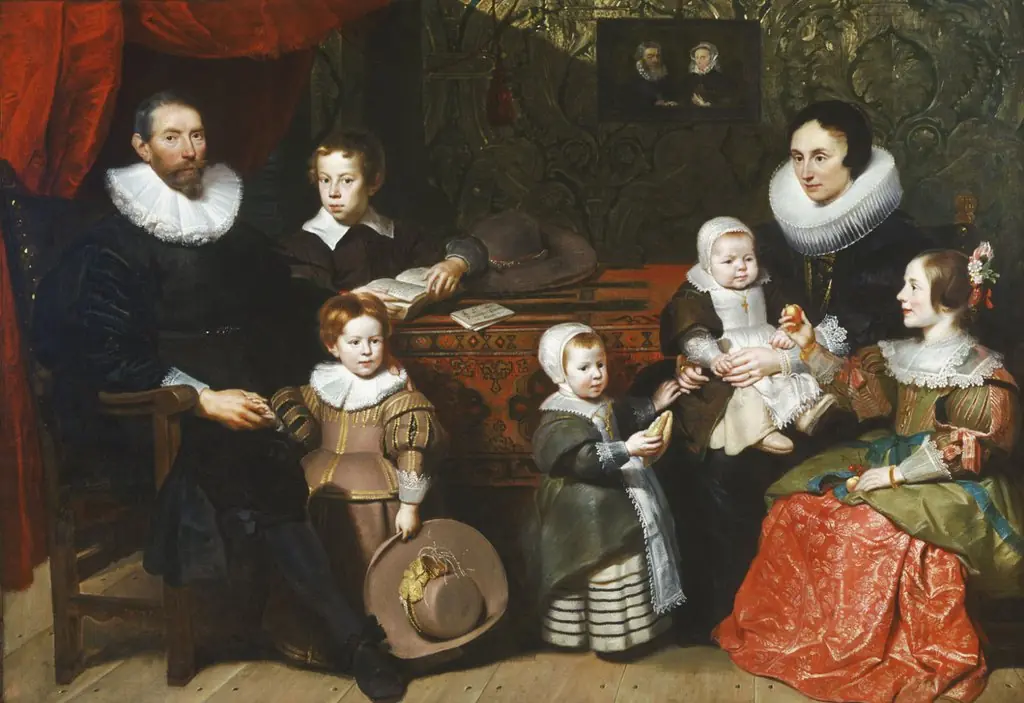 Portrait of Anthony Reyniers and His Family
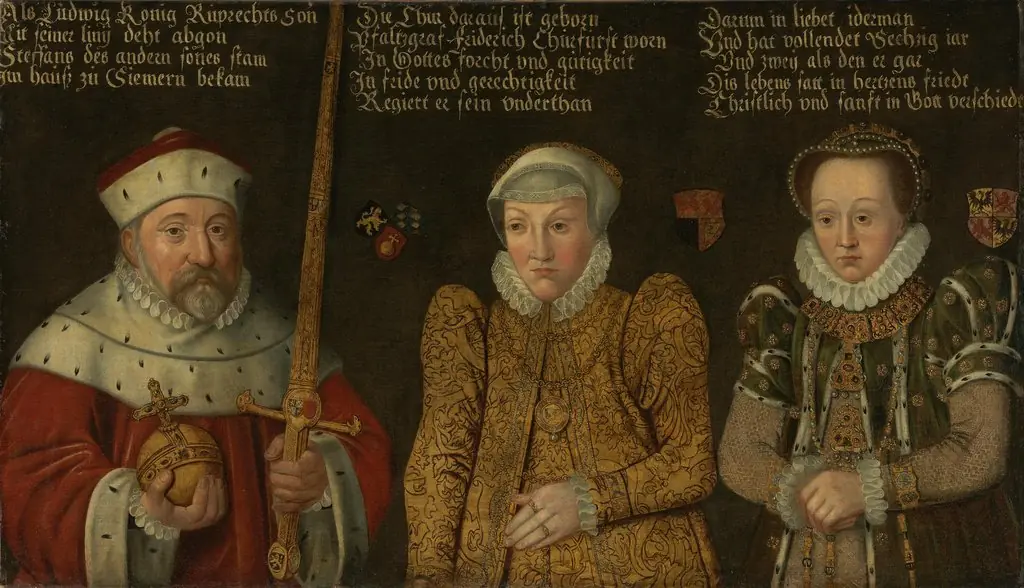 Bildnis des Kurfürsten Friedrich III. von der Pfalz (1515-1576) mit Gemahlinnen Maria von Brandenburg-Kulmbach und Amalia von Neuenar
 Portrait of the Family of Dirck Jacobsz Bas (1569-1637), Burgomaster of Amsterdam, and Margriet Snoeck (1588-1645)
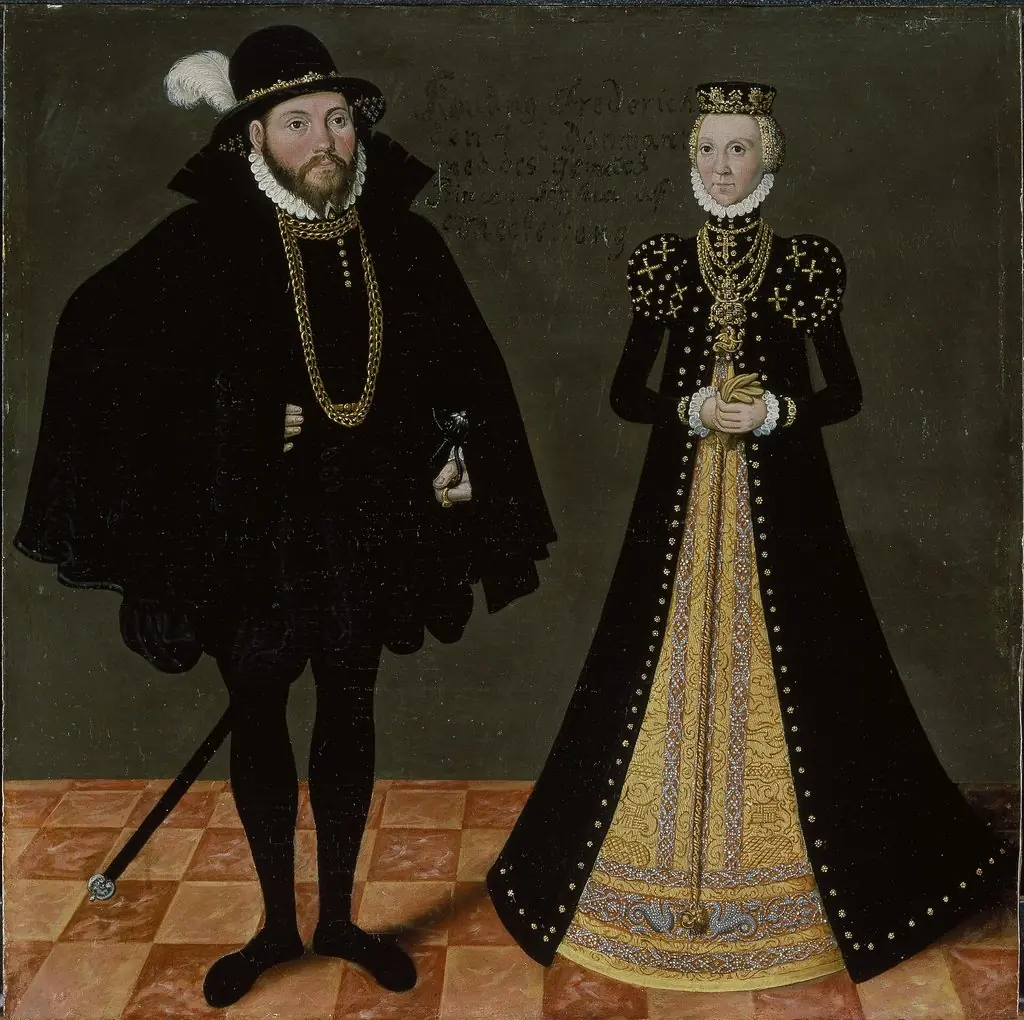 Okänt tyskt furstepar
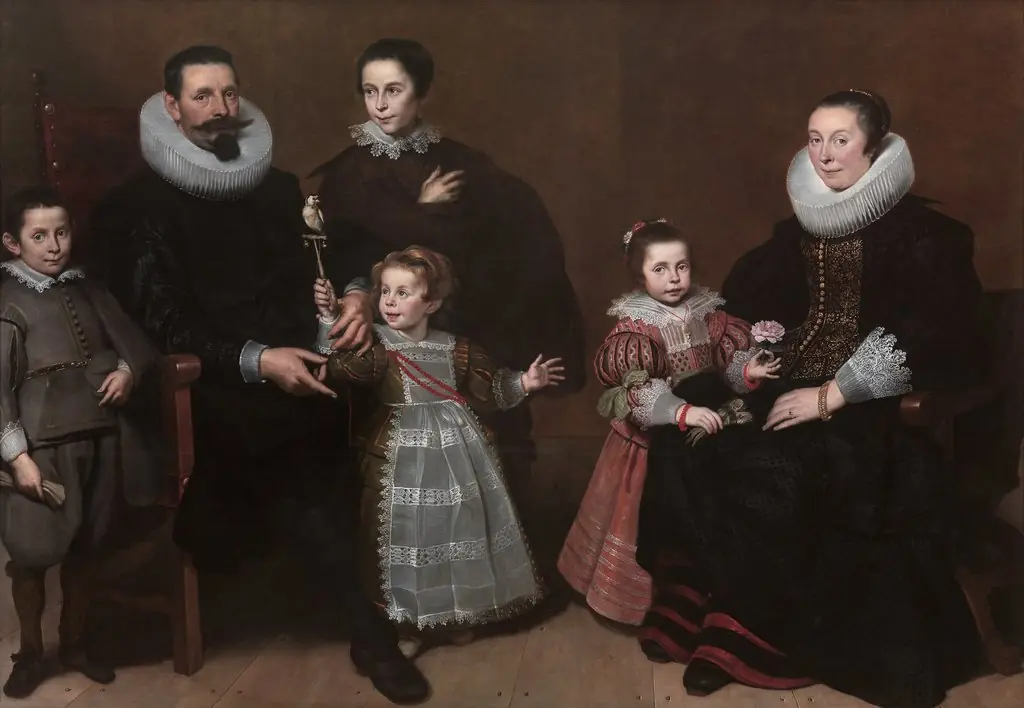 Portrait of a Family
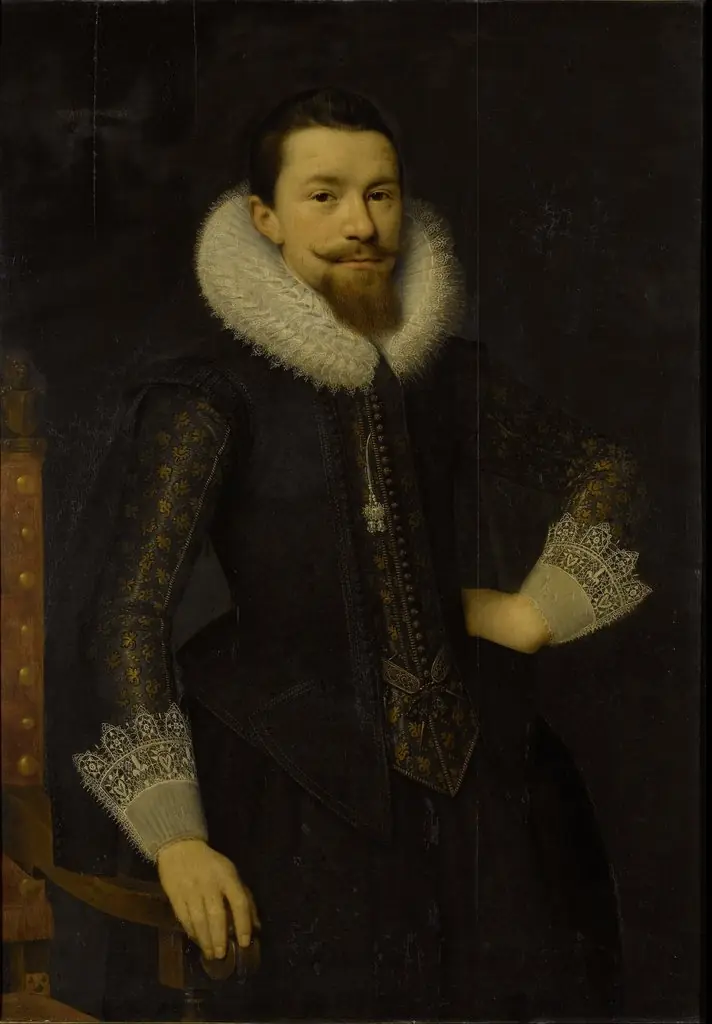 Portrait of Pieter Boudaen Courten (1594-1668)
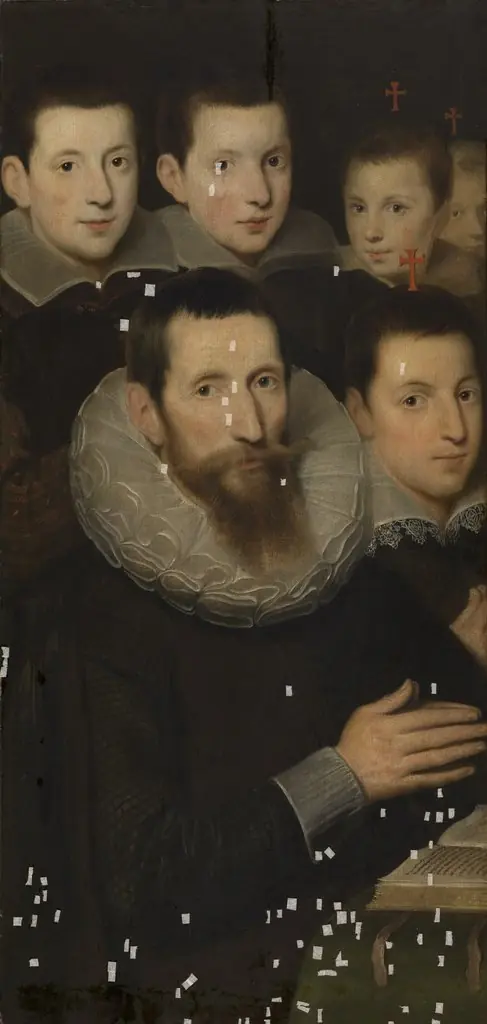 Donor man with five sons