Artwork
The Jami Masjid, Lahore
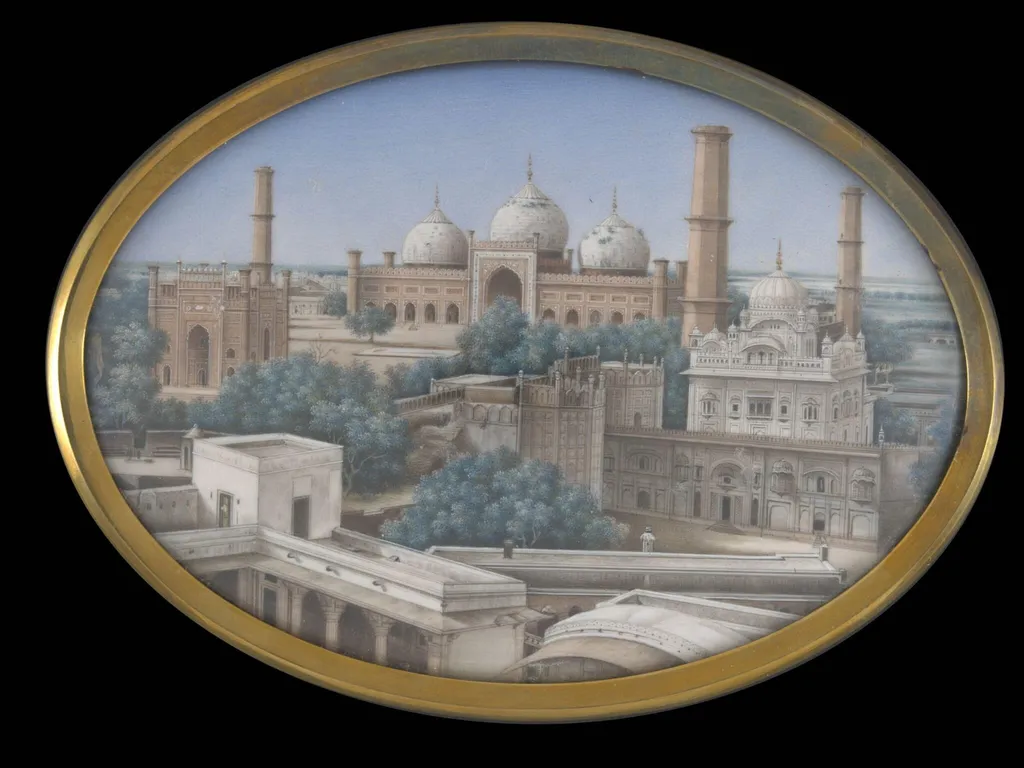
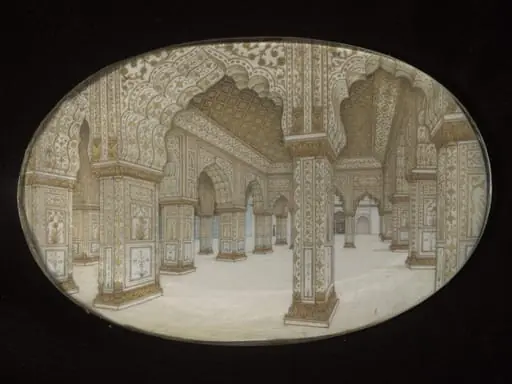
The Jami Masjid, Lahore is a paint painting by the Patna School of Painting artist Unknown. It dates from 1850 and is held in the collection of the Victoria and Albert Museum. This small oval plaque, carved from ivory, presents a painted depiction of the Jami Masjid in Lahore.
About this work
Overview
This small oval plaque, carved from ivory, presents a painted depiction of the Jami Masjid in Lahore. The work is one of a sextet of similar plaques, each illustrating a notable Mughal architectural site. Such sets were intended for display on interior walls, serving as portable records of the monuments they portray.
Subject & Meaning
The central image captures the façade of the Jami Masjid, highlighting its domes and arches within a balanced composition. By rendering the mosque on a compact, decorative object, the artist offers a visual souvenir that conveys the grandeur of Mughal religious architecture to viewers far from the original site.
Technique & Style
Executed with the refined brushwork characteristic of Indian miniature painting, the scene employs delicate layering and subtle tonal transitions reminiscent of sfumato. The artist, likely trained in a royal workshop, adapts courtly precision to a miniature format, achieving fine detail on the limited surface of ivory.
History & Provenance
Produced in the mid‑19th century, the plaque reflects a shift in patronage as Mughal court commissions waned. Miniaturists turned to the expanding market of European travelers seeking tangible mementos of their Indian journeys. The six‑piece series was therefore created for export, entering the souvenir trade that flourished during the colonial period.
Artist & collection

 Domestic Scene
 Giacomo and Cardinal Marco, investing Andrea, Abbot of San Zeno, with his Benefice
 The Nymph of Fontainebleau
 Portrait of a Woman
 Madonna and Child with Saints in the Enclosed Garden
 Venus and Minerva
 Family Group of Four on Sofa
 Wall painting from Room H of the Villa of P. Fannius Synistor at Boscoreale
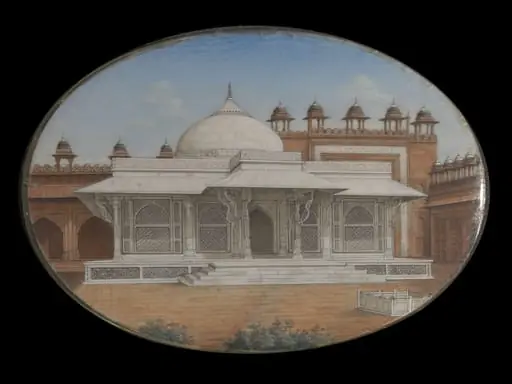 Tomb of Salim Christi
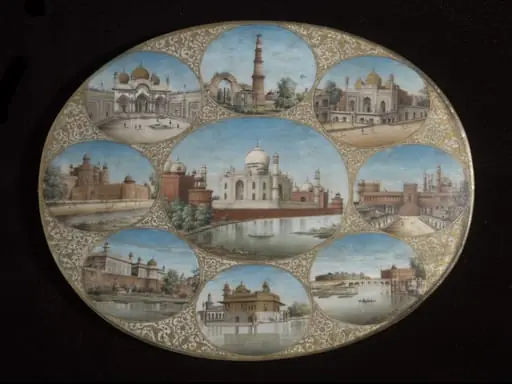 The Taj Mahal, Agra, in a gilt frame surrounded by eight smaller views.
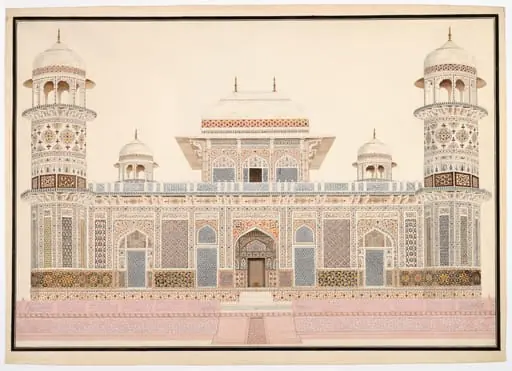 I'timad-ud-Daula's Tomb at Agra
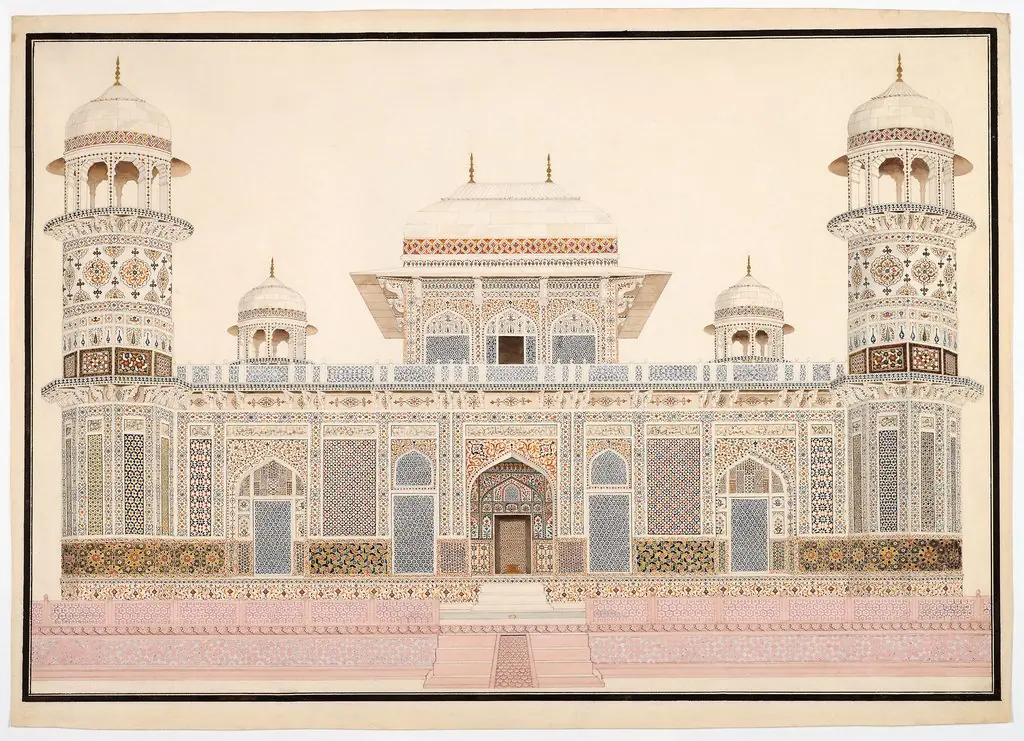 I'timad-ud-Daula's Tomb at Agra
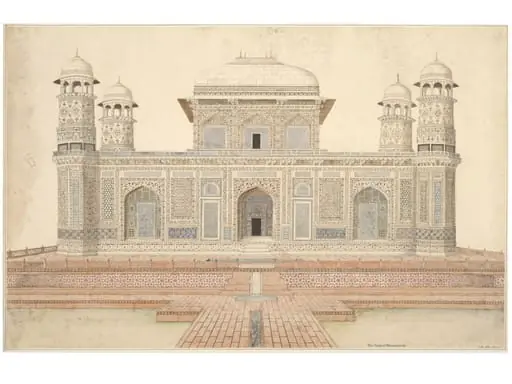 The facade of the tomb of I'timad ad-daula and his wife Asmat Begum, Agra.
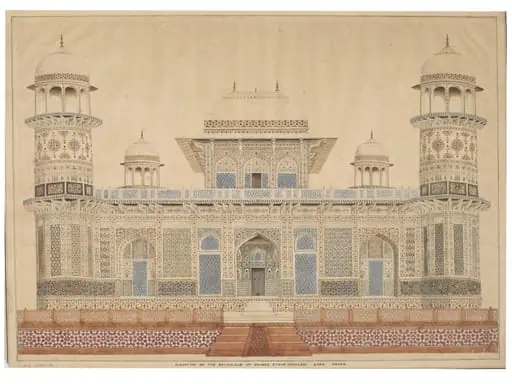 Mausoleum of Itimad ud-Daula.
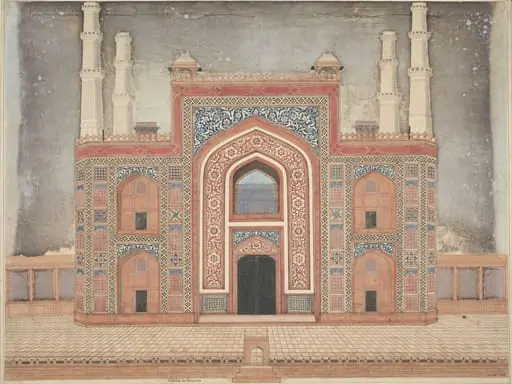 Elevation of the entrance gateway to the garden surrounding Akbar's masoleum.
 Interior of a Mughal Palace.