Artwork
Tomb of Salim Christi
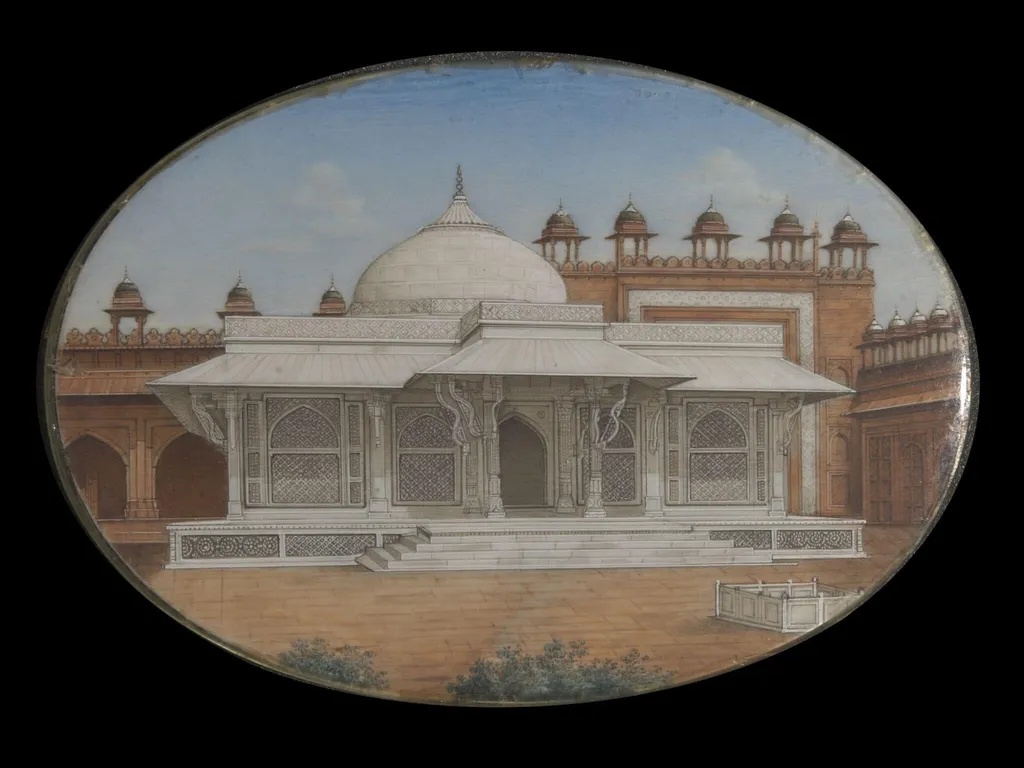
Tomb of Salim Christi is a paint painting by Unknown. It dates from 1900 and is held in the collection of the Victoria and Albert Museum.
About this work
Overview
The work is a small-scale painting executed on an ivory support, portraying a funerary structure traditionally identified as the tomb of Salim Christi in the historic complex of Fatehpur Sikri. The composition centers on a white marble pavilion with a dominant central dome flanked by subsidiary domes, set against a light‑toned, level ground.
Subject & Meaning
The depicted monument functions as a commemorative tomb, its pavilion form suggesting a ceremonial shelter rather than a fully enclosed building.
The depicted monument functions as a commemorative tomb, its pavilion form suggesting a ceremonial shelter rather than a fully enclosed building. Architectural elements such as arched, patterned windows and a pronounced overhanging roof convey a sense of reverence and public accessibility, aligning the structure with Mughal funerary aesthetics while emphasizing its role as a focal point for remembrance.
Technique & Style
Rendered with delicate, muted pigments, the artist employs precise linear drawing to delineate the marble surfaces and architectural details. The use of soft color modulation and careful shading imparts a tangible solidity to the domes and walls, while the smooth ivory ground enhances the subtle tonal transitions, achieving a realistic yet restrained visual effect.
History & Provenance
The painting’s medium—ivory—indicates a luxury object likely commissioned for a private collector interested in Indian architecture during the 19th or early 20th century. Though specific ownership records are absent, the work’s subject ties it to the broader European fascination with Mughal monuments, situating it within a tradition of travel‑inspired portraiture of historic sites.
Artist & collection

 Domestic Scene
 Giacomo and Cardinal Marco, investing Andrea, Abbot of San Zeno, with his Benefice
 The Nymph of Fontainebleau
 Portrait of a Woman
 Madonna and Child with Saints in the Enclosed Garden
 Venus and Minerva
 Family Group of Four on Sofa
 Wall painting from Room H of the Villa of P. Fannius Synistor at Boscoreale
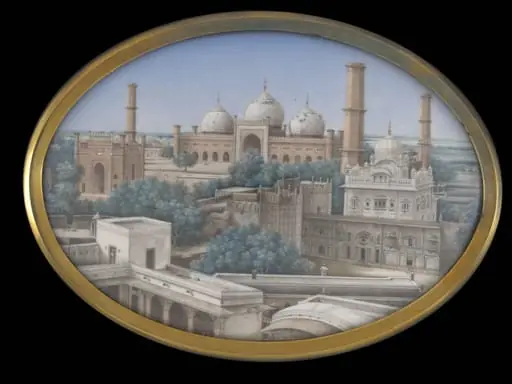 The Jami Masjid, Lahore
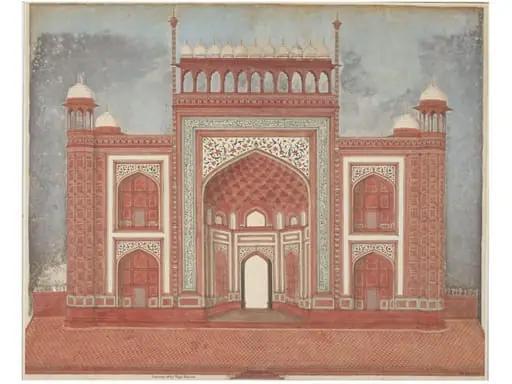 Elevation of the great gateway of the garden court of the Taj Mahal.
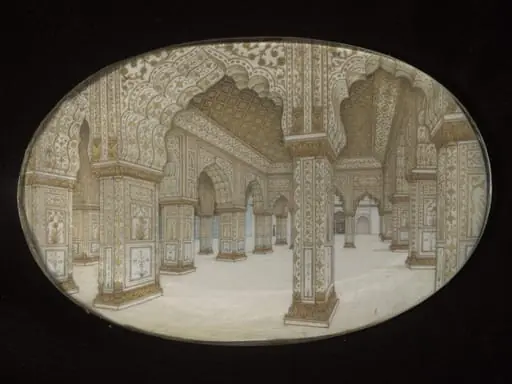 Interior of a Mughal Palace.
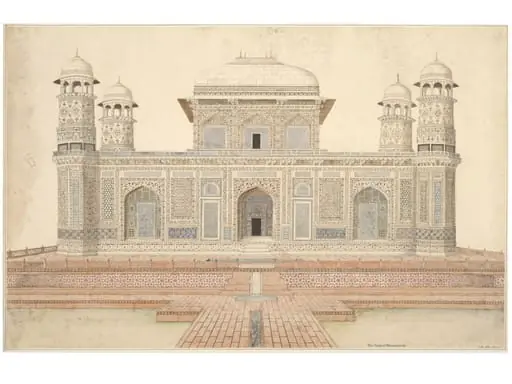 The facade of the tomb of I'timad ad-daula and his wife Asmat Begum, Agra.
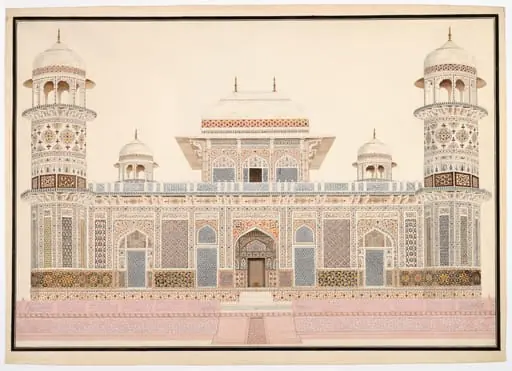 I'timad-ud-Daula's Tomb at Agra
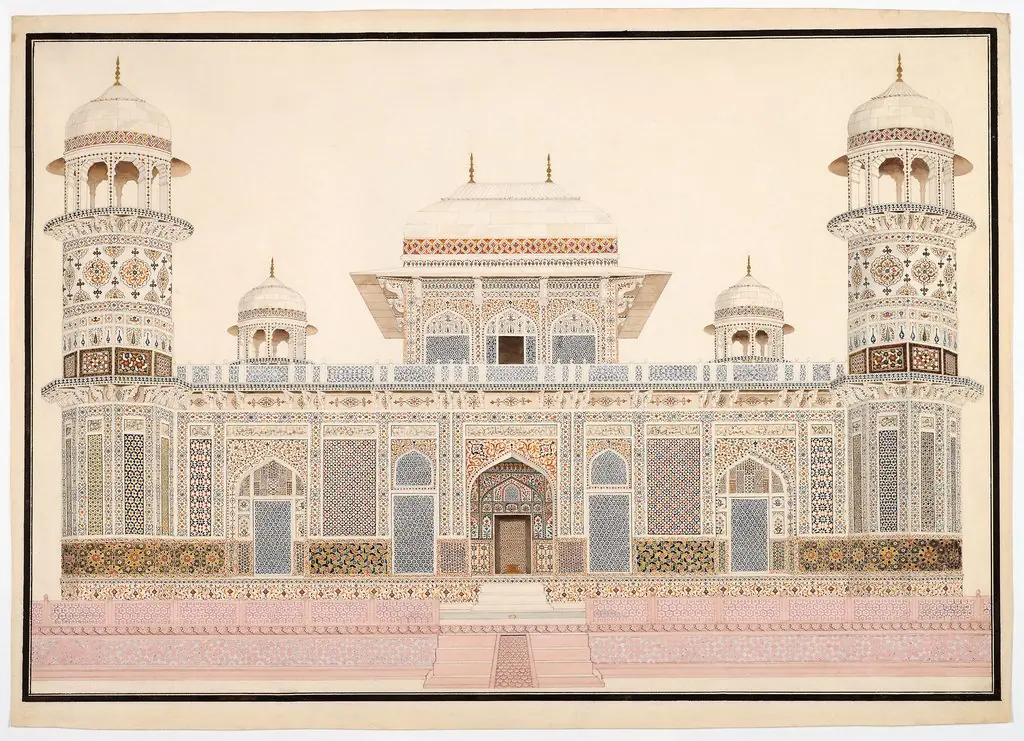 I'timad-ud-Daula's Tomb at Agra
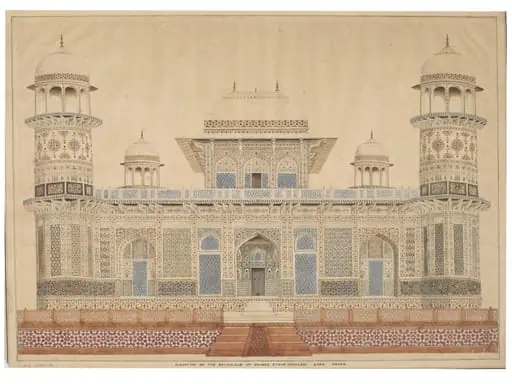 Mausoleum of Itimad ud-Daula.
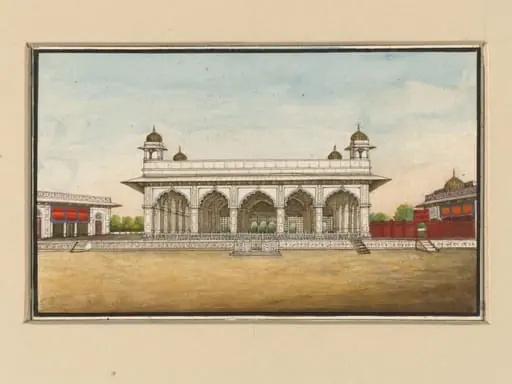 One of four drawings of Mughal architecture.
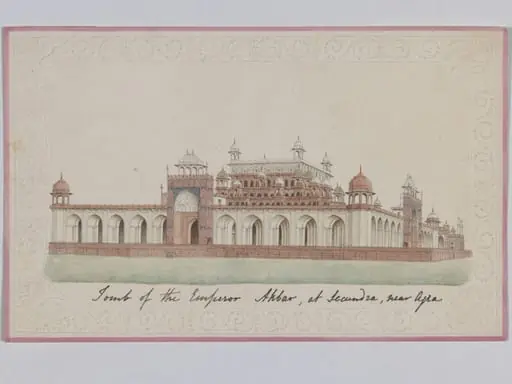 Akbar's mausoleum, Sikandra
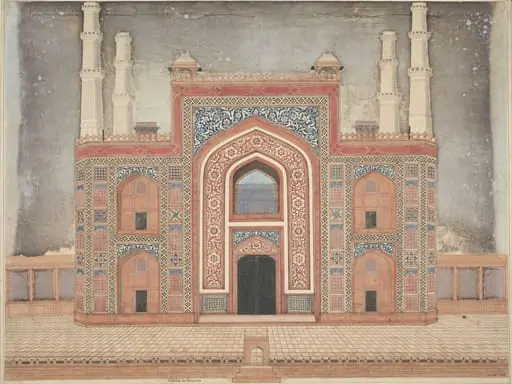 Elevation of the entrance gateway to the garden surrounding Akbar's masoleum.