Artwork
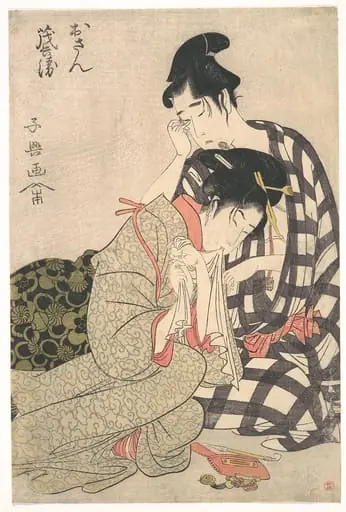
The Lovers Umegawa and Chubei
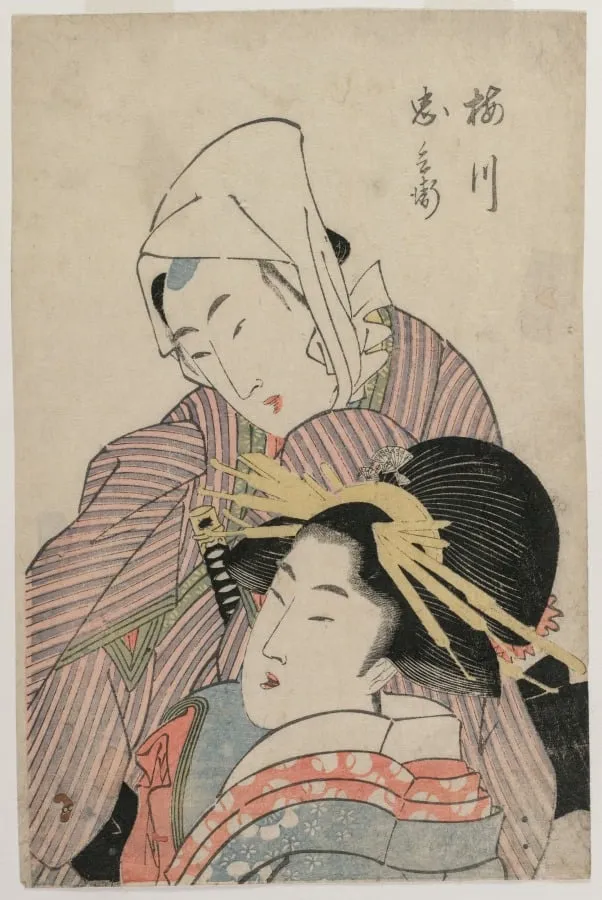
The Lovers Umegawa and Chubei is a print by the Romanticist artist Unknown. It dates from 1804 and is held in the collection of the Cleveland Museum of Art.
About this work
Overview
This ukiyo-e print depicts a quiet, intimate moment between two figures, Umegawa and Chubei, rendered in minimal lines and unmodulated color. The composition emphasizes closeness over narrative detail, with no background elements to distract from their posture and attire. The style reflects the Edo-period tradition of woodblock printing, where simplicity and suggestion replace realism.
Subject & Meaning
The figures are likely a courtesan and her client, caught in a private, tender exchange. Their turned heads and proximity suggest emotional intimacy rather than physical passion. The attire—striped robe and ornate hairpiece—signals their social roles within the pleasure quarters, where such moments were both common and carefully staged.
Technique & Style
The artist employed flat areas of color and clean, unshaded outlines, typical of early ukiyo-e. Details are reduced to essential forms: the hat’s silhouette, the flower-adorned hairpiece, the collar’s edge. No perspective or depth is attempted; the focus remains on pattern, gesture, and the quiet tension between the two figures.
History & Provenance
The print originates from the late 17th or early 18th century, part of a series illustrating famous lovers from the pleasure districts of Edo. While the exact publisher and carver are unknown, similar works circulated widely among urban audiences. The Cleveland Museum of Art holds a version, suggesting its early acquisition by Western collectors.
Context
Created during the height of ukiyo-e’s popularity, this print reflects the cultural fascination with the Yoshiwara district’s romanticized liaisons. Such images served as both entertainment and social commentary, capturing fleeting emotions in a society governed by strict hierarchies. The lack of setting underscores the private nature of these encounters.
Legacy
This print exemplifies the early aesthetic of ukiyo-e, influencing later artists who refined its emotional restraint. Its enduring presence in museum collections highlights its role in shaping global perceptions of Japanese printmaking—valued not for spectacle, but for its understated humanity.
Artist & collection

 Domestic Scene
 Giacomo and Cardinal Marco, investing Andrea, Abbot of San Zeno, with his Benefice
 The Nymph of Fontainebleau
 Portrait of a Woman
 Madonna and Child with Saints in the Enclosed Garden
 Venus and Minerva
 Family Group of Four on Sofa
 Wall painting from Room H of the Villa of P. Fannius Synistor at Boscoreale
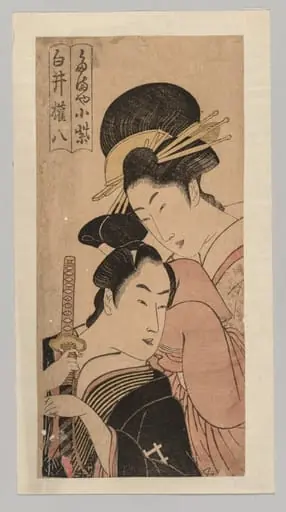 Komurasaki of the Miuraya and Shirai Gonpachi
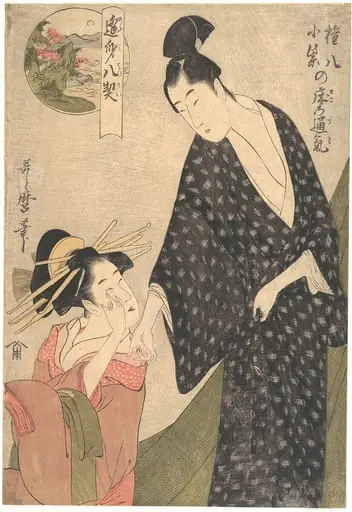 Gompachi Komurasaki no Toko no Tsuki|逢身八契 権八小紫の床の通気|Shared Feelings in the Bedchamber of Komurasaki and Gompachi
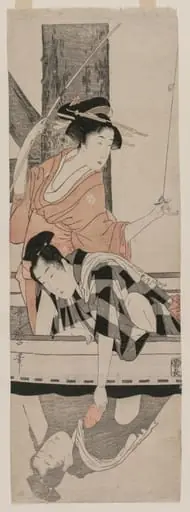 Couple in a Boat
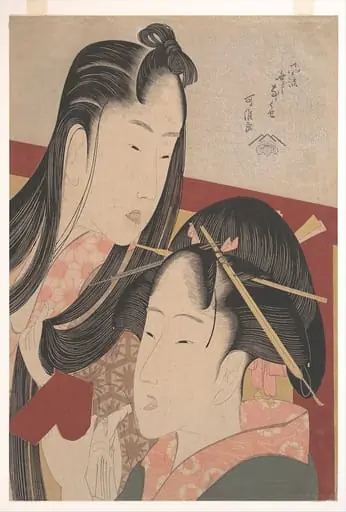 風流無くてななくせ|Squeaking a Ground Cherry, from the series Seven Fashionable Useless Habits (Furyu nakute nana kuse)
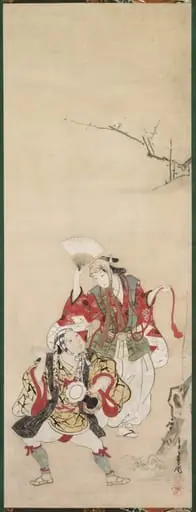 Spring Dancers (Manzai)
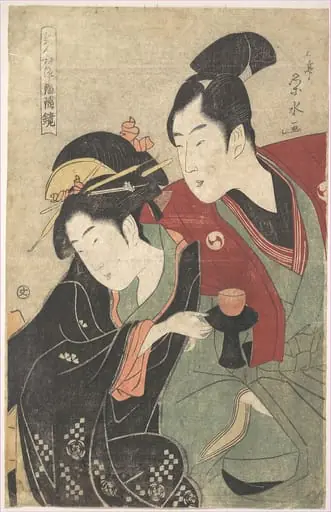 Untitled
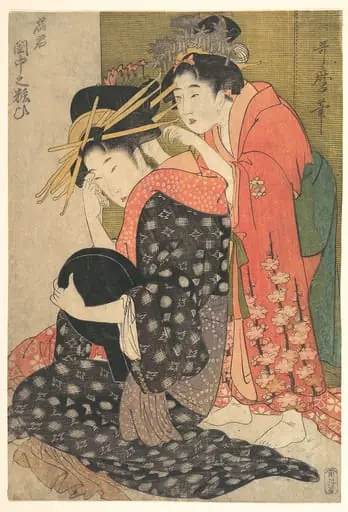 名君 閨中の粧ひ|The Oiran Yoso-oi Seated at Her Toilet
 Untitled
 Hanaōgi of Ōgiya from the series Picture Puzzles
 Untitled