Artwork
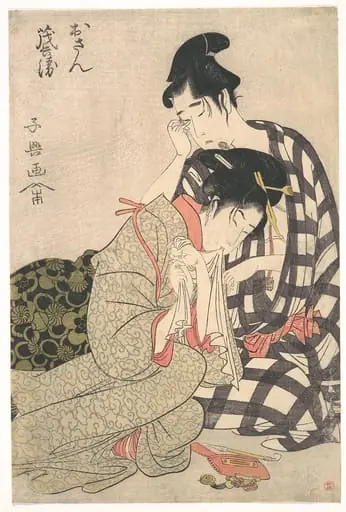
Gompachi Komurasaki no Toko no Tsuki|逢身八契 権八小紫の床の通気|Shared Feelings in the Bedchamber of Komurasaki and Gompachi
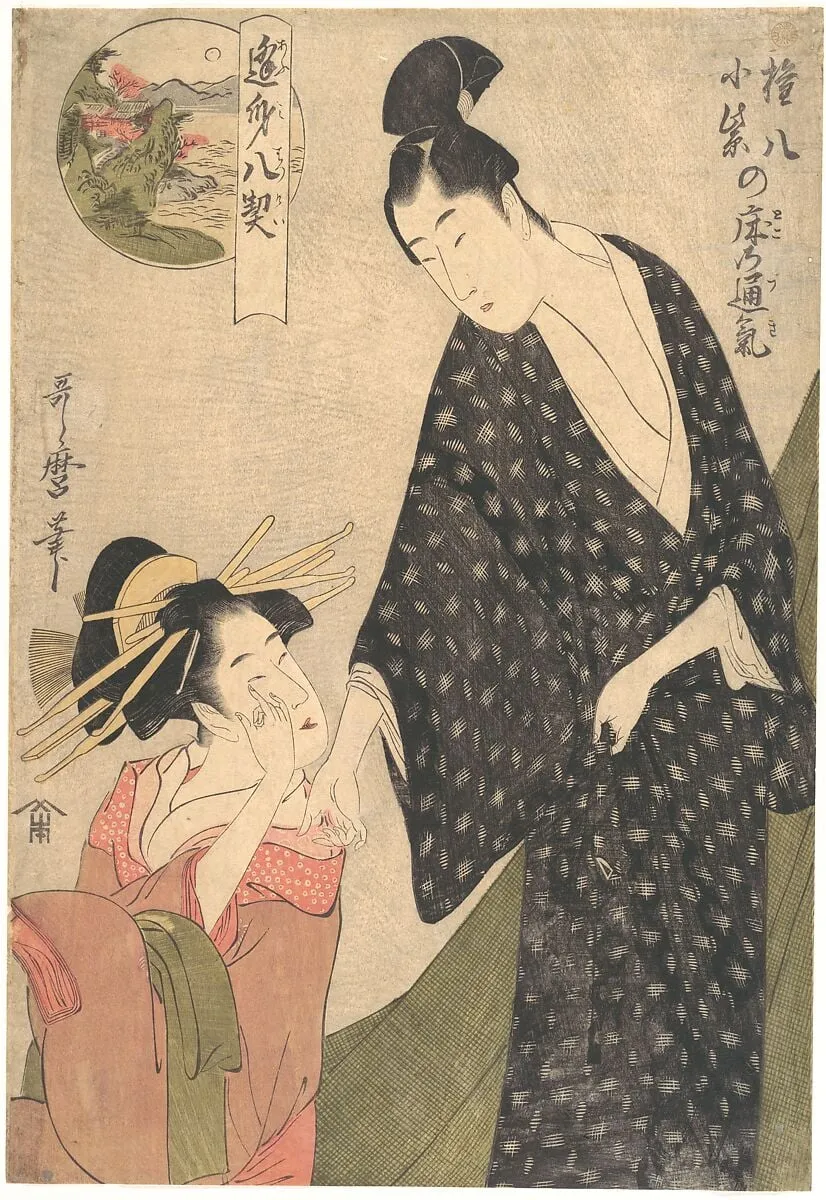
Gompachi Komurasaki no Toko no Tsuki|逢身八契 権八小紫の床の通気|Shared Feelings in the Bedchamber of Komurasaki and Gompachi is an ink print by the Romanticist artist Kitagawa Utamaro. It dates from 1795 and is held in the collection of the Metropolitan Museum of Art.
About this work
Overview
Kitagawa Utamaru’s woodblock print, titled *Gompachi Komurasaki no Toko no Tsuki* (also known as *Shared Feelings in the Bedchamber of Komurasaki and Gompachi*), dates to around 1795. Executed in ink and color on paper, the work belongs to the genre‑scene tradition of Edo‑period ukiyo‑e. It is part of the collection of the Metropolitan Museum of Art in New York.
Subject & Meaning
The composition presents an intimate interior where two women occupy a modestly furnished room. One figure reclines on a low cushion, eyes closed and head tilted back, suggesting a moment of repose. The other, standing in dark robes with a patterned sleeve, rests a hand on the seated woman’s shoulder, conveying a quiet, shared sentiment between the pair.
Technique & Style
Utamaro renders the standing woman’s sleeve with fine, parallel lines that create a subtle cross‑hatching effect, giving the fabric a tactile sense of texture. The overall palette combines muted ink washes with selective color accents, while the background includes a small circular wall painting of a bridge and trees, adding depth without detracting from the figures.
History & Provenance
The print was produced in the late eighteenth century, a period when ukiyo‑e artists frequently depicted scenes from the pleasure quarters and domestic life. It entered the Metropolitan Museum of Art’s collection through acquisition in the twentieth century, where it has been catalogued as an example of Utamaro’s nuanced portraiture of women.
Context
Created during the Kansei era, the work reflects the growing interest in private, emotional moments among the urban middle class of Edo. Utamō’s focus on nuanced facial expressions and delicate gestures aligns with contemporary literary themes that explored personal relationships and the subtleties of everyday intimacy.
Artist & collection


 Untitled
 Untitled
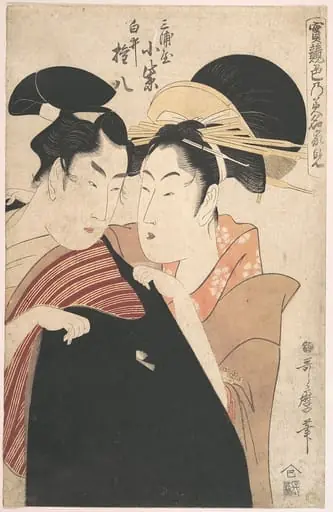 実競色乃美名家見 三浦屋小紫 白井権八|The Lovers Miura-ya Komurasaki and Shirai Gonpachi.
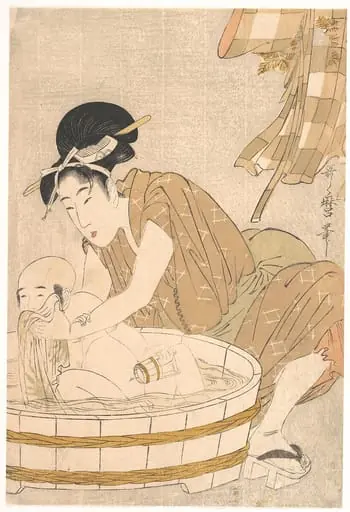 行水|Bathtime (Gyōzui)
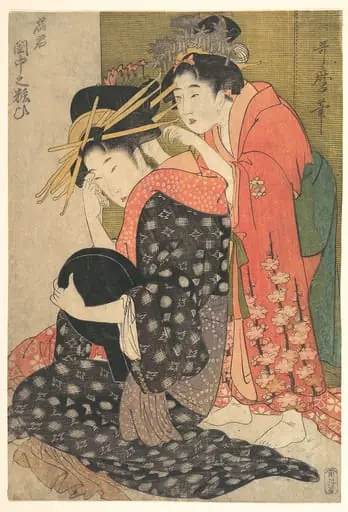 名君 閨中の粧ひ|The Oiran Yoso-oi Seated at Her Toilet
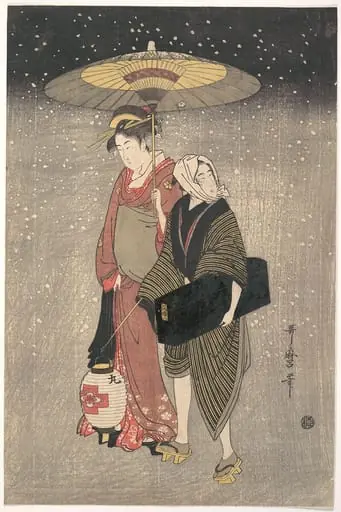 Untitled
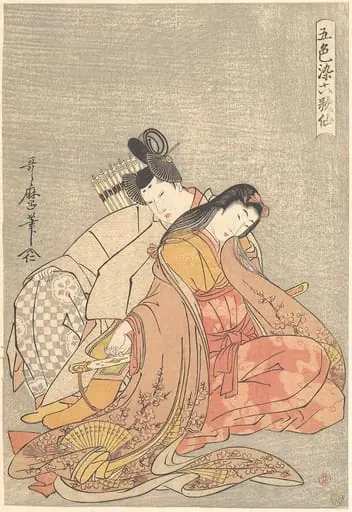 『五色染六歌仙』 在原業平と小野小町|“The Poet Ariwara no Narihira (825–880) and Ono no Komachi,” from the series Five Colors of Love for the Six Poetic Immortals (Goshiki-zome rokkasen)
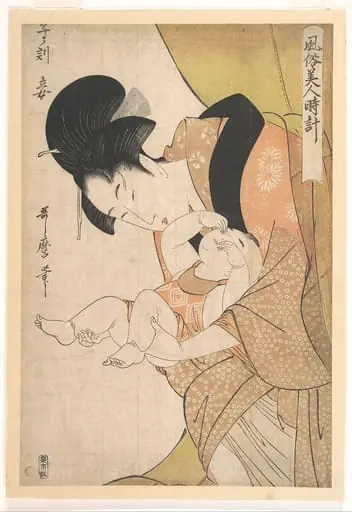 風俗美人時計 子ノ刻 妾|Midnight: Mother and Sleepy Child