Artwork
Hanaōgi of Ōgiya from the series Picture Puzzles
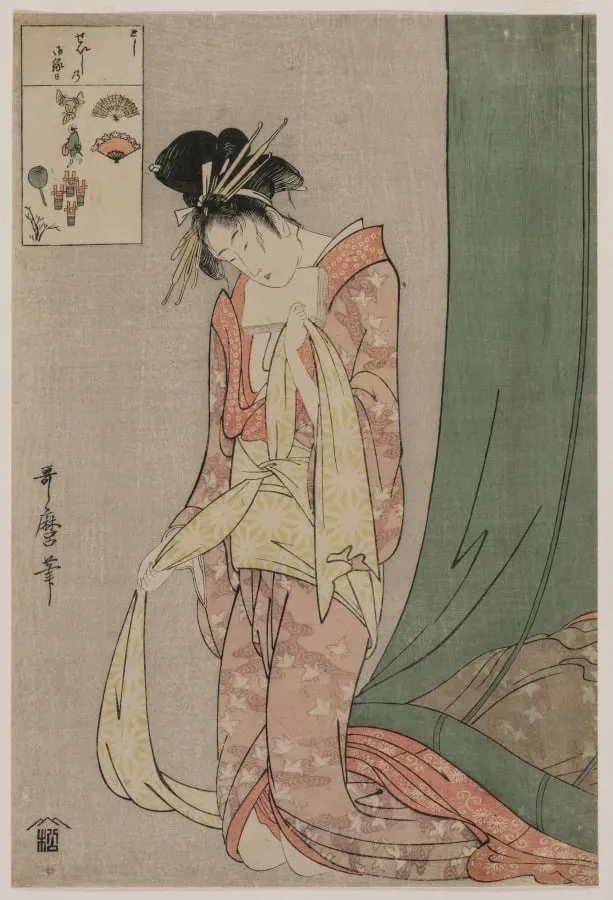
Hanaōgi of Ōgiya from the series Picture Puzzles is a print by the Romanticist artist Kitagawa Utamaro. It dates from 1797 and is held in the collection of the Cleveland Museum of Art. This ukiyo-e print is part of a series titled Picture Puzzles, created by the Japanese artist Utamaro around the late 18th century.
About this work
This print shows a woman in a soft pink robe standing by a window. She holds a fan and looks calm.
Look closer: the tiny pictures in the top left corner spell out her name, her workplace, and what she’s doing. That’s Utamaro’s trick—games inside the art.
This is an ukiyo-e print. See another one by Utamaro (Japanese, c. 1754–1806).
Overview
These pictorial clues encode the subject’s identity, occupation, and action, inviting viewers to engage in a visual riddle rather than simply observe.
This ukiyo-e print is part of a series titled Picture Puzzles, created by the Japanese artist Utamaro around the late 18th century. It presents a quiet scene of a woman at a window, but its true challenge lies in the small images arranged in the upper left corner. These pictorial clues encode the subject’s identity, occupation, and action, inviting viewers to engage in a visual riddle rather than simply observe.
Subject & Meaning
The woman depicted is identified by her name, meaning 'Flower Fan,' and her workplace, the 'House of Fans.' She is shown emerging from a mosquito net, a detail that suggests a private, intimate moment. The combination of her name, profession, and activity forms a layered riddle, typical of the series, where personal identity is revealed not through direct labeling but through symbolic imagery.
Technique & Style
Utamaro employs delicate lines and soft color gradients to render the woman’s pink robe and the window’s lattice. The figures are rendered with subtle expressiveness, emphasizing stillness and restraint. The pictorial clues in the corner are rendered with precision, each small image carefully composed to convey meaning without overt explanation, reflecting the artist’s mastery of visual shorthand.
History & Provenance
Created during the Edo period, this print was produced as part of a commercial series designed for popular consumption. Such puzzle prints were circulated among urban audiences who appreciated intellectual play alongside aesthetic appeal. While specific early ownership records are scarce, the work survives in multiple museum collections, indicating its enduring recognition within the ukiyo-e tradition.
Context
This print reflects the Edo-period fascination with wordplay, visual puzzles, and the culture of pleasure quarters. Utamaro’s series tapped into a broader trend of illustrated riddles found in literature and games. The blending of portraiture with cryptic symbolism catered to an educated urban public, where art served both entertainment and subtle social commentary.
Legacy
Utamaro’s Picture Puzzles series influenced later artists who experimented with layered meaning in prints. The integration of textual and visual riddles into everyday imagery expanded the possibilities of ukiyo-e beyond mere depiction. Today, these works are studied for their ingenuity in merging narrative, identity, and viewer participation within a single frame.
Artist & collection


 Untitled
 Untitled
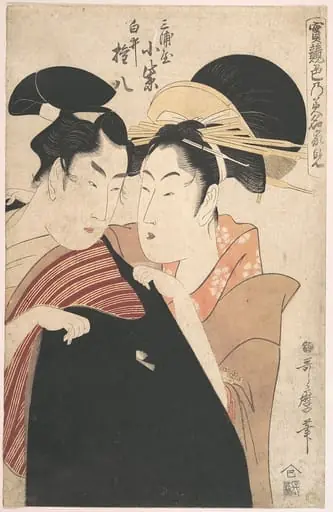 実競色乃美名家見 三浦屋小紫 白井権八|The Lovers Miura-ya Komurasaki and Shirai Gonpachi.
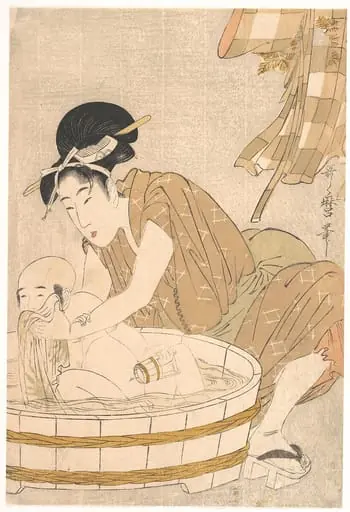 行水|Bathtime (Gyōzui)
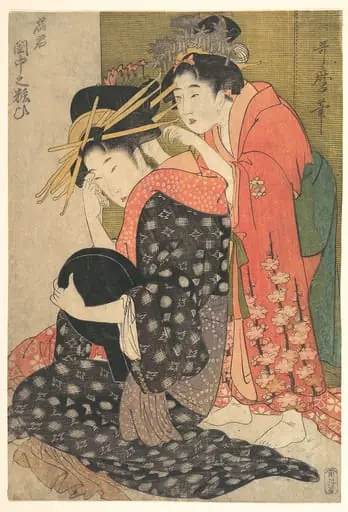 名君 閨中の粧ひ|The Oiran Yoso-oi Seated at Her Toilet
 Untitled
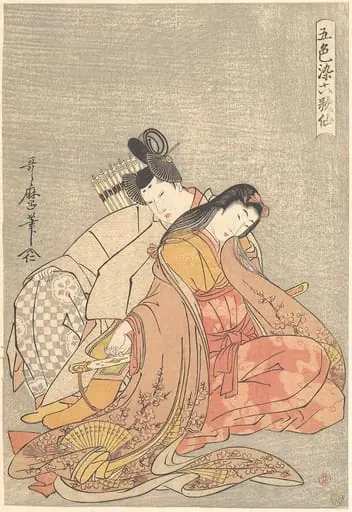 『五色染六歌仙』 在原業平と小野小町|“The Poet Ariwara no Narihira (825–880) and Ono no Komachi,” from the series Five Colors of Love for the Six Poetic Immortals (Goshiki-zome rokkasen)
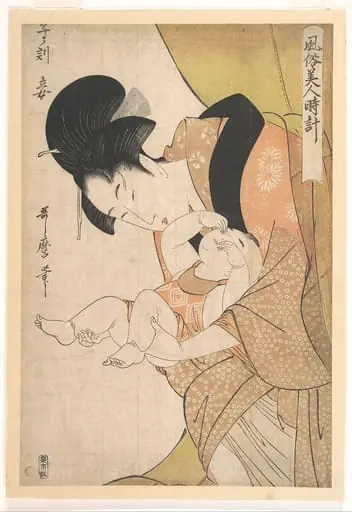 風俗美人時計 子ノ刻 妾|Midnight: Mother and Sleepy Child
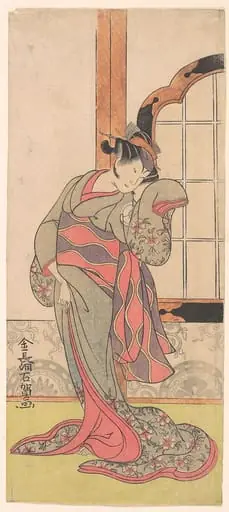 Untitled
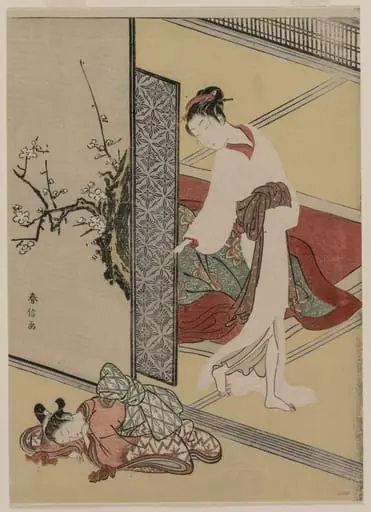 Courtesan and Sleeping Attendant
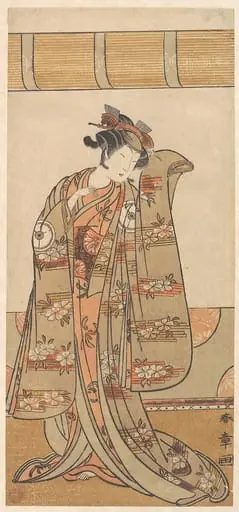 Untitled
 Untitled
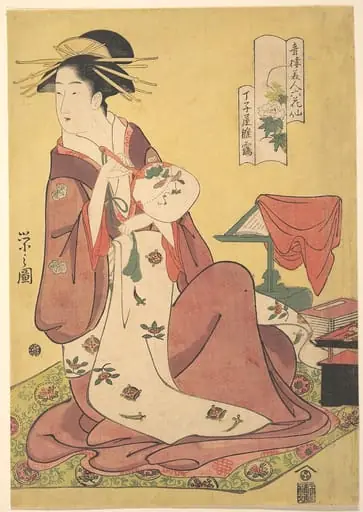 鳥文斎栄之画 「青楼美人六花仙 丁子屋雛鶴鸖」|The Courtesan Hinazuru of the Chōjiya Brothel (Chōjiya Hinazuru), from the series Beauties of the Pleasure Quarters as Six Floral Immortals (Seirō bijin rokkasen)
 Untitled
 Untitled
 Untitled
 Untitled
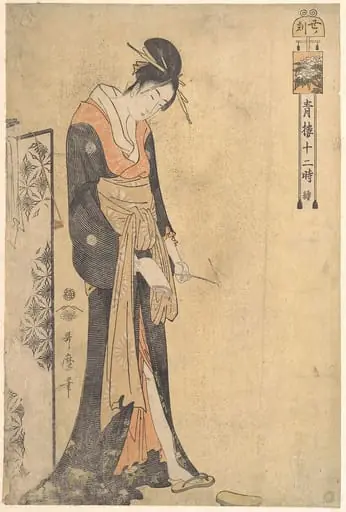 Ushi no Koku|青楼十二時 続 丑の刻|The Hour of the Ox (1 A.M.–3 A.M.)
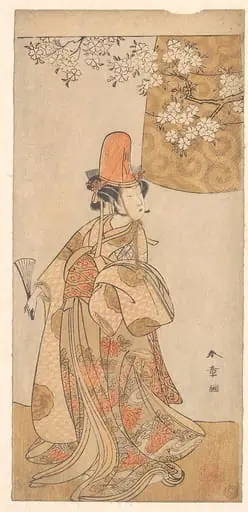 花形見風折烏帽子瀬川富三郎の娘道成寺|Segawa Tomisaburo in the Role of Musume Dojoji in "Hanagatami Kazaori Eboshi"
 Young Woman Looking at a Pot of Pinks