Artwork
The Mocking of Christ, The Scourging, The Deposition, The Entombment, The Ascension, Pentecost (diptych with miniatures behind crystal)
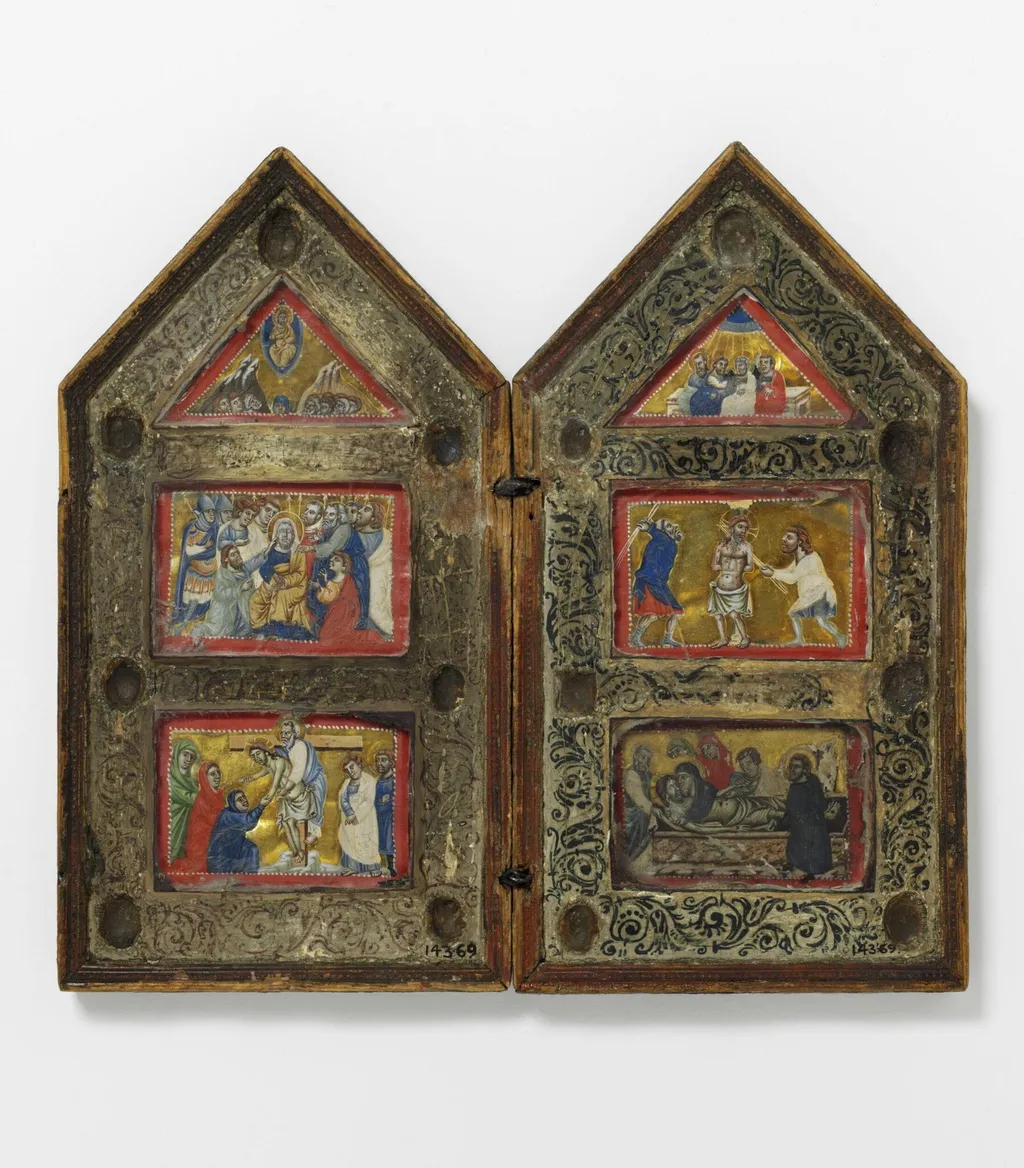
The Mocking of Christ, The Scourging, The Deposition, The Entombment, The Ascension, Pentecost (diptych with miniatures behind crystal) is a paint painting by the Byzantine icon painting artist Unknown. It dates from 1325 and is held in the collection of the Victoria and Albert Museum. This early 14th‑century diptych comprises two hinged panels that open like a book.
About this work
Overview
This early 14th‑century diptych comprises two hinged panels that open like a book. Each panel bears a series of miniature paintings on vellum, protected behind thin sheets of transparent rock crystal. The work presents six episodes from the life of Christ, arranged in paired rectangular and triangular fields, and exemplifies a portable devotional object intended for personal use.
Subject & Meaning
The upper rectangular scenes depict the Mocking of Christ opposite the Scourging, while the lower rectangles show the Deposition facing the Entombment. Above these, the triangular compartments contain the Ascension on the left and Pentecost on the right, together offering a concise visual narrative of Christ’s passion, death, and post‑resurrection appearances for contemplation.
Technique & Style
The miniatures are executed in vivid pigments on vellum and sealed beneath rock crystal, a technique that preserves colour and protects the images. The style aligns with a workshop known for manuscript illumination in early‑fourteenth‑century Venice, displaying the delicate line work and rich coloration typical of that circle.
History & Provenance
The diptych is linked to an unidentified Venetian workshop that also produced a group of illuminated manuscripts for the Basilica of San Marco in the first half of the 1300s, now housed in the Marciana Library. Its crystal panels reflect a broader 14th‑century practice of embedding images in rock crystal, a material sourced from Venice, the Rhine‑Meuse region, Catalonia, Paris and Prague.
Context
During the period, crystal‑covered miniatures were common in portable altars, reliquaries and devotional crosses, valued for their perceived protective and apotropaic qualities. The diptych’s compact format and durable construction made it suitable for travel, allowing a devotee to carry a complete Christological cycle wherever they went.
Artist & collection

 Domestic Scene
 Giacomo and Cardinal Marco, investing Andrea, Abbot of San Zeno, with his Benefice
 The Nymph of Fontainebleau
 Portrait of a Woman
 Madonna and Child with Saints in the Enclosed Garden
 Venus and Minerva
 Family Group of Four on Sofa
 Wall painting from Room H of the Villa of P. Fannius Synistor at Boscoreale
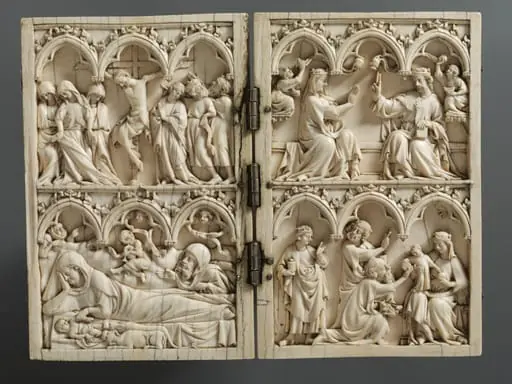 The Nativity, the Adoration of the Magi, the Crucifixion and the Coronation of the Virgin
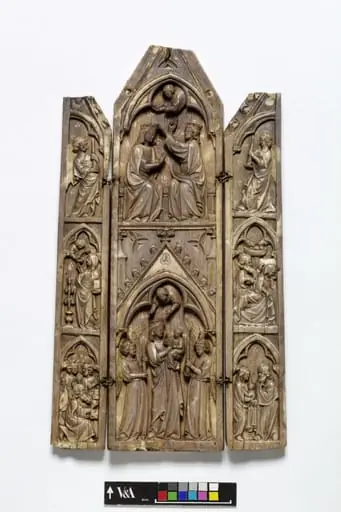 Virgin and Child, the Coronation of the Virgin and scenes from the Nativity
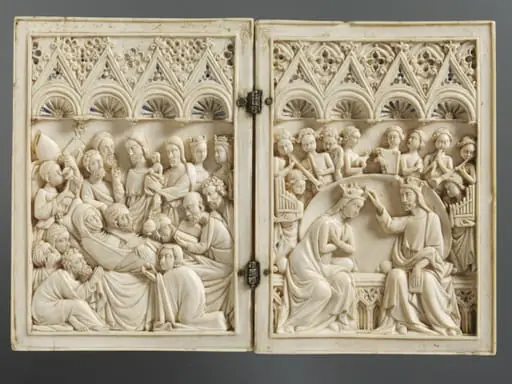 Death and the Coronation of the Virgin
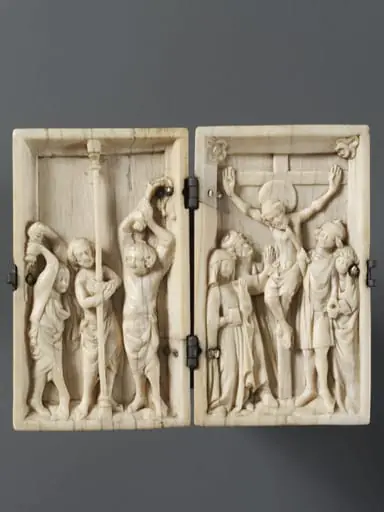 Scourging of Christ and the Crucifixion
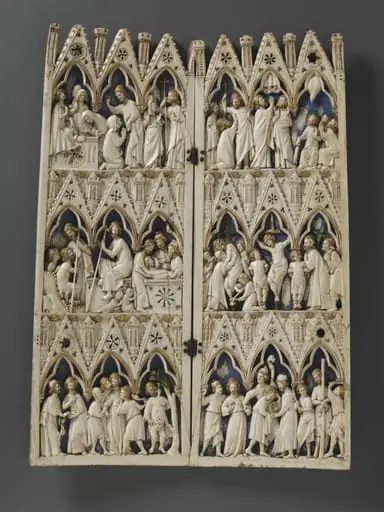 The Soissons Diptych
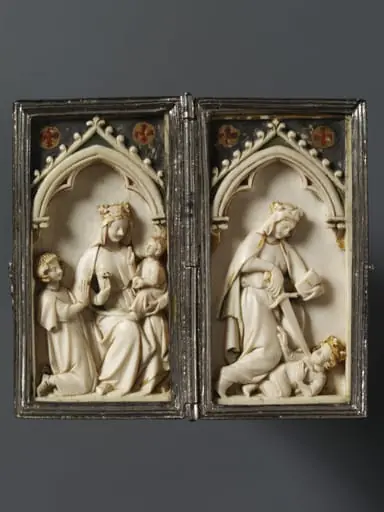 The Virgin and Child and St Catherine with the Emperor Maxentius
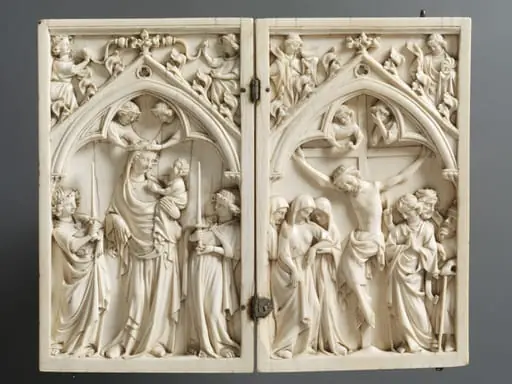 The Virgin and Child and the Crucifixion
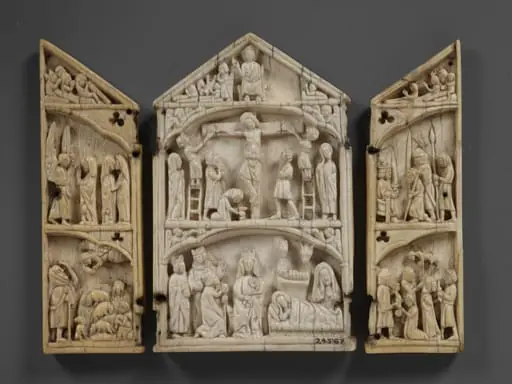 The Nativity with the Adoration of the Magi, the Crucifixion and the Last Judgement
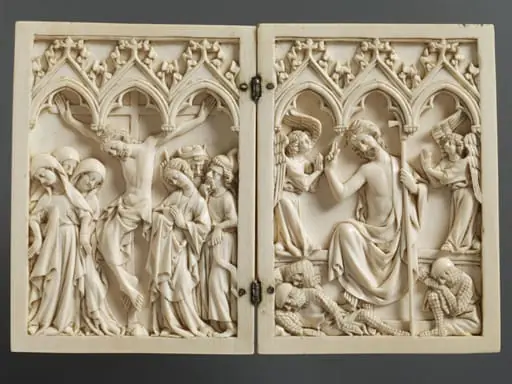 Diptych
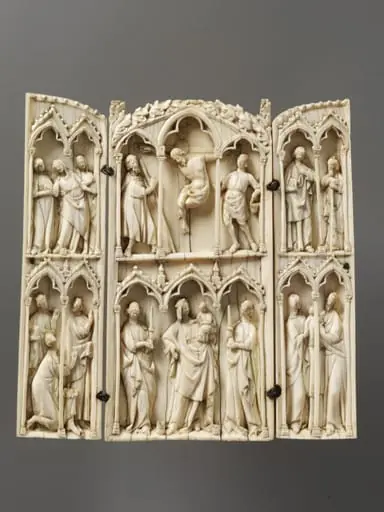 The Crucifixion, the Virgin and Child and Scenes from the Life of Christ