Artwork
The Nativity, the Adoration of the Magi, the Crucifixion and the Coronation of the Virgin
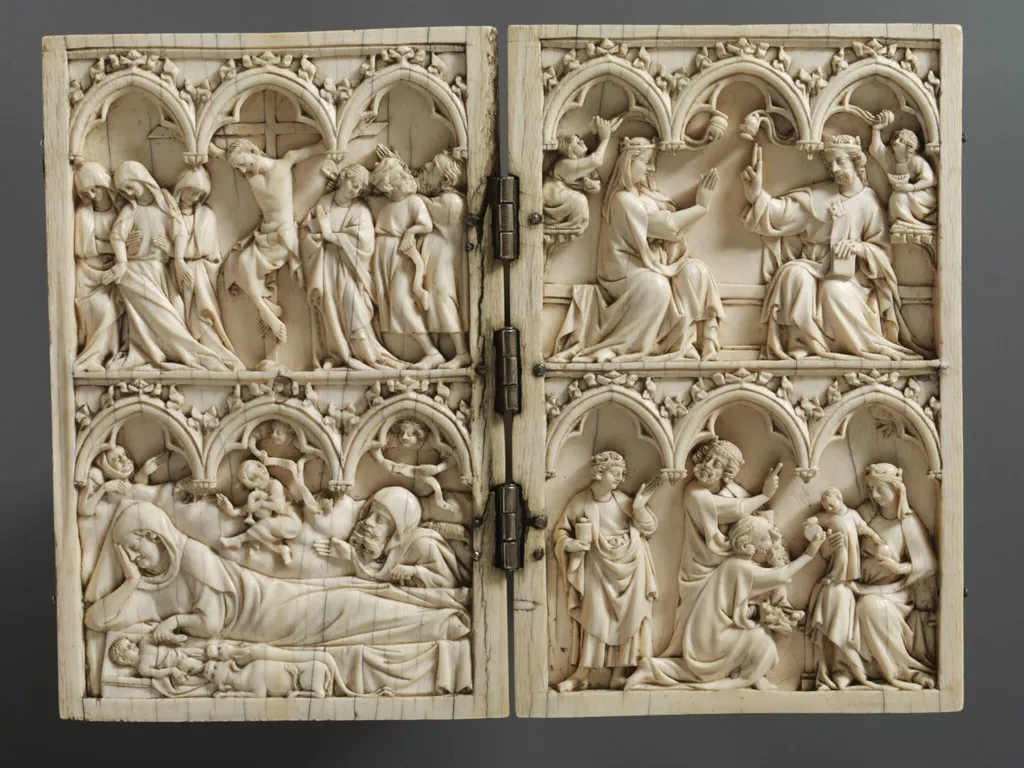
The Nativity, the Adoration of the Magi, the Crucifixion and the Coronation of the Virgin is a work on paper by Unknown. It dates from 1350 and is held in the collection of the Victoria and Albert Museum.
About this work
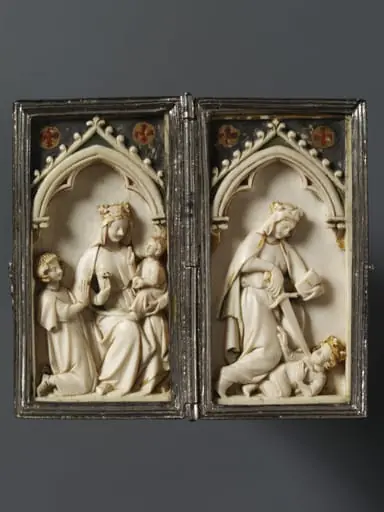
This painting shows four scenes from the life of Jesus and the Virgin Mary.
It's made of ivory and is very small, like a book.
The details are intricate, with many figures and symbols.
This diptych is interesting because it was made to be held in one's hand.
It was created in Paris, France, around 1340-1360.
To learn more about similar small, detailed artworks, look up the technique of sfumato.
Overview
This small, intricately detailed ivory diptych, crafted in Paris between 1340 and 1370, presents four pivotal scenes from Christian iconography: The Nativity, the Adoration of the Magi, the Crucifixion, and the Coronation of the Virgin. Designed for portability, it could be held in one hand and opened like a book.
Subject & Meaning
The diptych narrates key moments in the life of Jesus and the glorification of the Virgin Mary, serving as a devotional tool for personal contemplation. Its iconography balances narrative scenes with symbolic elements, focusing devotion on central Christian themes.
Technique & Style
Characterized by its meticulous, small-scale carving, this diptych exemplifies the refined craftsmanship of Gothic ivory work from 14th-century Paris. While not directly related to sfumato (a painting technique), its intricate details and compact format are notable.
History & Provenance
Created in Paris during the Gothic period (c. 1340-1370), this diptych is part of a tradition where owners were sometimes depicted within the scenes, indicating bespoke commissions. Early examples of such diptychs date back to the 1240s, marking an innovative form in Gothic art.
Context
Part of a broader tradition of portable devotional objects, this diptych reflects the religious practices of its time, designed for personal, intimate engagement with religious narratives and symbols.
Legacy
As a representative of Gothic ivory carving, it contributes to the understanding of medieval devotional practices and the evolution of small, intricate artworks for personal religious use.
Artist & collection

 Domestic Scene
 Giacomo and Cardinal Marco, investing Andrea, Abbot of San Zeno, with his Benefice
 The Nymph of Fontainebleau
 Portrait of a Woman
 Madonna and Child with Saints in the Enclosed Garden
 Venus and Minerva
 Family Group of Four on Sofa
 Wall painting from Room H of the Villa of P. Fannius Synistor at Boscoreale
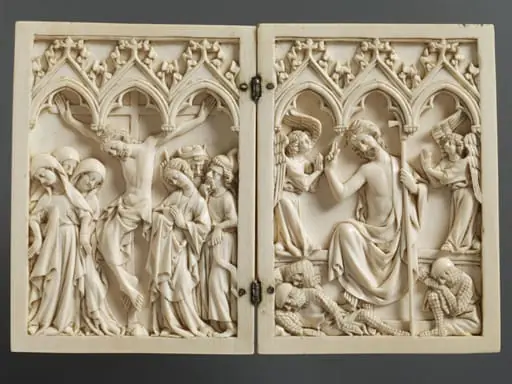 Diptych
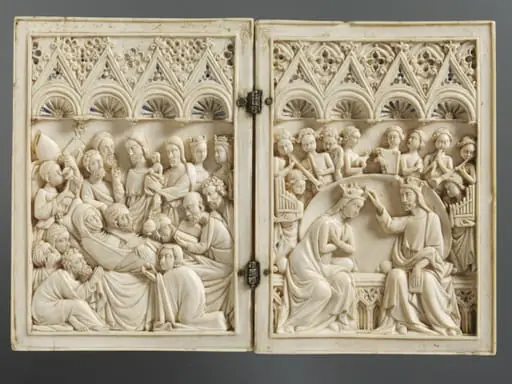 Death and the Coronation of the Virgin
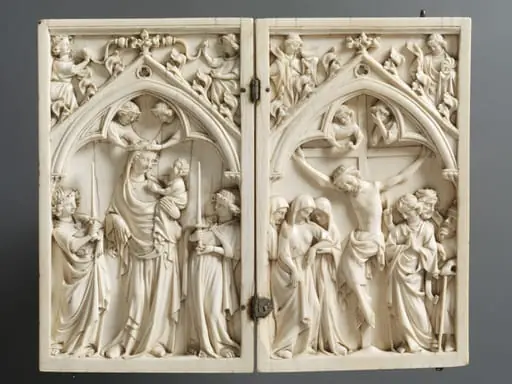 The Virgin and Child and the Crucifixion
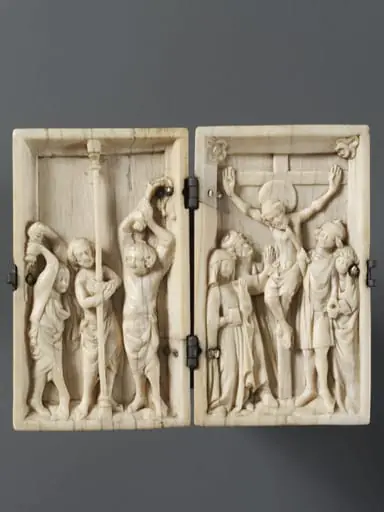 Scourging of Christ and the Crucifixion
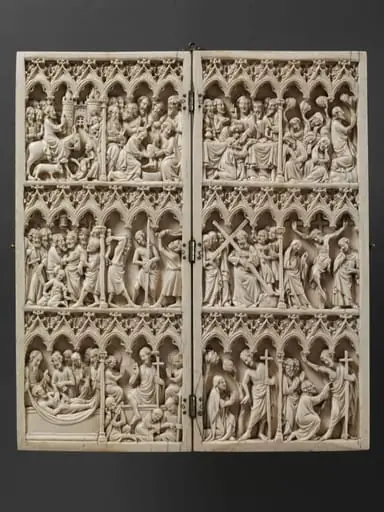 Scenes from the Passion of Christ
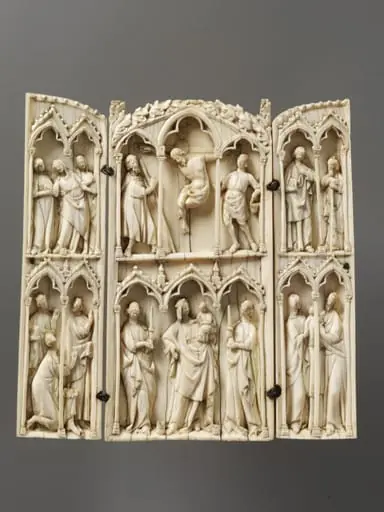 The Crucifixion, the Virgin and Child and Scenes from the Life of Christ
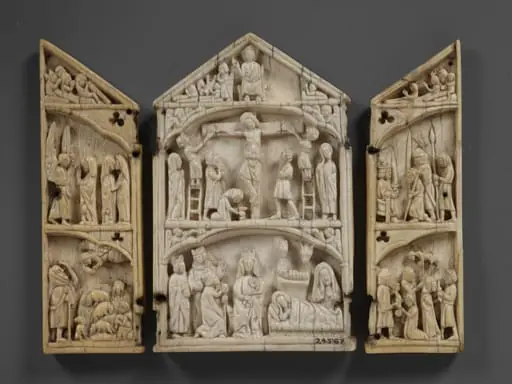 The Nativity with the Adoration of the Magi, the Crucifixion and the Last Judgement
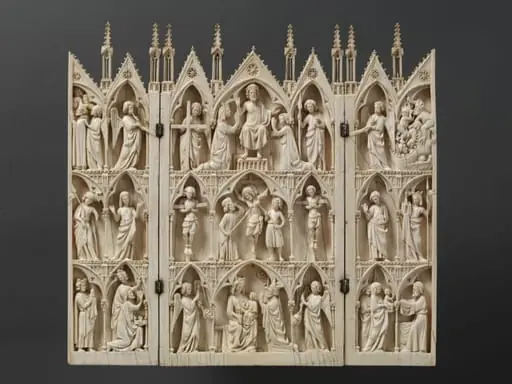 The Virgin and Child, the Crucifixion and the Last Judgement
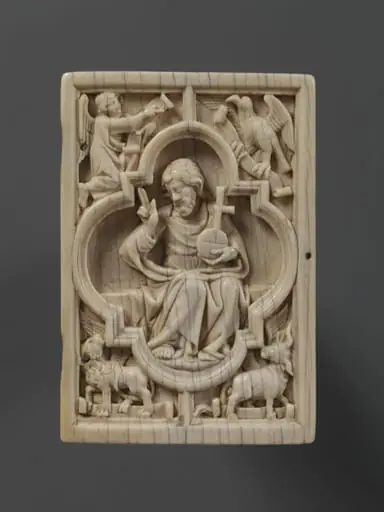 Christ in Majesty and the Coronation of the Virgin
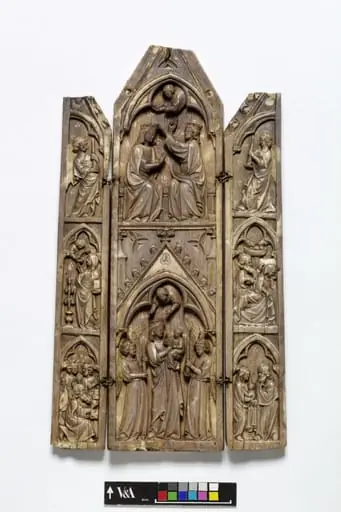 Virgin and Child, the Coronation of the Virgin and scenes from the Nativity
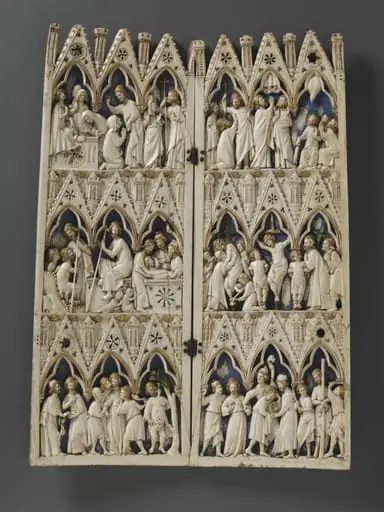 The Soissons Diptych
 The Virgin and Child and St Catherine with the Emperor Maxentius