Artwork
The Soissons Diptych
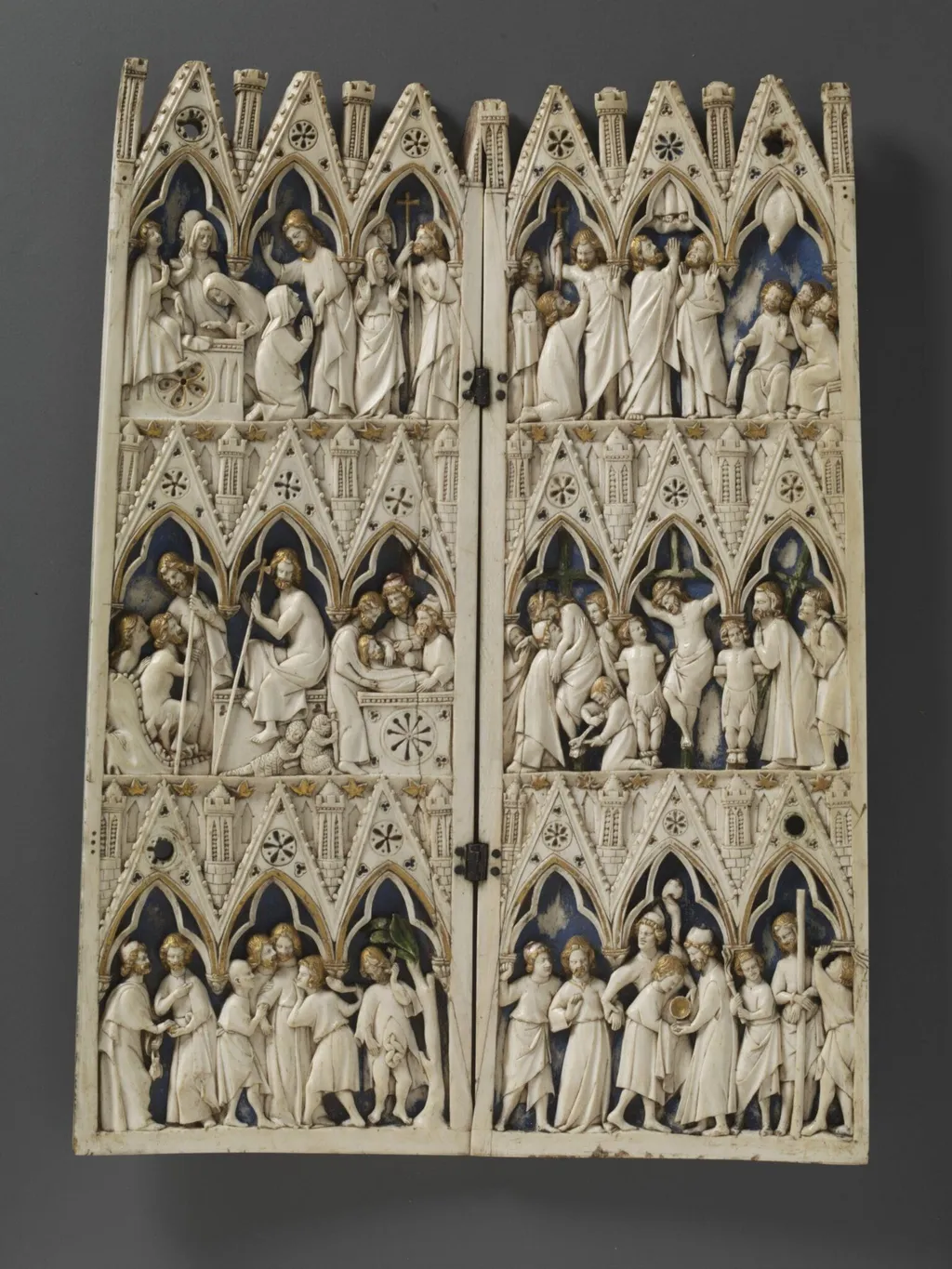
The Soissons Diptych is a work on paper by Unknown. It dates from 1270 and is held in the collection of the Victoria and Albert Museum.
About this work
Overview
The composition guides the viewer through the events of the final days of Jesus, from betrayal to the descent of the Holy Spirit.
The Soissons Diptych is a two‑panel ivory work that presents a continuous narrative of Christ’s Passion. The panels are organized in three horizontal registers, each containing a series of densely packed scenes that unfold from the lower left corner across the left panel, then reverse direction on the right panel. The composition guides the viewer through the events of the final days of Jesus, from betrayal to the descent of the Holy Spirit.
Subject & Meaning
The diptych depicts a comprehensive sequence of New Testament episodes. The lowest register includes Judas receiving silver, the betrayal, Judas’s death, the scourging of Christ, Pilate’s hand‑washing, and the flagellation. The middle tier follows Christ carrying the cross, the crucifixion, its removal, burial, resurrection, and the harrowing of Hell. The upper register shows the women at the tomb, appearances to Mary Magdalene and the other women, Thomas’s doubt, the Ascension, and the Pentecost.
Technique & Style
Carved in high relief from ivory, the work exemplifies late‑13th‑century Gothic ornamentation. The scenes are framed by intricate architectural motifs reminiscent of the high Gothic façades of French cathedrals. The dense arrangement of figures and the stacked narrative bands reflect the influence of cathedral tympana, translating monumental stone sculpture into a portable, intimate medium.
History & Provenance
Although documentary proof is lacking, the diptych has traditionally been linked to the Abbey of Saint‑Jean‑des‑Vignes in Soissons. Its association with that institution gave rise to the term “Soissons group,” a classification for similar Gothic ivories sharing the same narrative density and architectural framing.
Context
The Soissons Diptych belongs to a broader trend of portable devotional objects that disseminated the visual language of French High Gothic cathedrals beyond the Île‑de‑France. By mirroring the narrative programs of cathedral door tympana, such ivories served as portable exemplars of contemporary ecclesiastical art, facilitating the spread of Gothic iconography throughout medieval Europe.
Artist & collection

 Domestic Scene
 Giacomo and Cardinal Marco, investing Andrea, Abbot of San Zeno, with his Benefice
 The Nymph of Fontainebleau
 Portrait of a Woman
 Madonna and Child with Saints in the Enclosed Garden
 Venus and Minerva
 Family Group of Four on Sofa
 Wall painting from Room H of the Villa of P. Fannius Synistor at Boscoreale
 Scenes from the Passion of Christ
 The Virgin and Child and the Crucifixion
 Diptych
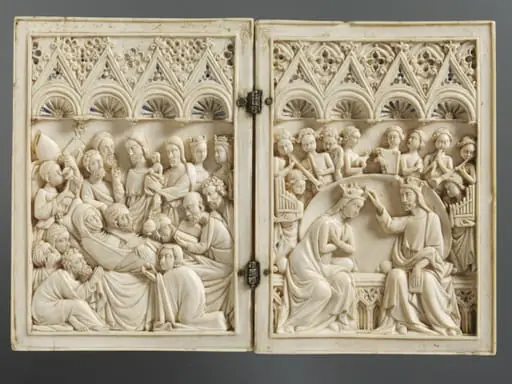 Death and the Coronation of the Virgin
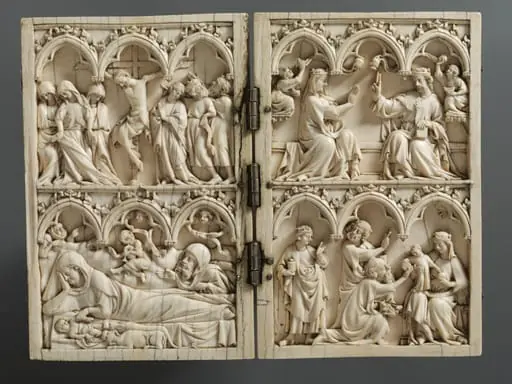 The Nativity, the Adoration of the Magi, the Crucifixion and the Coronation of the Virgin
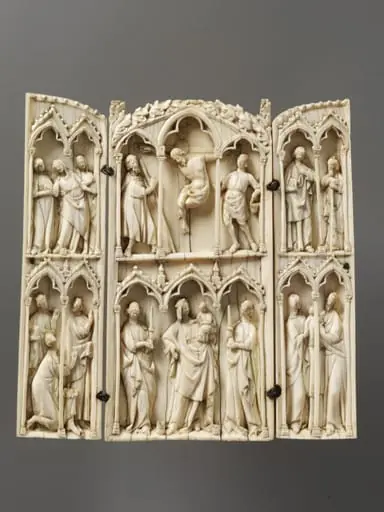 The Crucifixion, the Virgin and Child and Scenes from the Life of Christ
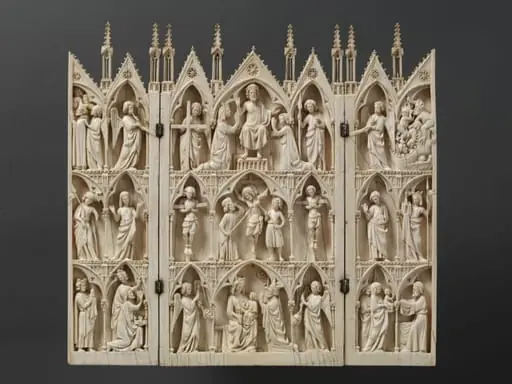 The Virgin and Child, the Crucifixion and the Last Judgement
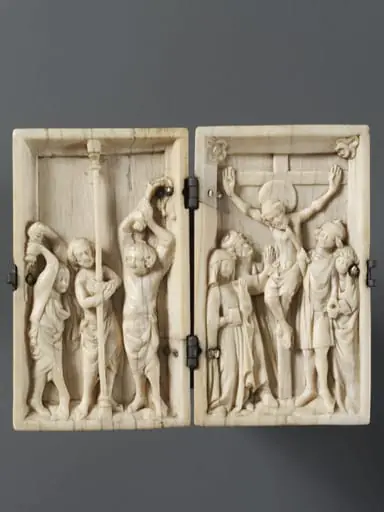 Scourging of Christ and the Crucifixion
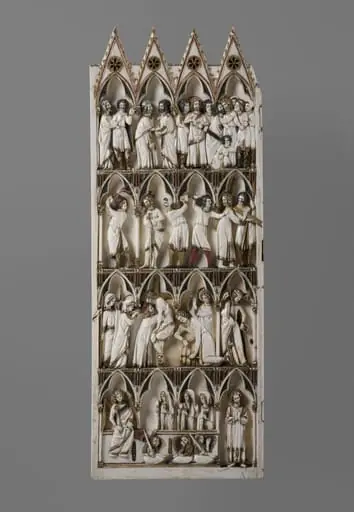 Scenes from the Passion of Christ
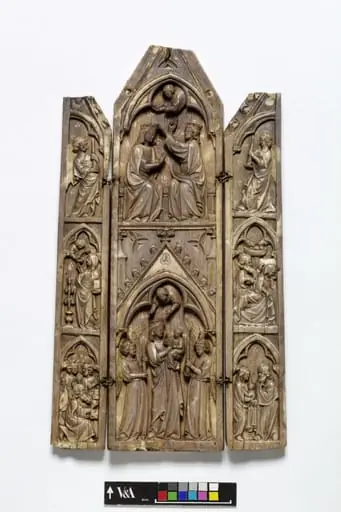 Virgin and Child, the Coronation of the Virgin and scenes from the Nativity
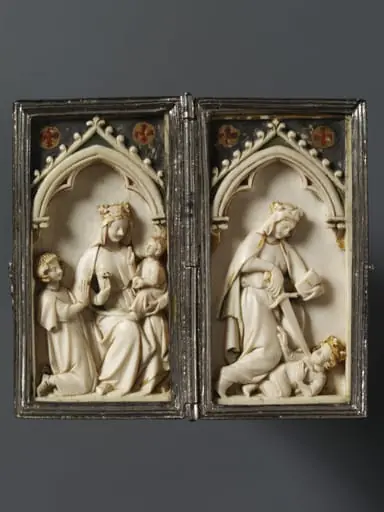 The Virgin and Child and St Catherine with the Emperor Maxentius
 The Salting Diptych