Artwork
The Virgin and Child and the Crucifixion
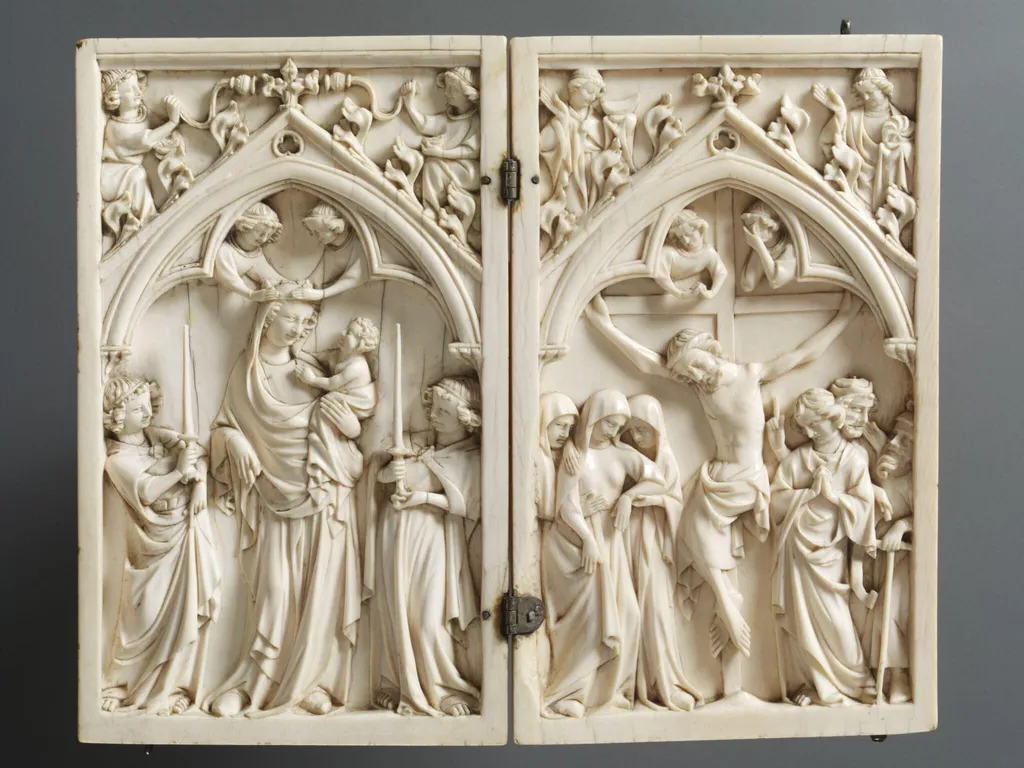
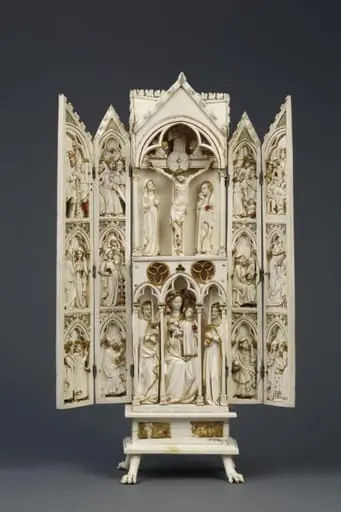
The Virgin and Child and the Crucifixion is a work on paper by Unknown. It dates from 1340 and is held in the collection of the Victoria and Albert Museum. This ivory diptych, crafted in Paris around 1340, consists of two hinged panels.
About this work
Overview
The work belongs to a small group of related pieces distinguished by distinctive sculptural details, particularly in the rendering of angelic figures.
This ivory diptych, crafted in Paris around 1340, consists of two hinged panels. One depicts the Virgin and Child surrounded by attendants; the other shows the Crucifixion. Such objects were designed for private devotion, combining portability with rich symbolic content. The work belongs to a small group of related pieces distinguished by distinctive sculptural details, particularly in the rendering of angelic figures.
Subject & Meaning
The left panel presents the Virgin Mary, crowned and flanked by two angels holding candlesticks, emphasizing her role as Queen of Heaven. The right panel portrays Christ on the cross, anchoring the devotional focus in sacrifice and redemption. Together, the panels frame Mary’s maternal role within the broader narrative of salvation, inviting contemplation of both divine grace and human suffering.
Technique & Style
Carved from ivory with fine precision, the figures exhibit delicate modeling and intricate surface detail. The angels lack wings and instead wear ornate morses—decorative clasps typically seen on ecclesiastical vestments—marking a rare stylistic choice. This departure from conventional angelic iconography suggests a deliberate emphasis on clerical authority and liturgical symbolism within domestic devotion.
History & Provenance
The diptych is one of three closely related works, including examples in the Victoria and Albert Museum and the Courtauld Institute. Their shared features—such as the unwinged angels and specific drapery treatments—indicate they may have originated from the same workshop or artistic circle in mid-14th-century Paris. These pieces represent a refined phase in the evolution of Gothic ivory carving.
Context
Ivory diptychs emerged in the 1240s as intimate objects for personal prayer, often commissioned by wealthy patrons. Unlike larger altarpieces, they allowed private engagement with sacred scenes. The inclusion of donor figures in some examples reflects a trend toward personalized devotion, paralleling developments in manuscript illumination and panel painting of the period.
Legacy
This diptych exemplifies the peak of Parisian ivory carving in the 14th century, where technical mastery met spiritual intent. Its distinctive iconography influenced later devotional objects, though few surviving works match its level of detail and coherence. It remains a key reference for understanding how religious imagery was adapted for private, domestic use in medieval Europe.
Artist & collection

 Domestic Scene
 Giacomo and Cardinal Marco, investing Andrea, Abbot of San Zeno, with his Benefice
 The Nymph of Fontainebleau
 Portrait of a Woman
 Madonna and Child with Saints in the Enclosed Garden
 Venus and Minerva
 Family Group of Four on Sofa
 Wall painting from Room H of the Villa of P. Fannius Synistor at Boscoreale
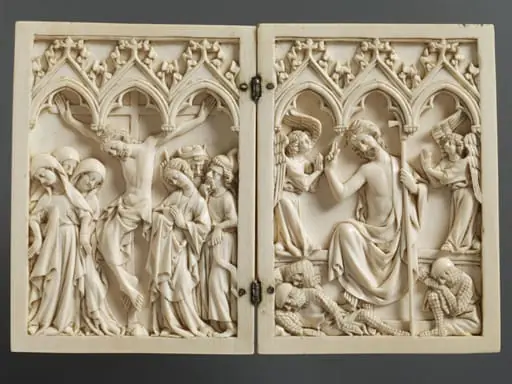 Diptych
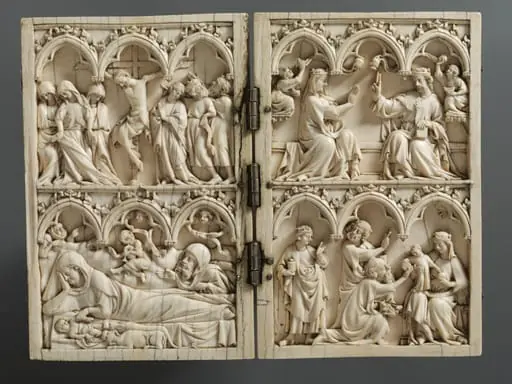 The Nativity, the Adoration of the Magi, the Crucifixion and the Coronation of the Virgin
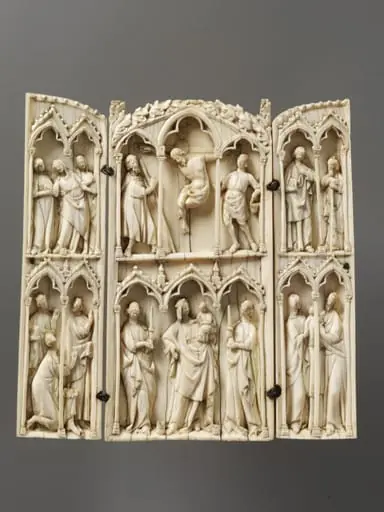 The Crucifixion, the Virgin and Child and Scenes from the Life of Christ
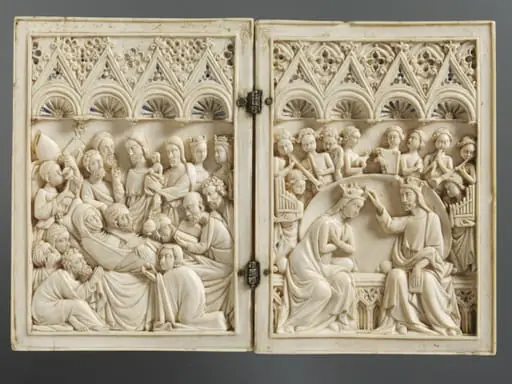 Death and the Coronation of the Virgin
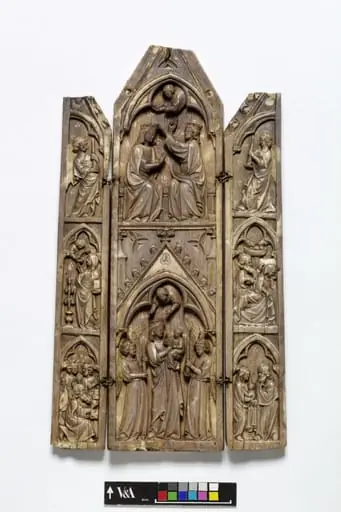 Virgin and Child, the Coronation of the Virgin and scenes from the Nativity
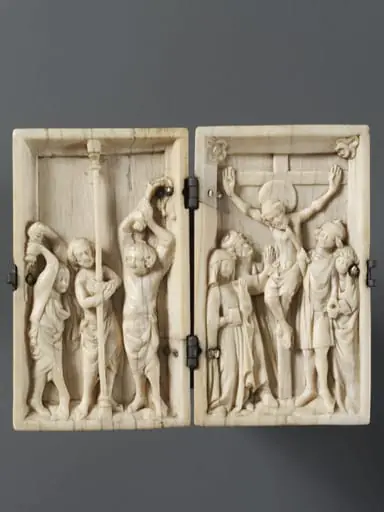 Scourging of Christ and the Crucifixion
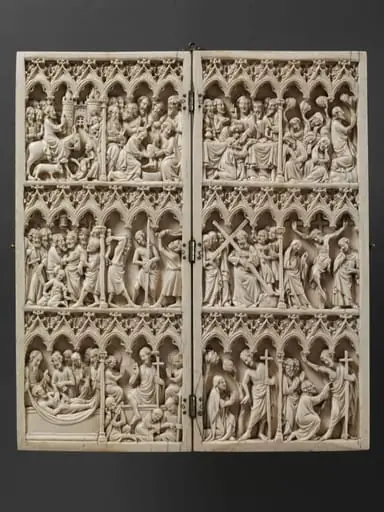 Scenes from the Passion of Christ
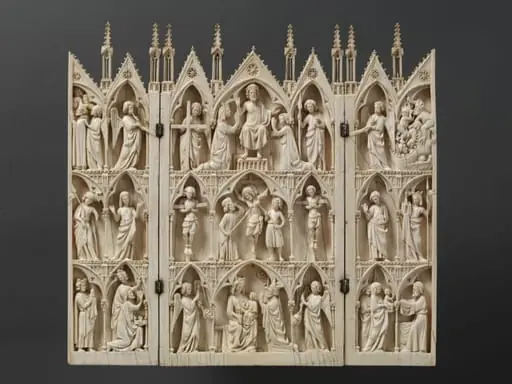 The Virgin and Child, the Crucifixion and the Last Judgement
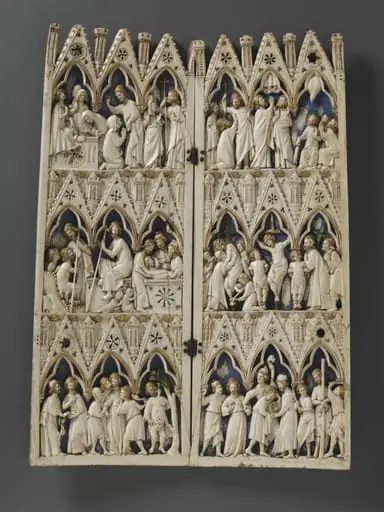 The Soissons Diptych
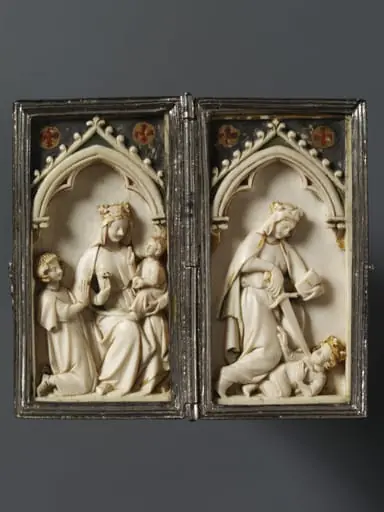 The Virgin and Child and St Catherine with the Emperor Maxentius
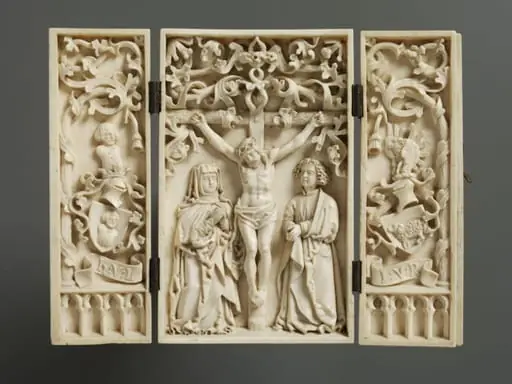 The Crucifixion
 Virgin and Child, the Crucifixion and Scenes from the Life of Christ