Artwork
Icoană cu scene biblice pe două registre
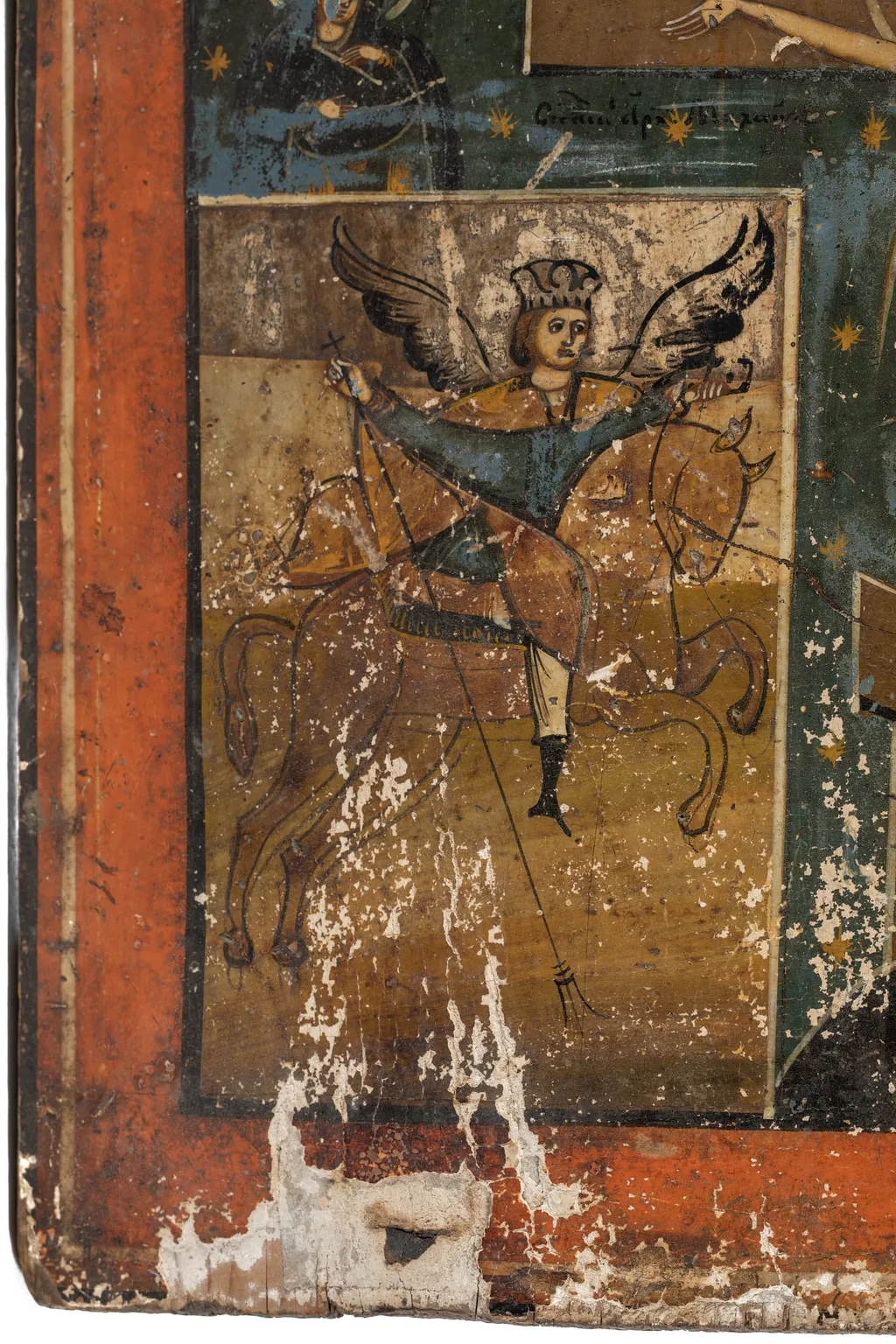
Icoană cu scene biblice pe două registre is an unspecified painting by the Byzantine icon painting artist Hugo Kołłątaj. It is held in the collection of the Moldova National Museum Complex. The work presents a vivid tableau centered on a crowned, winged rider on a brown horse.
About this work
Overview
The work presents a vivid tableau centered on a crowned, winged rider on a brown horse. The figure brandishes a bow and arrow in one hand while clutching a bird in the other, set against a multicolored backdrop of orange, green and blue. A decorative border surrounds the scene, parts of which have peeled away, exposing the underlying surface.
Subject & Meaning
The composition combines biblical motifs with allegorical elements. The crowned, winged rider may evoke a celestial or saintly messenger, while the bow, arrow and bird suggest themes of divine hunt or spiritual triumph. The dual registers of the original title hint at a narrative structure typical of medieval and early modern religious art.
Technique & Style
Executed in a flat, image‑like manner, the painting relies on bold colour fields and clear outlines rather than modeling. The peeling border indicates a layered application, perhaps a later addition or a protective framing that has deteriorated. The overall visual language aligns with folk‑type religious imagery common in Eastern European devotional panels.
History & Provenance
The piece is catalogued under the title “Icoană cu scene biblice pe două registre,” suggesting a Romanian origin. No specific creator is recorded, though comparative studies note stylistic affinities with the work of Hugo Kołłątaj, a known figure in regional religious painting.
Context
Such icons were traditionally used for private devotion or liturgical display, often hung in churches or homes. The inclusion of multiple registers allowed artists to convey complex theological narratives within a single visual field, a practice prevalent in post‑Byzantine iconography.
Artist & collection
Artist
This Polish folk painter worked in the late eighteenth and early nineteenth centuries, creating religious scenes with bold colors and simple shapes.
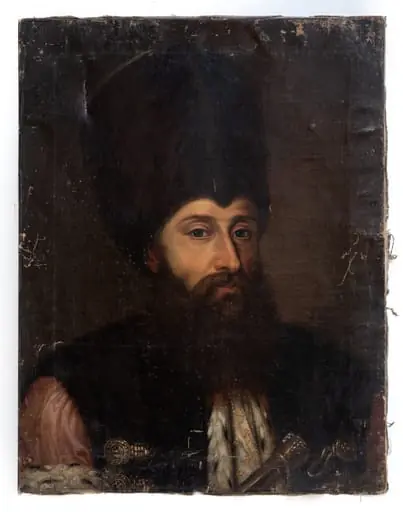 Alexandru Ipsilanti
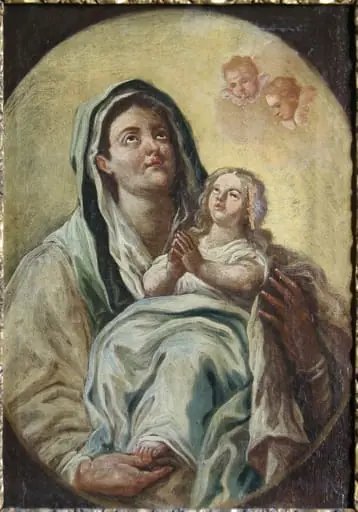 Fecioara Maria cu Pruncul Isus (în Reg. Inv.: Maria cu copilul Isus)
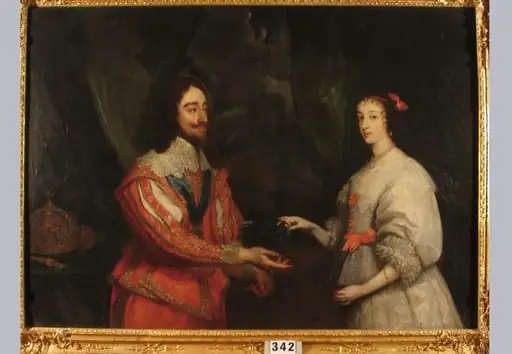 Regele Charles I Stuart al Angliei și soția sa Henrietta Maria de Franța (în Reg. Inv.: Carol I al Angliei și soția sa Henriette din Franța)
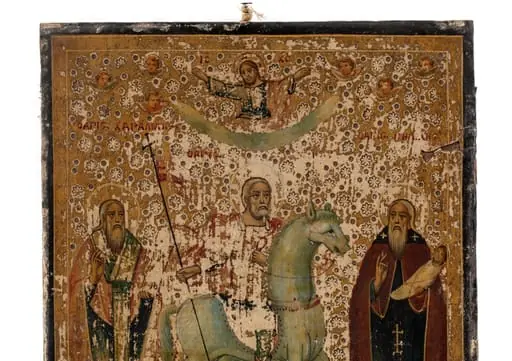 Sfântul Haralambie cu alți doi sfinți
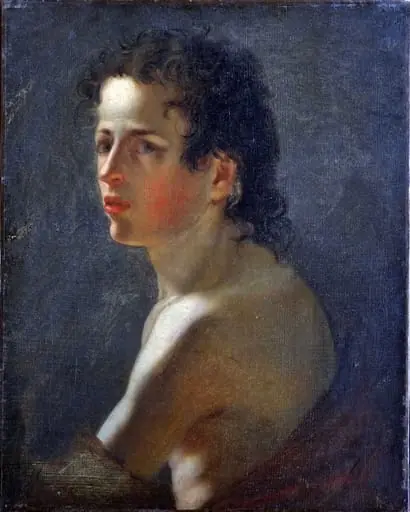 Portret de bărbat
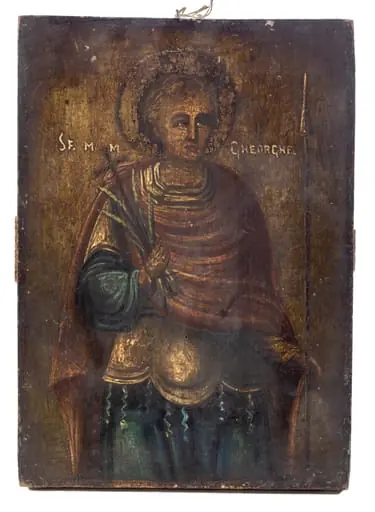 Sfântul Gheorghe
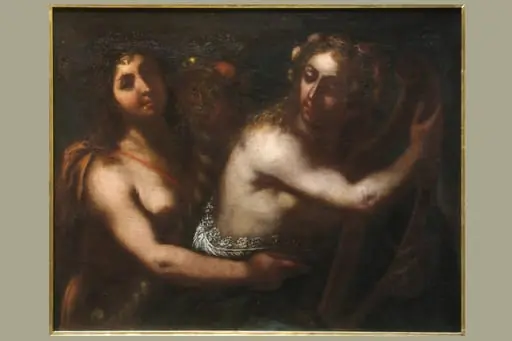 Vertumnus și Pomona (în Reg. Inv.: Vertumnus și Flora)
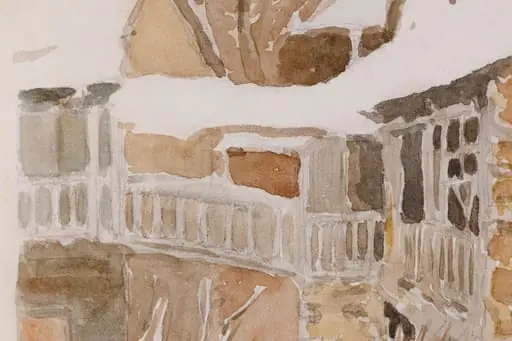 Iarnă
Iarnă
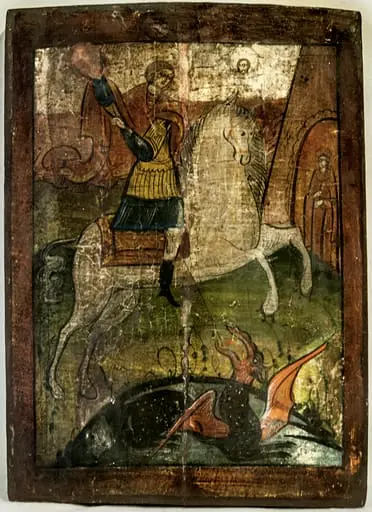 Tema iconografică este "Sfântul Gheorghe omorând balaurul". În prim plan, Sf. Gheorghe, în veșminte ostășești, călare pe un cal alb, cambrat, ridicat în două picioare, omoară balaurul plasat în registrul inferior. Veșmintele sfântului au o tentă țărănească(tunica albastră acoperită 3/4 de lorica argintie, pantaloni albi, cu motiv floral, cizme înalte. Calul are ambii ochi vizibili, coama bogată, coada în fuior. Partea dinspre privitor a ansamblului cal cu călăreț este supradimensionată, creând o impresie optică de înălțare a sfântului. În partea dreaptă, fata de împărat pe care o salvează sfântul, sub portalul palatului. privind scena. Veșminte lungi, simple, coroană împărătească. Înveșmântată în haine simple, lungi, cu coroană pe cap, privește scena cu brațele la piept. În colțul din stânga dreapta sus, Iisus Hristos așa cum apare pe sfântul Keramion. Nimbul cruciger. Balaurul plasat în registrul inferior asemănător unui grifon, corp diform, terminat cu o coadă în săgeată, aripile și capul roșii. Motiv mai elaborat decât în alte icoane unde redarea balaurului este minimizată. Compoziția este dinamică, chipurile expresive, gesturile bine realizate. Linia desenului variază, contribuind la efectul optic. Fondul foiței argintii(superior), relief din benzi late în tonuri de brun, brun roșcat, galben, alb, verde, cu elemente de vegetație. Bordura roșiatică lată, specifică icoanelor de tip krashnuska. Inscripție pe chenar, în partea superioară.
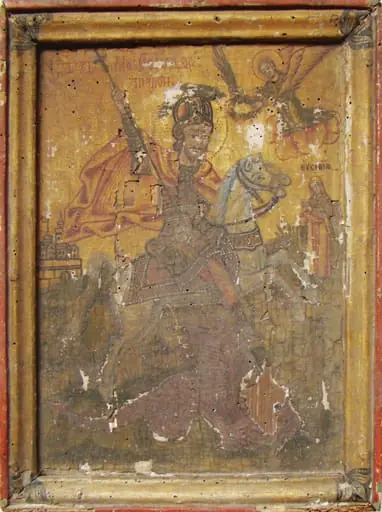 Sf. Teodor Tiron
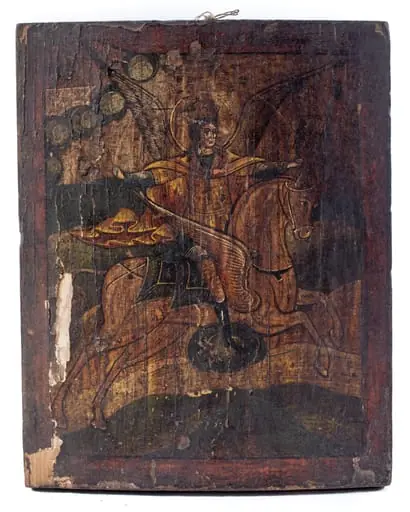 Un sfânt ecvestru
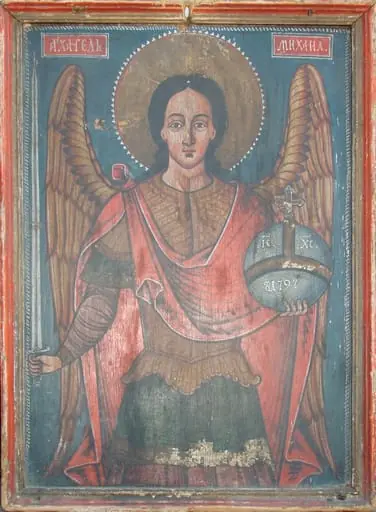 Arhanghelul Mihail
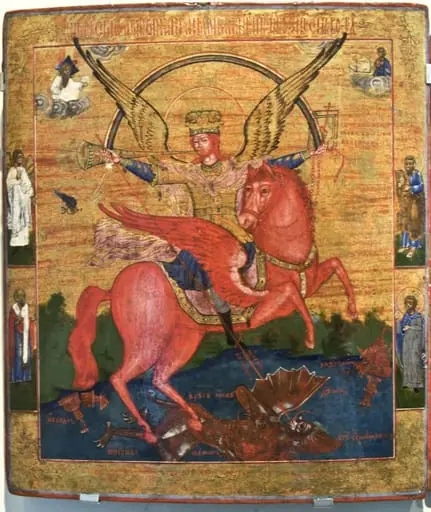 Sf. Arhanghel Mihail
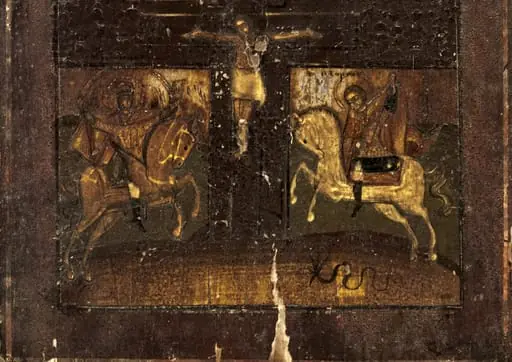 Răstignirea lui Iisus Hristos plasată pe un câmp central sub formă de cruce, împarte spațiul pictural în patru casete dreptunghiulare, Iisus Hristos răstignit pe crucea cu 6 brațe (specifică ortodoxiei ruse), cu un veșmânt alb în jurul mijlocului, ochii închiși, nimbul cu inscripțiile consacrate. Cele 4 casete conțin următoarele scene: Stânga sus Maica Domnului cu Pruncul tipul Kazanskaia. Este reprezentată până la piept, nu se văd mâinile. Are chipul îndurerat, privirea tristă, îndreptată în jos, capul ușor înclinat spre Prunc. Maforion negru. Iisus – Emanuel, binecuvintează cu dreapta, nimbul cruciger. Înveșmântat cu chiton verde și himation bej. Dreapta sus - Sf. Nicolae în veșminte de arhiereu, cărunt, cu barba rotundă și scurtă, capul descoperit. Înveșmântat cu sacos grena decorat cu șiruri de motive verticale de culoare galbenă, omofor verde cu cruci albe, binecuvântând cu mâna dreaptă, în stânga ținând Evanghelia închisă.; Stânga jos- Sf. Arh. Mihail, înaripat, purtând coroană, cu mantia în vânt, călare pe un cal roșu, de asemenea înaripat, în poziție cambrată. Dreapta jos - Sf. Gheorghe, oștean, călare pe un cal alb în poziție cambrată, înfigând, cu ambele mâini, sulița în gura balaurului, minimizat, redat schematic. Fondul: negru(scena centrală), scenele de sus: 3/4 grena, 1/4 foița metalică, nimburile cu linie discretă, la scenele de jos porțiune de relief redat printr-o zonă de brun care traversează spațiul cruciform și se continuă cu relief colinar în cele două casete. Chenarul marginal specific icoanelor tip krasnushka.Inscripții caligrafice cu negru.Vernis îmbătrânit, care acoperă inscripțiile.
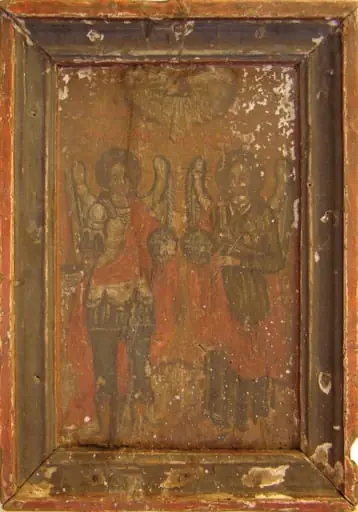 Arhanghelii Mihail și Gavriil
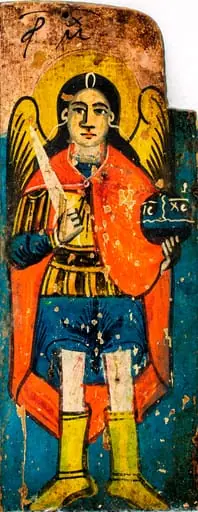 Cele două voleuri sunt realizate dintr-un blat subțire de formă dreptunghiulară, căruia i s-a îngustat și arcuit ușor porțiunea superioară. Pictura este realizată în stil popular, cu respectarea în mare a indicațiilor canoanelor bizantine. Sunt reprezentați frontal în picioare, pe un voleu sf.apostol Filip iar pe celălalt voleu, arhanghelul Mihail. Sfântul apostol Filip este redat tânăr, cu capul descoperit, părul lung, prins la spate.Fața ovală, nasul cu nările mari, buzele roșii, privirea îndreptată lateral. Înveșmântat cu chiton roșu și himation albastru. Binecuvintează cu mâna dreaptă, în stânga ține un rotulus desfășurat. Arhanghelul este redat în veșminte ostășești, în mâna dreaptă cu sabia de foc de culoare albă, în stânga cu globul cruciger.Părul lung, negru, lăsat pe umeri, fața asemănătoare cu a apostolului Filip.Poartă o lorică 3/4, mantie roșie, tunică albastră. Aripi galbene, cizme înalte galbene. Ambii au nimburi de culoare galbenă. Fondul - albastru pe porțiunea mai lată, roșu cărămiziu deasupra umerilor apostolului, bej la arhanghel.Inscripția este prescurtată, scrisă cu litere negre, dezordonate. Pictura are un evident caracter naiv, popular. Paleta cromatică variată, culorile tari, ușor stridente. Pe spatele voleurilor apare inscripția IS HS; NI KA, iar în partea de jos capul lui Adam. Cele două voleuri sunt fixate cu două șipci mici de brad și cuie metalice.
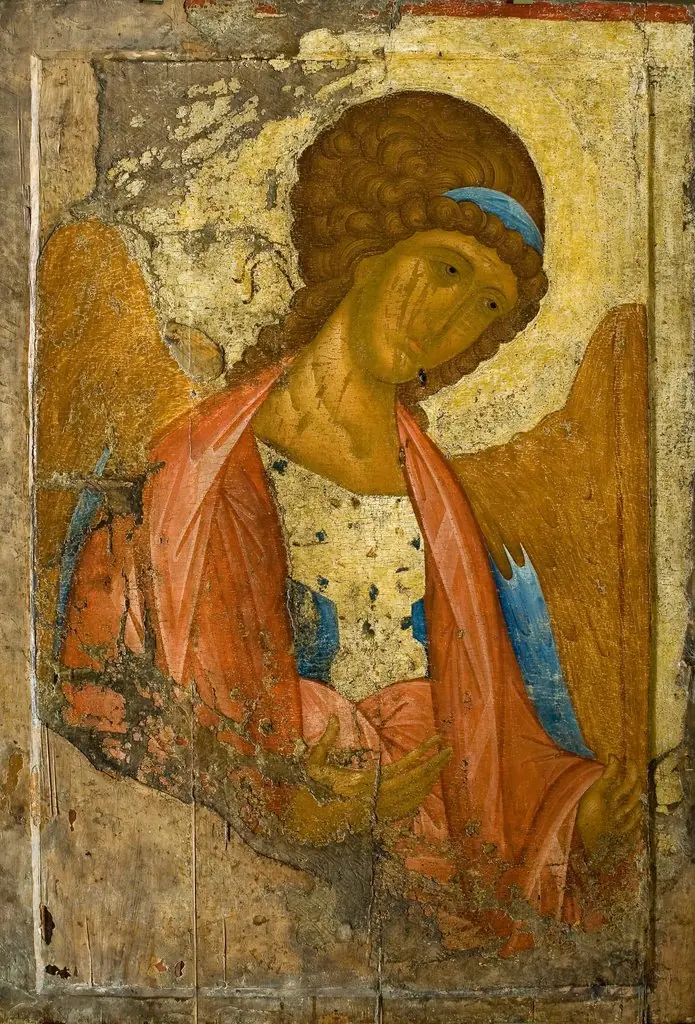 Archangel Michael
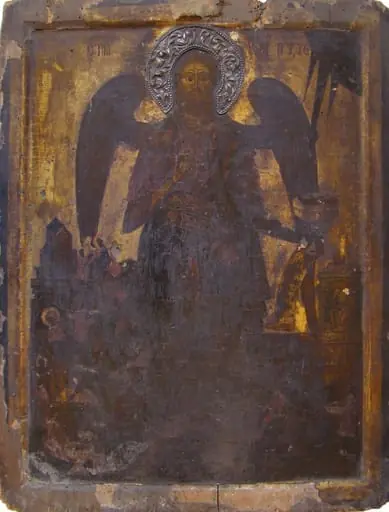 Sf. Ioan Botezătorul, îngerul deșertului
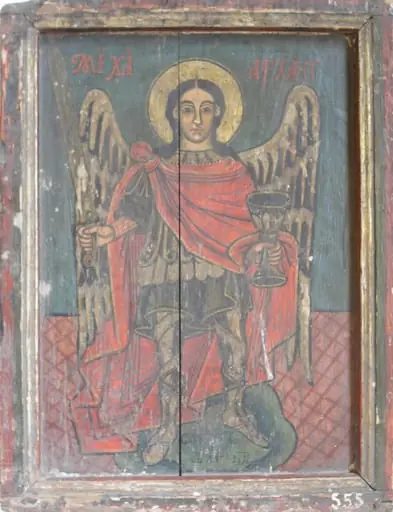 Arhanghelul Mihail
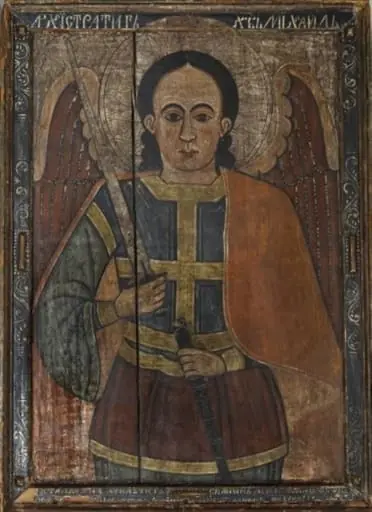 Arhanghelul Mihail