Artwork
The Tale of Genji
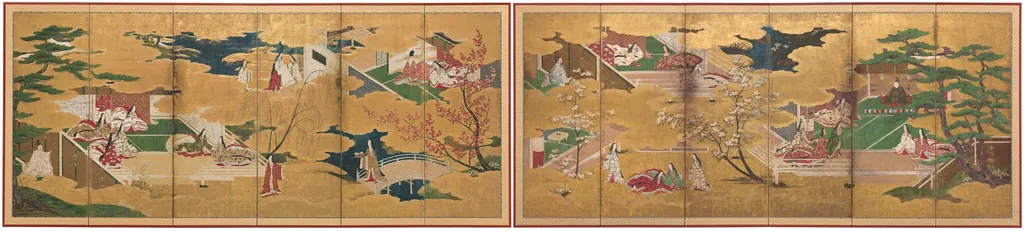
The Tale of Genji is an ink painting by the Baroque artist Unknown. It dates from 1613 and is held in the collection of the Art Institute of Chicago.
About this work
Overview
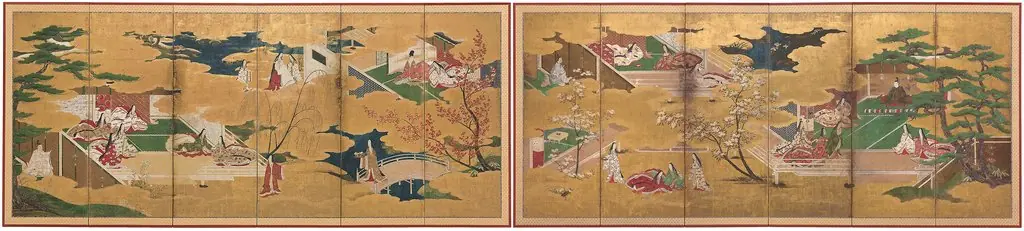
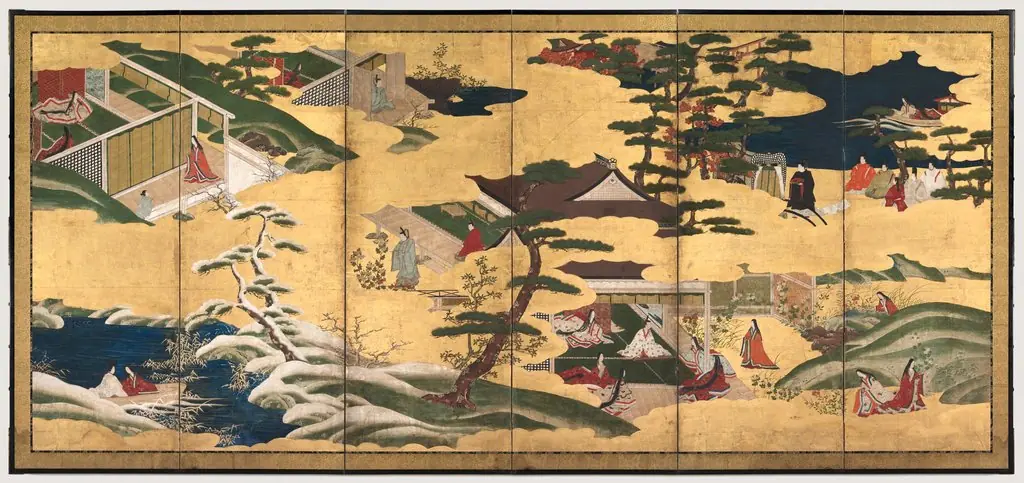
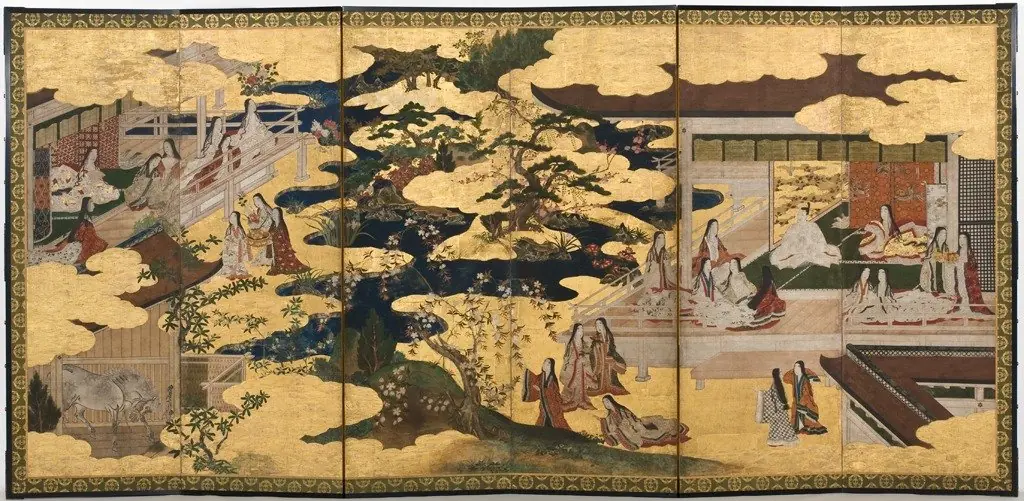
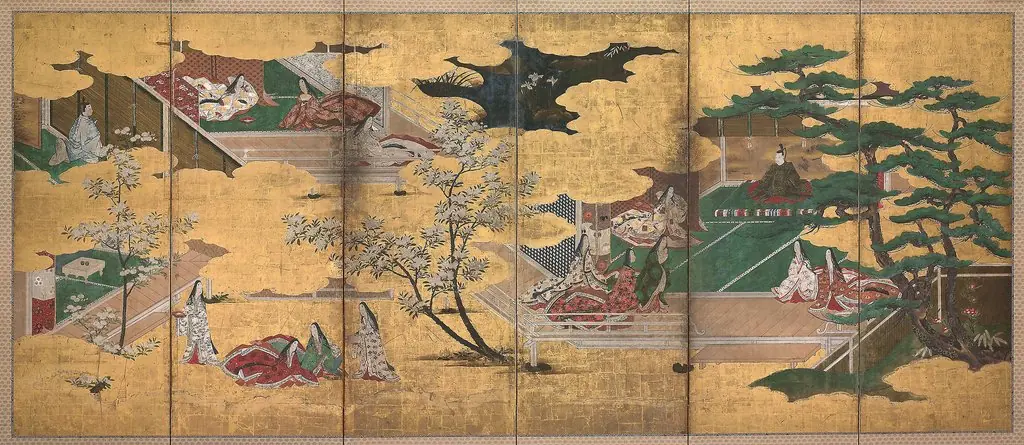
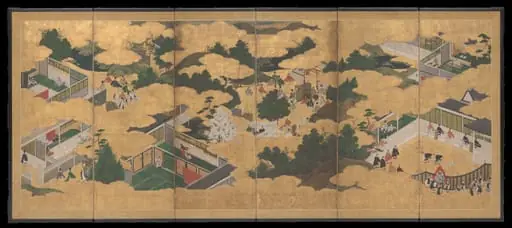
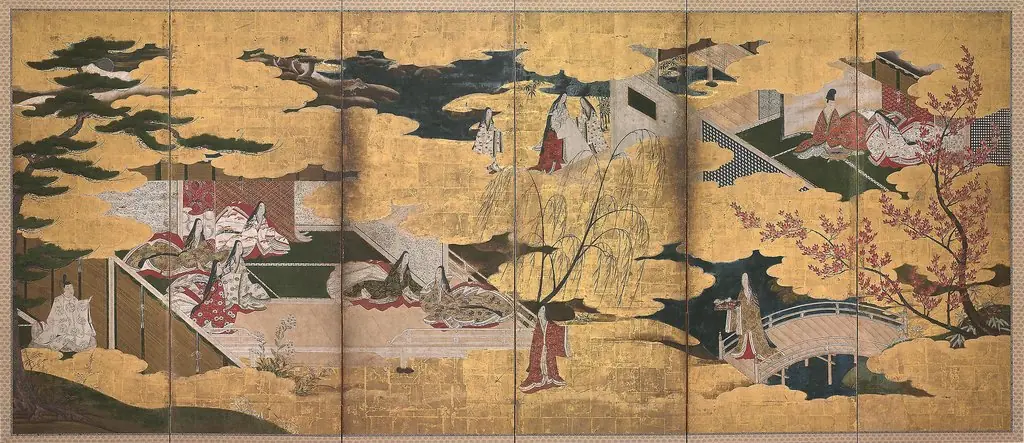
A pair of six-panel folding screens, painted in ink, color, and gold leaf on paper, illustrates select scenes from The Tale of Genji.
A pair of six-panel folding screens, painted in ink, color, and gold leaf on paper, illustrates select scenes from The Tale of Genji. Though drawn from different chapters and separated by time in the narrative, the five moments are arranged as if unfolding within a single, continuous landscape. The surfaces shimmer with gold leaf, creating a luminous backdrop that unifies the vignettes and elevates their domestic intimacy.
Subject & Meaning
The scenes depict tender, quiet moments: the emperor gazing at his infant son Genji, court ladies debating the beauty of the seasons, and Genji sharing warmth with Lady Murasaki before a brazier. Each episode emphasizes harmony, affection, or seasonal grace—qualities associated with auspicious beginnings. The selection suggests the screens were intended as wedding gifts, symbolizing hope for a prosperous and serene married life.
Technique & Style
Figures are rendered with delicate brushwork, their forms simplified yet expressive, set against softly modeled landscapes. Gold leaf covers the background, enhancing the ethereal quality of the space. The composition reflects the Kano school’s influence, particularly in its balanced spatial organization and restrained use of color, aligning with early 17th-century courtly painting conventions.
History & Provenance
Created likely in the early 1600s, the screens were probably commissioned as part of a bride’s dowry, accompanying her to her new household. Such screens were among luxury items—including lacquered boxes, embroidered robes, and games—that signified status and refined taste. Their survival suggests they were carefully preserved, possibly within aristocratic families who valued their literary and aesthetic associations.
Context
The Tale of Genji, written in the early 11th century, remained a cornerstone of aristocratic culture centuries later. By the Edo period, its scenes were frequently adapted for decorative arts, especially items tied to women’s lives. These screens reflect a revival of Heian-era literary themes in a visual form suited to private, interior spaces, where poetry and painting intertwined in daily ritual.
Legacy
The screens exemplify how classical literature was reimagined through material culture in early modern Japan. Their integration of narrative, symbolism, and luxury craftsmanship influenced later decorative arts, particularly in the depiction of literary themes on screens and lacquerware. They remain a key reference for understanding the visual language of courtly femininity and literary nostalgia in Edo-period Japan.
Artist & collection

 Domestic Scene
 Giacomo and Cardinal Marco, investing Andrea, Abbot of San Zeno, with his Benefice
 The Nymph of Fontainebleau
 Portrait of a Woman
 Madonna and Child with Saints in the Enclosed Garden
 Venus and Minerva
 Family Group of Four on Sofa
 Wall painting from Room H of the Villa of P. Fannius Synistor at Boscoreale
 Scenes from the Tale of Genji
 Scenes from the Tale of Genji
 Scenes from the Tale of Genji
 The Tale of Genji
 Scenes from the Tale of Genji
 Scene from "The Tale of Genji": from the chapter "The Maiden"
 The Tale of Genji
 Scenes from the Tale of Genji
 The Tale of Genji
 Scenes from the Tales of Ise
 Scenes from the Tales of Ise