Artwork
The unfaithful wife explaining away the presence of the dough elephant, from a Tuti-nama (Tales of a Parrot): Eighth Night
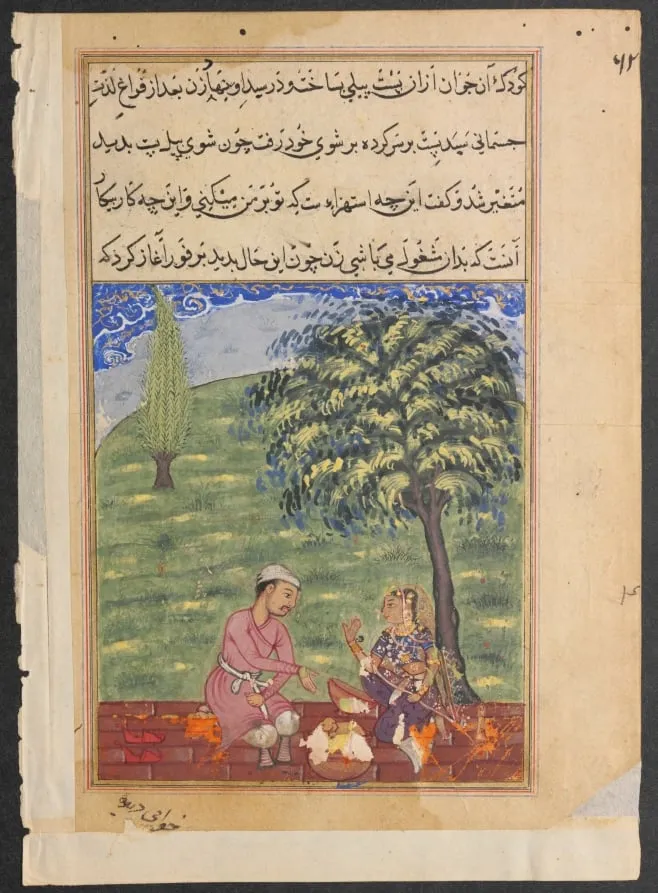
The unfaithful wife explaining away the presence of the dough elephant, from a Tuti-nama (Tales of a Parrot): Eighth Night is an unspecified painting by the Mughal Painting artist Unknown. It dates from 1560 and is held in the collection of the Cleveland Museum of Art. The painting illustrates a domestic scene from a Mughal illustrated manuscript of the Tuti‑nama, a collection of parrot tales.
About this work
The story is wild: the wife cheated, then lied about the elephant-shaped pastry to cover her tracks.
A woman kneels in a courtyard, holding a tray with a dough elephant. Her husband sits beside her, listening as she talks. A boy watches from the shadows.
This painting comes from a book of parrot tales told in Mughal India. The story is wild: the wife cheated, then lied about the elephant-shaped pastry to cover her tracks. The artist made the scene feel like a quiet moment, not a scandal.
To see more stories like this, look up Mughal India, court of Akbar (reigned 1556–1605).
Overview
The painting illustrates a domestic scene from a Mughal illustrated manuscript of the Tuti‑nama, a collection of parrot tales. In the image a woman kneels in a courtyard, presenting a tray that holds a dough figure shaped like an elephant, while her husband sits nearby listening. A young boy is visible in the background, observing the exchange.
Subject & Meaning
The narrative depicted shows a wife who has been unfaithful and must justify the elephant‑shaped pastry she has prepared for her husband. She claims the form was inspired by a protective dream, suggesting that eating the elephant will safeguard him from harm. The husband accepts her explanation, expressing gratitude for her supposed kindness.
Technique & Style
Executed in the miniature painting tradition of Mughal court art, the work combines delicate brushwork with fine detailing of fabrics and architecture. The composition is restrained, using muted colours and a calm spatial arrangement that downplays the scandalous content, focusing instead on the intimate interaction between the figures.
History & Provenance
The scene is taken from a manuscript of the Tuti‑nama, compiled in Mughal India during the reign of Emperor Akbar (1556–1605). Such illustrated books were produced for elite patrons and circulated among the court, reflecting the period’s interest in moral tales and exotic storytelling.
Context
Mughal illustrated manuscripts often blended Persian artistic conventions with Indian subject matter, creating a hybrid visual language. The tale of the unfaithful wife and the dough elephant belongs to a larger corpus of moralizing stories that used animal motifs and domestic drama to convey ethical lessons within the imperial cultural milieu.
Artist & collection

 Domestic Scene
 Giacomo and Cardinal Marco, investing Andrea, Abbot of San Zeno, with his Benefice
 The Nymph of Fontainebleau
 Portrait of a Woman
 Madonna and Child with Saints in the Enclosed Garden
 Venus and Minerva
 Family Group of Four on Sofa
 Wall painting from Room H of the Villa of P. Fannius Synistor at Boscoreale
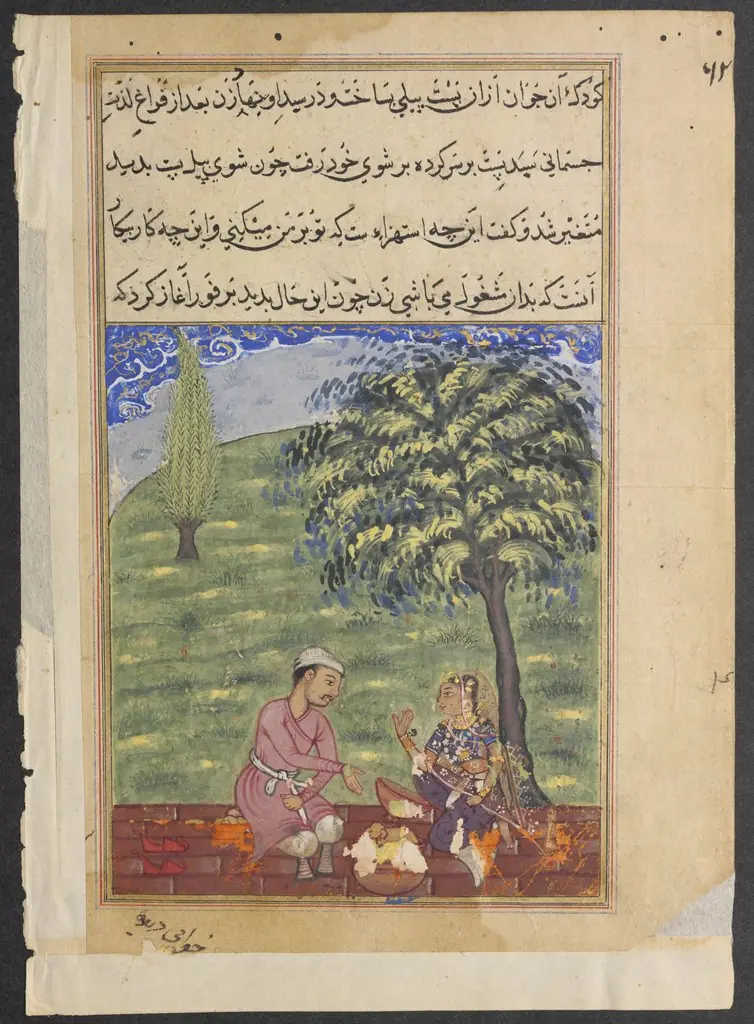 The unfaithful wife explaining away the presence of the dough elephant, from a Tuti-nama (Tales of a Parrot): Eighth Night
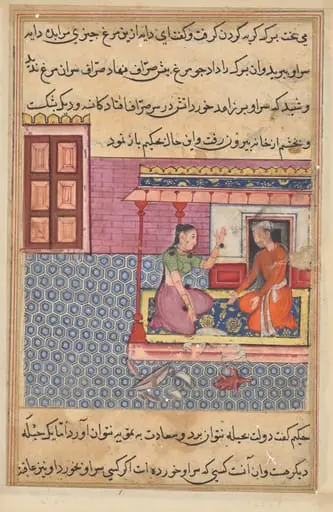 The pious man’s wife offers the seven-colored bird as food to her lover, but not finding its head, he breaks the pot and bowl in anger, from a Tuti-nama (Tales of a Parrot): Fifty-second Night
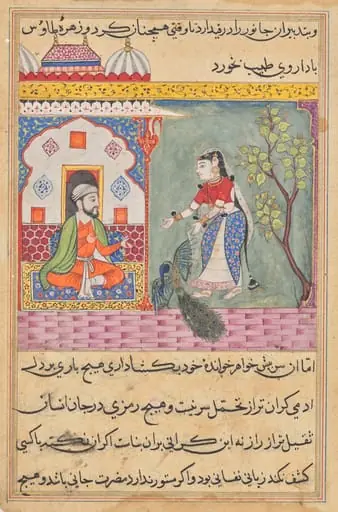 The Brahman’s wife who killed a peacock and ate its gallbladder on the physician’s advice, from a Tuti-nama (Tales of a Parrot): Nineteenth Night
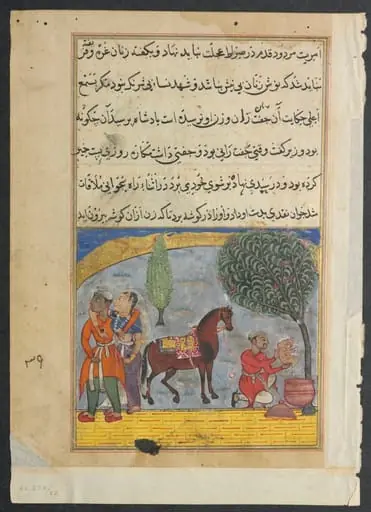 The lover’s son makes an elephant of the pastry dough carried by the unfaithful wife and puts it in her basket, from a Tuti-nama (Tales of a Parrot): Eighth Night
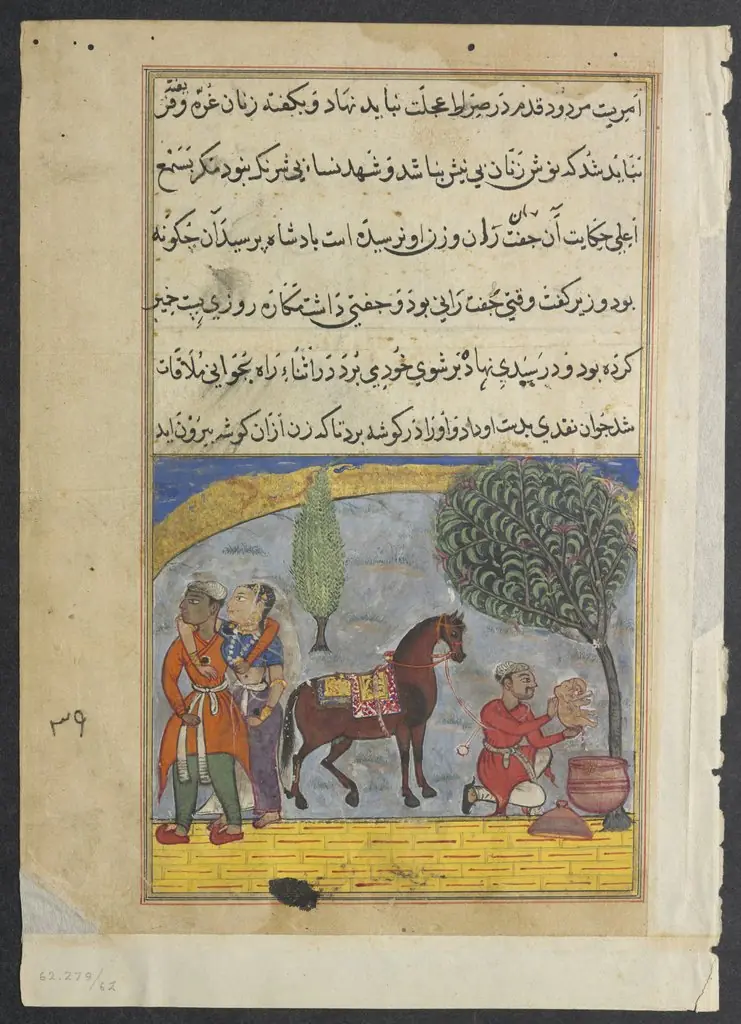 The lover’s son makes an elephant of the pastry dough carried by the unfaithful wife and puts it in her basket, from a Tuti-nama (Tales of a Parrot): Eighth Night
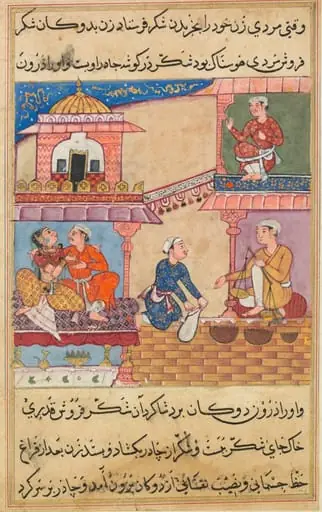 The merchant’s clerk replaces the sugar purchased by the philandering wife with gravel, from a Tuti-nama (Tales of a Parrot): Eighth Night