Artwork
The merchant’s clerk replaces the sugar purchased by the philandering wife with gravel, from a Tuti-nama (Tales of a Parrot): Eighth Night
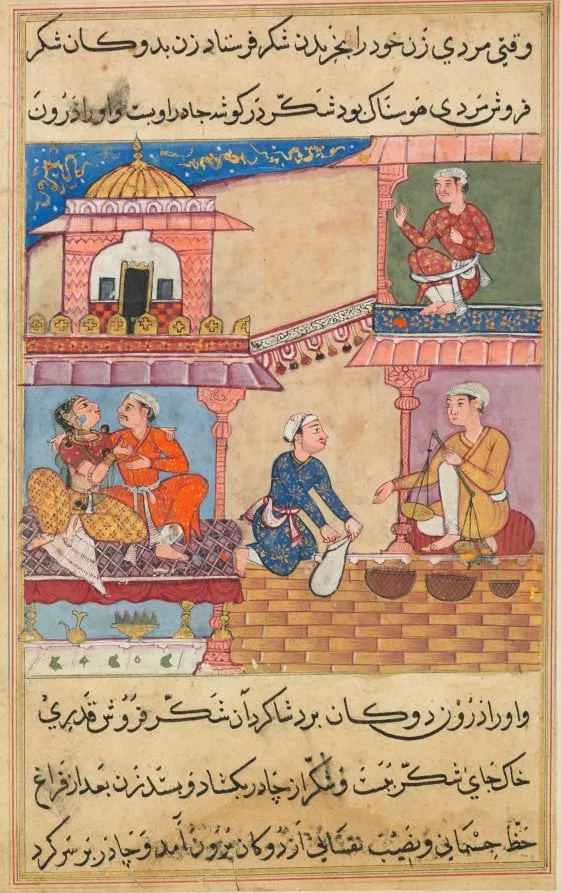
The merchant’s clerk replaces the sugar purchased by the philandering wife with gravel, from a Tuti-nama (Tales of a Parrot): Eighth Night is an unspecified painting by the Mughal Painting artist Unknown. It dates from 1560 and is held in the collection of the Cleveland Museum of Art. The work illustrates the eighth episode of the Tuti‑nama, a 52‑night narrative recounted by a parrot.
About this work
The artist packed every inch with sharp, bright details—no shadows, just clear lines and flat colors—so the moral lesson pops off the page.
You see a busy market scene split in two: on the left, a woman and merchant embrace in a private room; on the right, a clerk in blue swaps her bag of sugar for gravel.
This tiny painting is one page from a 52-night story cycle told by a parrot. The artist packed every inch with sharp, bright details—no shadows, just clear lines and flat colors—so the moral lesson pops off the page.
To see more stories like this, look up mughal india, court of akbar (reigned 1556–1605).
Overview
The work illustrates the eighth episode of the Tuti‑nama, a 52‑night narrative recounted by a parrot. It portrays a market transaction that turns into a clandestine affair, followed by a deceitful exchange of the woman’s sugar for gravel. The composition is divided into two simultaneous scenes, linking the public market with a private chamber.
Subject & Meaning
A woman, while purchasing sugar, is caught in an illicit liaison with a merchant. Their embrace unfolds in a secluded room, while a clerk in blue, positioned outside, covertly substitutes the sugar with gravel. The unsuspecting wife later presents the gravel to her husband, whose reaction underscores the moral warning against infidelity and deception.
Technique & Style
Executed in a miniature format, the painting employs flat, vivid colours and precise, linear detailing without chiaroscuro. Every surface is densely populated with decorative elements, allowing the narrative to be read clearly. The lack of shading and the crisp outlines are characteristic of Mughal court miniatures of the late 16th century.
Context
Created during the reign of Emperor Akbar (1556–1605), the piece reflects the sophisticated visual culture of his court, where literary works were frequently illustrated. The Tuti‑nama itself is a Persian‑influenced collection of moral tales, and this illustration demonstrates the integration of storytelling and fine art in Mughal patronage.
Legacy
The painting exemplifies the narrative potency of Mughal miniature art, influencing later South Asian manuscript illustration. Its clear visual moral and meticulous execution continue to serve as a reference for scholars studying the interplay of literature, ethics, and visual culture in early modern India.
Artist & collection

 Domestic Scene
 Giacomo and Cardinal Marco, investing Andrea, Abbot of San Zeno, with his Benefice
 The Nymph of Fontainebleau
 Portrait of a Woman
 Madonna and Child with Saints in the Enclosed Garden
 Venus and Minerva
 Family Group of Four on Sofa
 Wall painting from Room H of the Villa of P. Fannius Synistor at Boscoreale
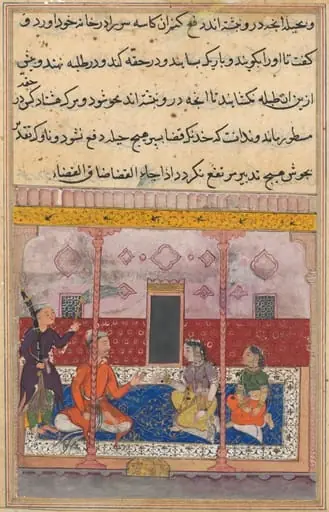 The merchant has the hateful skull ground and put into a box, from a Tuti-nama (Tales of a Parrot): Twenty-third Night
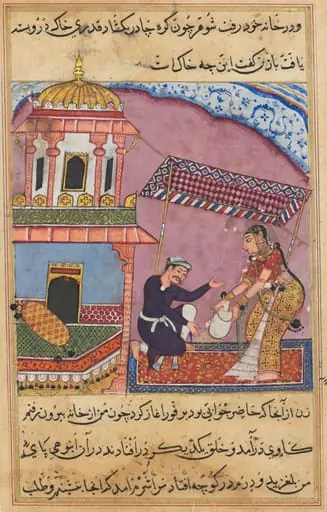 The husband berates his wife for purchasing gravel instead of sugar, from a Tuti-nama (Tales of a Parrot): Eighth Night
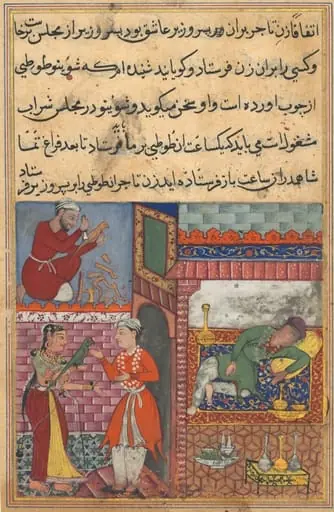 The vizier’s son receives the magic wooden parrot from the wife of the merchant, who is drunk, and has a replica made by a carpenter, from a Tuti-nama (Tales of a Parrot): Tenth Night
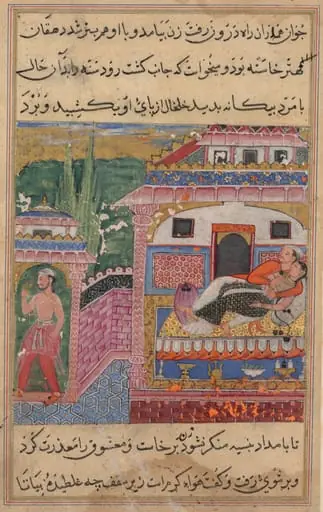 The farmer, father of the son with the deceitful wife, steals away with her anklet while she is in bed with her lover, from a Tuti-nama (Tales of a Parrot): Eighth Night
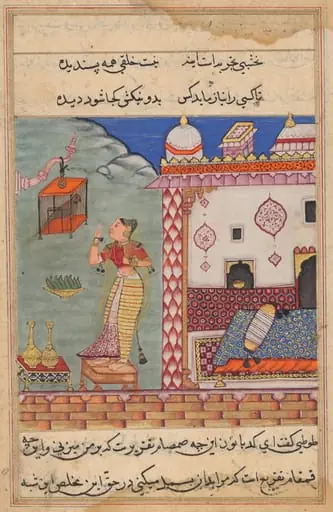 The Parrot Addresses Khujasta at the Beginning of the Twenty-seventh Night, form a Tuti-nama (Tales of a Parrot)
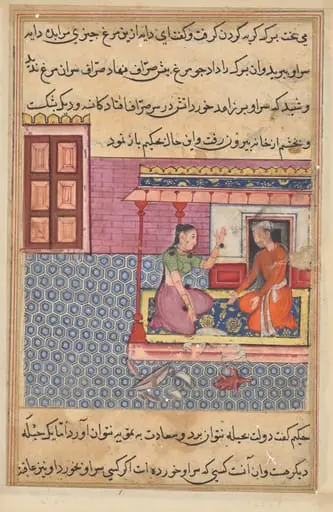 The pious man’s wife offers the seven-colored bird as food to her lover, but not finding its head, he breaks the pot and bowl in anger, from a Tuti-nama (Tales of a Parrot): Fifty-second Night
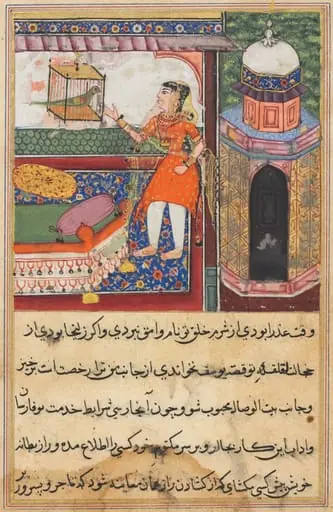 The Parrot Addresses Khujasta at the Beginning of the Tenth Night, from a Tuti-nama (Tales of a Parrot)