Artwork
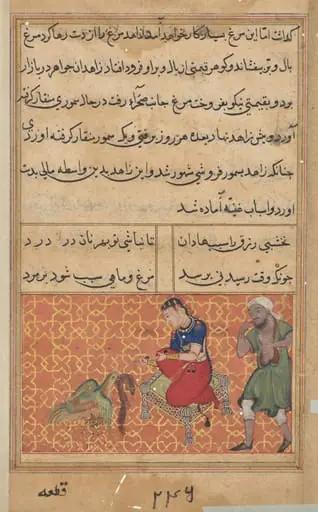
The lover’s son makes an elephant of the pastry dough carried by the unfaithful wife and puts it in her basket, from a Tuti-nama (Tales of a Parrot): Eighth Night
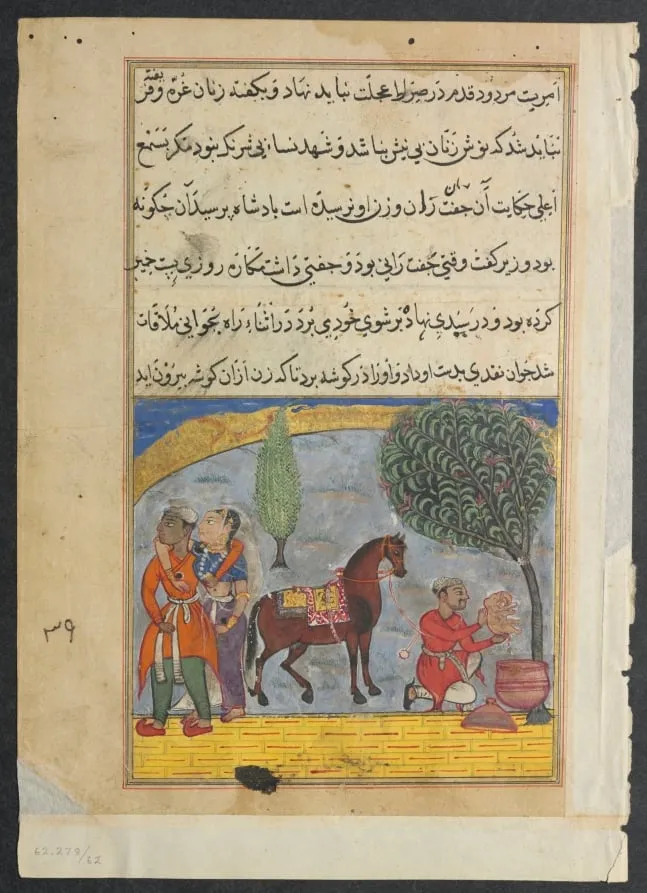
The lover’s son makes an elephant of the pastry dough carried by the unfaithful wife and puts it in her basket, from a Tuti-nama (Tales of a Parrot): Eighth Night is an unspecified painting by the Mughal Painting artist Unknown. It dates from 1560 and is held in the collection of the Cleveland Museum of Art. This painting illustrates a scene from the Tuti-nama, a collection of parrot tales created for Emperor Akbar.
About this work
A boy kneads dough from the basket into a tiny elephant shape while two adults kiss behind a bush.
You see a woman in a long red dress walking away, basket of food on her head. A boy kneads dough from the basket into a tiny elephant shape while two adults kiss behind a bush.
This painting comes from a book of parrot tales told to Emperor Akbar. The stories were meant to teach lessons—here, about trust and consequences. The boy’s playful elephant is a quiet clue that something’s wrong.
To see more paintings like this, look up Mughal India, court of Akbar (reigned 1556–1605).
Overview
This painting illustrates a scene from the Tuti-nama, a collection of parrot tales created for Emperor Akbar. It depicts a moment from the eighth night's story, where a child's actions inadvertently reveal his mother's infidelity.
Subject & Meaning
The scene shows a woman, a boy, and a man in a compromising situation, with the boy creating an elephant from dough in the woman's basket. The narrative conveys a moral lesson about the consequences of unfaithfulness and the innocence of children.
Technique & Style
The painting is characterized by its vivid depiction of figures and their actions. A woman in a red dress is shown walking away, while a boy shapes dough into an elephant and two adults engage in intimate behavior behind a bush, showcasing the artist's skill in conveying complex narratives through visual elements.
Context
The Tuti-nama was commissioned by Emperor Akbar, a Mughal ruler known for his patronage of the arts. The stories and accompanying illustrations were intended to impart moral teachings, reflecting Akbar's interest in promoting cultural and educational endeavors during his reign from 1556 to 1605.
Artist & collection

 Domestic Scene
 Giacomo and Cardinal Marco, investing Andrea, Abbot of San Zeno, with his Benefice
 The Nymph of Fontainebleau
 Portrait of a Woman
 Madonna and Child with Saints in the Enclosed Garden
 Venus and Minerva
 Family Group of Four on Sofa
 Wall painting from Room H of the Villa of P. Fannius Synistor at Boscoreale
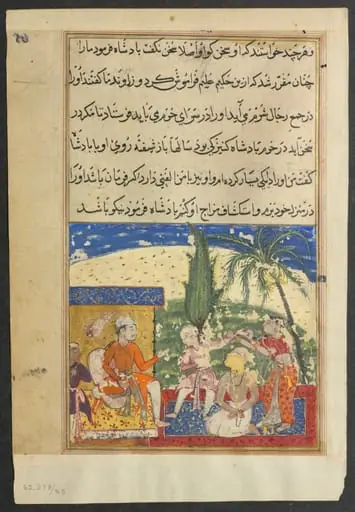 The king’s handmaiden takes the prince away to the harem, from a Tuti-nama (Tales of a Parrot): Eighth Night
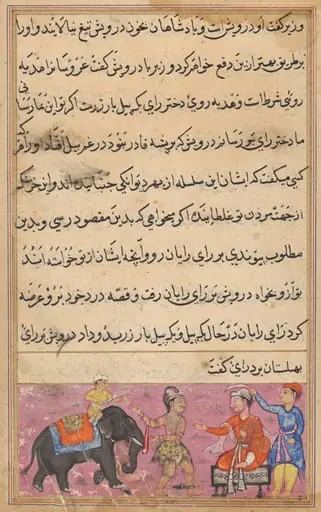 The dervish brings in as dowry an elephant laden with gold, from a Tuti-nama (Tales of a Parrot): Seventh Night
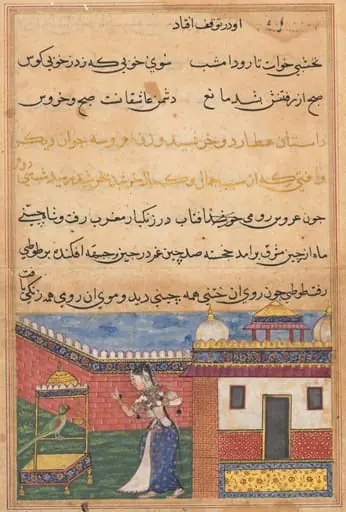 The parrot addresses Khujasta at the beginning of the thirty-second night, from a Tuti-nama (Tales of a Parrot)
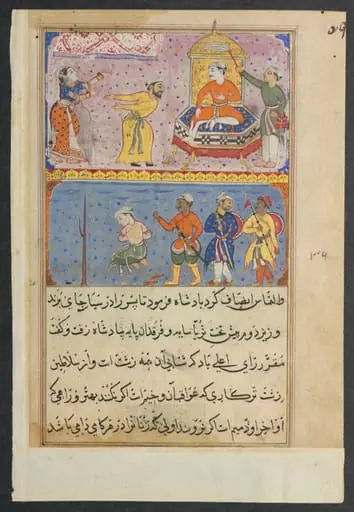 The prince, once reprieved, is returned to the palace of execution a second time on the plea of the king’s handmaiden, from a Tuti-nama (Tales of a Parrot): Eighth Night
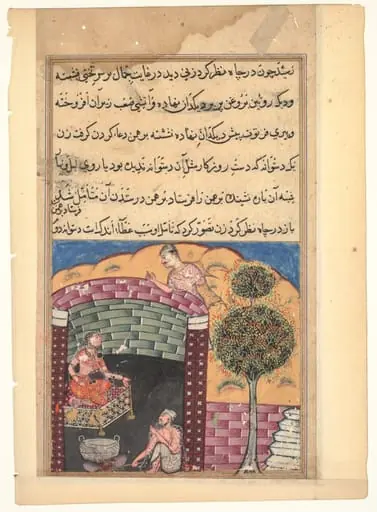 The Brahman gambler sees the daughter of the king of the jinns in a pit together with an old man and a cauldron of boiling oil, from a Tuti-nama (Tales of a Parrot: Seventh Night)
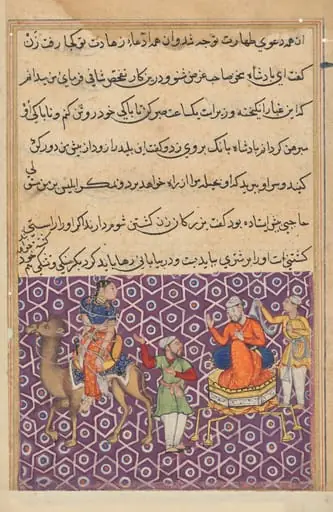 King Bahram, who has married Khassa’s daughter, has her tied to a camel to be abandoned in the desert as a result of false accusations made by Khulasa, from a Tuti-nama (Tales of a Parrot): Fifty-first Night
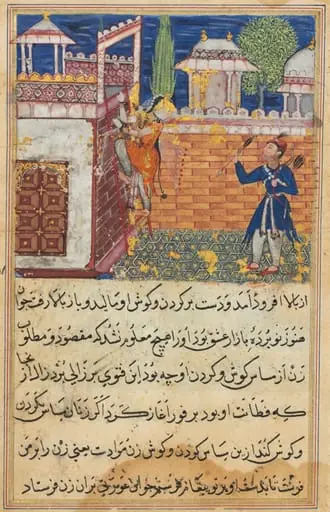 The deceitful wife returns to her terrace after caressing her lover, from a Tuti-nama (Tales of a Parrot): Eighth Night
 The bird of seven colors brings a sable to the pious man, from a Tuti-nama (Tales of a Parrot): Fifty-second Night