Artwork
The pious man’s wife offers the seven-colored bird as food to her lover, but not finding its head, he breaks the pot and bowl in anger, from a Tuti-nama (Tales of a Parrot): Fifty-second Night
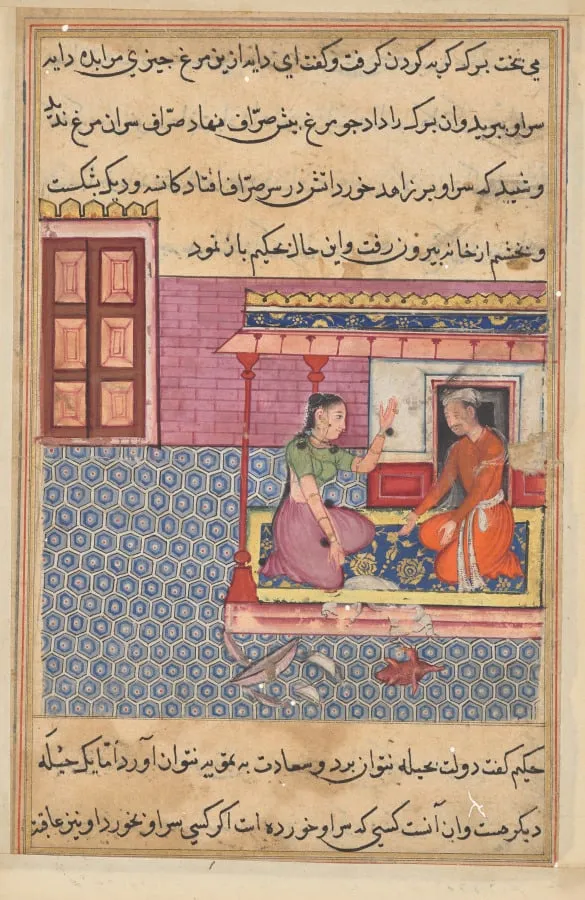
The pious man’s wife offers the seven-colored bird as food to her lover, but not finding its head, he breaks the pot and bowl in anger, from a Tuti-nama (Tales of a Parrot): Fifty-second Night is an unspecified painting by the Mughal Painting artist Unknown. It dates from 1560 and is held in the collection of the Cleveland Museum of Art.
About this work
Look up more paintings from Mughal India, court of Akbar (reigned 1556–1605) to see how these stories were told in art.
You see a woman kneeling, holding a bowl of food toward a man who smashes a pot in anger. A small bird lies on the ground, head missing.
This scene comes from a book of parrot tales told in Mughal India. The story is dark: the man wants the bird’s head because eating it could make him king. But the woman’s son already ate it, and the man demands she cook her own child instead. The painting shows the moment before the violence gets worse.
Look up more paintings from Mughal India, court of Akbar (reigned 1556–1605) to see how these stories were told in art.
Overview
This 16th-century Indian painting depicts a dramatic scene from the Tuti-nama (Tales of a Parrot), a collection of stories popular in Mughal India. The image captures a moment of tension and impending violence within a narrative of desire, power, and betrayal.
Subject & Meaning
The scene illustrates a pivotal, dark moment in a tale where a lover, seeking to become king by consuming a magical bird's head, discovers it missing. His demand for an horrific alternative - the head of the woman's son, who unknowingly ate the bird's head - sets the stage for tragedy. The woman's acquiescence, driven by maddening love, heightens the dramatic intensity.
Technique & Style
Executed in the style characteristic of Mughal court art under Akbar's reign (1556-1605), this painting features detailed, expressive figures set against a minimalist background, emphasizing the emotional intensity of the scene. The use of vibrant colors, particularly in the absent bird (implied by the mention of 'seven-colored' though only its headless form is seen), contrasts with the somber mood of the human figures.
History & Provenance
Part of a Tuti-nama manuscript from the Mughal Empire during Akbar's rule, this painting reflects the period's literary and artistic tastes. The Tuti-nama's stories, originating from Persian and Indian folklore, were popularly illustrated in Mughal manuscripts, blending local and Islamic artistic influences.
Context
Created for the elite, such illustrated manuscripts showcased Mughal artistic prowess and the patronage of literary arts by the imperial court. The story's themes of love, power, and the consequences of desire resonated with the courtly audience, offering moral lessons veiled within entertaining narratives.
Legacy
This painting, along with other Tuti-nama illustrations, contributes to the understanding of Mughal artistic and literary heritage. It influences subsequent Indian and Persian miniature painting traditions, exemplifying the enduring impact of Mughal art on South Asian cultural expression.
Artist & collection

 Domestic Scene
 Giacomo and Cardinal Marco, investing Andrea, Abbot of San Zeno, with his Benefice
 The Nymph of Fontainebleau
 Portrait of a Woman
 Madonna and Child with Saints in the Enclosed Garden
 Venus and Minerva
 Family Group of Four on Sofa
 Wall painting from Room H of the Villa of P. Fannius Synistor at Boscoreale
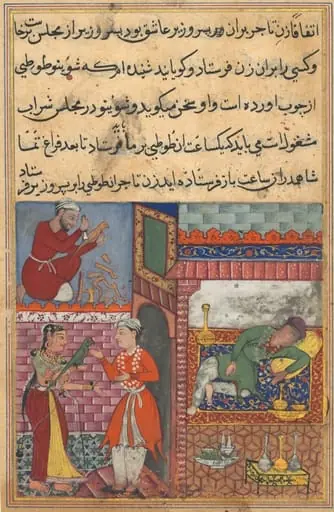 The vizier’s son receives the magic wooden parrot from the wife of the merchant, who is drunk, and has a replica made by a carpenter, from a Tuti-nama (Tales of a Parrot): Tenth Night
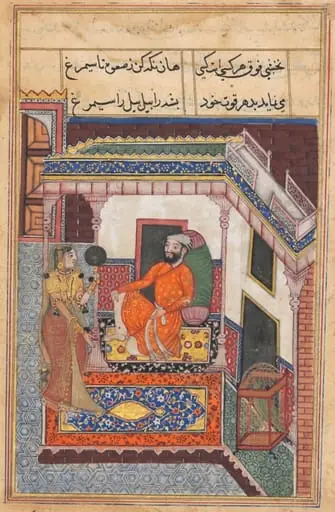 The parrot laughs on hearing the Raja of Ujjain’s wife admire her beauty in a mirror, from a Tuti-nama (Tales of a Parrot: Forty-sixth Night
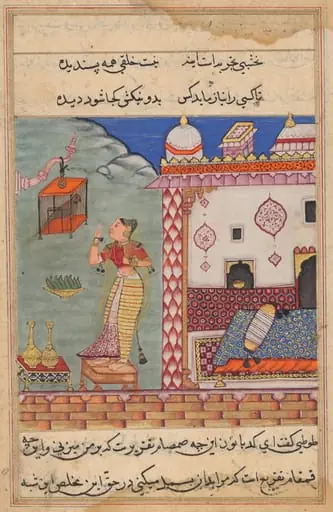 The Parrot Addresses Khujasta at the Beginning of the Twenty-seventh Night, form a Tuti-nama (Tales of a Parrot)
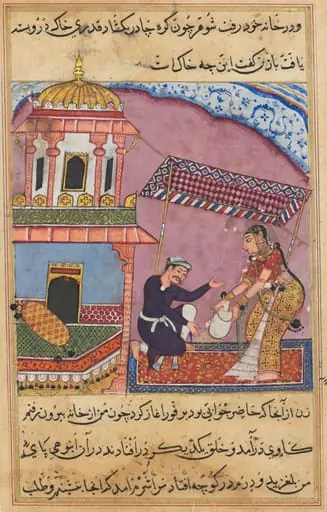 The husband berates his wife for purchasing gravel instead of sugar, from a Tuti-nama (Tales of a Parrot): Eighth Night
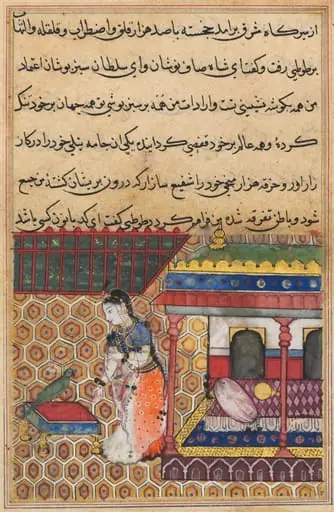 The parrot addresses Khujasta at the beginning of the thirty-eighth night, from a Tuti-nama (Tales of a Parrot)
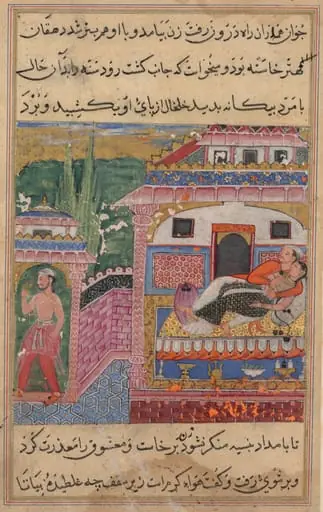 The farmer, father of the son with the deceitful wife, steals away with her anklet while she is in bed with her lover, from a Tuti-nama (Tales of a Parrot): Eighth Night