Artwork
Three couples
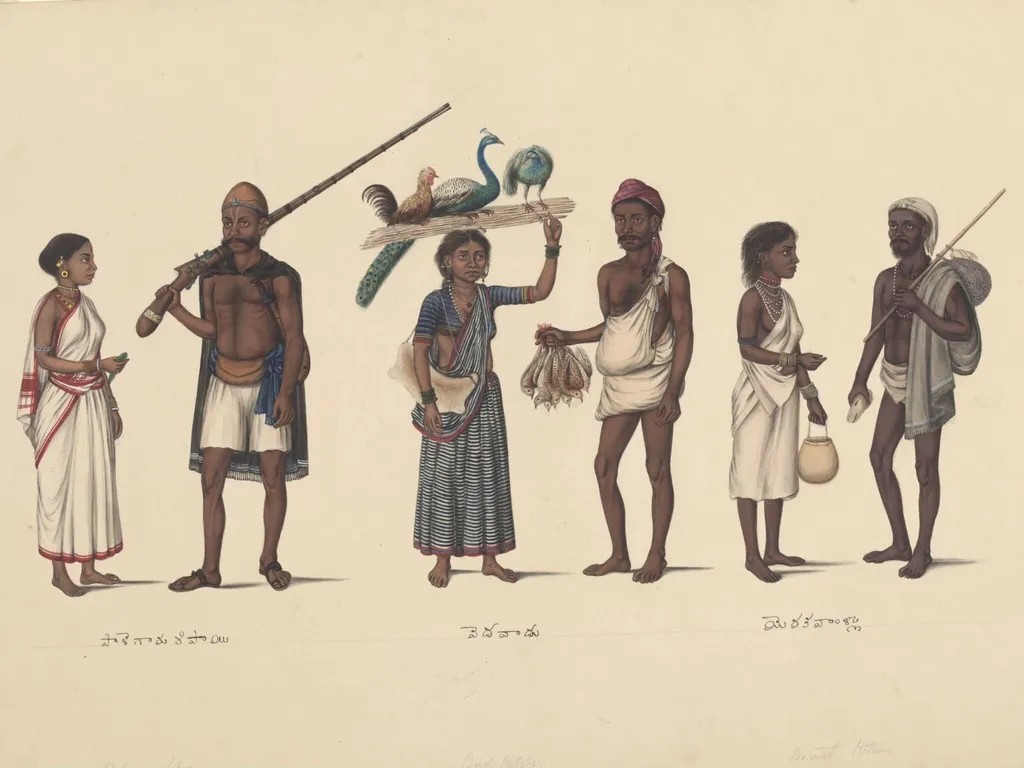
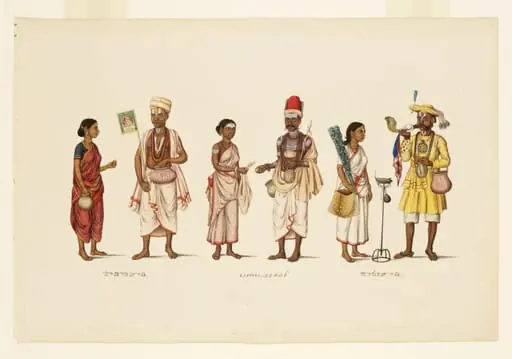
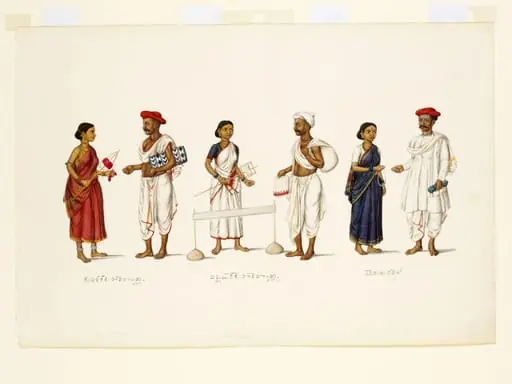
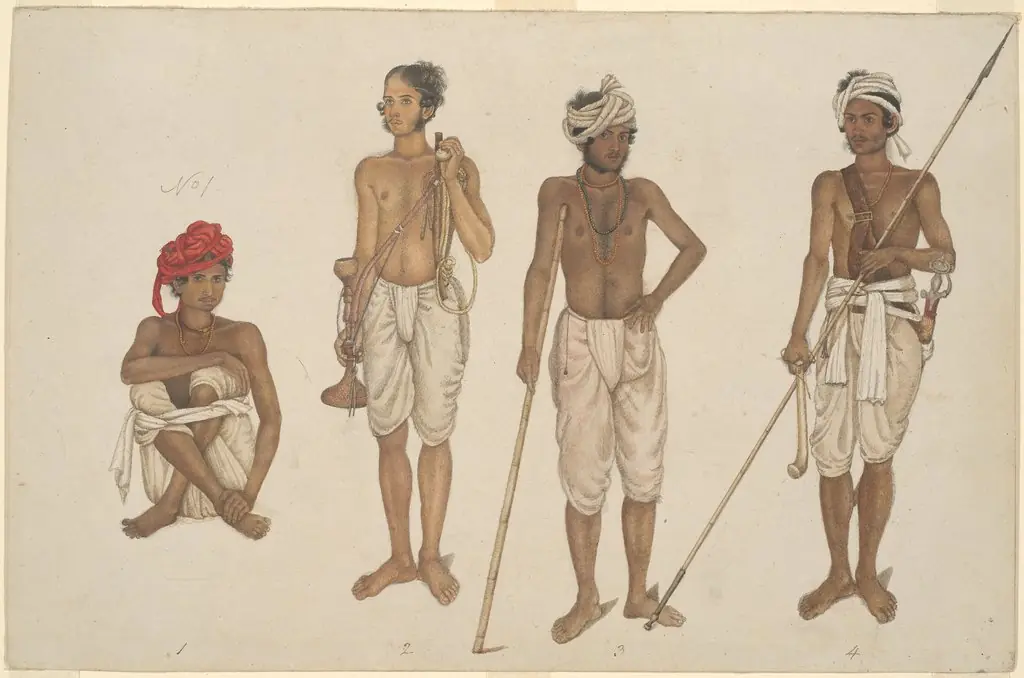
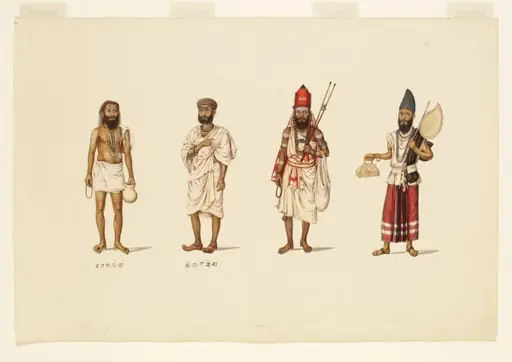
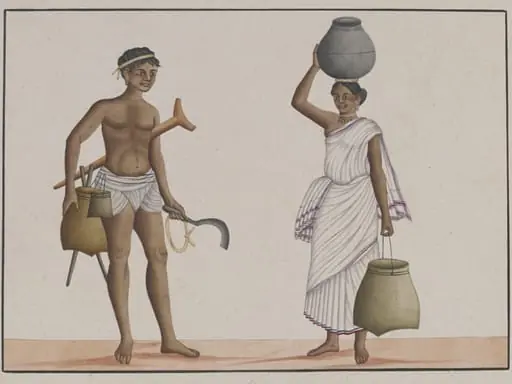
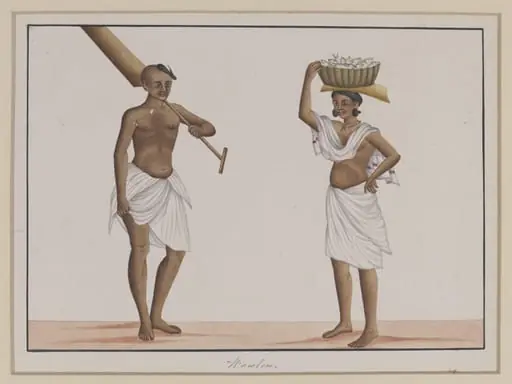
Three couples is a paint painting by the Romanticist artist Unknown. It dates from 1830 and is held in the collection of the Victoria and Albert Museum. This painting is one of thirty folios in a manuscript documenting South Indian social groups through detailed visual records.
About this work
Overview
The scene blends everyday life with symbolic elements, reflecting a systematic effort to catalog regional customs during the late 18th century.
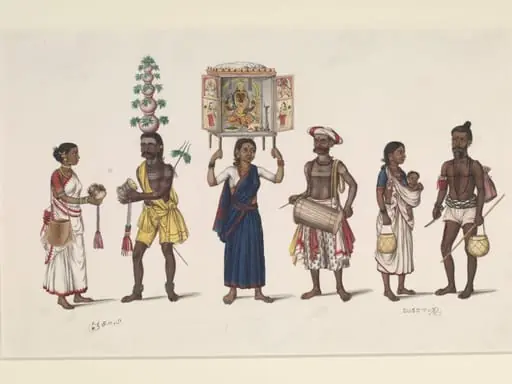
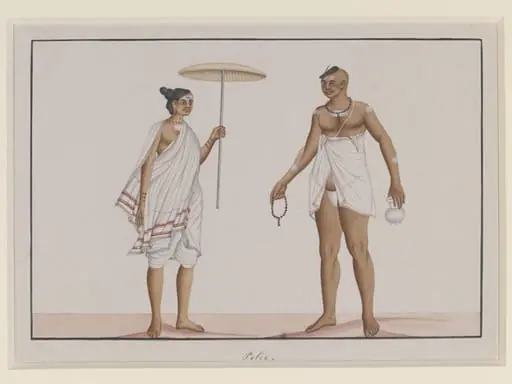
This painting is one of thirty folios in a manuscript documenting South Indian social groups through detailed visual records. It presents five individuals arranged in a linear composition, capturing figures associated with distinct occupations and domestic roles. The scene blends everyday life with symbolic elements, reflecting a systematic effort to catalog regional customs during the late 18th century.
Subject & Meaning
The figures represent occupational and familial roles tied to specific communities: a woman adorned in white and gold, a man with a peacock on his shoulder, a woman carrying fish, a bare-chested man, and a pair holding a jug and staff. The peacock, a symbol of regional fauna and status, and the fish and vessel suggest subsistence and trade. Together, they form a non-narrative tableau of labor and identity rather than a story.
Technique & Style
Rendered in opaque watercolor on paper, the painting employs fine brushwork to distinguish textures—jewelry, feathers, fabric folds—against flat, earth-toned backgrounds. Figures are arranged in a single plane with minimal depth, emphasizing clarity over perspective. The peacock’s plumage is rendered with meticulous detail, contrasting with the simplified forms of clothing and limbs, highlighting the artist’s focus on emblematic accuracy.
History & Provenance
Created in the late 1700s in Tamil Nadu or nearby regions, the folio was part of a commissioned series likely intended for colonial or elite patrons interested in ethnographic documentation. The volume remained in private collections before entering institutional holdings, eventually becoming part of the Victoria and Albert Museum’s South Asian manuscript collection.
Context
The painting emerged during a period when British administrators and Indian rulers alike commissioned visual surveys of local societies. These works served both administrative and curiosities-driven purposes, documenting caste, labor, and ritual without overt commentary. This folio aligns with broader efforts to classify and preserve regional knowledge through image, not text.
Legacy
As part of a rare surviving set of ethnographic folios, this work contributes to historical understanding of how South Indian communities were visually recorded before modern anthropology. Its value lies not in artistic innovation but in its function as a documentary record, offering insight into material culture, dress, and occupational roles of the time.
Artist & collection

 Domestic Scene
 Giacomo and Cardinal Marco, investing Andrea, Abbot of San Zeno, with his Benefice
 The Nymph of Fontainebleau
 Portrait of a Woman
 Madonna and Child with Saints in the Enclosed Garden
 Venus and Minerva
 Family Group of Four on Sofa
 Wall painting from Room H of the Villa of P. Fannius Synistor at Boscoreale