Artwork
Twenty-three Deity Nairatma Mandala
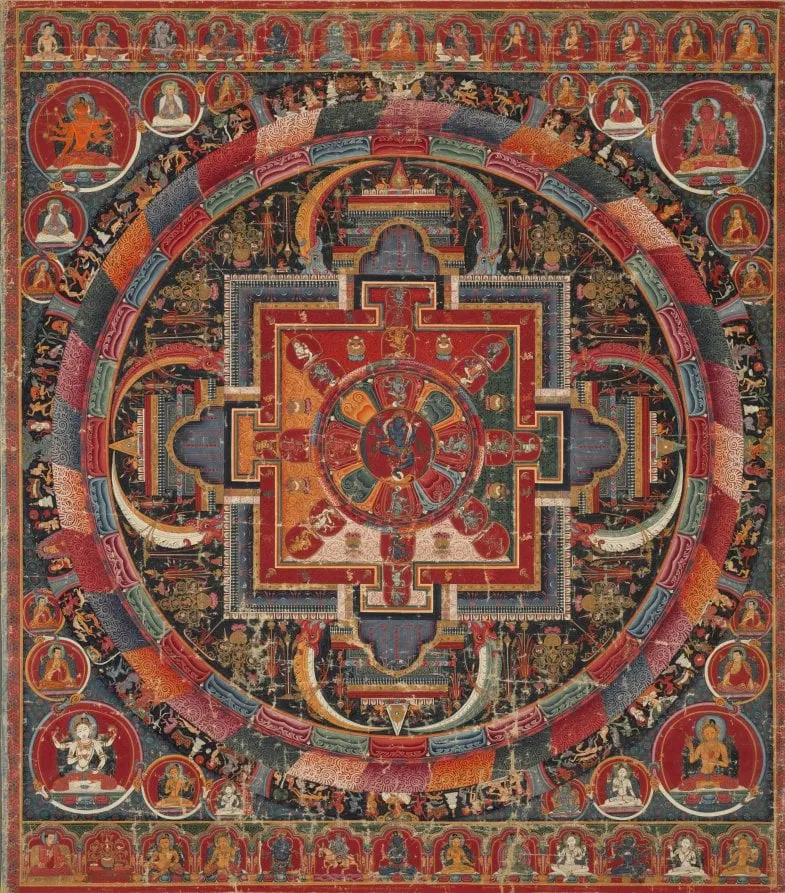
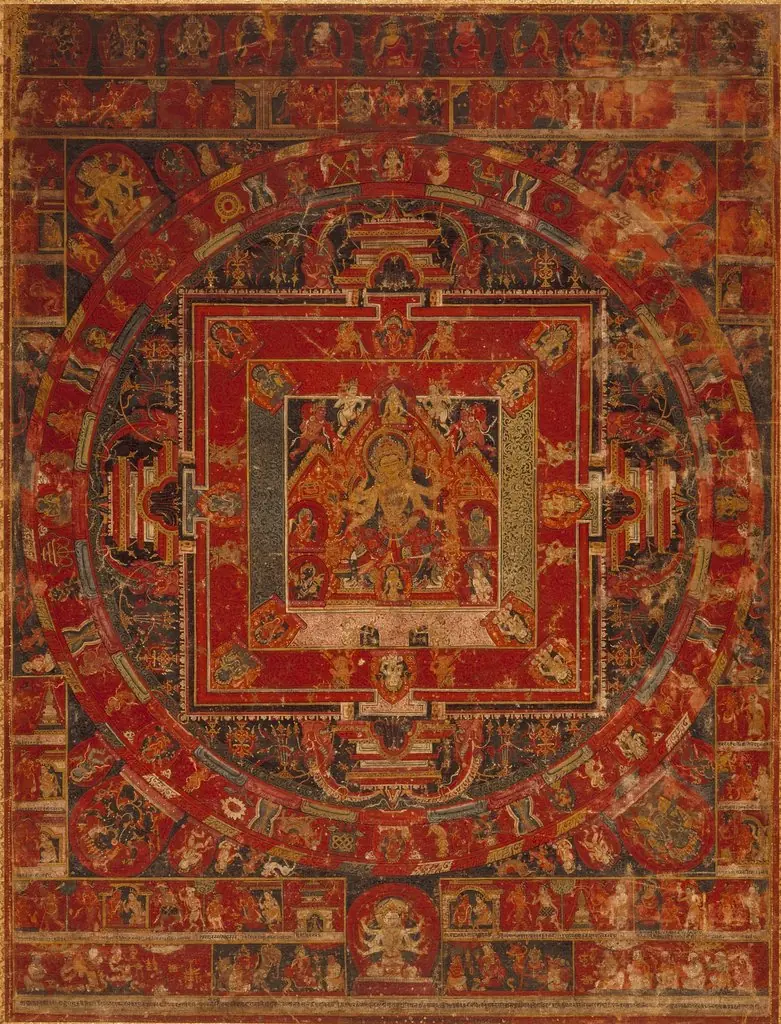
Twenty-three Deity Nairatma Mandala is an unspecified painting by Unknown. It dates from 1375 and is held in the collection of the Cleveland Museum of Art.
About this work
A monk would use it to imagine stepping into the scene, turning flat shapes into a 3D world in their mind.
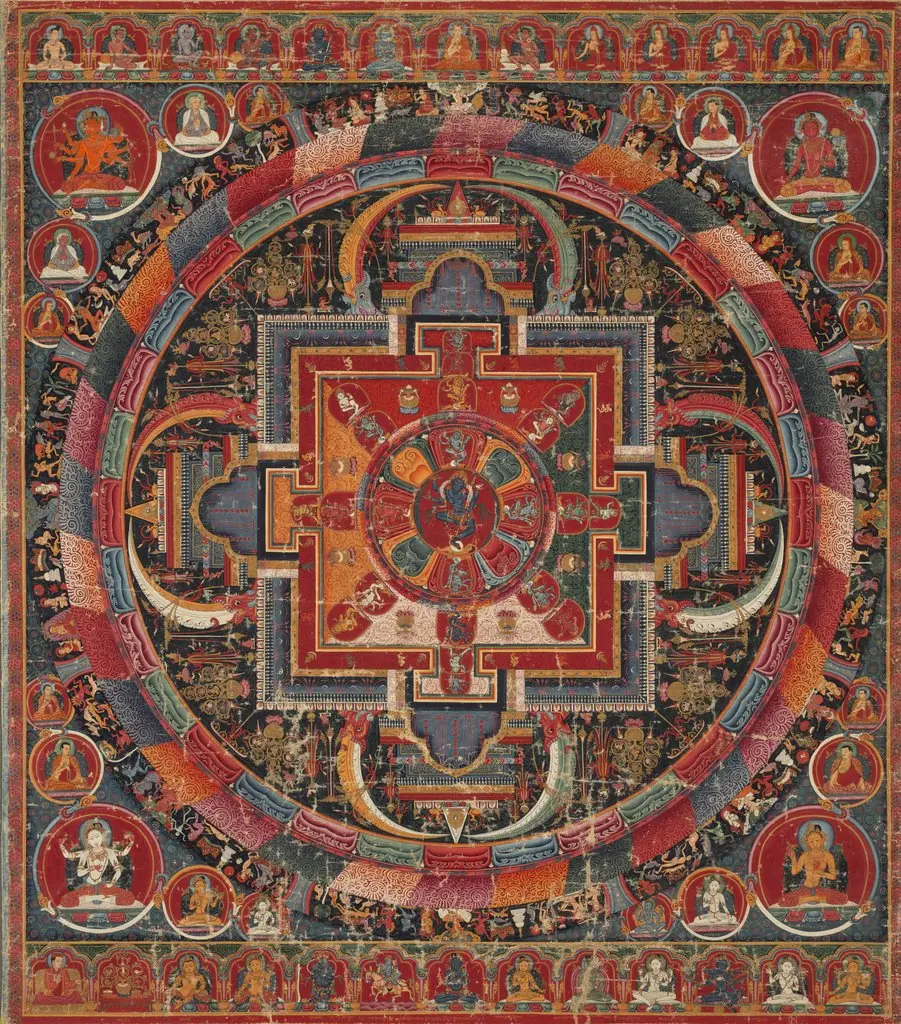
You see a bright circle filled with tiny figures, flames, and a dancing woman in the middle. The colors are bold—reds, blues, and golds—like a map of a magical palace.
This isn’t just a painting; it’s a tool for meditation. A monk would use it to imagine stepping into the scene, turning flat shapes into a 3D world in their mind. The outer ring shows burning corpses, a reminder that life is short.
To see more like this, look up *central tibet, sakya-affiliated monastery, 14th century*.
Overview
Twenty-three Deity Nairatma Mandala is a tantric Buddhist painting depicting a two-dimensional representation of the enlightened realm of Nairatma. At its center, Nairatma dances, surrounded by her entourage within a symbolic palace. Designed for meditation, the work guides practitioners in mentally recreating its plan in three dimensions to facilitate spiritual immersion.
Subject & Meaning
The mandala's central figure, Nairatma, is encircled by elements symbolizing spiritual journey and enlightenment. The outer ring contrasts the transience of life (depicted through cremation grounds with burning corpses) with the pursuit of enlightenment, highlighting themes of impermanence and the overcoming of mortal fears.
Technique & Style
Executed in bold, vibrant colors (notably reds, blues, and golds), the painting features intricate, minute figures and symbolic motifs, characteristic of 14th-century Central Tibetan, Sakya-affiliated monastery art. Its detailed, layered composition reflects the complex cosmology of tantric Buddhism.
History & Provenance
Attributed to a Sakya-affiliated monastery in Central Tibet, this mandala dates to the 14th century. Specific provenance details are not provided, though its style and content align with the artistic and religious practices of the time.
Context
Within tantric Buddhist practice, this mandala serves as a meditative tool. Practitioners would use it to visualize and mentally enter the depicted realm, aiding in their spiritual practice and connection with the enlightened beings represented.
Artist & collection

 Domestic Scene
 Giacomo and Cardinal Marco, investing Andrea, Abbot of San Zeno, with his Benefice
 The Nymph of Fontainebleau
 Portrait of a Woman
 Madonna and Child with Saints in the Enclosed Garden
 Venus and Minerva
 Family Group of Four on Sofa
 Wall painting from Room H of the Villa of P. Fannius Synistor at Boscoreale