Artwork
ulcior
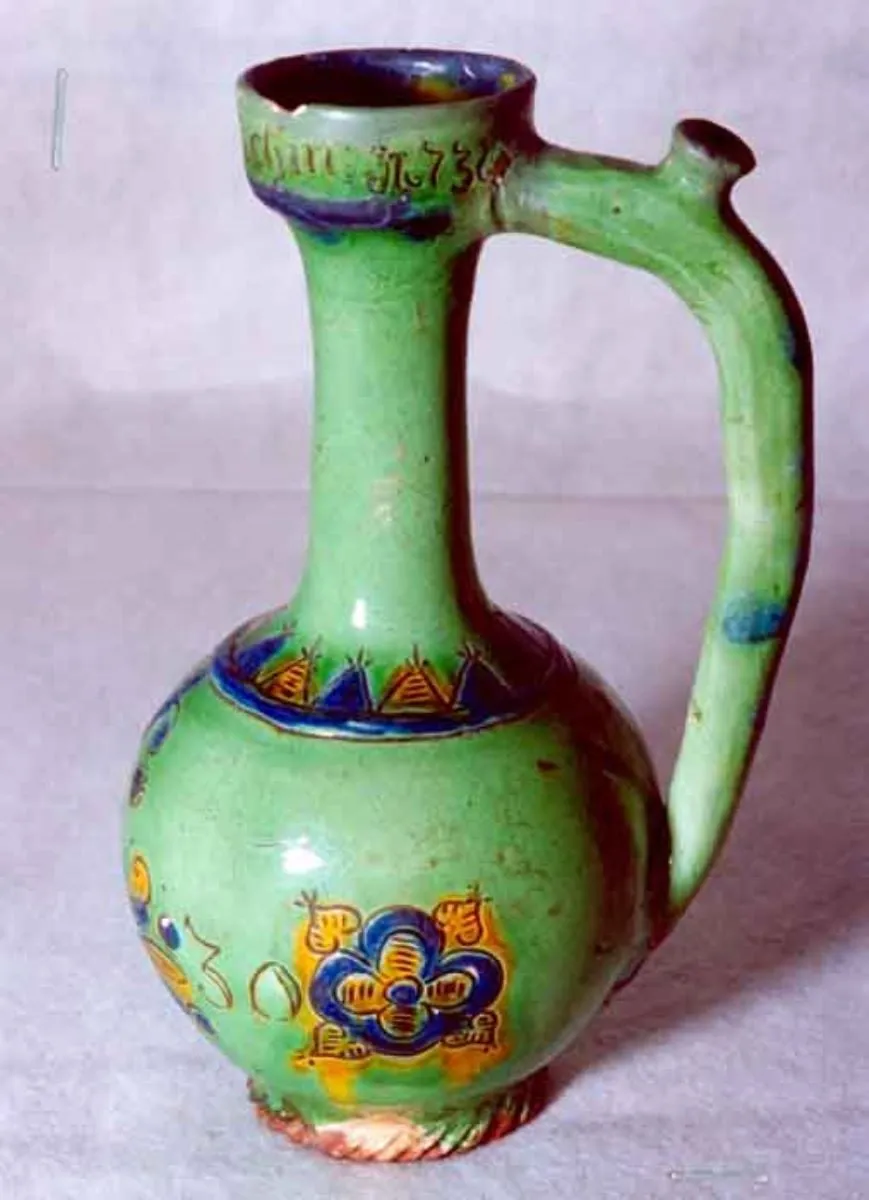
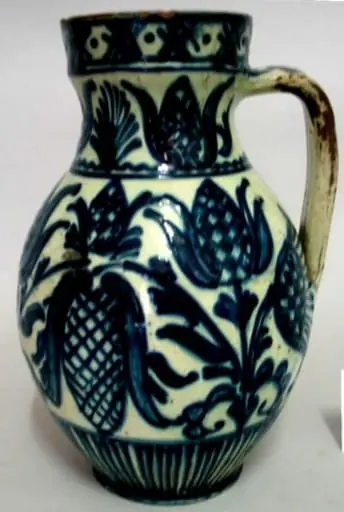
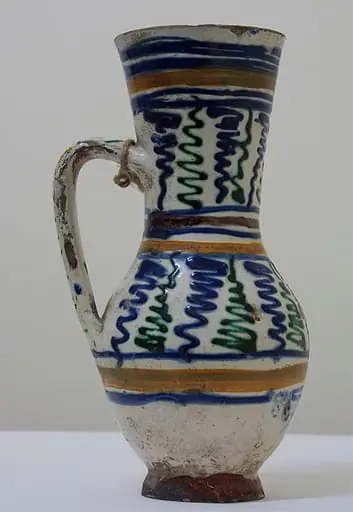
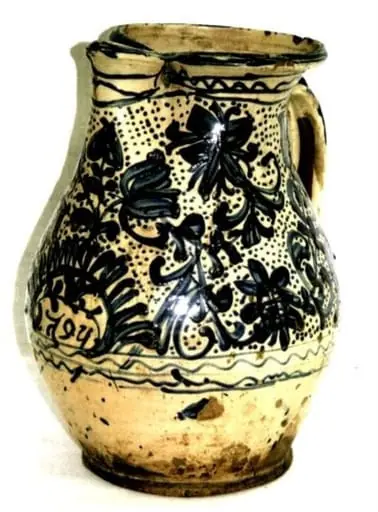
ulcior is a photography by the Baroque artist Unknown. It dates from 1730 and is held in the collection of the Romanian Peasant Museum. A ceramic pitcher with a rounded body, handle, and spout, this object is decorated with vivid floral patterns in blue, yellow, and orange.
About this work
Overview
A ceramic pitcher with a rounded body, handle, and spout, this object is decorated with vivid floral patterns in blue, yellow, and orange.
A ceramic pitcher with a rounded body, handle, and spout, this object is decorated with vivid floral patterns in blue, yellow, and orange. A narrow band of miniature tent-like motifs encircles the neck, while the rim bears faint, faded inscriptions. The surface shows signs of wear, suggesting regular use. Its energetic palette and dense ornamentation give it a domestic, lively character rather than a formal or ceremonial one.
Subject & Meaning
The pitcher’s decoration centers on abundant flowers and leaves, evoking natural abundance and seasonal vitality. The repeated tent motifs near the neck may reference temporary shelters or festive encampments, hinting at communal gatherings or travel. Together, these elements suggest a celebration of everyday life, possibly tied to local customs or seasonal rituals, rather than religious or aristocratic symbolism.
Technique & Style
The vessel was likely hand-painted with opaque pigments on a glazed ceramic surface, using bold outlines and flat areas of color. The floral motifs are stylized rather than naturalistic, with rhythmic repetition creating visual movement. The contrast between the dense central design and the restrained neck band reflects a deliberate compositional balance, typical of folk or regional ceramic traditions.
History & Provenance
The pitcher’s worn condition and faded inscriptions indicate prolonged domestic use, likely in a household setting rather than a ceremonial one. Its style aligns with 18th- or early 19th-century European folk pottery, possibly from a region known for colorful glazed wares. Exact origin remains uncertain, but its form and decoration suggest local production, not mass manufacture.
Context
This pitcher belongs to a broader tradition of utilitarian ceramics decorated with folk motifs, common in rural European households during the early modern period. Such objects blended function with personal or regional expression, often reflecting local flora, seasonal cycles, or community symbols. Unlike elite porcelain, these pieces were made for daily life, valued for their beauty as much as their utility.
Legacy
Though not produced by a named artist or workshop, the pitcher exemplifies the enduring appeal of handmade domestic objects. Its survival and preservation reflect a growing 20th-century interest in vernacular art forms. Today, it stands as a quiet testament to the aesthetic sensibilities of ordinary households, bridging craft and daily ritual across generations.
Artist & collection

 Domestic Scene
 Giacomo and Cardinal Marco, investing Andrea, Abbot of San Zeno, with his Benefice
 The Nymph of Fontainebleau
 Portrait of a Woman
 Madonna and Child with Saints in the Enclosed Garden
 Venus and Minerva
 Family Group of Four on Sofa
 Wall painting from Room H of the Villa of P. Fannius Synistor at Boscoreale
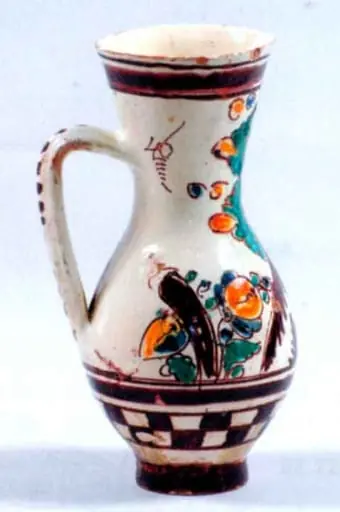 canceu
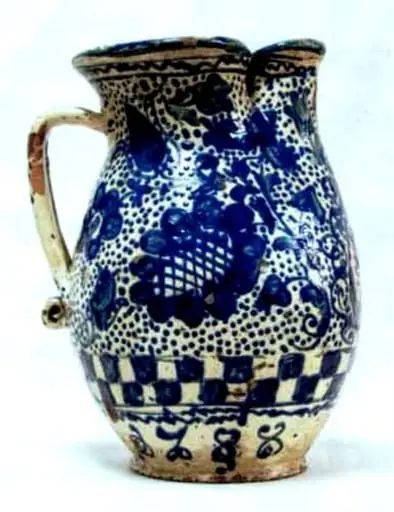 cană de vin
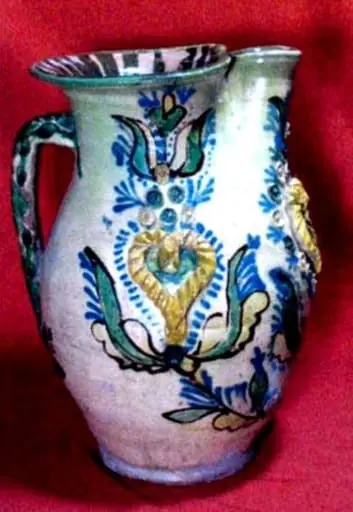 cană
cană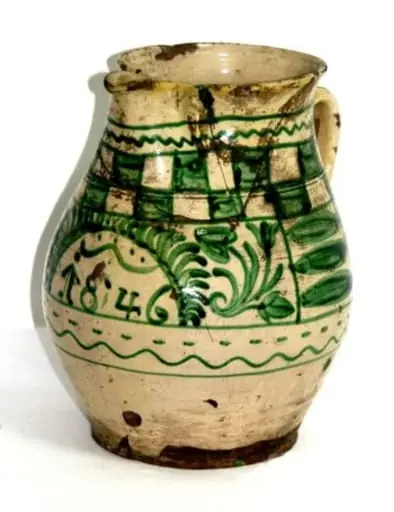 cană de vin
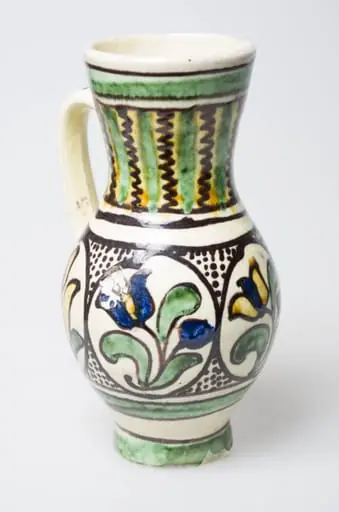 Recipient ceramic de formă ovoidală, smălțuit, cu gâtul lung, fund inelar și buza dreaptă. Prevăzut cu o toartă arcuită, care pleacă din mijlocul gâtului spre partea inferioară a vasului. Intens stilizat cu motive florale, vegetale și geometrice, pictate cu pensula, în două registre diferite. În primul registru, situat în zona gâtului, sunt pictate dungi late și linii meandrice dispuse pe verticală, alternativ. Aproape de gura vasului, sunt prezente dungi late și linii circulare. În al doilea registru întâlnim patru flori încadrate în cercuri și între acestea, puncte mici, umplând astfel cu decorații toată zona bombată a recipientului. Registrele sunt delimitate între ele de trei linii circulare. În partea inferioară, întâlnim ca și la gură, o dungă lată încadrată de două linii circulare. Prezent motiv geometric pe toartă sub formă de linie vălurită. Cromatică: fundal: alb; motive: galben; albastru; verde; maro închis.
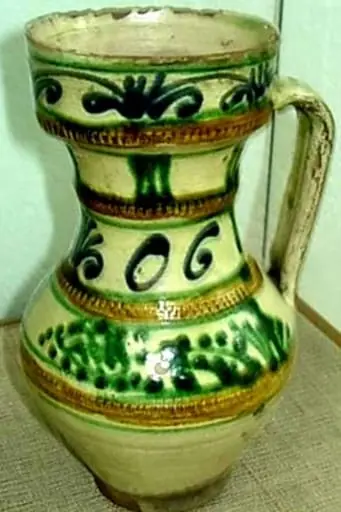 canceu
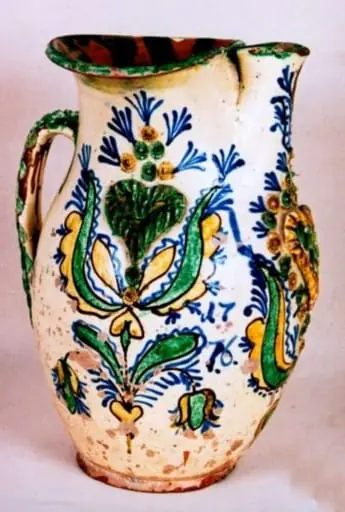 cană de vin
 cană de vin
 canceu
 cană de bere