Artwork
canceu
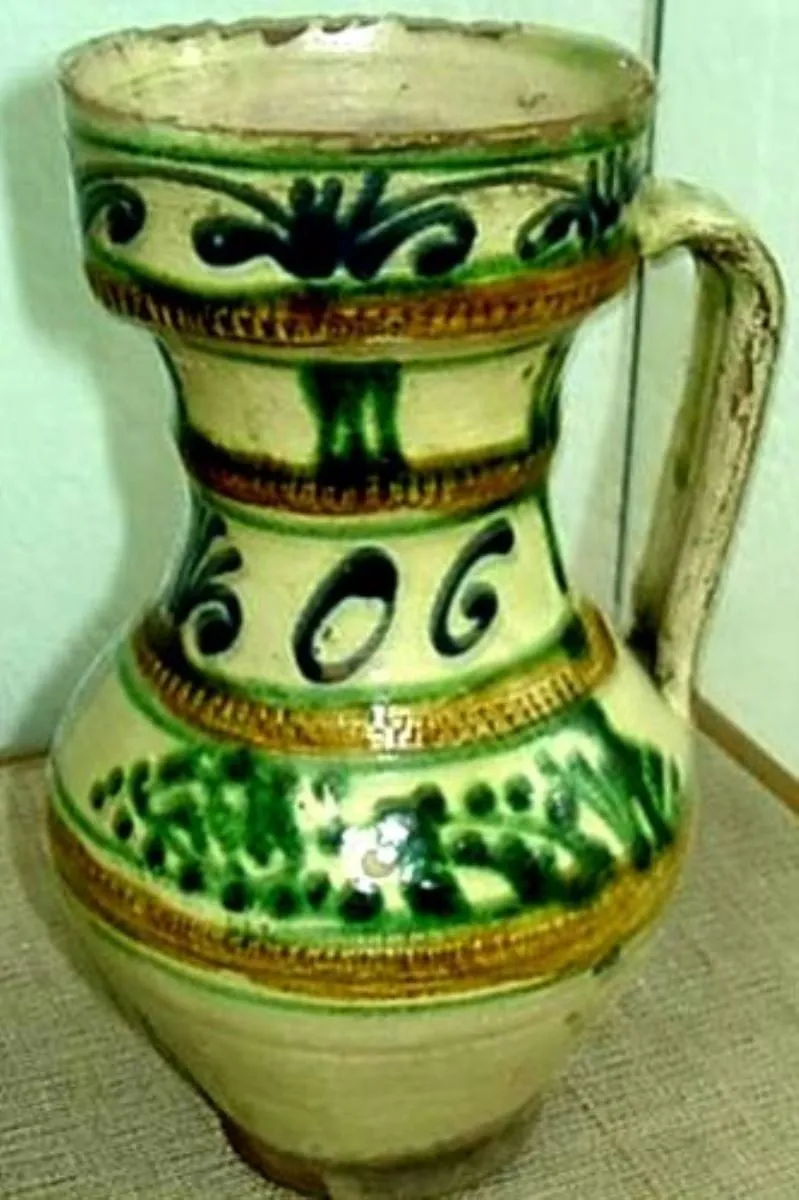
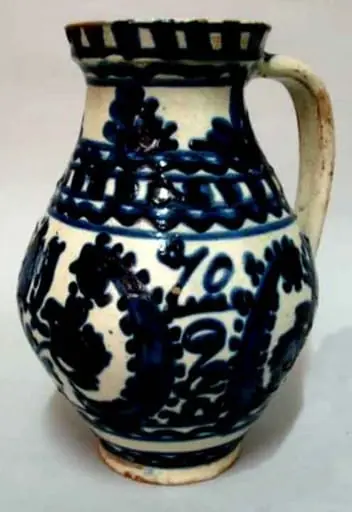
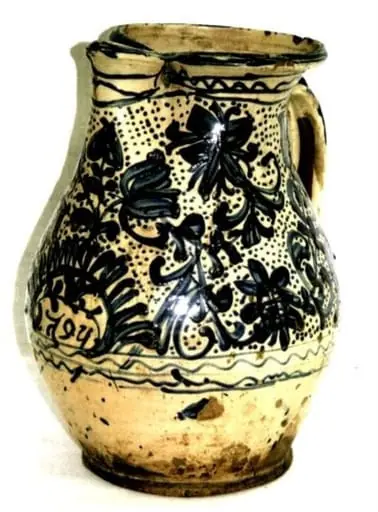
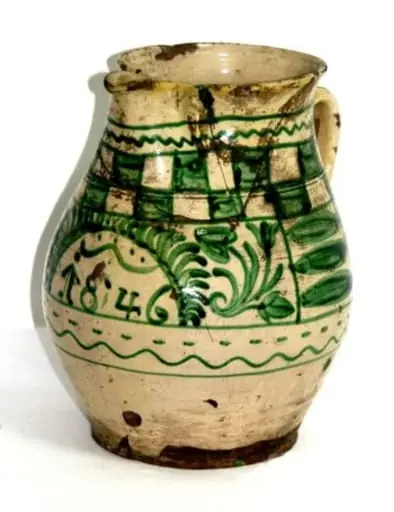
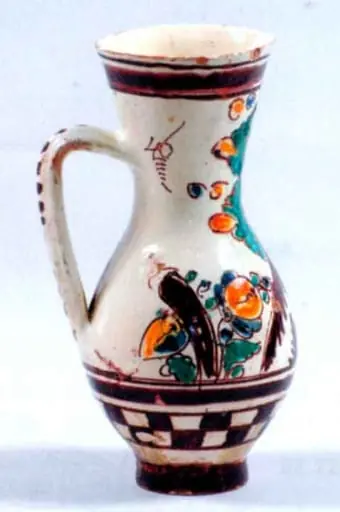
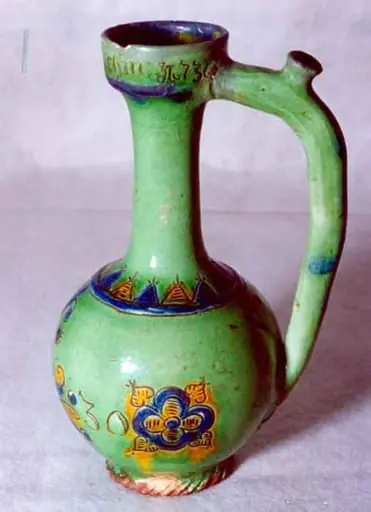
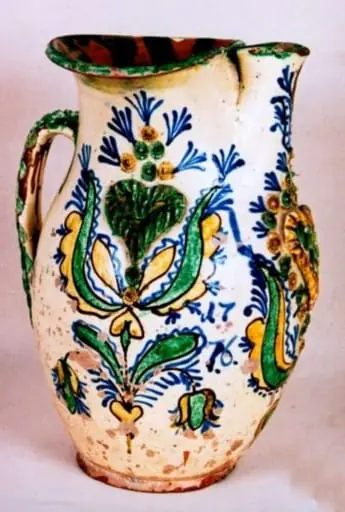
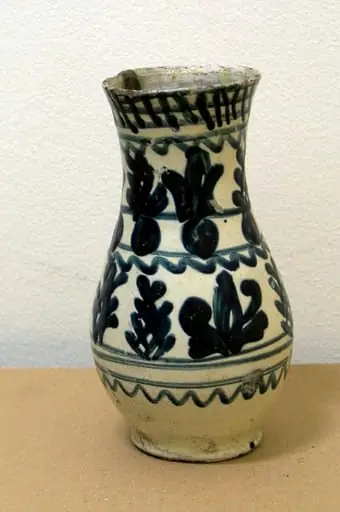
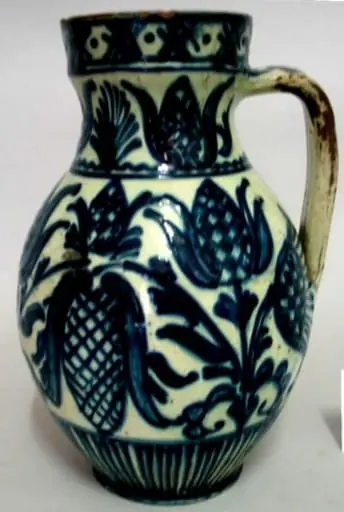
canceu is a photography by the Romanticist artist Unknown. It dates from 1806 and is held in the collection of the ASTRA National Museum Complex. The object is a ceramic pitcher, characterized by a single handle positioned on its right side.
About this work
The top half has a cream background with green and brown stripes, plus swirls and a leafy pattern.
This is a ceramic pitcher with a handle on the right side. The top half has a cream background with green and brown stripes, plus swirls and a leafy pattern. The bottom half shows a big green-and-white flower with dark leaves. The numbers "1806" are painted in black near the middle.
The pitcher looks old, with some wear on the edges and colors. The design mixes simple shapes with natural-looking flowers, which was common in everyday pottery.
Next, look up green, white, flower to see how plants were used in old ceramics.
Overview
The object is a ceramic pitcher, characterized by a single handle positioned on its right side. Its form is divided horizontally: the upper portion features a cream base overlaid with green and brown linear motifs and decorative swirls, while the lower portion displays a prominent green‑and‑white floral motif accompanied by dark foliage. The year 1806 is inscribed in black paint near the central band, indicating its date of production.
Subject & Meaning
The decorative program combines geometric bands with a stylized botanical element, reflecting a common decorative approach in utilitarian pottery of the early nineteenth century. The central flower, rendered in contrasting green and white, serves as the visual focal point, while the surrounding stripes and swirls provide a framing context that balances abstraction with natural representation.
Technique & Style
The pitcher is formed of earthenware and painted with mineral pigments that have darkened with age. The surface treatment includes a cream slip background, over which slip‑painted stripes and free‑hand brushwork create the swirling and leafy patterns. The floral design is executed in a simplified, almost schematic style, typical of domestic wares intended for everyday use rather than formal display.
History & Provenance
A black numeral indicating the year 1806 is applied near the middle of the vessel, situating its manufacture in the early nineteenth century. The piece exhibits signs of wear along its rim and edges, suggesting prolonged functional use before entering a collection. No further provenance details are provided.
Context
During the period around 1806, ceramic producers frequently incorporated modest decorative motifs—such as stripes, swirls, and stylized flora—into household items. This practice linked functional objects to contemporary aesthetic trends that favored accessible, nature‑inspired ornamentation without the expense of elaborate hand‑painting.
Artist & collection

 Domestic Scene
 Giacomo and Cardinal Marco, investing Andrea, Abbot of San Zeno, with his Benefice
 The Nymph of Fontainebleau
 Portrait of a Woman
 Madonna and Child with Saints in the Enclosed Garden
 Venus and Minerva
 Family Group of Four on Sofa
 Wall painting from Room H of the Villa of P. Fannius Synistor at Boscoreale